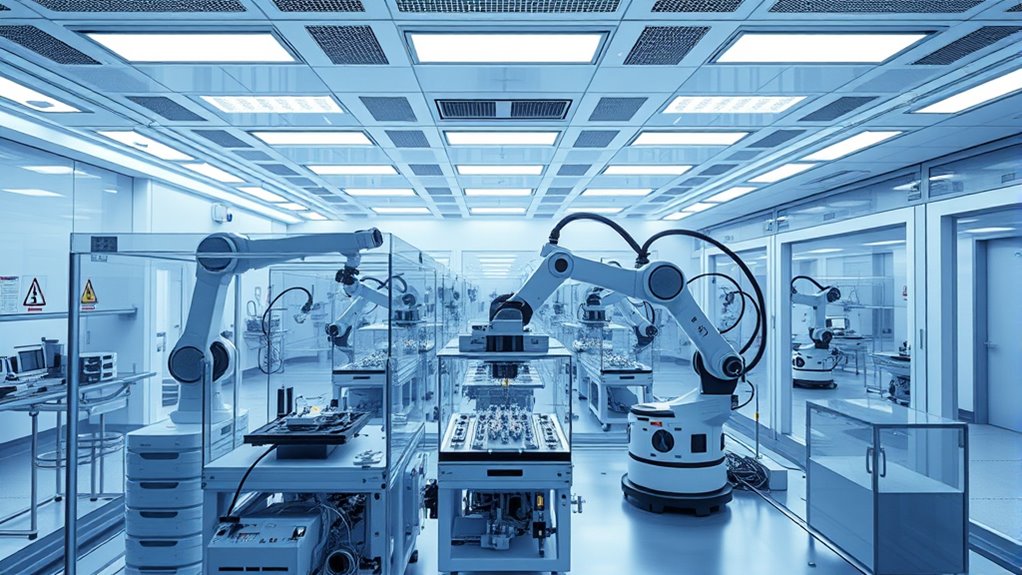

In nanomanufacturing, you need to be aware of environmental safety concerns from nanoparticle releases during production, handling, and disposal. These tiny particles can enter ecosystems, water sources, and organisms, posing ecological risks because of their high reactivity and small size. Monitoring and controlling nanoparticle emissions are essential to minimize impact. Understanding ecotoxicity and implementing safety measures will help you remain compliant and contribute to sustainable practices—discover more ways to guarantee safe nanomanufacturing below.
Key Takeaways
- Monitoring nanoparticle release during manufacturing, handling, and disposal is essential for environmental safety.
- Ecotoxicity assessments help identify nanoparticles posing ecological risks and inform safer material development.
- Implementing containment, filtration, and early detection systems reduces nanoparticle dispersion into ecosystems.
- Regulatory compliance mandates comprehensive testing and risk assessments to ensure environmentally safe nanomanufacturing.
- Responsible practices balance technological innovation with ecological protection, promoting sustainable nanotechnology development.
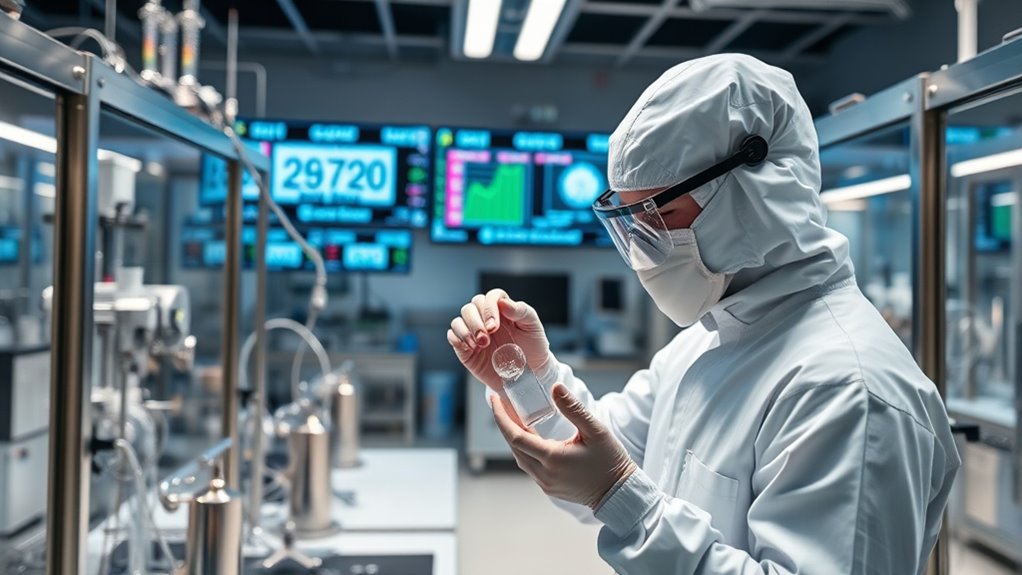
Nanomanufacturing, the process of creating materials and devices at the nanoscale, offers remarkable technological advancements but also raises important environmental safety concerns. One of the main issues you’re likely to encounter is nanoparticle release. During production, handling, and disposal, nanoparticles can escape into the environment, often unintentionally. These particles are tiny enough to penetrate ecosystems, water sources, and even living organisms, potentially causing harmful effects. Because of their small size and high reactivity, nanoparticles can behave differently from their bulk counterparts, making it critical to monitor and control their release. If you’re involved in nanomanufacturing, understanding how nanoparticles are released and dispersed in the environment is key to preventing unintended ecological consequences.
To effectively manage these risks, conducting thorough ecotoxicity assessments becomes essential. Ecotoxicity assessment involves testing nanoparticles on various organisms—such as algae, aquatic invertebrates, and fish—to evaluate their potential toxicity. You need to understand how different types of nanoparticles interact with biological systems, how they accumulate, and their potential to cause harm at environmental concentrations. These assessments help you identify which nanoparticles pose the greatest risks and inform safety protocols to minimize environmental impact. They also guide the development of safer nanomaterials, ensuring that innovations don’t come at the expense of ecological health.
Conduct ecotoxicity tests on nanoparticles to identify risks and develop safer, environmentally responsible nanomaterials.
Another critical aspect is understanding the pathways through which nanoparticles travel in the environment. Once released, they can settle in sediments, be transported through water currents, or be inhaled by wildlife and humans. This movement complicates efforts to contain and mitigate their effects, making it necessary for you to develop robust containment and filtration systems. Regular monitoring and risk assessments can help detect nanoparticle release early, enabling you to take corrective actions before significant environmental damage occurs. Incorporating encryption solutions into monitoring systems can enhance data security and integrity during environmental assessment processes.
Furthermore, regulatory frameworks increasingly emphasize the importance of ecotoxicity assessments in nanomanufacturing. You’re expected to adhere to guidelines that require comprehensive testing of nanoparticle release and toxicity before market approval. Staying informed about these regulations helps you design safer manufacturing practices and avoid legal liabilities. In the end, ensuring environmental safety isn’t just about compliance; it’s about responsible innovation. By prioritizing nanoparticle release control and ecotoxicity assessment, you contribute to sustainable nanotechnology development—balancing cutting-edge advancements with environmental stewardship.
nanoparticle air filtration system
As an affiliate, we earn on qualifying purchases.
As an affiliate, we earn on qualifying purchases.
Frequently Asked Questions
What Are the Long-Term Health Effects of Nanomaterial Exposure?
You might face uncertain long-term health effects from nanomaterial exposure, including potential chronic toxicity and biological accumulation. These tiny particles can persist in your body, possibly leading to inflammation or cellular damage over time. While research is ongoing, staying cautious by minimizing exposure and using protective measures helps reduce risks associated with their long-term health impacts. it is crucial to follow safety guidelines to protect yourself from potential adverse effects.
How Is Nanomaterial Waste Properly Disposed of or Recycled?
Nanomaterial waste is like fragile glass—you must handle it carefully. You should use strict nanomaterial containment to prevent leaks, then follow recycling protocols designed for nanomaterials. Proper disposal involves labeling waste correctly, avoiding open-air burning, and working with certified disposal facilities. Always guarantee you adhere to safety guidelines, as improper handling can release tiny particles into the environment, posing health and ecological risks.
Are There Specific Regulations Governing Nanomanufacturing Safety?
Yes, there are specific regulations governing nanomanufacturing safety, but you should be aware of regulatory gaps that exist. These gaps can leave certain nanomaterials insufficiently controlled, so it’s essential to stay updated on evolving safety standards. You’re responsible for adhering to existing guidelines and advocating for thorough regulations, ensuring safe practices in nanomanufacturing. This proactive approach helps minimize environmental and health risks associated with nanomaterial production.
What Are the Environmental Impacts of Nanoparticle Runoff?
You can’t put the genie back in the bottle, and nanoparticle runoff causes environmental contamination and ecosystem disruption. When nanoparticles enter water or soil, they can harm wildlife, accumulate in organisms, and alter natural processes. This runoff risks long-term environmental damage, making it essential to monitor and control nanoparticle release. Ignoring these impacts could lead to unforeseen consequences that threaten both ecosystems and human health.
How Can Workers Be Protected From Nanomaterial Hazards?
You can protect yourself from nanomaterial hazards by wearing proper personal protective equipment, like gloves, masks, and protective clothing. Additionally, guarantee workplace monitoring is in place to detect nanomaterial presence and exposure levels. Follow safety protocols strictly, and participate in training sessions to stay informed about risks and best practices. Staying vigilant and using protective gear effectively keeps you safe from potential nanomaterial hazards.
environmental nanoparticle monitoring device
As an affiliate, we earn on qualifying purchases.
As an affiliate, we earn on qualifying purchases.
Conclusion
As you navigate the frontier of nanomanufacturing, remember that safety is your guiding star amid the swirling cosmos of innovation. Like a vigilant lighthouse, it illuminates potential hazards, steering you clear of unseen storms. Embrace rigorous safeguards and stay informed, for in this delicate dance with tiny particles, every step shapes a safer, brighter future. By respecting the power of nanotechnology, you become the steady hand forging progress without casting shadows on our environment.
ecotoxicity testing kits for nanoparticles
As an affiliate, we earn on qualifying purchases.
As an affiliate, we earn on qualifying purchases.
nanoparticle containment and filtration equipment
As an affiliate, we earn on qualifying purchases.
As an affiliate, we earn on qualifying purchases.