Choosing a polishing machine for lab samples starts with the material and finish you need. My leading pick for controlled metallographic preparation is the MP-160, with its variable speed and water cooling. The desktop horizontal ball mill suits small, contained jar-based work, while the PIAOCAIYIN dental lathe is the more targeted choice for dental castings and buffing. Those machines do different jobs: a metallographic disc supports sample preparation, a ball mill works through jars, and bench buffers use fast cloth wheels. I rank these options by how well their stated design fits laboratory sample work, then weigh control, cooling, setup needs, and limitations. Before choosing, check whether your process calls for abrasive grinding, jar milling, or final buffing—and verify the machine’s voltage and compatible accessories.

Get the latest gadgets delivered free with Prime
- Fast, free delivery on millions of items
- Prime Video, Amazon Music and more included
- Member-only deals all year
Complete the kit



Key Takeaways
- The MP-160 is the clearest fit for metallographic preparation because it has a 203 mm disc, adjustable 50–600 rpm range, and integrated water cooling; confirm the actual speed settings because its title lists 150/300 rpm.
- The desktop ball mill uses compatible jars on adjustable rollers, so it suits small batch jar processing rather than direct polishing on a specimen disc; jars must be sourced separately.
- The PIAOCAIYIN bench buffer is aimed at dental and jewelry castings, with a fixed 3000 rpm and dust collection compatibility, rather than controlled metallographic grinding.
- The two other 550W bench buffers offer dual cloth-wheel positions at 3000 rpm; neither listing describes variable speed, and their shared basic format makes accessories and protective setup key comparison points.
- Choose by process and sample geometry first: disc preparation, jar milling, and cloth-wheel buffing are distinct methods that should not be treated as interchangeable.
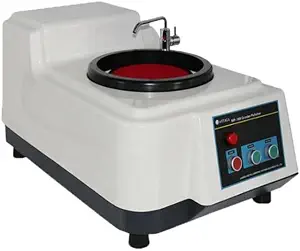


| polishing machines for lab sample | Voltage | Dimensions | Motor | Included |
|---|---|---|---|---|
| MP-160 Metallographic Grinding | 220 V | 500 × 910 × 475 mm | — | — |
| Desktop Laboratory Horizontal | — | — | Brushless, pure copper | Mini ball mill, power adapter, 2 baffles; jars not included |
| PIAOCAIYIN Dental Polishing La | 110 V | 48 × 41 × 32 cm | — | — |
| 550W 110V 3000RPM Bench Buffer | 110 V | — | Pure copper motor | 2 cloth wheels, 2 glass baffles, dust-proof covers |
| 550W Double-Top Bench Buffer P | Not specified in supplied details | 18.9 × 16.14 × 12.6 inches | Pure copper motor | 2 cloth wheels, 2 detachable protective covers |
More Details on Our Top Picks
MP-160 Metallographic Grinding and Polishing Machine, 203 mm Disc, Variable Speed, Water Cooling, 220 V
The MP-160 is the strongest match here for preparing metallographic samples because its 203 mm disc gives a specimen a direct abrasive work surface, while the 50–600 rpm range offers more process control than the fixed 3000 rpm bench buffers. Integrated water cooling can help manage heat during grinding and polishing, a useful distinction when a sample’s surface condition matters. At 36 kg, it is a substantial piece of equipment, but its stated footprint is more compact than the bench buffers’ listed dimensions.
There is a specification discrepancy to resolve: the title lists 150/300 rpm, while the description states 50–600 rpm. I would confirm the supplied controls and available speeds before purchasing, especially if a procedure depends on a specific rotation rate. The standard disc is also smaller than the optional 300 mm size, and customization may be needed for larger specimens or an established lab workflow. Compared with the ball mill, this machine is for direct disc-based preparation; compared with the cloth-wheel buffers, it is better suited to controlled sample grinding than general buffing.
Pros:- A 203 mm disc supports direct metallographic grinding and polishing.
- The stated 50–600 rpm range offers more control than fixed-speed buffers.
- Integrated water cooling can help limit heat during sample work.
- Its 36 kg weight and listed dimensions suit a dedicated bench setup.
Cons:- The title’s 150/300 rpm conflicts with the description’s 50–600 rpm range.
- A 300 mm disc requires customization.
- The 220 V requirement may not match every lab outlet.
Best for: Labs preparing metallographic samples that need a water-cooled disc and adjustable rotation, after confirming the actual speed configuration.
Not ideal for: Buyers who need a portable unit, a standard 300 mm disc, or a clearly verified speed specification without follow-up.
- Model:MP-160
- Disc diameter:203 mm standard; customizable to 300 mm
- Stated speed range:50–600 rpm; title also lists 150/300 rpm
- Cooling:Integrated water cooling
- Control:Single disc, single control
- Dimensions:500 × 910 × 475 mm
- Weight:36 kg
- Voltage:220 V
Our verdict“I rank the MP-160 first for metallographic sample work, provided the buyer confirms its delivered speed settings and disc configuration.”
Desktop Laboratory Horizontal Ball Mill
This is the most space-conscious option in the group, with a listed size of 310 × 150 × 90 mm and a weight of 2.5 kg. Its rollers turn compatible jars at adjustable speeds from 60 to 900 rpm, so the sample stays inside a vessel rather than being worked directly against a disc or cloth wheel. That makes it a distinct choice for small research, teaching, or batch processes that call for jar milling. The cooling system is described as supporting continuous operation.
The working method is the deciding tradeoff. I would not treat this ball mill as a substitute for the MP-160 when preparing a flat metallographic face: its stated format is jar-based, and the jars are not included. Buyers also need to check that their jar falls within the listed 65–170 mm diameter and up-to-220 mm height range, and that a batch stays under the 5 kg maximum load. Unlike the 550W buffers, it is compact and speed-adjustable, but it requires compatible vessels and a process suited to milling inside them.
Pros:- Adjustable 60–900 rpm roller speed supports a range of jar processes.
- The 2.5 kg unit is much easier to place or move than the larger machines.
- An integrated cooling system is specified for continuous operation.
- Adjustable baffles and an enclosed dual-roller drive are included.
Cons:- Compatible jars are not included.
- Maximum load is 5 kg, limiting batch size.
- Jar-based milling is not direct specimen-face polishing.
Best for: Research or teaching labs that need a compact roller drive for small jar-based batches and already have, or can source, compatible jars.
Not ideal for: Anyone who needs to polish a specimen directly on a disc or cloth wheel, or expects jars to come in the package.
- Motor:Brushless, pure copper
- Input voltage:AC 100–240 V
- Roller speed:60–900 rpm
- Compatible jar diameter:65–170 mm
- Compatible jar height:Up to 220 mm
- Maximum load:5 kg
- Dimensions and weight:310 × 150 × 90 mm; 2.5 kg
- Included:Mini ball mill, power adapter, 2 baffles; jars not included
Our verdict“I place this second for labs that need compact, adjustable jar processing, while keeping it separate from direct metallographic polishing.”
PIAOCAIYIN Dental Polishing Lathe Machine, 110V 550W Bench Buffer Polisher, 3000rpm
Among the bench buffers, the PIAOCAIYIN is the clearest fit for a dental lab working on castings: its description names dental polishing and gives dust collection compatibility via a vacuum hose. It pairs that application focus with a 550W motor at 3000 rpm, built-in lighting, and stated safety protection. Those details make it a more specific choice than the MP-160 when the task is buffing a casting, though it does not offer the latter’s variable-speed disc workflow or water cooling.
Its listing says the machine connects to a dust collection unit, but the included components list only the polishing lathe; I would confirm whether a hose or collection equipment must be supplied separately. The 110 V, fixed 3000 rpm setup also narrows its fit: it is not the pick for speed-sensitive preparation or labs without a compatible power supply. Compared with the two other buffers, its dental and extraction context is more explicit, but their listings give more detail about included cloth wheels and protective covers.
Pros:- The stated use directly includes dental casting polishing.
- Dust collection compatibility addresses debris from buffing.
- Built-in lighting and safety protection are listed.
- A 550W motor and 3000 rpm speed suit fixed-speed buffing tasks.
Cons:- The machine is listed for 110 V and fixed 3000 rpm operation.
- The included-components list does not specify a vacuum hose or collector.
- No cloth wheel or protective cover is listed as included.
Best for: Dental labs buffing castings that can use a compatible dust collection setup and have 110 V power.
Not ideal for: Labs seeking adjustable-speed metallographic grinding, supplied extraction equipment, or a machine for large, varied sample-preparation tasks.
- Brand:PIAOCAIYIN
- Voltage:110 V
- Power:550 W
- Speed:3000 rpm
- Dimensions:48 × 41 × 32 cm
- Application:Dental casting and jewelry buffing
- Dust handling:Vacuum hose connection to a dust collection unit described
- Included components:Dental polishing lathe machine
Our verdict“I recommend this buffer for 110 V dental labs prioritizing casting buffing and dust collection compatibility, after checking which accessories are supplied.”
550W 110V 3000RPM Bench Buffer Polisher with Dust-Proof Covers and 2 Cloth Wheels
This bench buffer is a straightforward choice for fixed-speed work: it has two polishing positions, a 550W motor, and two cloth wheels in the package. Glass baffles and dust-proof covers are also listed, giving it a more complete stated wheel-side setup than the PIAOCAIYIN, whose package description names only the machine. For samples that need cloth-wheel buffing rather than controlled abrasive grinding, the included wheels may reduce accessory sourcing before setup.
Its 3000 rpm speed is fixed in the supplied details, so it falls behind the MP-160 for variable-speed metallographic preparation. This model also requires assembly, and its vacuum cleaner suction pipe is not included despite the dust-handling context. Grounding and strict safety precautions are specified, so a lab should plan its installation and extraction before operation. Compared with the Double-Top buffer, this listing spells out dust-proof covers and glass baffles; the core motor and two-position format are otherwise similar.
Pros:- Two cloth wheels are included for a ready-to-configure buffing setup.
- Dual polishing positions allow two wheel stations.
- Dust-proof covers and glass baffles are listed.
- Cast iron construction provides a substantial countertop base.
Cons:- The listed 3000 rpm speed has no stated adjustment.
- Assembly is required.
- The vacuum suction pipe is not included, and grounding is required.
Best for: A lab or workshop that needs a dual-position cloth-wheel buffer with wheels and protective baffles included.
Not ideal for: Users who need variable speed, a direct sample-grinding disc, or a complete dust extraction system in the package.
- Power:550 W
- Voltage:110 V
- Speed:3000 rpm
- Polishing positions:2
- Motor:Pure copper motor
- Materials:Cast iron, glass, cotton, ABS
- Dimensions and weight:48 × 41 × 32 cm; 10 kg
- Included:2 cloth wheels, 2 glass baffles, dust-proof covers
Our verdict“I favor this over the other general bench buffer when included wheels and listed covers matter more than speed adjustment or extraction accessories.”
550W Double-Top Bench Buffer Polisher, 3000RPM Dual Polishing Machine for Jewelry and Dental Lab Use
The Double-Top buffer offers the same broad bench-buffer format as the 550W model above: a 550W motor, fixed 3000 rpm, and two polishing positions. The listing emphasizes jewelry and dental castings, and includes two cloth wheels and detachable protective covers. For buyers who want a dual-wheel buffing station with a simple start and stated low-noise operation, it covers the basics without the added focus on extraction or safety lighting described for the PIAOCAIYIN.
The overlap with the other bench buffers is substantial, so I would choose it based on the supplied accessories and fit with the workspace rather than expect a different sample-preparation method. It does not state variable speed, water cooling, or a direct grinding disc, which puts it well behind the MP-160 for metallographic work. Its listed footprint is 18.9 × 12.6 inches across the base dimensions shown, so it still needs a dedicated bench area. The product details also do not specify voltage, making electrical compatibility something to verify before selection.
Pros:- Two polishing positions support a dual-wheel setup.
- Two cloth wheels and detachable covers are listed as included.
- The stated 550W, 3000 rpm configuration is suited to fixed-speed buffing.
- Low-noise operation is described by the listing.
Cons:- No variable speed control is mentioned.
- Voltage is not specified in the supplied product details.
- The machine needs dedicated bench and storage space.
Best for: Jewelry or dental labs seeking a simple two-position cloth-wheel buffer with included covers.
Not ideal for: Labs that need variable speed, explicit dust extraction details, or a listed voltage before purchase.
- Power:550 W
- Speed:3000 rpm
- Polishing positions:2
- Motor:Pure copper motor
- Materials:Cast iron, glass, ABS
- Dimensions:18.9 × 16.14 × 12.6 inches
- Included:2 cloth wheels, 2 detachable protective covers
- Voltage:Not specified in supplied details
Our verdict“I would choose the Double-Top for a basic dedicated buffing station when its included covers suit the setup and the seller confirms voltage.”

How We Picked
I ranked these five machines by their fit for laboratory sample preparation, not by broad claims about polishing speed or motor power. A metallographic specimen typically needs controlled contact with an abrasive surface and attention to heat; that makes the MP-160’s disc, adjustable speed, and water cooling especially relevant. The ball mill earns a separate place because its roller-and-jar format supports contained batch processing, but that is a different workflow from polishing an exposed sample face.
For the three bench buffers, I compared the details that matter in a lab setting: fixed operating speed, number of wheel positions, included cloth wheels, dust handling, and stated safety provisions. Their 550W motors and 3000 rpm ratings look similar on paper, so I gave more weight to application fit and disclosed setup details than to repeated power claims. I also considered practical constraints such as voltage, dimensions, weight, included components, and whether jars or extraction equipment are supplied. Missing details are treated as uncertainties; they are not assumed to be included or present.
This ordering favors machines with a clearly described process for lab samples. The MP-160 ranks first for metallographic work; the ball mill follows for small-scale jar processing. The buffers are ranked below them because they provide fast cloth-wheel buffing but lack the listed speed control and sample-grinding features of the first two. Within that group, the PIAOCAIYIN description gives the most direct dental-lab and dust-collection context, while the other buffers distinguish themselves through listed covers, baffles, or dual-position setup.
| polishing machines for lab sample | Motor |
|---|---|
| MP-160 Metallographic Grinding | — |
| Desktop Laboratory Horizontal | Brushless, pure copper |
| PIAOCAIYIN Dental Polishing La | — |
| 550W 110V 3000RPM Bench Buffer | Pure copper motor |
| 550W Double-Top Bench Buffer P | Pure copper motor |
Factors to Consider When Choosing Polishing Machines For Lab Samples
I would begin by identifying what physically contacts the sample, then match that process to the machine. The distinction matters more than motor wattage alone.Match the machine to the preparation step
A metallographic disc machine works directly on a sample face and is the closest fit here for grinding and polishing lab specimens. A ball mill instead turns jars, so it supports a contained batch process. A bench buffer spins cloth wheels for buffing. These are different stages or methods, not interchangeable versions of one tool. If a protocol calls for a flat polished cross-section, the MP-160’s disc format is more relevant than any of the bench buffers.
Treat speed and heat as process controls
Variable speed lets an operator adjust rotation to the sample, abrasive, and preparation step. Of the five listings, the MP-160 and ball mill state adjustable ranges; the three buffers list 3000 rpm without a stated speed control. The MP-160 also includes water cooling, which can help manage heat during direct sample work. Do not infer equivalent control from motor power: a 550W buffer can still be a poor match for a speed-sensitive preparation protocol.
Check the working surface and required accessories
Disc diameter affects the usable work area, while jar dimensions determine what the ball mill can accept. The MP-160 has a 203 mm standard disc and may be customized to 300 mm. The ball mill requires a compatible 65–170 mm diameter jar, and jars are not included. Cloth wheels are included with the two general buffers and are not listed for the PIAOCAIYIN. I would check consumable compatibility and package contents before treating any machine as ready for a specific procedure.
Plan for power, space, and debris
Confirm voltage before ordering: the MP-160 is listed at 220 V, two buffers are 110 V, and the Double-Top listing omits voltage. The ball mill accepts AC 100–240 V. Compare the dimensions and weight with the intended bench, and leave room for safe access. Buffing can create debris; the PIAOCAIYIN describes a vacuum connection, while the B0F8VBWLTW listing says its suction pipe is not included. A collector or extraction setup may need separate planning.
Resolve unclear specifications before relying on them
Where descriptions disagree or omit a detail, treat it as an open purchasing question. The MP-160 title lists 150/300 rpm while the description gives a 50–600 rpm range. The Double-Top lacks a supplied voltage specification. I would verify those points with the seller and compare the answer with the lab’s procedure and outlet. A stated certification or safety feature does not replace checking equipment suitability, installation requirements, and the lab’s own operating controls.
Frequently Asked Questions
Which of these machines is best suited to metallographic sample preparation?
The MP-160 is the most directly suited because it is described as a metallographic grinding and polishing machine with a sample-contact disc, adjustable speed, and water cooling. Its listed speed information conflicts, however: the title gives 150/300 rpm and the description gives 50–600 rpm. I would confirm the actual configuration before matching it to a lab procedure.
Can I use the horizontal ball mill to polish a sample face?
The listing describes a roller drive for compatible jars, which makes it a jar-based milling machine rather than a direct-contact polishing disc. It may suit processes where material is worked inside a jar, but the supplied information does not describe flat specimen-face preparation. For that task, the MP-160 has the more relevant format.
What is the main difference between the three bench buffers?
All three list a 550W motor and 3000 rpm operation, with two polishing positions described for the general buffer formats. The B0F8VBWLTW lists cloth wheels, glass baffles, and dust-proof covers; the Double-Top lists wheels and detachable covers; and the PIAOCAIYIN emphasizes dental casting work, lighting, safety protection, and vacuum connection compatibility. Their fixed-speed cloth-wheel method remains distinct from disc grinding.
Do any of these machines include everything needed to collect dust or debris?
The supplied descriptions do not establish that a complete extraction system is included. PIAOCAIYIN describes connection to a dust collection unit, but its included-components list names only the lathe. The B0F8VBWLTW specifically excludes the vacuum cleaner suction pipe. I would confirm the hose, collector, and other accessories required by the intended setup.
What should I verify before choosing a machine for my lab?
Check the sample-preparation method, compatible disc, jar, or wheel, required speed range, cooling needs, voltage, work area, and included accessories. Resolve the MP-160 speed discrepancy and the Double-Top’s missing voltage detail before relying on those specifications. For a ball mill, confirm jar compatibility and source jars separately; for a buffer, plan for a fixed 3000 rpm process and safe debris handling.
Conclusion
For metallographic sample preparation, I would start with the MP-160 and confirm its true speed configuration and desired disc diameter. For small jar-based batches, the desktop ball mill is the compact choice, as long as compatible jars are part of the plan. Dental labs focused on casting buffing may prefer the PIAOCAIYIN for its stated vacuum connection and built-in lighting, after confirming extraction accessories. If a fixed-speed cloth-wheel station is the goal, choose the B0F8VBWLTW for its listed wheels and baffles or the Double-Top for its detachable covers. The right choice depends on the preparation method your samples actually require.