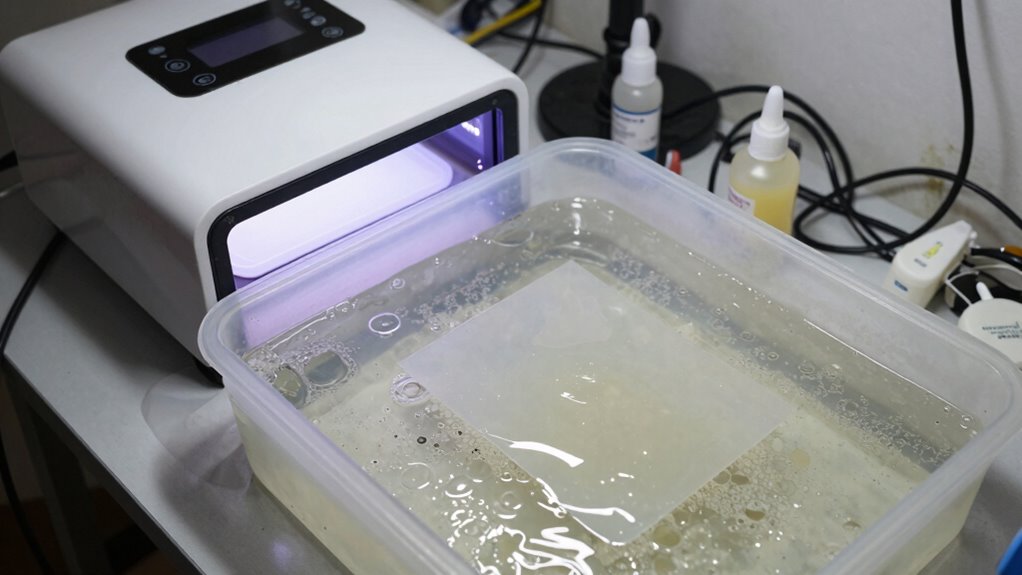
A wash and cure station handles the messiest half of resin 3D printing: removing uncured resin and hardening the finished model. After comparing the current lineup, the ELEGOO Mercury Plus 3.0 stands out as the best overall pick thanks to its generous build volume, sealed washing design, and dual-purpose cure platform. The ANYCUBIC Wash & Cure Max 3.0 is the clear choice for large-format printers with its 15.1-liter capacity, while the ANYCUBIC Wash and Cure 3.0 with its gooseneck curing light makes the most sense for beginners who want flexibility when curing odd-shaped parts. The main tradeoff in this category is capacity versus desk space and cost — bigger tanks wash larger plates but demand more IPA and more room. Read on for the full breakdown of all ten options.

Get the latest gadgets delivered free with Prime
- Fast, free delivery on millions of items
- Prime Video, Amazon Music and more included
- Member-only deals all year
Complete the kit



Key Takeaways
- The category is dominated by two brands — ANYCUBIC and ELEGOO — and their 2026 lineups are close enough in cleaning performance that capacity and curing flexibility decide most matchups, not wash quality.
- Gooseneck LED curing arms, found on the ANYCUBIC Wash & Cure 3 and 3.0 models, proved to be the biggest differentiator for anyone printing tall or irregularly shaped parts that a fixed UV array cannot reach evenly.
- The ANYCUBIC Wash & Cure Max 3.0’s 15.1-liter tank is overkill for small-plate printers — it only earns its place if you run large-format machines like the Photon Mono M5s or similar big-bed resin printers.
- The ELEGOO Mercury Plus 2.0 appears multiple times in this comparison, and it remains the strongest value play for typical 6-8 inch resin printers; paying more mostly buys capacity, not cleaner prints.
- Bundles like the ANYCUBIC Photon Mono 4 with Wash & Cure 3.0 only make sense if you don’t already own a resin printer — buying the station separately gives you better control over sizing.
| ANYCUBIC Wash & Cure 3 with Gooseneck Lights |  | Best for Detailed Miniatures | Cleaning bucket capacity: 4 L | Compatible printer size: Up to 7.3 inches | Adjustable basket heights: 100 mm and 165 mm | VIEW ON AMAZON | See Our Full Breakdown |
| ELEGOO Mercury Plus 2.0 Wash and Cure Station |  | Best Value All-in-One | Product dimensions: 7.8 x 7.8 x 13.8 inches | Weight: 10 pounds | UV LEDs: 16 pcs of 405nm UV LED | VIEW ON AMAZON | See Our Full Breakdown |
| ANYCUBIC Wash and Cure 3.0 Machine with Flexicure Gooseneck Light |  | Best Overall | Max cleaning volume: 165 x 100 x 180 mm | Cleaning bucket volume: 4 L | Max curing size: 160 x 180 mm | VIEW ON AMAZON | See Our Full Breakdown |
| ELEGOO Mercury Plus 2.0 Wash and Cure Machine |  | Best for Beginners | Functions: Washing and curing | Printer compatibility: Most LCD, DLP, and SLA 3D printers | Curing wavelength: 405 nm | VIEW ON AMAZON | See Our Full Breakdown |
| ANYCUBIC Wash & Cure Max 3.0 – 15.1L Ultra-Large 3D Print Washing and Curing Station |  | Best Premium for Large Prints | Max wash capacity: 305 x 165 x 300 mm | Liquid capacity: 15.1L | Compatible build volume: 13.6 inches or lower | VIEW ON AMAZON | See Our Full Breakdown |
| ANYCUBIC Wash and Cure 3 Plus Station for LCD/SLA/DLP 3D Printers |  | Best for Large-Format Printers | Washing Volume: 7.6L | Washing Size: 8.97 x 5.03 x 10.23 inches | Compatible Platform Sizes: 6.6 to 10.6 inches | VIEW ON AMAZON | See Our Full Breakdown |
| ELEGOO Mercury Plus 3.0 Wash and Cure Station for Resin 3D Printing |  | Best Overall | Cleaning Capacity: 7.5L | Max Cleaning Size: 230 x 135 x 260 mm | Max Curing Size: ∅250 x 290 mm | VIEW ON AMAZON | See Our Full Breakdown |
| ANYCUBIC Photon Mono 4 10K Resin 3D Printer with Wash & Cure 3.0 |  | Best Starter Bundle | Display: 7-inch 10K monochrome LCD | Resolution: 9024 x 5120 | XY Pixel Size: 17 x 17 μm | VIEW ON AMAZON | See Our Full Breakdown |
| ANYCUBIC Wash and Cure Station 3.0 |  | Best for Small-Batch Workflows | Washing Size: 165 x 100 x 180 mm | Cleaning Basket Capacity: 3 liters | Cleaning Bucket Volume: 4 liters | VIEW ON AMAZON | See Our Full Breakdown |
| ELEGOO Mercury Plus 2.0 Wash and Cure Station |  | Best Value | Washing Size: 5.16 x 3.54 x 8.66 inches | UV Light: 16 x 405 nm LEDs | Turntable: Rotating, for even curing | VIEW ON AMAZON | See Our Full Breakdown |
More Details on Our Top Picks
ANYCUBIC Wash & Cure 3 with Gooseneck Lights
This option stands out for its gooseneck light, which delivers concentrated curing energy of 30,000 μW/cm² within a 1–3 cm range — exactly what detailed miniatures and intricate models need, where a turntable alone leaves shadowed recesses under-cured. Compared with the ELEGOO Mercury Plus 2.0, which relies entirely on a 360-degree turntable, this model gives you manual, targeted control over stubborn spots. The 4 L cleaning bucket is generous for its class, and dual basket heights (100 mm and 165 mm) let you use less IPA for smaller batches — a running cost the Mercury Plus can’t match in flexibility. The tradeoff: it’s capped at 7.3-inch LCD printers, so owners of large-format machines like the Photon Mono M5s should look to the Wash & Cure Max 3.0 instead.
Pros:- Gooseneck light targets small, detailed areas the turntable can’t fully cure
- 4 L bucket offers larger cleaning capacity than the previous generation
- Two basket heights let smaller batches use less IPA
- One-click mode selection with adjustable 1–30 minute timer
Cons:- Compatibility limited to LCD printers up to 7.3 inches
- Gooseneck boost only works within 1–3 cm, so large surfaces still rely on the base light
- Washing requires IPA, which is messy and needs safe disposal
Best for: Miniature painters and hobbyists printing highly detailed small models who need precise spot-curing
Not ideal for: Owners of resin printers with build plates above 7.3 inches — models simply won’t fit
- Cleaning bucket capacity:4 L
- Compatible printer size:Up to 7.3 inches
- Adjustable basket heights:100 mm and 165 mm
- Timer:1–30 minutes
- Curing uniformity improvement:20% over generation 2.0
- Gooseneck light energy:30,000 μW/cm² within 1–3 cm range
Our verdict“The pick for detail-heavy miniature work, as long as your printer is 7.3 inches or smaller.”
ELEGOO Mercury Plus 2.0 Wash and Cure Station
The Mercury Plus 2.0 makes the most sense for buyers who want washing and curing in one box without paying extra for a gooseneck light they may never aim. Its sealed washing container keeps alcohol fumes contained — a real advantage over open-bucket washing — and the anti-UV lid blocking 99.95% of ultraviolet rays means you can peek at a print mid-cure without eye strain. Sixteen 405nm LEDs paired with a rotating turntable produce even cures for typical figures and terrain pieces. Compared with the ANYCUBIC Wash & Cure 3, the fixed light array cures large flat surfaces more predictably, but it lacks that model’s targeted light for recessed details. It’s also fussier with water-washable resins, which don’t rinse as cleanly here as in dedicated setups.
Pros:- 2-in-1 washing and curing saves desk space and money versus separate units
- Sealed washing prevents alcohol from evaporating during cycles
- Anti-UV lid blocks 99.95% of ultraviolet rays for safer viewing
- Fan-less curing keeps noise minimal for apartment workspaces
Cons:- Washing function isn’t well-suited to water-washable resin prints
- Fixed LED array can’t target detail areas the way a gooseneck light can
- Uncured resin still requires careful manual handling between modes
Best for: First-time resin printer owners who want a simple, sealed 2-in-1 station at a modest price
Not ideal for: Users printing water-washable resin exclusively — washing performance is noticeably weaker for that material
- Product dimensions:7.8 x 7.8 x 13.8 inches
- Weight:10 pounds
- UV LEDs:16 pcs of 405nm UV LED
- Washing size:5.16 x 3.54 x 8.66 inches
- Curing turntable:360-degree rotating
- UV blocking:99.95%
- Compatibility:Most LCD/DLP/SLA printers (Mars series, Photon series)
Our verdict“A dependable, no-frills all-in-one that beats pricier rivals on simplicity for standard resin workflows.”
ANYCUBIC Wash and Cure 3.0 Machine with Flexicure Gooseneck Light
This is the machine I’d point most resin hobbyists toward, because it balances targeted curing power, solvent economy, and quiet operation in one package. The Flexicure gooseneck adds 30,000 uW/cm² of local energy for detail work, while the redesigned bead layout improves uniformity by 20% over the previous generation — so big surfaces and small recesses both get proper treatment, something neither ELEGOO Mercury Plus variant manages alone. The adjustable basket heights (3.93 in and 6.5 in) genuinely reduce IPA consumption on smaller loads, and sub-65 dB operation makes it apartment-friendly where older stations hum noticeably. Tradeoffs remain: the 7.3-inch platform ceiling excludes large-format printers, and anyone hoping the gooseneck will accelerate curing on full-size models will find its effective range stops at 3 cm.
Pros:- Flexicure gooseneck provides targeted high-energy curing for fine details
- Large 4L bucket handles bigger or multiple models per cycle
- Adjustable basket heights cut IPA and detergent usage on small loads
- Runs under 65 dB for shared or apartment workspaces
Cons:- Capped at print platforms between 5.9 and 7.3 inches
- Gooseneck curing boost only applies within a 1–3 cm range
Best for: Serious hobbyists running mid-size resin printers (Mars 3/4, Photon Mono) who want one balanced station for both detail and bulk work
Not ideal for: Large-format printer owners — anything above a 7.3-inch platform won’t fit the wash bucket or curing bay
- Max cleaning volume:165 x 100 x 180 mm
- Cleaning bucket volume:4 L
- Max curing size:160 x 180 mm
- Basket heights:3.93 in / 6.5 in
- Gooseneck light energy:30,000 uW/cm²
- Timer range:1–30 minutes
- Noise level:Under 65 dB
- Compatible platforms:5.9 to 7.3 inches (Mono 4, Mars 3/4 series and others)
Our verdict“The most complete package for typical resin printers — strong at both fine detail and everyday batch curing.”
ELEGOO Mercury Plus 2.0 Wash and Cure Machine
Where the ANYCUBIC Wash and Cure 3.0 asks you to learn basket heights and gooseneck positioning, this Mercury Plus 2.0 variant keeps post-processing almost foolproof. Its two washing methods — basket or platform-suspension washing — let total beginners drop the entire build plate in without touching a sticky, uncured print, which is the single most intimidating step for newcomers. The automatic pause when the lid lifts is a smarter safety behavior than most rivals offer; the standard Mercury Plus 2.0 blocks UV but doesn’t stop the cycle the same way. Curing is handled by 16 lamp beads and a 360° turntable, delivering even results on typical beginner prints. The honest weakness: no stated maximum print size, so anyone with larger machines is guessing whether their parts fit — a reason serious users should step up to the ANYCUBIC 3.0 or Max 3.0.
Pros:- Suspension washing lets beginners avoid touching uncured resin entirely
- Curing pauses automatically when the cover is lifted mid-cycle
- 360° rotating turntable cures models evenly without manual rotation
- Enclosed design with 99.95% UV blocking at 405 nm
Cons:- No clearly stated maximum supported print size
- Requires washing liquid in the sealed container, adding recurring supply costs
- Fixed light layout offers no targeted option for intricate details
Best for: Resin printing newcomers who want the safest, simplest path from print to finished model
Not ideal for: Owners of larger resin printers — unspecified capacity makes fit a gamble for big parts
- Functions:Washing and curing
- Printer compatibility:Most LCD, DLP, and SLA 3D printers
- Curing wavelength:405 nm
- Curing lights:16 lamp beads (two rows of 8)
- Washing methods:Basket washing or suspension washing
- Container dimensions:180 × 150 × 206 mm
- UV blocking:Up to 99.95% at 405 nm
Our verdict“The least intimidating entry point into resin post-processing, ideal for a first station.”
ANYCUBIC Wash & Cure Max 3.0 – 15.1L Ultra-Large 3D Print Washing and Curing Station
If the rest of this lineup is sized for desktop printers, the Max 3.0 exists for people outgrowing them. Its 305 x 165 x 300 mm wash chamber and 15.1L capacity accept prints from any resin printer up to 13.6 inches — the Saturn-class machines that a Wash & Cure 3.0 simply can’t hold. The standout engineering is 360° spray rinsing, which cuts detergent use by nearly half compared with immersion machines like the Mercury Plus 2.0; that difference compounds fast given how much liquid this tank holds. One-click automatic mode chains wash and cure with no handling in between. The tradeoffs are physical and financial: this station demands serious bench space, and filling 15.1L means a large up-front IPA or detergent outlay even when you’re only cleaning one small part.
Pros:- Extra-large 15.1L capacity fits prints from resin printers up to 13.6 inches
- 360° spray rinsing saves up to 50% on detergent versus immersion designs
- One-click automatic mode washes and cures without manual intervention
- Wash and cure modes can be customized and run independently
Cons:- Large footprint requires substantial dedicated workspace
- High liquid capacity means a heavy initial IPA or detergent expense
- Overkill in cost and size for standard 6–7 inch printer workflows
Best for: Owners of large-format resin printers (Saturn-class and similar up to 13.6 inches) producing big or high-volume prints
Not ideal for: Mars- or Photon-sized printer owners — the footprint and 15.1L fill cost outweigh any benefit
- Max wash capacity:305 x 165 x 300 mm
- Liquid capacity:15.1L
- Compatible build volume:13.6 inches or lower
- Curing energy:25,000 μW/cm²
- Irradiation distance:18 cm
- Detergent savings:Up to 50% vs. immersion machines
- Modes:Automatic, Washing, Curing (independently customizable)
Our verdict“The only sensible choice if you print big — everything smaller here will physically bottleneck a large-format machine.”
ANYCUBIC Wash and Cure 3 Plus Station for LCD/SLA/DLP 3D Printers
This option stands out for its 7.6L dual-layer cleaning capacity, which is what owners of bigger machines like the Saturn 4 or Photon Mono M7 Pro actually need. Compared with the standard ANYCUBIC Wash & Cure 3.0, the Plus trades a compact footprint for genuine large-platform headroom — it handles printers from 6.6 up to 10.6 inches. The Flexicure gooseneck light is the real differentiator here: instead of relying only on the turntable, you can direct UV light into hollow interiors and undercuts that box-style curing leaves tacky. The dual-layer platform means more models cured per cycle, but that same stacking design demands careful placement — uneven curing on crowded layers is a real risk if you rush it. At 15.4 pounds it also stays parked on the bench.
Pros:- 7.6L cleaning capacity supports LCD printers up to 10.6 inches
- Flexicure gooseneck light cures hollow interiors and fine details box curing misses
- Dual-layer curing platform doubles throughput per cycle
- Adjustable basket heights stretch every liter of alcohol further
Cons:- At 15.4 pounds and 21.65 inches wide, it monopolizes bench space
- Dual-layer curing requires careful spacing to avoid shadowed, unevenly cured models
Best for: Owners of 8.9–10.6 inch resin printers (Saturn series, Photon Mono M5s/M7 Pro) who need one station that matches their build volume
Not ideal for: Anyone with a 6-inch or smaller printer — the Wash & Cure 3.0 handles those prints at a smaller footprint and less IPA consumption
- Washing Volume:7.6L
- Washing Size:8.97 x 5.03 x 10.23 inches
- Compatible Platform Sizes:6.6 to 10.6 inches
- Curing Feature:Flexicure gooseneck light
- Platform Design:Dual-layer, adjustable heights
- Product Dimensions:21.65 x 13.78 x 15.75 inches
- Item Weight:15.4 pounds
Our verdict“If your resin printer has a build plate over 8 inches, this is the station sized to match it — everyone smaller can save space and solvent elsewhere.”
ELEGOO Mercury Plus 3.0 Wash and Cure Station for Resin 3D Printing
The Mercury Plus 3.0 earns the top spot because it refuses to compromise on either half of the job. Its 7.5L wash tank handles prints up to 230 x 135 x 260 mm, while the curing chamber accepts models up to ∅250 x 290 mm with 24 LEDs and a rotating turntable delivering genuinely even 360° exposure. Compared with the ANYCUBIC Wash and Cure 3 Plus, the Mercury gives you a taller curing envelope and the option of hanging cleaning, which lets you wash models still attached to the build plate — hands stay out of the IPA entirely. The tradeoff is honest: this is a big, dedicated appliance, and buyers with printers under 8 inches are paying for capacity they will never touch. For a mixed workflow of Saturn-class prints and batches of smaller parts, nothing else in this lineup balances both stages as cleanly.
Pros:- 7.5L cleaning capacity with a 230 x 135 x 260 mm wash envelope
- 360° curing from 24 LEDs plus turntable, up to ∅250 x 290 mm
- Two cleaning modes, including hands-free hanging wash on the build plate
- 2-in-1 design consolidates post-processing into a single workflow
Cons:- Large footprint consumes serious bench real estate
- Recent release means less accumulated long-term reliability data than older models
Best for: Serious hobbyists and small studios running 10-inch printers who want one machine to finish both washing and curing at full capacity
Not ideal for: Compact workspaces — at nearly 20 inches wide and 14 inches deep, it dominates a small desk
- Cleaning Capacity:7.5L
- Max Cleaning Size:230 x 135 x 260 mm
- Max Curing Size:∅250 x 290 mm
- UV LEDs:24 x 405 nm
- Cleaning Modes:Basket, hanging cleaning
- Compatibility:Resin printers up to 10 inches
- Product Dimensions:19.56 x 14.92 x 14.92 inches
- Item Weight:13.72 pounds
Our verdict“The most complete wash-and-cure package here — buy it if your prints are large enough to justify the size, skip it if they aren’t.”
ANYCUBIC Photon Mono 4 10K Resin 3D Printer with Wash & Cure 3.0
Buying a printer and post-processing station together removes the most common beginner mistake: ordering resin gear without a finishing plan. This pairing matches the Photon Mono 4’s 7-inch, 10K monochrome LCD — sharp enough for 17 μm XY detail — with a Wash & Cure 3.0 scaled to that exact output, including a 3-liter basket, 4-liter bucket, and a gooseneck lamp for small parts. Compared with buying the ANYCUBIC Wash and Cure 3 Plus separately, the included station is smaller, but that’s the point: its capacity is sized to this printer, so you’re not storing a 7.6L tank for 6-inch prints. The gooseneck curing light earns its keep on miniatures with deep recesses. Just remember the bundle covers hardware only — resin, IPA, and safety gear are all still on you, and the station caps out at 7.3-inch printers if you upgrade later.
Pros:- 10K monochrome LCD delivers 17 μm XY detail for miniatures and fine parts
- Matched wash and cure station sized correctly for the printer’s output
- Gooseneck lamp cures small, intricate pieces the chamber alone can’t reach
- Complete post-processing chain out of one box
Cons:- Station only supports printers up to 7.3 inches, limiting future upgrades
- Resin, alcohol, and PPE are not included — the true start-up cost is higher than the box suggests
Best for: First-time resin printers who want a matched printer-plus-finisher kit instead of piecing together components
Not ideal for: Anyone who already owns a resin printer — you’d be paying for hardware you don’t need
- Display:7-inch 10K monochrome LCD
- Resolution:9024 x 5120
- XY Pixel Size:17 x 17 μm
- Print Volume:153.4 x 87 x 165 mm
- Cleaning Basket Capacity:3 liters
- Cleaning Bucket Volume:4 liters
- Curing Light:Gooseneck, +30,000 μW/cm² at 1-3 cm
Our verdict“The smartest on-ramp into resin printing — everything works together from day one, but plan to outgrow the curing station if you move to larger printers.”
ANYCUBIC Wash and Cure Station 3.0
This model makes the most sense for owners of mainstream 6–7 inch printers — the Mars and Photon Mono class — where the 3 Plus’s 7.6L tank would just be wasted solvent. Its 42% larger basket over the 2.0 generation means full build plates fit without a second wash cycle, and the dual-layer design with two height settings lets the basket and build platform clean simultaneously. Curing uniformity is improved 20% over the 2.0, and the Flexicure gooseneck lamp handles the fiddly details, from drainage holes to delicate antennae on figures. Against the ELEGOO Mercury Plus 3.0, it gives up raw curing height but counters with one-button simplicity and quiet operation that suits a shared room. The catch: the listed footprint of 25 x 20 x 20 inches is chunky for a 7.3-inch-class station, and the size ceiling is hard.
Pros:- 42% larger 3-liter basket swallows full build plates in one cycle
- Dual-layer, two-height design washes basket and platform at the same time
- 20% better curing uniformity than the 2.0, plus a powerful gooseneck lamp
- Quiet running and one-button controls with 1–30 minute cure timer
Cons:- Hard compatibility limit at 7.3-inch printers
- Surprisingly large footprint for its capacity class at 25 x 20 x 20 inches
Best for: Miniature painters and hobbyists running 6–7 inch printers who wash full plates at once and value quiet, simple operation
Not ideal for: Saturn-class printer owners — the 7.3-inch compatibility ceiling rules out their build plates entirely
- Washing Size:165 x 100 x 180 mm
- Cleaning Basket Capacity:3 liters
- Cleaning Bucket Volume:4 liters
- Compatible Printer Size:Up to 7.3 inches
- Cure Time Range:1-30 minutes
- Adjustable Heights:100 mm / 165 mm
- Item Weight:17.64 pounds
Our verdict“The right-sized workhorse for standard resin printers — precise, quiet, and efficient, as long as you never plan to print bigger.”
ELEGOO Mercury Plus 2.0 Wash and Cure Station
For buyers who want the core 2-in-1 wash-and-cure function without paying for the newest generation, the Mercury Plus 2.0 still delivers the fundamentals: a wash container with basket and build-plate support, 16 UV LEDs, and a rotating turntable for even exposure. Compared with the Mercury Plus 3.0, it gives up the larger curing envelope, the extra eight LEDs, and hanging-clean mode — but for Mars-class prints and casual batches, the 5.16 x 3.54 x 8.66 inch wash volume covers the typical workload. At 8.36 pounds and 16.5 inches wide, it’s also the lightest and most bench-friendly full station in this lineup, which matters in a crowded maker space. The limitations are the flip side of that compactness: tall or wide models simply won’t fit, and the LED count means longer cure times than the 3.0 demands. As a first station or a backup unit, the compromises are easy to live with.
Pros:- Combines washing and curing in a single affordable machine
- Basket and build-plate support handles multiple models per cycle
- Compact 16.5-inch footprint and 8.36-pound weight fit tight benches
- Broad compatibility with most LCD, DLP, and SLA printers
Cons:- Small wash envelope limits model size more than any other station here
- 16 LEDs mean slower, less intense curing than newer 24-LED models
Best for: Budget-conscious beginners with 6-inch printers, or makers wanting a lightweight second station
Not ideal for: Anyone printing tall or large models — the stated washing dimensions will physically exclude Saturn-class output
- Washing Size:5.16 x 3.54 x 8.66 inches
- UV Light:16 x 405 nm LEDs
- Turntable:Rotating, for even curing
- Compatibility:Most LCD, DLP, and SLA printers
- Product Dimensions:16.5 x 10.5 x 10.8 inches
- Item Weight:8.36 pounds
Our verdict“The dependable budget entry point — perfect for small prints and first setups, outgrown the day you buy a large-format printer.”

How We Picked
I evaluated each wash and cure station against the factors that actually affect day-to-day resin printing: washing capacity relative to common resin printer build plates, curing coverage (fixed UV arrays versus flexible gooseneck lights), seal and splash protection, ease of cleaning and draining, noise during wash cycles, and overall build quality. Since these products come from just two manufacturers, I focused heavily on generational differences — comparing what each new version actually changes over its predecessor rather than treating them as interchangeable.
The ranking rewards versatility and right-sizing. Stations that match the volume of popular mid-size resin printers while offering flexible curing options rank highest, because that combination serves the largest group of buyers. Ultra-large units rank well only for their intended audience, and bundles are judged on whether the pairing makes financial and practical sense for someone starting from zero. Every pick carries real drawbacks — excess capacity, redundant features, or awkward maintenance — so the order reflects tradeoffs, not just feature counts.
Factors to Consider When Choosing Wash And Cure Stations
Before choosing a wash and cure station, it helps to understand what separates a smart purchase from an expensive mismatch. These are the factors I weighed most heavily, plus the mistakes buyers commonly make in this category.Match Tank Size to Your Printer’s Build Plate
The most common mistake in this category is buying a wash tank that is either too small for your printed plate or far too large for your needs. A station must fit your printer’s entire build plate with parts attached, not just the largest single model you plan to print — most people wash the whole plate at once. Oversized tanks like the 15.1-liter ANYCUBIC Max 3.0 consume dramatically more IPA per fill, which adds recurring cost that beginners rarely anticipate. A tank sized for an 8-inch printer might use two liters of alcohol, while an ultra-large one can swallow four or more. Measure your plate diagonal before buying, then choose the smallest station that comfortably accommodates it.
Fixed UV Arrays Versus Gooseneck Curing Lights
Curing coverage matters more than washing power, because uneven curing leaves tacky or brittle patches that weaken finished parts. Traditional stations use a rotating platform under a fixed UV array, which works well for compact models but leaves shadowed zones on tall, wide, or complex geometries. Gooseneck-style curing lights — like those on ANYCUBIC’s Wash & Cure 3 line — let you position UV sources at multiple angles, which suits figurine printers and anyone making parts with deep recesses. The tradeoff is that gooseneck setups require more manual fiddling and don’t hold multiple parts as neatly as a rotating platform. Decide whether you print mostly flat, plate-sized batches or sculptural single pieces before committing.
Sealed Washing and Splash Control
Washing is the step where resin and alcohol meet your workspace, so containment features deserve real weight. Stations with sealed lids and internal propellers agitate alcohol without splashing, letting you wash a plate while it stays mounted. Open-bucket designs or loosely lidded units force you to handle dripping, resin-coated plates by hand, which means more gloves, more mess, and more skin contact with uncured resin. Look for gasketed lids, stable bases with suction feet, and a drain valve or removable basket — because emptying a heavy tank of dirty IPA through a narrow opening is genuinely unpleasant. These details rarely appear on spec sheets but define the daily experience.
Bundles Only Make Sense From Zero
Printer-and-station bundles, like the ANYCUBIC Photon Mono 4 paired with a Wash & Cure 3.0, are priced to attract first-time buyers. That can be a good deal only if you own no resin printer at all. If you already have a printer, you are paying for hardware you don’t need, and bundled stations are often the smaller capacity version rather than the one best matched to your plate. Bundles also lock you into one brand’s ecosystem, which matters less here than in printers themselves but can complicate warranty claims. My advice: buy the printer you want first, then size the station to it independently.
Consumables and Long-Term Running Cost
The purchase price is only the entry fee. Isopropyl alcohol is the dominant ongoing expense, and tank size, filtration, and how well the station lets you reuse alcohol all affect consumption. Units with removable baskets let you strain and reclaim IPA between sessions; sealed integrated tanks can make cleaning cured resin sludge awkward. UV LEDs also degrade over years of use, and replacement availability differs between brands. Finally, consider noise: motor-driven wash cycles run for ten minutes or more, and some units are loud enough to be annoying in a shared apartment. These running-cost factors often separate two stations that look identical on paper.
Generational Upgrades: When to Pay More
Both ANYCUBIC and ELEGOO have iterated their stations repeatedly, and the differences between versions are sometimes cosmetic. Paying for the newest generation makes sense when it adds meaningful capability — better curing coverage, a larger tank, improved sealing — rather than a renamed shell. Where a 2.0 and 3.0 model coexist at different price points, the older version frequently remains the smarter buy for standard-sized printers. The flip side: the newest models sometimes fix genuine annoyances, like weak lid latches or noisy fans, that owners complained about for years. Checking exactly what changed between generations before paying the premium will save you from buying a feature list instead of an improvement.
Frequently Asked Questions
Can one wash and cure station work with resin printers from a different brand?
Yes, in almost every case. Wash and cure stations are brand-agnostic — they don’t connect to your printer electronically, they just hold alcohol and emit UV light. What matters is whether your printer’s build plate fits inside the wash tank with parts attached, so check plate dimensions against the stated washing capacity. An ELEGOO Mercury Plus will happily wash plates from an ANYCUBIC printer and vice versa, provided the size works. This is also why I caution against bundles unless you need both devices: you are never locked into matching brands, so you can pick the best station for your plate regardless of who made your printer.
Is a wash and cure station actually necessary, or can I use jars and a UV flashlight?
The DIY approach genuinely works — plenty of resin printers started with a jar of IPA and sunlight. But the manual method is inconsistent: uneven curing produces weak or tacky spots, and hand-swishing parts in alcohol means repeated contact with uncured resin. A station gives you agitated, timed washing and uniform 360-degree curing, which translates directly into stronger, more consistent parts with less mess and less exposure. If you print more than occasionally, the station pays for itself in convenience and part quality. If you print once a month and mostly make small trinkets, the jar-and-flashlight route remains defensible.
What size station do I need for an 8-inch resin printer?
An 8-inch plate, the most common size in 2026 resin printing, fits comfortably in mid-size stations like the ELEGOO Mercury Plus 2.0 or 3.0. You want a margin of at least a couple of centimeters around the plate so parts near the edges get full agitation and don’t scrape the tank walls. Going up to an ultra-large 15-liter station for an 8-inch printer is a false economy — you’ll burn through IPA faster and gain nothing in cleaning quality. Where large tanks earn their keep is with big-format printers whose plates simply won’t fit anything smaller. Match the station to the plate, not to your ambition.
Are gooseneck curing lights better than a rotating turntable under fixed UV lights?
Neither is universally better — they solve different problems. A rotating turntable under a fixed UV array delivers hands-off, even curing for compact models and batches of smaller parts, which suits functional printing and miniatures on plates. Gooseneck lights shine, literally, on parts with shadowed geometry: tall figures, hollow items, and anything with deep recesses where a fixed array leaves blind spots. The cost of that flexibility is more manual positioning and slower batch curing. If your prints are mostly flat and small, stick with a turntable; if you sculpt or print display pieces, the gooseneck models in ANYCUBIC’s lineup are worth the adjustment.
How long does IPA last in a wash station, and can I extend it?
Fresh IPA typically handles somewhere between ten and twenty full wash cycles before resin saturation makes it too cloudy to clean effectively, depending on how resin-heavy your prints are. You can extend its life by using a two-stage wash — a dirty first bath that removes most resin and a cleaner second bath for the final rinse — which more than doubles effective alcohol life. Letting dirty IPA sit in sunlight also cures suspended resin into sediment you can strain out. Stations with removable tanks and baskets make this reclaiming process far easier than sealed integrated designs, which is a real long-term cost factor worth weighing alongside the purchase price.
Conclusion
The right wash and cure station depends less on brand loyalty than on the size of your build plate and the shapes you print. For most resin printers in 2026, the ELEGOO Mercury Plus 3.0 is the best overall choice — it balances capacity, sealed washing, and straightforward curing at a sensible size. Budget-conscious buyers and owners of standard 6-8 inch printers get the best value from the ELEGOO Mercury Plus 2.0, which covers the essentials without paying for capacity you won’t use. On the premium end, the ANYCUBIC Wash & Cure Max 3.0 is unmatched for large-format plates, but only buy it if your printer genuinely needs that 15.1-liter tank.
For beginners, the ANYCUBIC Wash and Cure 3.0 with its gooseneck light offers forgiving, flexible curing while you learn what your prints need — and if you’re starting from zero, the Photon Mono 4 bundle is a reasonable shortcut. Figurine and display-part printers should lean toward the gooseneck-equipped ANYCUBIC Wash & Cure 3 for its multi-angle UV coverage. Whatever you choose, size the tank to your actual build plate: that single decision prevents both the most common and the most expensive mistake in this category.
Halloween Picks
halloween
As an affiliate, we earn on qualifying purchases.