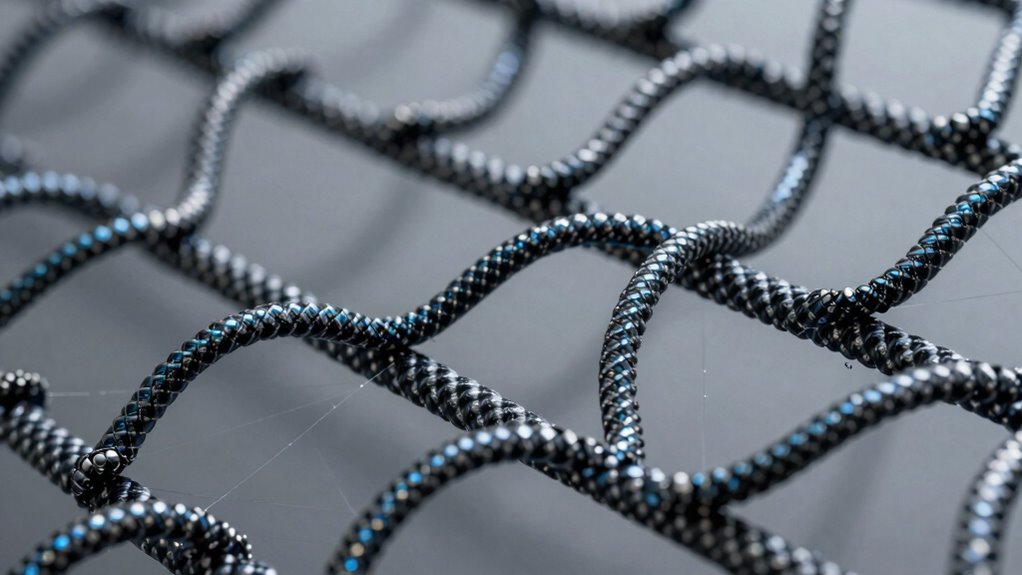

Carbon nanotubes are incredibly useful in advanced engineering because of their exceptional strength, electrical conductivity, and high aspect ratio, which allow them to reinforce materials and enable lighter, stronger structures. Their molecular structure makes them nearly 100 times stronger than steel on a per-weight basis, while their conductive properties open up new possibilities in electronics and sensors. Their versatility in manufacturing means they’re shaping innovations across industries. Keep exploring to discover how these tiny tubes are transforming technology.
Key Takeaways
- Exceptional electrical conductivity enables efficient signal transfer in flexible electronics and energy storage devices.
- High aspect ratio reinforces composite materials, making structures stronger and lighter.
- Superior mechanical strength, nearly 100 times that of steel, enhances durability in various applications.
- Versatility in manufacturing allows integration into polymers, metals, and ceramics for advanced functionalities.
- Ongoing research uncovers new uses in nanotechnology, sensors, and lightweight, high-performance components.
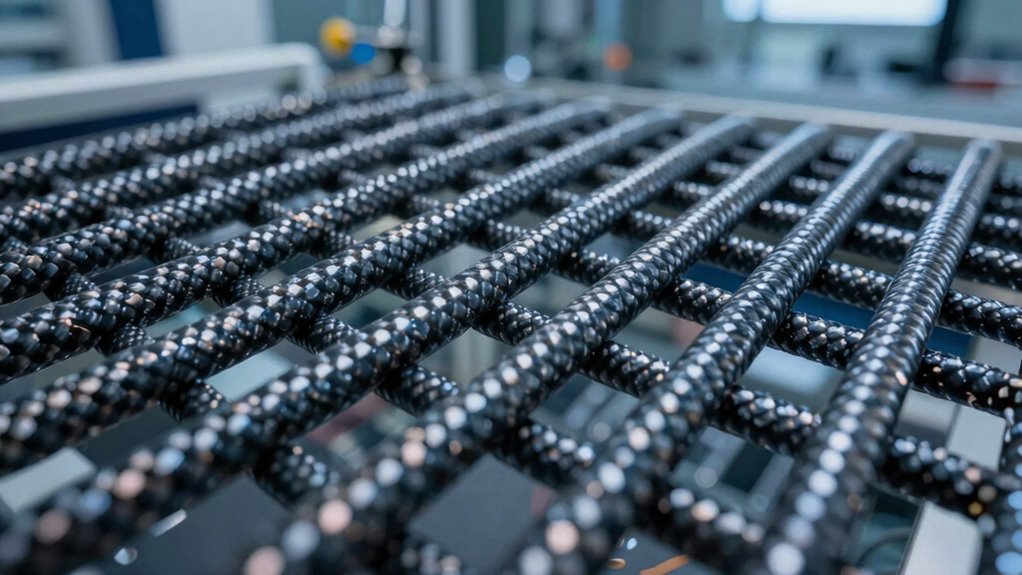
Have you ever wondered what makes carbon nanotubes such a game-changer in advanced engineering? The answer lies in their extraordinary properties, especially their electrical conductivity and mechanical strength. These tiny structures, just a few nanometers in diameter, pack a punch that surpasses many traditional materials. When you consider electrical conductivity, carbon nanotubes stand out because they can conduct electricity better than copper, with some types exhibiting metallic behavior. This means they can efficiently transfer electrical signals with minimal resistance, making them ideal for applications like flexible electronics, conductive films, and energy storage devices. Their high electrical conductivity allows for the development of lighter, more efficient components, which is essential in industries like aerospace and consumer electronics, where weight and performance are critical. Additionally, their high surface area enhances their effectiveness in catalytic and sensor applications, further broadening their utility.
Their high aspect ratio also contributes to their unique ability to reinforce composite materials, providing strength without significantly increasing weight. On the other hand, their mechanical strength is equally impressive. Despite their minuscule size, carbon nanotubes are incredibly strong—about 100 times stronger than steel on a per-weight basis. This strength stems from their unique molecular structure, where carbon atoms are arranged in a hexagonal lattice, creating a robust, resilient framework. When you incorporate carbon nanotubes into composites, you greatly enhance the material’s durability and flexibility without adding much weight. This strength-to-weight ratio opens doors for building stronger, lighter materials used in everything from sports equipment to structural components in vehicles and aircraft. Their resilience allows engineers like you to push the boundaries of design, creating structures that can withstand extreme forces and environments. Moreover, ongoing research into nanotechnology continues to unlock new ways to leverage these remarkable materials for innovative solutions.
Furthermore, the combination of high electrical conductivity and mechanical strength makes carbon nanotubes versatile. You can use them to develop advanced sensors, where their electrical properties change when exposed to various stimuli, or in nanotechnology, where their strength and conductivity are harnessed to build miniature devices. Manufacturing processes have evolved to embed these nanotubes into polymers, metals, and ceramics, expanding their utility across multiple sectors. Their ability to improve electrical and mechanical performance simultaneously makes them invaluable in creating next-generation materials.

Conductive PU Film Carbon nanotube Graphene Film electrically Heated Therapy Electrode Patch Anti-Static Pressure Sensitive Conductive (400 x 400 mm)
Conductive body: conductive carbon black/multi walled carbon nanotubes; Thickness 0.03-0.1mm; Weight 10-50g/m2; Far infrared emissivity 80-90%; Square resistance…
As an affiliate, we earn on qualifying purchases.
As an affiliate, we earn on qualifying purchases.
Frequently Asked Questions
How Are Carbon Nanotubes Produced on an Industrial Scale?
You produce carbon nanotubes on an industrial scale mainly through synthesis methods like chemical vapor deposition (CVD), which efficiently grow nanotubes on substrates. To guarantee consistent performance, you implement strict quality control measures, including characterization techniques like electron microscopy and spectroscopy. These steps help maintain high purity and uniformity, making the nanotubes suitable for advanced engineering applications where reliability and precision are essential.
What Are the Environmental Impacts of Manufacturing Carbon Nanotubes?
Manufacturing carbon nanotubes is like walking a tightrope, balancing progress and environmental impact. You should know that it releases environmental emissions, which may contribute to air and water pollution. Additionally, ecological toxicity concerns arise because some production processes involve hazardous chemicals. To minimize these effects, industries are exploring greener methods, but careful regulation and innovation are essential to prevent long-term ecological harm while harnessing nanotubes’ remarkable benefits.
Can Carbon Nanotubes Be Recycled or Reused Effectively?
You can recycle and reuse carbon nanotubes effectively through specialized recycling methods like chemical treatment or thermal processes that remove contaminants. Their reuse potential is high, especially in composite materials, electronics, and energy storage. Proper recycling helps reduce environmental impact and preserves their valuable properties. While challenges remain, ongoing research is making it increasingly feasible to reclaim and repurpose these versatile nanomaterials, promoting sustainable advanced engineering applications.
Are There Health Risks Associated With Handling Carbon Nanotubes?
You should be aware that occupational exposure to carbon nanotubes poses inhalation risks, with studies indicating potential respiratory issues among workers. About 15% of nanomaterials inhaled can reach deep into the lungs. Handling them without proper precautions increases health risks, so using protective gear and proper ventilation is essential. Always follow safety guidelines to minimize inhalation risks and protect your health when working with these advanced materials.
How Do Carbon Nanotubes Compare to Graphene in Engineering Applications?
You’ll find that carbon nanotubes excel in engineering applications due to their unique nanotube properties, like exceptional strength and electrical conductivity. Compared to graphene, nanotubes offer greater material versatility because they can be tailored into various shapes and structures, making them ideal for composite materials, electronics, and sensors. While graphene provides excellent surface area, nanotubes often outperform in strength and flexibility, making them indispensable for advanced engineering solutions.

Graphene Composite Powder XFNANO Carbon nanotubes Combined with high Quality Thin-Layer Graphene for Radiating and Antistatic Plastic Composite Black powder-10 Gram (Graphene Powder-Based)
Product name:Graphene composite powder
As an affiliate, we earn on qualifying purchases.
As an affiliate, we earn on qualifying purchases.
Conclusion
In the world of advanced engineering, carbon nanotubes gently whisper promises of innovation and strength. Their remarkable properties open doors to possibilities that once seemed out of reach. As you explore their potential, you’ll find these tiny structures quietly transforming ideas into reality. Embrace the subtle magic of nanotubes, and you’ll discover a future where your innovations are limited only by your imagination. The journey ahead is brighter with these tiny marvels guiding the way.

Research Grade Purity 95% Multi Walled Carbon Nanotubes Powder MWCNTs with Outer Diameter 10-20nm-Same Day Priority Shipping(10G)
Product Name: Multi-walled Carbon Nanotubes
As an affiliate, we earn on qualifying purchases.
As an affiliate, we earn on qualifying purchases.

Water Treatment Using Engineered Carbon Nanotubes (Micro and Nano Technologies)
As an affiliate, we earn on qualifying purchases.
As an affiliate, we earn on qualifying purchases.