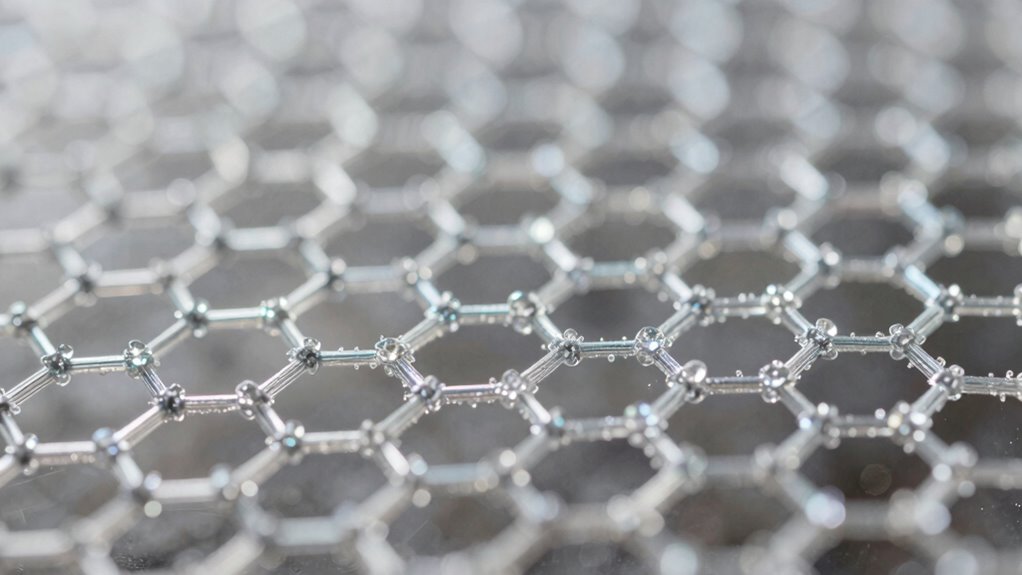

Nanoscale architecture affects how your material handles stress and flexibility by shaping how tiny building blocks connect and interact. When you manipulate these structures, you can make materials tougher, more flexible, or both. Adjusting size, shape, and arrangements creates pathways that evenly distribute force and reduce cracks. Introducing nanoscale defects or designing layered networks further boosts resilience. If you keep exploring, you’ll discover how strategic nano design can unleash new levels of durability and adaptability.

Get the latest gadgets delivered free with Prime
- Fast, free delivery on millions of items
- Prime Video, Amazon Music and more included
- Member-only deals all year
Key Takeaways
- Nanoscale arrangement determines how building blocks connect, affecting overall material strength and flexibility.
- Layered and interconnected nanostructures distribute stress evenly, enhancing toughness and preventing fractures.
- Adjusting nanostructure size and shape allows tuning of materials’ rigidity or flexibility.
- Incorporating nanoscale defects can improve toughness without compromising strength.
- Strategic nano design improves energy absorption and fatigue resistance, boosting durability and flexibility.
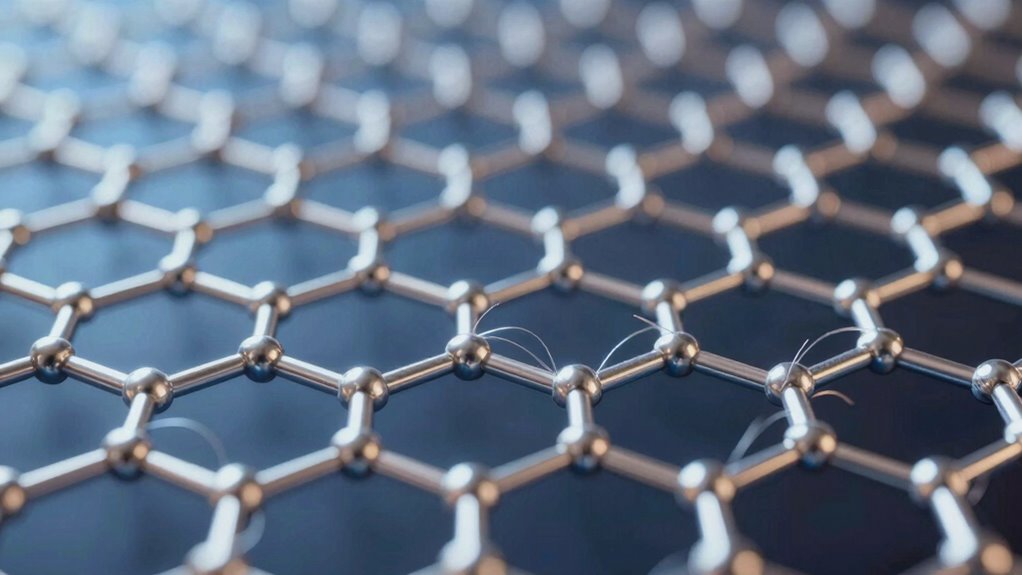
At the nanoscale, the arrangement of atoms and molecules plays an essential role in determining a material’s strength and durability. When you focus on nano structural design, you’re fundamentally shaping how these tiny building blocks connect and interact. These arrangements influence how a material responds to stress, strain, and external forces. By manipulating the nano architecture, you can enhance a material’s mechanical resilience—its ability to absorb shocks or recover from deformation without breaking.
Nano structural design enhances strength and resilience by shaping atomic connections and optimizing how materials respond to stress and external forces.
In nanoscale architecture, the way atoms are organized affects the density and bonding strength within the material. For example, designing materials with specific nanostructures like layered sheets or interconnected networks can notably boost their toughness. When you engineer these structures carefully, you create pathways that distribute stress more evenly, reducing the risk of cracks or fractures. This is particularly important in creating lightweight yet durable materials, where you want to maximize resilience without adding bulk.
Your control over nano structural design allows you to tune the mechanical properties precisely. For instance, by adjusting the size, shape, or arrangement of nanostructures, you can increase flexibility or rigidity based on your needs. In some cases, introducing nanoscale defects intentionally can improve toughness by preventing crack propagation, demonstrating how strategic design at this scale enhances overall resilience. These small modifications have outsized impacts because at the nanoscale, even minor changes ripple through the material’s entire structure.
Furthermore, nanoscale architecture influences how materials behave under repeated stress or fatigue. Materials with optimized nano structures can absorb energy more efficiently, making them suitable for applications where durability over time is critical. Additionally, material properties such as elasticity and hardness are directly affected by nanoscale design choices, allowing for further customization of performance. Materials with optimized nano structures can absorb energy more efficiently, making them suitable for applications where durability over time is critical. This is especially relevant in fields like aerospace, biomedical devices, and flexible electronics, where combining strength with flexibility is essential. By focusing on nano structural design, you craft materials that aren’t just strong but also adaptable, extending their lifespan and performance.
nanostructure reinforced composite materials
As an affiliate, we earn on qualifying purchases.
As an affiliate, we earn on qualifying purchases.
Frequently Asked Questions
How Does Nanoscale Architecture Affect Material Durability Over Time?
Nanoscale architecture greatly boosts your material’s durability over time through nano precision, which allows for highly controlled structures at the atomic level. This enhances structural resilience, making your materials better at resisting wear, fatigue, and environmental damage. As a result, they maintain their strength and flexibility longer, reducing the risk of failure. By optimizing nanoscale design, you guarantee your materials are more robust, adaptable, and capable of enduring demanding conditions over extended periods.
Can Nanoscale Design Improve Impact Resistance in Materials?
Yes, nanoscale design can markedly improve impact resistance in materials. By incorporating nano-enhanced structures, you create a more robust and resilient framework that absorbs and dissipates energy effectively. This enhances structural resilience, making the material better equipped to withstand sudden impacts without damage. Nanoscale architecture allows you to tailor properties precisely, leading to tougher, more durable materials suitable for demanding applications.
What Manufacturing Techniques Enable Precise Nanoscale Architecture?
You’d think nanotech magicians conjure perfect structures out of thin air, but they actually rely on self-assembly techniques and lithography methods. Self-assembly lets molecules organize themselves into desired patterns, saving time and effort, while lithography uses precise light or electron beams to carve nanoscale features. Together, these techniques enable you to create intricate, highly controlled nanoscale architectures that boost material properties, making your innovations both precise and powerful.
How Scalable Are Nanoscale Architectural Features for Industrial Use?
You’ll find that scaling nanoscale architectural features for industrial use faces significant scalability challenges. While techniques like self-assembly and advanced lithography are promising, they often encounter issues with maintaining precision at larger volumes. The cost implications are substantial, as high-precision equipment and processes are expensive. Overcoming these hurdles requires ongoing innovation to develop cost-effective, scalable methods that can produce consistent nanoscale features efficiently, making industrial application more feasible.
Do Nanoscale Structures Influence Environmental Sustainability of Materials?
Nanoscale structures considerably impact environmental sustainability by enabling the development of eco-friendly composites and renewable nanomaterials. You’ll find these innovations reduce the need for harmful chemicals and decrease overall material waste. By incorporating nanoscale architecture, you can create lightweight, durable, and environmentally friendly materials that lower carbon footprints and support sustainable practices. This approach promotes greener manufacturing processes and helps you contribute to a more sustainable future.
flexible nanomaterials for electronics
As an affiliate, we earn on qualifying purchases.
As an affiliate, we earn on qualifying purchases.
Conclusion
By understanding nanoscale architecture, you reveal the secret dance between strength and flexibility, like a master weaver threading resilience into delicate fabric. This intricate design weaves harmony at the tiniest levels, turning potential into power. As you explore these tiny structures, remember they’re the backbone of innovation, shaping materials that bend without breaking and stand tall against forces. Embrace these nanoscale marvels—where science’s brush strokes craft the future’s resilient masterpiece.
nano engineered toughness materials
As an affiliate, we earn on qualifying purchases.
As an affiliate, we earn on qualifying purchases.
As an affiliate, we earn on qualifying purchases.
Halloween Picks
halloween
As an affiliate, we earn on qualifying purchases.