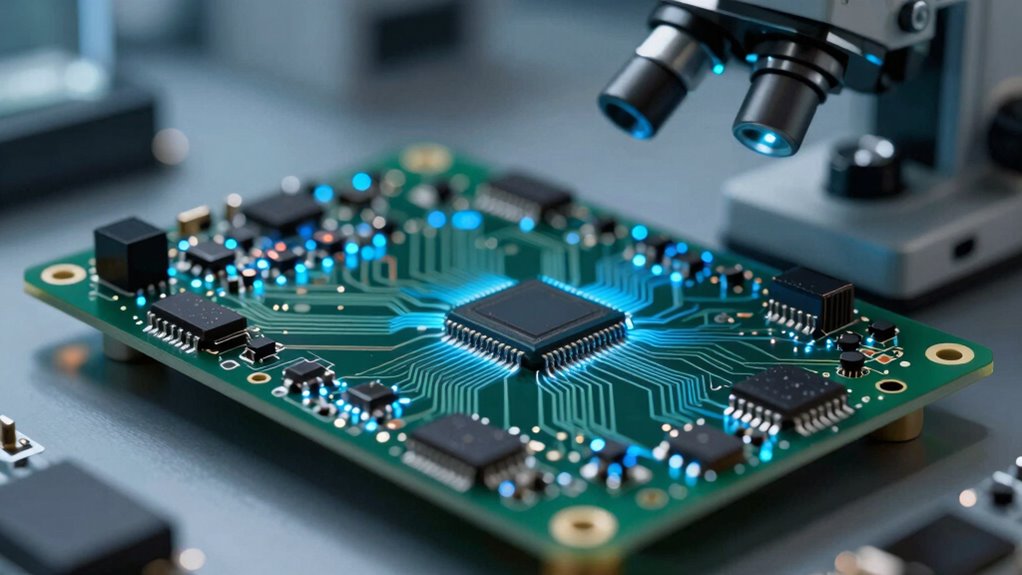

Nanotechnology helps you build smaller, more energy-efficient electronics by allowing precise control over materials and fabrications. It enables the creation of ultra-compact components that run at lower voltages and consume less power. Nanomaterials like nanowires and nanotubes improve energy harvesting and storage, making devices more sustainable and longer-lasting. Understanding quantum effects, such as tunneling, further enhances device performance while reducing power leakage. Stay here to discover how these advancements can transform your electronic experiences.

Get the latest gadgets delivered free with Prime
- Fast, free delivery on millions of items
- Prime Video, Amazon Music and more included
- Member-only deals all year
Key Takeaways
- Nanotechnology enables the creation of smaller, energy-efficient components that reduce power consumption in electronic devices.
- Precise control over nanomaterials enhances device performance while minimizing energy needs.
- Quantum tunneling in nanodevices can be managed to lower power leakage and improve switching efficiency.
- Energy-harvesting nanomaterials support self-sustaining electronics with reduced reliance on external power sources.
- Advanced nanofabrication techniques improve device scalability and reduce size, promoting more efficient low-power electronics.
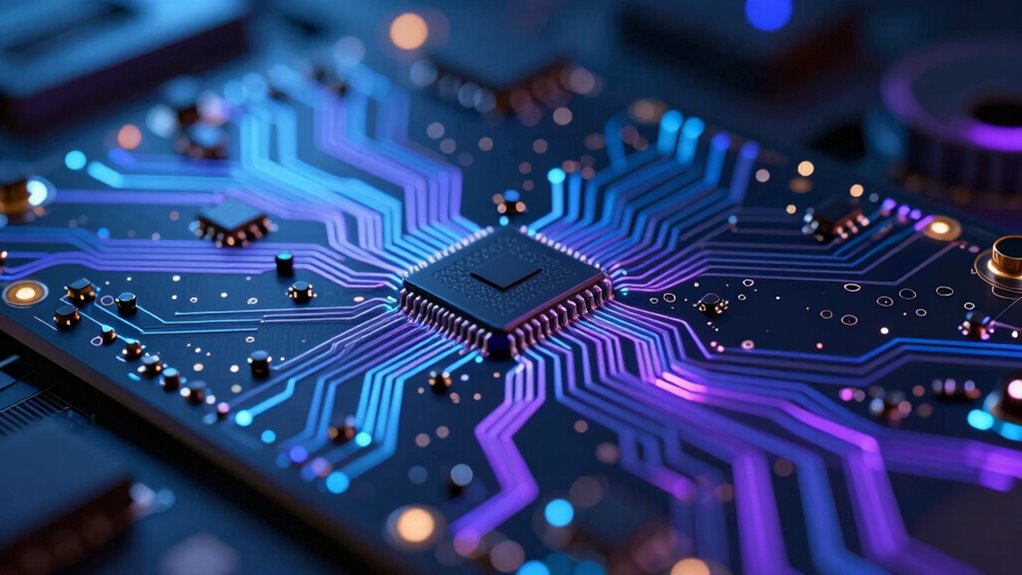
Nanotechnology is revolutionizing the design of low-power electronics by enabling the creation of smaller, more efficient components. With this leap forward, you can expect devices that consume less energy while maintaining high performance. One of the key breakthroughs in this field involves understanding and harnessing quantum tunneling—a phenomenon where particles pass through barriers that classical physics would deem impenetrable. In tiny nanodevices, quantum tunneling can be both a challenge and an opportunity. Engineers are exploring how to control this effect to improve the switching behavior of transistors, reducing power leakage and increasing overall efficiency. Instead of fighting quantum tunneling, you can leverage it to develop ultra-compact components that operate at lower voltages, conserving energy without sacrificing speed. Additionally, advances in nanofabrication allow precise control over material properties, optimizing device performance further. Nanomaterials like nanowires and nanotubes are particularly suited for energy harvesting because of their high surface area and exceptional electrical properties. For example, nanogenerators can convert mechanical vibrations into electrical energy, allowing your devices to sustain themselves in remote or hard-to-access locations. These innovations mean your electronics could run continuously without frequent charging or battery replacements, making them more sustainable and cost-effective in the long run. Furthermore, nanotech enables you to develop integrated energy harvesting and storage systems. By embedding nanomaterials into microchips, you can create self-sustaining systems that harvest energy and store it efficiently within the same device. This integration reduces size and complexity, paving the way for smarter, more autonomous gadgets. Advances in nanofabrication allow precise control over material properties, so you can optimize devices for maximum energy conversion and minimal power loss. As a result, your low-power electronics become more reliable and longer-lasting, even in energy-scarce environments. Understanding quantum effects is crucial for harnessing the full potential of nanotech in electronics. In essence, nanotechnology is shaping a future where your electronic devices are smaller, smarter, and more energy-efficient. Quantum tunneling, once a hurdle, now offers new pathways to miniaturization, while energy harvesting guarantees your devices can operate without constant external power. Exploring material properties further can unlock even more innovative applications in this field. For instance, the development of novel nanomaterials with tailored electrical characteristics can significantly enhance device performance and energy efficiency. Incorporating advanced fabrication techniques can further improve the precision and scalability of nanodevices, opening up new possibilities for innovation. The ongoing research in nanostructure design continues to push the boundaries of what’s achievable in low-power electronics, promising even more groundbreaking solutions in the near future. By embracing these innovations, you’re stepping into a world where low-power electronics are not only more sustainable but also more capable than ever before.
nanotech energy harvesting devices
As an affiliate, we earn on qualifying purchases.
As an affiliate, we earn on qualifying purchases.
Frequently Asked Questions
How Does Nanotech Improve Energy Efficiency in Electronic Devices?
Nanotech improves energy efficiency in electronic devices by leveraging quantum effects and material miniaturization. You benefit from smaller, more efficient components that consume less power, thanks to quantum effects that enable faster switching and reduced energy loss. Material miniaturization allows for denser, more capable circuits, which reduce overall energy consumption. This combination results in devices that operate more efficiently, last longer, and generate less heat, making your electronics smarter and greener.
What Are the Environmental Impacts of Nanomaterials in Electronics?
You’re stepping into a world where nanomaterials in electronics can pose environmental risks. Their potential for environmental toxicity raises concerns, especially if these tiny components leak harmful substances. Recycling challenges also loom large, making it tricky to dispose of or reuse nanotech-enabled devices responsibly. While nanotech offers great benefits, you should be aware of these impacts to guarantee sustainable innovation. It’s a case of weighing progress against environmental responsibility.
Can Nanotech-Enabled Low-Power Devices Be Manufactured at Scale?
Yes, nanotech-enabled low-power devices can be manufactured at scale, but you’ll face scalability challenges and higher manufacturing costs. Overcoming these hurdles involves developing cost-effective production techniques and improving process consistency. As technology advances, you’ll likely see economies of scale reduce costs, making mass production more feasible. Continued research and innovation are essential for shifting nanotech-enhanced low-power electronics from lab prototypes to widespread commercial use.
How Durable Are Nanotech-Based Electronic Components Over Time?
Nanotech-based electronic components are as resilient as they are innovative, but their durability depends heavily on material longevity and degradation mechanisms. You might wonder if they stand the test of time—often, they do, but exposure to environmental factors can accelerate wear. Understanding these mechanisms helps you improve nanomaterials, ensuring your devices last longer. With ongoing research, you can expect nanotech components to become increasingly durable, promising reliable performance over years.
What Are the Current Limitations of Nanotechnology in Electronics?
You should know that current limitations of nanotechnology in electronics include quantum tunneling, which causes unwanted leakage currents at very small scales, and challenges with nano doping, where precise doping becomes difficult due to size constraints. These issues hinder device reliability and scalability. Overcoming these hurdles requires advancements in fabrication techniques and a deeper understanding of quantum effects, so progress may be slow but promising in enhancing nanotech applications.
low power nanomaterials for electronics
As an affiliate, we earn on qualifying purchases.
As an affiliate, we earn on qualifying purchases.
Conclusion
By harnessing nanotech, you can create low-power electronics that are more efficient and longer-lasting. Some might worry about complexity or cost, but advances are making nanotech more accessible and affordable. Embracing these innovations today means you’ll benefit from smarter, eco-friendly devices tomorrow. Don’t let concerns hold you back—nanotech offers practical solutions that can revolutionize your electronics while reducing energy consumption. The future of low-power tech is within your reach, so get ready to lead the way.
As an affiliate, we earn on qualifying purchases.
nanowire energy storage components
As an affiliate, we earn on qualifying purchases.
As an affiliate, we earn on qualifying purchases.
Halloween Picks
halloween
As an affiliate, we earn on qualifying purchases.