

Nanomaterials like graphene, carbon nanotubes, and quantum dots are transforming brain–machine interfaces by providing highly conductive, flexible, and biocompatible tools. They increase signal sensitivity, reduce device size, and support minimally invasive designs. Advances in nanoscale fabrication improve stability and integration with neural tissue. While promising, challenges remain in ensuring long-term safety and overcoming biological responses. If you explore further, you’ll discover the breakthroughs shaping future neural technologies.
Key Takeaways
- Nanomaterials like graphene, carbon nanotubes, and quantum dots enhance neural interface conductivity, flexibility, and signal detection accuracy.
- Precise nanofabrication techniques improve the development of minimally invasive, high-performance brain–machine interface probes.
- Surface modifications of nanomaterials increase biocompatibility, reduce immune responses, and promote neural tissue integration.
- Nanostructured electrodes offer increased surface area, leading to stronger neural signals and improved device efficiency.
- Challenges include ensuring long-term stability, biocompatibility, and addressing ethical and regulatory considerations in neural nanomaterials.
graphene neural interface electrodes
As an affiliate, we earn on qualifying purchases.
As an affiliate, we earn on qualifying purchases.
Types of Nanomaterials Used in Neural Interfaces

Nanomaterials have become essential in developing advanced neural interfaces because their unique properties enable better interaction with neural tissue. Quantum effects play a significant role, allowing materials like graphene and carbon nanotubes to exhibit exceptional electrical conductivity and flexibility, which are vital for neural signal transmission. Material synthesis techniques, such as chemical vapor deposition, enable precise control over nanomaterial structures, ensuring they meet specific biocompatibility and performance requirements. These methods produce materials with tailored surface properties that enhance neural interfacing and minimize tissue response. Different nanomaterials, including metallic nanoparticles, quantum dots, and nanowires, are used based on their distinct quantum effects and synthesis methods, offering a versatile toolkit to improve neural interface design and functionality. Additionally, understanding the dynamics of tissue response is crucial for optimizing nanomaterials to reduce inflammation and improve long-term stability of neural interfaces.
carbon nanotube brain-machine interface probes
As an affiliate, we earn on qualifying purchases.
As an affiliate, we earn on qualifying purchases.
Enhancing Signal Detection With Nanostructured Electrodes

Nanostructured electrodes increase the surface area, allowing for more efficient interaction with neural signals. This expanded interface enhances electrical conductivity, leading to clearer and stronger signal detection. By optimizing these features, you can markedly improve brain–machine communication accuracy. Incorporating pressure relief features can further improve the quality of signal detection by reducing noise caused by physical strain.
Increased Surface Area
Have you ever wondered how tiny modifications at the nanoscale can dramatically improve brain–machine interfaces? Increasing the surface area of electrodes is key. Nanostructured materials provide:
- Enhanced surface chemistry for better interaction with neural tissue, improving signal quality.
- Greater mechanical properties that allow electrodes to withstand brain movements without damage.
- More contact points that boost signal detection capabilities.
Improved Electrical Conductivity
Enhancing electrical conductivity is essential for improving the performance of brain–machine interfaces. Nanostructured electrodes leverage quantum effects to notably boost conductivity, allowing for more precise signal detection. These effects enable electrons to move more efficiently across the electrode surface, reducing resistance and noise. Additionally, nanomaterials like graphene and carbon nanotubes offer excellent mechanical strength, ensuring durability during implantation and operation. This robustness maintains consistent conductivity over time and under mechanical stress. By combining quantum effects with high mechanical strength, nanomaterials create electrodes that deliver clearer, more reliable signals. This advancement improves the interface’s sensitivity and stability, ultimately enabling more accurate and responsive brain–machine interactions.
quantum dot neural sensors
As an affiliate, we earn on qualifying purchases.
As an affiliate, we earn on qualifying purchases.
Biocompatibility and Safety Considerations of Nanomaterials

As you consider nanomaterials for brain–machine interfaces, understanding their toxicity and how your body responds is vital. Long-term stability remains a challenge, affecting both safety and device performance over time. Additionally, ethical and regulatory issues must be addressed to guarantee responsible development and use of these technologies. Material stability is crucial for ensuring consistent device operation and minimizing potential health risks over extended periods.
Toxicity and Biological Response
Understanding the toxicity and biological response of nanomaterials is essential for their safe integration into brain–machine interfaces. Your focus should be on how these materials interact with biological systems, especially regarding nanomaterial biodegradation and immune response. Consider these key points:
- The rate of nanomaterial biodegradation influences how long they persist and potential toxicity.
- The immune response can lead to inflammation or rejection, impacting device performance.
- Surface modifications can help minimize adverse reactions and improve biocompatibility.
Long-term Stability Challenges
Ensuring the long-term stability of nanomaterials in brain–machine interfaces remains a significant challenge due to their dynamic biological environment. You need to consider biocompatibility testing to guarantee nanomaterials don’t trigger adverse responses over time. Long-term durability is critical; nanomaterials must withstand biological conditions without degrading or causing harm. Factors like immune responses, protein adsorption, and mechanical stress can compromise stability. To help you understand, here’s a quick comparison:
| Aspect | Focus |
|---|---|
| Biocompatibility | Ensuring materials don’t harm surrounding tissue |
| Long-term durability | Maintaining functionality over extended periods |
| Degradation risks | Potential breakdown and release of harmful substances |
| Testing methods | In vivo and in vitro biocompatibility assessments |
Ethical and Regulatory Aspects
The integration of nanomaterials into brain–machine interfaces raises critical ethical and regulatory concerns centered on biocompatibility and safety. You need to contemplate potential risks, such as immune responses or toxicity, which could compromise user well-being. Key issues include:
- Privacy concerns: Nanomaterials may enable unprecedented data collection, risking user privacy if data security isn’t robust.
- Informed consent: Users must fully understand the risks tied to nanomaterial-based interfaces before agreeing to their use.
- Regulatory oversight: Establishing clear standards is essential to ensure safe deployment and prevent misuse or unintended harm.
Addressing these concerns helps protect individuals and promotes responsible innovation, balancing technological advances with ethical integrity.
nanostructured neural electrodes
As an affiliate, we earn on qualifying purchases.
As an affiliate, we earn on qualifying purchases.
Innovations in Nanoscale Fabrication for Brain Interfaces
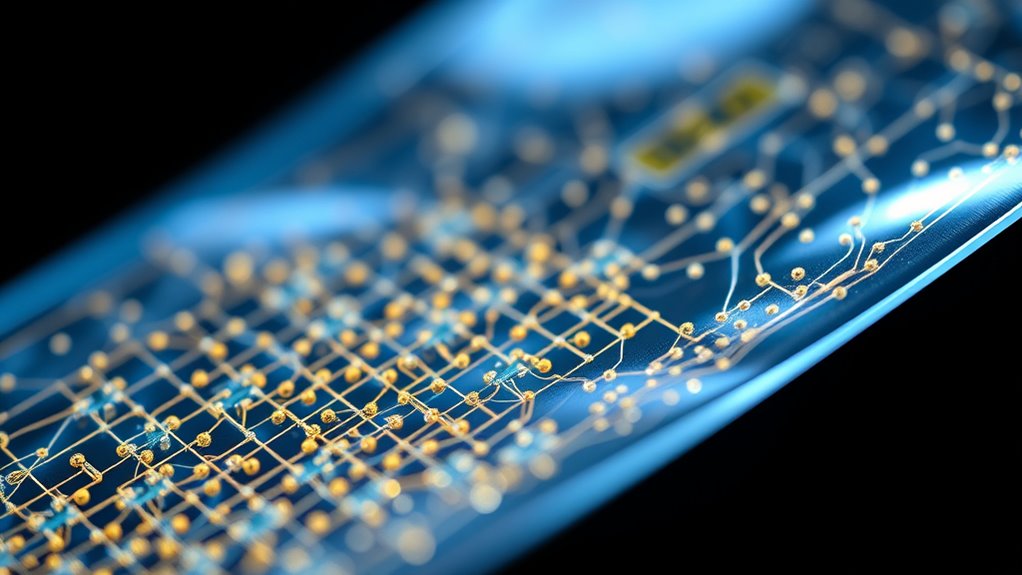
Recent advances in nanoscale fabrication have revolutionized the development of brain–machine interfaces by enabling the creation of highly precise and minimally invasive neural probes. You can now leverage innovative nanomaterial synthesis methods to produce materials with tailored electrical and biocompatible properties. Surface modification techniques further enhance these probes by improving their integration with neural tissue, reducing immune responses, and increasing stability. These innovations allow for the fabrication of ultra-small, flexible, and durable devices capable of recording neural signals with unprecedented accuracy. As a result, brain interfaces become more reliable and less invasive, opening new possibilities for real-time monitoring and modulation of brain activity. This progress paves the way for next-generation neural interfaces that are both highly functional and biocompatible. Additionally, understanding dog behavior and companionship can inform the development of more intuitive and responsive neural interfaces tailored to individual needs.
Challenges in Integrating Nanomaterials With Neural Tissue
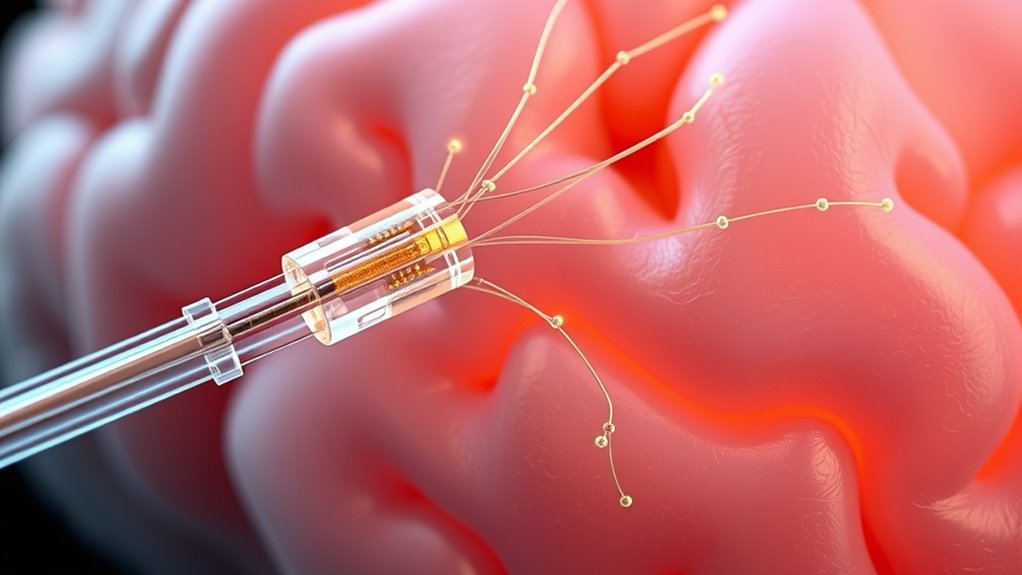
Integrating nanomaterials with neural tissue presents significant challenges because these materials often provoke immune responses and struggle to form stable interfaces with complex biological environments. You must consider how neural plasticity can alter the interface over time, impacting device stability. Ensuring material biocompatibility is *vital*, as incompatible materials can cause inflammation or tissue damage, hindering long-term functionality. Moreover, the choice of projector technology can influence the precision of neural signal detection and stimulation, highlighting the importance of selecting suitable materials for seamless integration.
Integrating nanomaterials with neural tissue requires biocompatibility and stability amid neural plasticity.
Key challenges include: 1. Minimizing immune reactions to improve neural tissue compatibility. 2. Maintaining stable contacts despite neural plasticity-induced changes. 3. Developing materials that adapt to dynamic biological environments without losing functionality.
Overcoming these obstacles is essential to create durable, seamless nanomaterial-based brain–machine interfaces that interact effectively with neural tissue.
Future Directions and Emerging Technologies in Nanomaterial-Based BMIs
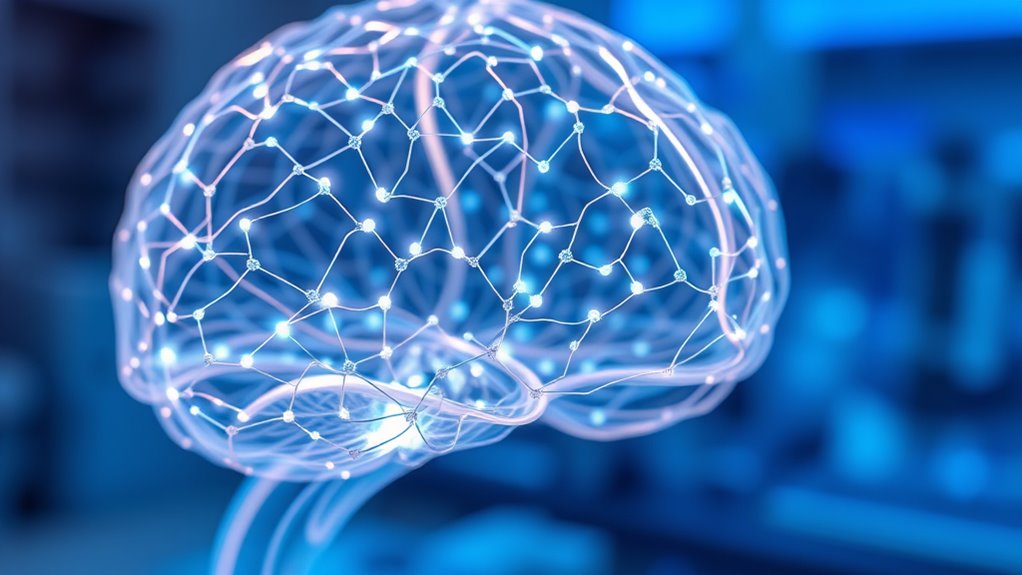
Advancements in nanomaterials are opening new avenues for brain–machine interfaces (BMIs), promising more durable and biocompatible solutions. Emerging technologies like quantum computing could revolutionize data processing, enabling faster, more efficient neural decoding. You might see nanomaterials facilitating seamless neural network integration, allowing BMIs to interpret complex brain signals with higher accuracy. These innovations could lead to more adaptive, real-time interfaces that better mimic natural brain functions. Researchers are also exploring hybrid systems combining nanomaterials with quantum sensors to enhance signal sensitivity. Future developments aim to reduce device size while increasing performance, making BMIs more accessible and user-friendly. The integration of nanoscience techniques into BMI development is expected to further improve device stability and longevity. These emerging technologies hold the potential to transform neural interfaces, pushing the boundaries of current capabilities and opening new possibilities for brain health and augmentation.
Ethical and Regulatory Aspects of Nanomaterial-Driven Neural Devices
As nanomaterial-driven neural devices become more prevalent, addressing their ethical and regulatory implications becomes essential to guarantee responsible development and use. You must consider issues like privacy concerns, as these devices can access sensitive brain data. Ensuring informed consent is critical, especially when users may not fully understand the risks involved. Regulatory frameworks need to keep pace with technological advances to prevent misuse and protect user rights. Incorporating sound design principles can also aid in creating transparent and user-friendly interfaces for these devices.
Frequently Asked Questions
How Do Nanomaterials Affect Long-Term Neural Tissue Stability?
Nanomaterials improve long-term neural tissue stability by offering enhanced biocompatibility, reducing immune responses, and promoting better integration with brain tissue. However, you need to contemplate biocompatibility concerns, as some nanomaterials may cause inflammation or toxicity over time. Material degradation is also critical; if nanomaterials break down improperly, they could compromise device performance or harm tissue. Careful design and testing help guarantee stability and safety in long-term applications.
What Are the Costs Associated With Nanomaterial-Based Brain Interfaces?
You should consider that nanomaterial-based brain interfaces involve significant costs, including extensive cost analysis to develop and produce them. Regulatory challenges also add to expenses, as obtaining approval requires rigorous testing and compliance with safety standards. Additionally, ongoing maintenance and potential risks can increase overall costs. While these interfaces offer promising benefits, understanding these financial and regulatory hurdles is essential for realistic implementation and funding strategies.
Can Nanomaterials Be Used to Target Specific Neuron Types?
Yes, nanomaterials can be used to target specific neuron types through selective targeting, leveraging their unique properties. You can functionalize nanomaterials with molecules that bind to particular neuron markers, achieving neuron specificity. This approach allows you to precisely modulate or monitor specific neurons, enhancing brain–machine interface applications. By tuning nanomaterial properties, you improve accuracy and reduce off-target effects, making your neural interventions more effective and safer.
How Do Nanomaterials Influence Neural Plasticity?
Sure, nanomaterials magically boost neural plasticity by enhancing conductivity and promoting neural regeneration, right? In reality, their high conductivity allows better electrical signals, encouraging neurons to form new connections. By supporting neural regeneration, they help repair damaged pathways, making your brain more adaptable. So, while it sounds like sci-fi, nanomaterials genuinely influence neural plasticity, giving your brain a futuristic upgrade—no time machine needed.
Are There Environmental Impacts From Manufacturing Nanomaterials for BMIS?
You should know that manufacturing nanomaterials for BMIs can pose environmental concerns, mainly due to manufacturing emissions that release toxic chemicals and nanoparticles into the environment. These emissions may affect air and water quality, harming ecosystems and human health. It’s crucial to implement stricter regulations and develop greener manufacturing processes to minimize these environmental impacts and guarantee sustainable innovation in nanomaterials for brain–machine interfaces.
Conclusion
As you explore nanomaterials for brain–machine interfaces, remember that pushing the boundaries is like walking a tightrope. While innovations promise incredible breakthroughs, you need to balance progress with safety and ethics. By staying informed and cautious, you’ll help guarantee these cutting-edge technologies don’t go off the rails. Ultimately, with careful navigation, nanomaterials can open new horizons in neural interfacing, turning science fiction into reality without losing sight of the bigger picture.