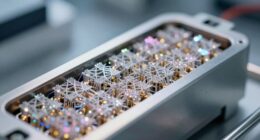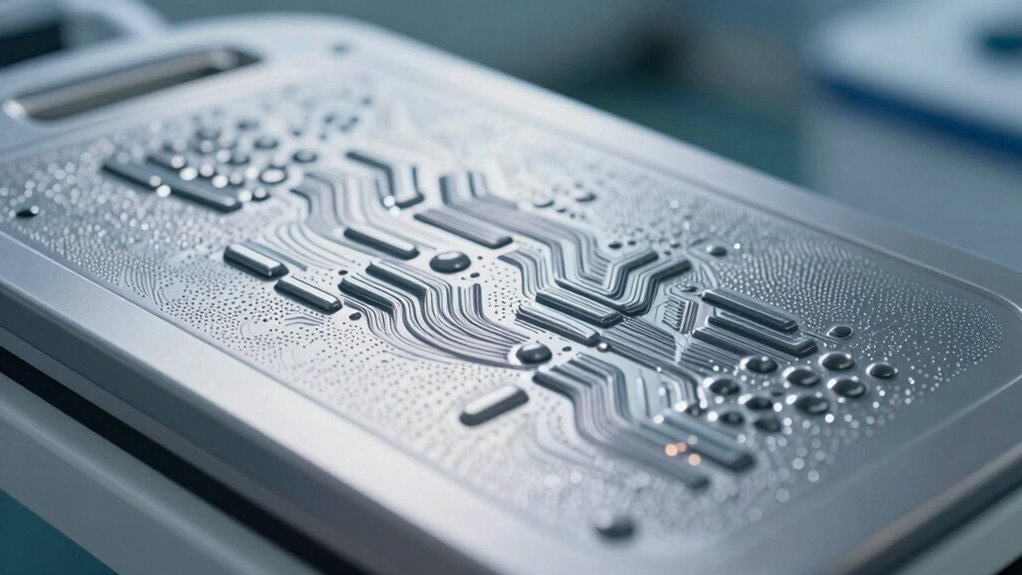

Nanoengineered surfaces can transform medical devices by giving you precise control over how they interact with the body. By customizing surface nanostructures and chemistry, you can reduce infections, improve drug delivery, and promote better tissue integration. These advanced surfaces also make devices safer and more effective, adapting to specific needs. If you want to discover how these innovations are shaping the future of healthcare, there’s more to explore.
Key Takeaways
- Nanoengineered surfaces enable precise control over biological interactions, improving device integration and functionality.
- Surface nanostructuring can prevent bacterial adhesion, reducing infections and biofilm formation on medical devices.
- Modifiable surface chemistry and topography allow customization for enhanced biocompatibility and targeted drug delivery.
- Advanced manufacturing techniques facilitate scalable production of consistent, personalized nanoengineered medical surfaces.
- Surface modifications improve device performance, safety, and longevity through optimized tissue integration and biointerface interactions.
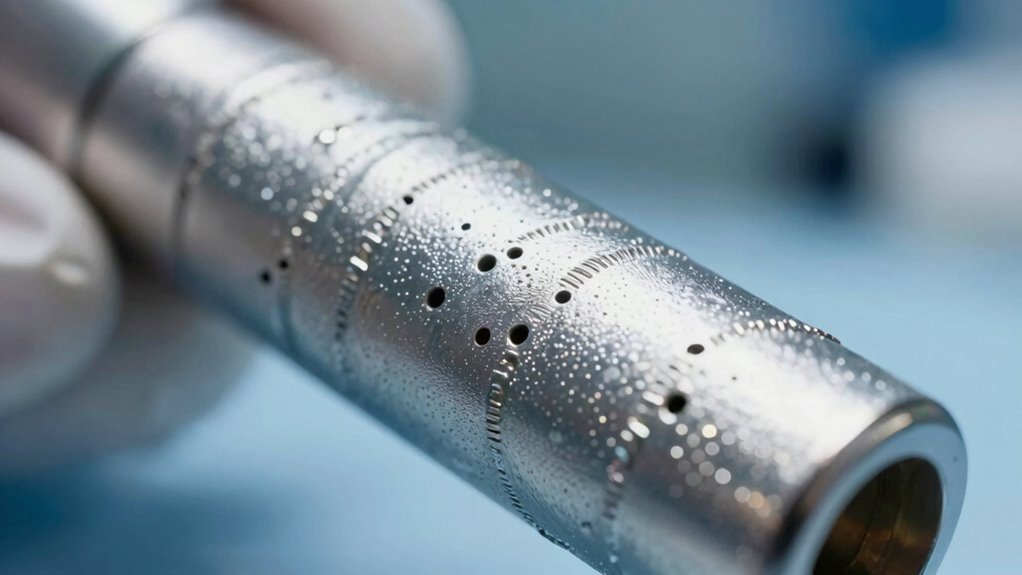
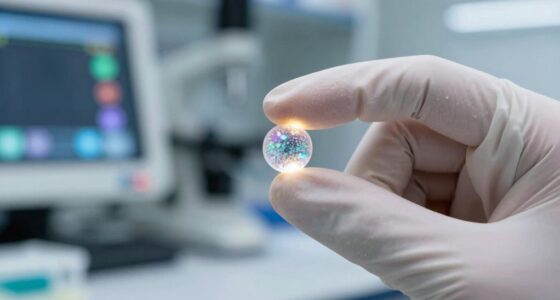
Nanotechnology has revolutionized the design of medical devices by enabling the creation of nanoengineered surfaces that interact more effectively with biological systems. These advanced surfaces are tailored at the nanoscale, allowing you to control how materials engage with cells, tissues, and fluids. One key aspect of this innovation is how nanoparticle adhesion is managed on these surfaces. By manipulating surface features at the nanometer level, you can either promote or inhibit the attachment of nanoparticles, which is essential for applications like targeted drug delivery or preventing biofilm formation. For example, reducing nanoparticle adhesion can minimize the risk of device-associated infections, while enhancing it might improve the efficiency of drug-loaded nanoparticles sticking to specific tissues.
Nanoengineered surfaces control nanoparticle adhesion to enhance drug delivery and prevent infections.
Surface hydrophobicity plays a significant role here, as it influences how biological fluids interact with the device. If a surface is hydrophobic, it repels water and aqueous solutions, which can be advantageous for preventing bacterial colonization or biofilm development. Conversely, increasing surface hydrophilicity might enhance compatibility with blood or tissue fluids, reducing inflammation or clotting risks. As you design these surfaces, you can fine-tune hydrophobicity levels to match the intended medical application, optimizing device performance and longevity. Additionally, understanding the importance of surface nanostructure can help in designing surfaces that better interact with biological environments. The ability to precisely control nanoscale features enables customization for specific medical needs. Furthermore, advancements in surface manufacturing techniques allow for more consistent and scalable production of these nanoengineered surfaces, facilitating their transition from research to clinical use.
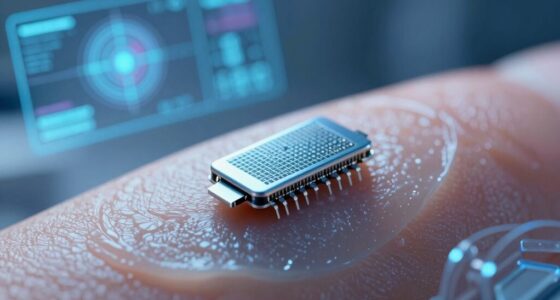
The power of nanoengineering lies in its ability to modify surface topography and chemistry at an extremely precise level. By creating nano-textured surfaces, you can alter how fluids spread across the device, affecting nanoparticle adhesion and overall biocompatibility. For instance, a roughened, hydrophobic surface can discourage bacterial adhesion while still allowing beneficial cell growth. Alternatively, coating surfaces with specific nanomaterials can enhance nanoparticle interactions, making drug delivery more efficient or enabling real-time sensing of biological markers. This level of design precision can lead to personalized medical devices that better suit individual patient needs. Moreover, advances in surface manufacturing techniques allow for scalable production of these sophisticated surfaces, bringing these innovations closer to widespread clinical use. Recognizing how surface properties influence biological responses is crucial for developing next-generation implants and sensors.
This precise control over surface properties opens the door to a new generation of medical devices that are smarter, safer, and more personalized. Whether you’re aiming to reduce infection risk, improve tissue integration, or deliver drugs more effectively, nanoengineered surfaces give you the tools to tailor interactions at the biological interface. Ultimately, by understanding and manipulating nanoparticle adhesion and surface hydrophobicity, you can develop devices that not only perform better but also adapt seamlessly to the complex environment of the human body.
nanoengineered medical device surfaces
As an affiliate, we earn on qualifying purchases.
As an affiliate, we earn on qualifying purchases.
Frequently Asked Questions
How Durable Are Nanoengineered Surfaces Under Long-Term Use?
Nanoengineered surfaces are generally quite durable under long-term use, thanks to their enhanced surface adhesion and mechanical stability. You’ll find that these surfaces resist wear and tear better than traditional ones, maintaining their properties over time. However, their durability can depend on the specific material and application. Proper design and protective coatings help guarantee they withstand the rigors of medical environments, offering reliable performance for extended periods.
Are Nanoengineered Surfaces Safe for Human Contact?
Nanoengineered surfaces are generally safe for human contact, but you should consider biocompatibility concerns and regulatory challenges. These surfaces are designed to minimize adverse reactions, but thorough testing is essential to guarantee safety. Regulatory agencies require extensive data before approving such devices, so ongoing research and strict standards help address potential risks. Overall, with proper evaluation, nanoengineered surfaces can be safely integrated into medical devices.
What Are the Manufacturing Costs of Nanoengineered Medical Devices?
You might think nanoengineering costs are sky-high, but in reality, once you factor in cost efficiency and production scalability, they become more manageable. While initial investments can be steep, advancements in manufacturing processes are bringing costs down. Over time, as production scales up, the expense per device drops, making these innovative surfaces not just feasible but also economically attractive for widespread medical use.
How Do Nanoengineered Surfaces Affect Device Sterilization?
Nanoengineered surfaces enhance device sterilization by reducing surface adhesion and increasing bacterial resistance. You’ll find that bacteria struggle to stick to these surfaces, making it easier to clean and disinfect medical devices thoroughly. This minimizes infection risks and shortens sterilization times. By disrupting bacterial attachment, nanoengineered surfaces improve overall sterilization efficiency, ensuring safer medical environments and better patient outcomes.
Can Nanoengineering Be Customized for Specific Medical Applications?
Yes, you can customize nanoengineering for specific medical applications by tailoring nanoparticle coatings and surface topography. By adjusting nanoparticle size, composition, and distribution, you enhance biocompatibility or antimicrobial properties. Modifying surface topography influences cell adhesion and tissue integration. This precise control allows you to design surfaces suited for implants, sensors, or drug delivery systems, ultimately improving device performance and patient outcomes.

Bioactive Coatings for Implantable Devices
As an affiliate, we earn on qualifying purchases.
As an affiliate, we earn on qualifying purchases.
Conclusion
You might not realize it, but the tiny details on a surface could unexpectedly change your healthcare experience. Nanoengineered surfaces, designed at the smallest scale, could make implants safer, reduce infections, and improve device longevity—all just by chance discoveries paving the way. As these innovations unfold, you could find yourself benefiting from smarter, more reliable medical devices that seem almost like a coincidence of science and necessity. It’s an exciting coincidence that could transform your future care.

Drug-Loaded Colloidal Systems in Nanomedicine II
As an affiliate, we earn on qualifying purchases.
As an affiliate, we earn on qualifying purchases.
biocompatible nano surface treatments
As an affiliate, we earn on qualifying purchases.
As an affiliate, we earn on qualifying purchases.