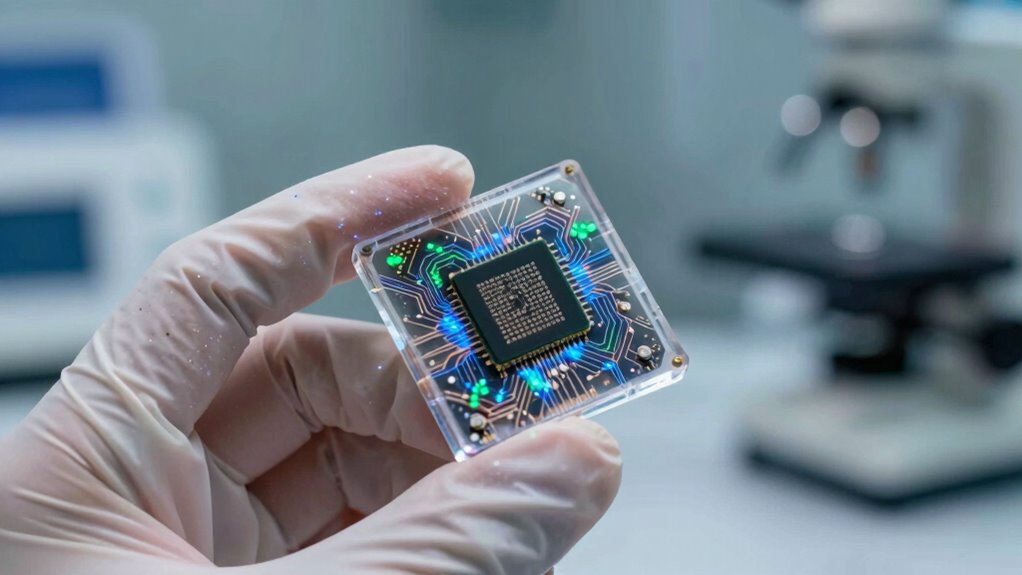

Nano materials could matter more in future medical testing because they enable faster, more precise, and less invasive diagnostics. They can detect diseases early, often before symptoms show, by targeting specific biomarkers. Advances in nanoparticle safety and targeting improve test accuracy and reduce false results. These innovations also support real-time health monitoring and personalized care. If you want to discover how these materials could transform healthcare, there’s more to explore.

Get the latest gadgets delivered free with Prime
- Fast, free delivery on millions of items
- Prime Video, Amazon Music and more included
- Member-only deals all year
Key Takeaways
- Nanomaterials enable highly specific targeting of biomarkers, improving diagnostic accuracy and early disease detection.
- Advances in nanoparticle synthesis enhance safety, making future diagnostics more effective and less invasive.
- Nanomaterials support real-time health monitoring and personalized medicine through continuous data collection.
- Improved imaging contrast ratios with nanomaterials provide clearer, deeper diagnostic visuals.
- Balancing innovation with safety concerns ensures the responsible integration of nanomaterials in future medical testing.

Nanomaterials are poised to revolutionize medical testing by enabling more precise, faster, and less invasive diagnostics. As these tiny materials continue to be developed, their potential to transform healthcare becomes increasingly clear. Nano enabled diagnostics offer the chance to detect diseases at much earlier stages, sometimes even before symptoms appear. This early detection can save lives and improve treatment outcomes markedly. However, as you explore this promising field, it’s essential to consider the potential risks, especially concerning nanoparticle toxicity. When nanoparticles are used in medical applications, understanding how they interact with the human body is vital. While they can improve diagnostic accuracy, there’s a concern about unintended adverse effects, such as toxicity or long-term accumulation in tissues. Researchers are actively working to design safer nanoparticles, but this remains an important factor in the development of future diagnostics. Additionally, understanding the contrast ratio in imaging can significantly enhance the clarity and depth of diagnostic visuals, further improving accuracy and detection capabilities.
Despite these concerns, the advantages of nano enabled diagnostics are compelling. Their small size allows them to target specific cells or molecules with extraordinary precision. For example, nanoparticles can be engineered to bind to biomarkers associated with cancer, infections, or genetic disorders, enabling highly specific tests. This level of accuracy reduces false positives and negatives, leading to more trustworthy results. Additionally, because these tests can be performed rapidly and often with minimal sample volumes, they are less invasive and more patient-friendly. You might find that in the near future, routine tests could involve just a tiny blood sample or even breath analysis, thanks to these innovations. Moreover, advances in nanoparticle synthesis are continuously improving the safety and effectiveness of these diagnostic tools, further accelerating their adoption. The ongoing research also aims to optimize the targeting capabilities of nanoparticles, ensuring they reach the intended tissues without unintended interactions. As the field advances, understanding nanoparticle toxicity will be crucial in ensuring these innovations are safe for widespread use. Continued research into nanoparticle interactions with biological systems will be essential for developing safer and more effective diagnostic tools.
The potential of nanomaterials extends beyond just improving existing testing methods; it opens new avenues for diagnostics that were previously impossible. Imagine real-time monitoring of health conditions through wearable devices embedded with nanomaterials, providing continuous data without discomfort or inconvenience. Such advancements could lead to personalized medicine where treatments are tailored based on real-time diagnostic information. However, the path forward depends heavily on addressing nanoparticle toxicity concerns, ensuring that these powerful tools don’t pose new health risks. Balancing innovation with safety remains a challenge, but the benefits of early, accurate, and minimally invasive diagnostics make it a challenge worth tackling. As you witness the evolution of nano enabled diagnostics, it’s clear that nanomaterials could matter more than ever in shaping the future of medical testing.
nanoparticle-based diagnostic test kits
As an affiliate, we earn on qualifying purchases.
As an affiliate, we earn on qualifying purchases.
Frequently Asked Questions
Are Nano Materials Safe for Long-Term Medical Use?
Nano materials’ safety for long-term medical use remains uncertain because of nanotoxicity concerns and questions about long-term stability. You should stay cautious, as some nanomaterials may cause adverse effects over time or degrade unpredictably. Researchers are actively studying these issues to guarantee safety, but until then, it’s wise to monitor ongoing developments and conduct thorough testing before widespread adoption. Your health depends on understanding potential risks associated with nanomaterials.
How Cost-Effective Are Nano-Based Diagnostic Tools?
Nano-based diagnostic tools are generally cost-effective over time because their precision can reduce unnecessary tests and treatments. However, a cost comparison shows initial expenses are higher due to complex manufacturing. You might face accessibility challenges, especially in remote areas, since these advanced tools often require specialized equipment and training. Still, as technology advances and scales up, costs are expected to decrease, making nano diagnostics more widely accessible and affordable in the future.
Can Nano Materials Be Integrated With Existing Medical Devices?
Yes, nano materials can be integrated with existing medical devices, enhancing their capabilities through nano-enhanced diagnostics. You’ll find that material compatibility is vital; selecting nano materials that seamlessly blend with current device components guarantees safety and effectiveness. Researchers are developing methods to incorporate nano-scale elements without compromising device function, making future medical tools more sensitive, precise, and efficient. This integration could revolutionize diagnostics and patient monitoring, leading to better health outcomes.
What Regulations Govern Nano Materials in Healthcare?
You’re entering a regulatory maze that’s more complex than traversing a jungle gym! Regulations governing nano materials in healthcare involve multiple pathways like the FDA’s approval process, along with international standards. Ethical considerations also play a major role, ensuring safety and transparency. Staying compliant requires understanding these regulatory pathways and addressing ethical concerns, so your nano-enabled medical tools are safe, effective, and ready to revolutionize future healthcare.
How Scalable Is Nano Material Production for Widespread Testing?
You can produce nano materials at a scale suitable for widespread testing, but manufacturing challenges and supply chain logistics pose hurdles. Scaling up requires precise control over production processes to guarantee quality and consistency. Additionally, sourcing raw materials and distributing nano-enabled testing kits demand robust logistics systems. With technological advancements and streamlined supply chains, mass production becomes more feasible, making nano materials increasingly viable for broad medical testing applications.
biomarker detection nanomaterials
As an affiliate, we earn on qualifying purchases.
As an affiliate, we earn on qualifying purchases.
Conclusion
Imagine a future where tiny nano materials act like vigilant explorers inside your body, detecting diseases long before symptoms appear. These minuscule marvels could revolutionize medical testing, turning complex procedures into swift, precise scans. As you stand on the brink of this nanotech frontier, picture a world where health concerns fade into the background, replaced by a seamless dance of discovery and care. Nano materials aren’t just small—they’re shaping the future of medicine itself.
nano enabled medical imaging contrast agents
As an affiliate, we earn on qualifying purchases.
As an affiliate, we earn on qualifying purchases.
real-time health monitoring devices
As an affiliate, we earn on qualifying purchases.
As an affiliate, we earn on qualifying purchases.
Halloween Picks
halloween
As an affiliate, we earn on qualifying purchases.