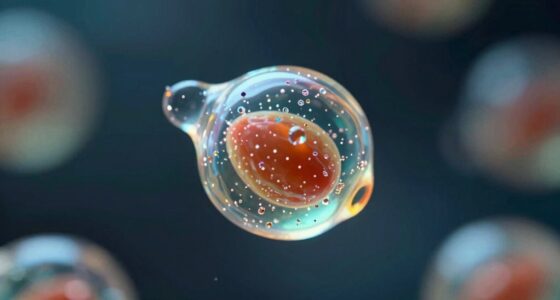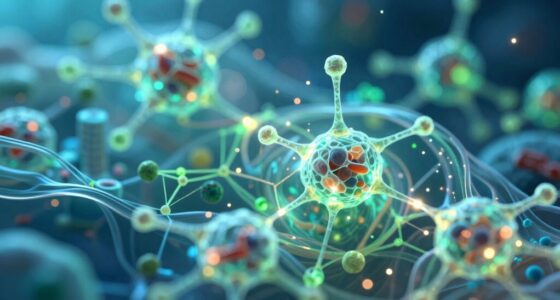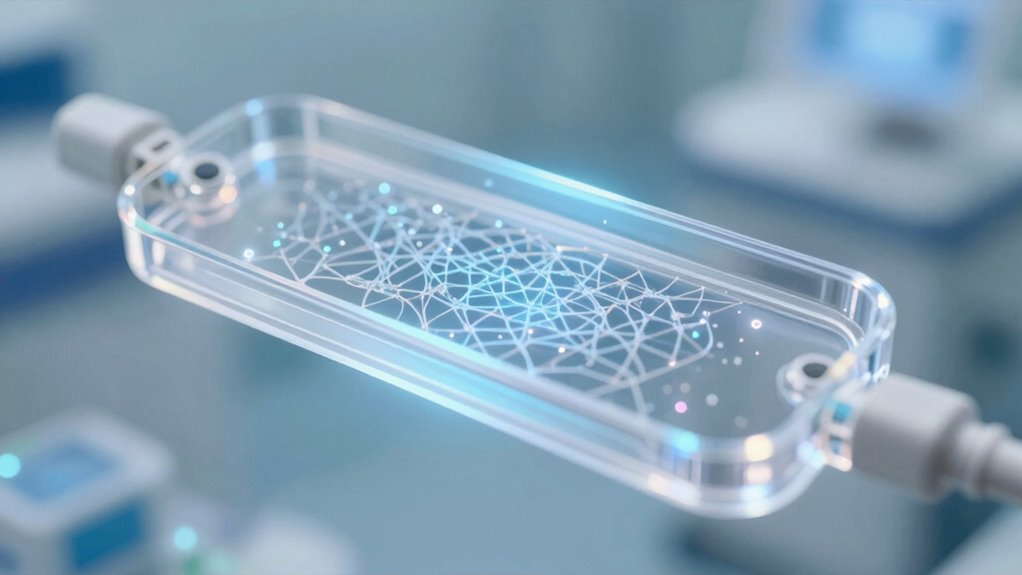
Nanotechnology, especially quantum dots, plays a hidden yet essential role in making medical imaging safer and more precise. These tiny particles produce brighter, stable signals that improve tissue visualization while reducing exposure to harmful chemicals. Their customizable surface properties enable targeted imaging, helping you detect diseases early and accurately. Because of their small size and biocompatibility, they penetrate tissues effectively with fewer risks. If you look further, you’ll discover how these innovations are revolutionizing healthcare and saving lives.
Key Takeaways
- Nanotechnology enables the creation of highly targeted and customizable contrast agents for precise tissue and disease visualization.
- Quantum dots provide brighter, more stable imaging, reducing the need for higher doses and minimizing toxicity risks.
- Engineered nanomaterials improve tissue penetration, allowing safer imaging of hard-to-reach areas at the cellular level.
- Advances in nanotech facilitate the development of biocompatible agents, decreasing adverse effects during diagnostic procedures.
- Future innovations aim for smart nanomaterials that enhance safety and enable early, non-invasive detection of diseases.
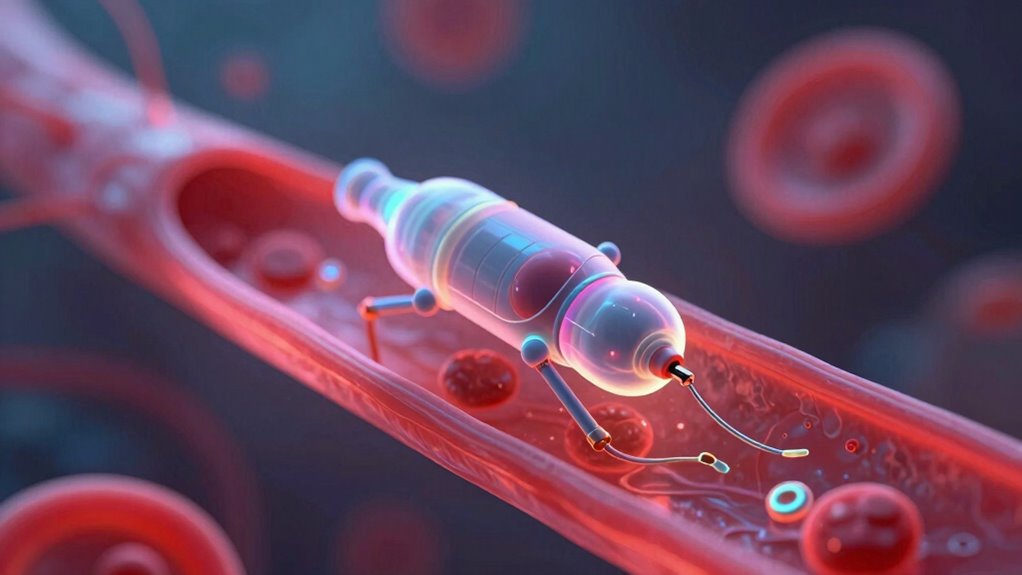
Have you ever wondered how cutting-edge nanotechnology is transforming medical imaging? It’s a fascinating world where tiny particles make a big difference. One of the most exciting advances involves quantum dots, which are nanometer-sized semiconductor particles. These tiny dots have unique optical properties that make them ideal for contrast enhancement in imaging techniques. When introduced into the body, quantum dots emit bright, stable fluorescence under specific lighting, allowing doctors to visualize tissues and cellular processes with unprecedented clarity. This improved contrast helps in detecting diseases at earlier stages, often before symptoms appear. Unlike traditional dyes, quantum dots resist fading, giving you clear, consistent images over longer periods, which is crucial during complex procedures.
Quantum dots provide brighter, more stable imaging for earlier, clearer disease detection and safer, more precise medical procedures.
By leveraging quantum dots for contrast enhancement, you gain a sharper, more detailed view of what’s happening inside the body. This precision reduces the need for invasive procedures and minimizes exposure to higher doses of traditional imaging agents. Since these nanomaterials are customizable, their surface properties can be tailored to target specific tissues or disease markers. This means you can obtain highly specific images that pinpoint abnormalities like tumors or inflammation with minimal ambiguity. The ability to enhance contrast with quantum dots not only improves diagnostic accuracy but also opens doors for more personalized treatment plans, where therapies can be guided more precisely based on detailed imaging data.
Moreover, the small size of quantum dots allows them to penetrate tissues more effectively than larger particles, reaching areas that might otherwise be difficult to visualize. This penetration enhances the quality of imaging, making it possible to observe cellular-level details. Because these particles can be engineered to be biocompatible, they pose fewer risks of toxicity, further ensuring your safety during diagnostic procedures. The ongoing research into nanotechnology means future innovations could include even smarter contrast agents, capable of responding to specific biological signals or releasing drugs directly at targeted sites.
Incorporating quantum dots into medical imaging represents a significant leap forward in safety and effectiveness. You benefit from clearer images, earlier detection of medical conditions, and reduced exposure to potentially harmful substances. As nanotechnology continues to evolve, it will increasingly become an integral part of safer, more precise medical imaging, transforming healthcare from a reactive to a proactive discipline. This hidden role of nanotechnology promises a future where your diagnostic experiences are more accurate, less invasive, and ultimately, more life-saving.

Biocompatible Fluorescent Magnetic Nanoparticles for Imaging of Cancer Cells
As an affiliate, we earn on qualifying purchases.
As an affiliate, we earn on qualifying purchases.
Frequently Asked Questions
How Does Nanotechnology Improve Contrast Agent Safety?
Nanotechnology improves contrast agent safety by enhancing nanoparticle stability, preventing aggregation or premature breakdown that could cause side effects. It also addresses biocompatibility concerns by designing nanoparticles that are less toxic and more compatible with your body’s tissues. These advancements make contrast agents safer, reducing risks of adverse reactions and improving imaging clarity, so you get more accurate diagnoses with fewer worries about potential harm.
Are There Any Long-Term Health Risks From Nanotech in Imaging?
Are there long-term health risks from nanotech in imaging? While advancements seem promising, you should consider potential genetic interactions and environmental impacts. Nanoparticles might interact unpredictably with your DNA, possibly causing mutations over time. Additionally, their environmental footprint raises concerns about accumulation and unforeseen consequences. Staying informed and advocating for ongoing research helps protect your health and the planet from these emerging risks.
What Are the Costs Associated With Nanotech-Based Imaging?
The costs of nanotech-based imaging vary depending on technology complexity and implementation scale. A thorough cost analysis reveals higher initial expenses for advanced nanomaterials and specialized equipment, but these can lead to long-term savings through improved accuracy and reduced procedure times. When considering budget considerations, you should weigh these upfront costs against potential benefits like enhanced safety and diagnostic precision, making nanotech a promising, though initially investment-heavy, option.
Can Nanotechnology Be Used in Portable or Home Imaging Devices?
Yes, nanotechnology can be used in portable or home imaging devices. However, miniaturization challenges require scientists to develop smaller, efficient components, while user interface considerations guarantee ease of use for non-professionals. Overcoming these hurdles allows for more accessible, reliable, and safe medical imaging at home. As technology advances, expect to see more compact devices that integrate nanotech innovations, making medical imaging more convenient and widespread.
How Does Nanotech Influence the Accuracy of Medical Diagnoses?
Nanotech improves diagnosis accuracy through quantum dots and nanoparticle targeting. Quantum dots provide brighter, more stable imaging signals, helping you detect diseases earlier and more precisely. Nanoparticles target specific cells or tissues, reducing false positives and enhancing clarity. By integrating these technologies, your medical images become sharper, enabling your healthcare team to make better-informed decisions, ultimately leading to more effective treatments and improved patient outcomes.
biocompatible nanotechnology imaging dyes
As an affiliate, we earn on qualifying purchases.
As an affiliate, we earn on qualifying purchases.
Conclusion
You now see how nanotechnology nurtures safer, sharper scans, shielding you from side effects while showcasing stunning specifics. By bridging brilliance with biology, it boosts your biopsy’s bravery, bringing breakthroughs beyond basic benchmarks. Embrace this evolving evolution, where tiny tools transform treatment techniques, turning terrifying tests into trustworthy, tech-savvy triumphs. Take heart in this harmonious harmony, knowing nanotech’s notable nuances nurture your health, heralding a healthier, happier horizon ahead.
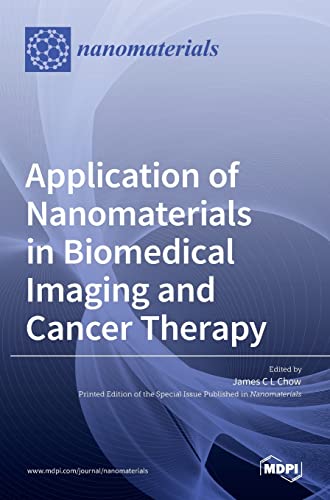
Application of Nanomaterials in Biomedical Imaging and Cancer Therapy
As an affiliate, we earn on qualifying purchases.
As an affiliate, we earn on qualifying purchases.