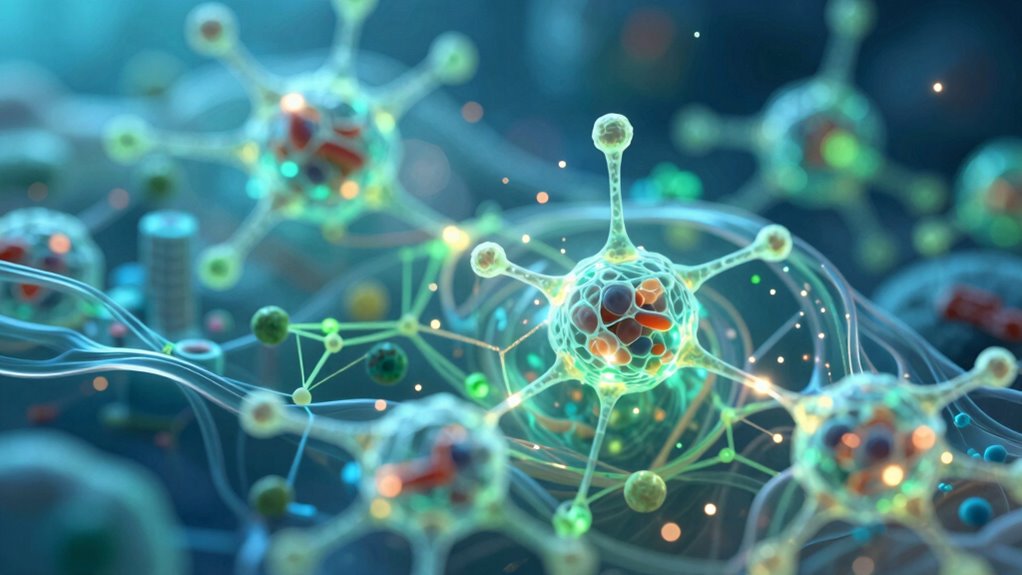

Targeted drug delivery keeps driving nanotech research because it offers solutions for precise treatments that improve effectiveness and minimize side effects. Nanoparticles can target diseased cells at the molecular level, penetrate tissues better, and respond to biological cues. This approach allows for safer, less invasive therapies and real-time monitoring of treatment progress. As researchers work on making nanocarriers safer and more effective, you’ll discover even more exciting advancements ahead.
Key Takeaways
- Targeted delivery enhances treatment precision, reducing side effects and improving patient outcomes.
- Nanotech allows customization of carriers responsive to biological cues for site-specific drug release.
- Incorporation of imaging agents enables real-time monitoring of therapy progress and effectiveness.
- Advances in nanomaterials improve biocompatibility, safety, and clinical applicability of drug carriers.
- Personalized medicine benefits from nanotech by enabling tailored, minimally invasive, and more effective therapies.

Targeted drug delivery has revolutionized medical treatments by allowing therapies to precisely reach diseased cells while minimizing side effects on healthy tissue. This approach hinges on the development of nanotechnology, which enables the design of tiny carriers that can navigate the complex environment of the human body. Nanoparticle synthesis plays an essential role here, as it involves creating particles small enough to interact with cells at the molecular level. These nanoparticles can be engineered to carry drugs directly to their intended targets, improving effectiveness and reducing adverse reactions. Because of their size, nanoparticles can penetrate tissues more efficiently than traditional drug delivery systems, making treatments more precise and less invasive.
Nanoparticles enable precise, minimally invasive drug delivery by targeting diseased cells at the molecular level.
Your interest in nanoparticle synthesis is central to advancing this field. The process involves meticulous control over particle composition, size, and surface properties to guarantee optimal delivery performance. By fine-tuning these parameters, researchers like you can develop carriers that respond to specific biological cues, such as pH changes or enzyme presence, releasing drugs only when and where they’re needed. This specificity not only enhances therapeutic outcomes but also limits toxicity to healthy cells. Additionally, nanoparticles are instrumental in biomedical imaging, providing new ways to visualize disease progression and treatment responses in real time. The integration of imaging agents into nanoparticles enables you to track their journey through the body, offering unprecedented insight into how drugs reach and interact with target tissues.
Your work in nanoparticle synthesis supports the broader goal of making treatments smarter and more personalized. As you refine these tiny carriers, you contribute to a future where cancer, neurological disorders, and infectious diseases can be tackled with pinpoint accuracy. The synergy between nanoparticle design and biomedical imaging allows clinicians to monitor therapy efficacy closely, adjusting treatments based on precise imaging feedback. This real-time data helps improve patient outcomes and reduces unnecessary exposure to drugs. Advances in nanoparticle synthesis are continually expanding the possibilities for targeted therapies, bringing us closer to more effective and less invasive treatments. Moreover, ongoing research into biocompatibility ensures that these nanocarriers are safe for widespread clinical use.
The drive for better targeted drug delivery systems fuels ongoing nanotech research because the potential benefits are immense. You’re part of a cutting-edge field that continuously pushes the boundaries of what’s possible in medicine. As nanoparticle synthesis techniques become more sophisticated, they open up new avenues for therapies that are safer, more effective, and tailored to individual patients’ needs. Ultimately, your efforts in this area are shaping a future where healthcare is more precise, less invasive, and more responsive to the complexities of human biology.

Nanoparticle-Mediated Targeted Drug Delivery Systems
As an affiliate, we earn on qualifying purchases.
As an affiliate, we earn on qualifying purchases.
Frequently Asked Questions
How Close Are Targeted Drug Delivery Techniques to Clinical Application?
Targeted drug delivery techniques are nearing clinical use, especially with advances in personalized treatment and targeted imaging. You’ll see more therapies tailored to individual patient profiles, improving effectiveness and reducing side effects. While some methods are still in trials, others have already gained approval, making these approaches more accessible. Continued research accelerates their translation into standard care, promising better outcomes for patients soon.
What Are the Main Safety Concerns With Nanotech in Medicine?
You might find it surprising, but safety concerns in nanotech medicine include biocompatibility issues and environmental impact. You need to consider how nanoparticles interact with your body — could they trigger immune responses or toxicity? Plus, there’s worry about their long-term environmental effects if they enter ecosystems. Ensuring these materials are safe and eco-friendly is vital before widespread clinical use, so researchers stay cautious and focused on rigorous testing.
How Cost-Effective Is Nanotech-Based Drug Delivery Compared to Traditional Methods?
Nanotech-based drug delivery can be more cost-effective than traditional methods because it enhances precision, reducing waste and side effects. You’ll find it economically viable in the long run, as targeted treatments often need lower doses and fewer hospital visits. Although initial development costs are higher, the improved efficiency and better patient outcomes ultimately make nanotech a financially smart choice for healthcare systems.
Are There Specific Diseases More Suited for Nanotech Drug Targeting?
Certain diseases, like cancer, are more suited for nanotech drug targeting because of nanoparticle specificity and disease targeting capabilities. You’ll find that solid tumors, with their unique microenvironments, allow nanoparticles to selectively accumulate, minimizing side effects. Neurodegenerative diseases and infections also benefit from precise delivery, as nanotech can cross biological barriers and target affected cells directly, improving treatment efficacy and reducing systemic toxicity.
What Are the Regulatory Challenges Faced by Nanotech Drug Delivery Systems?
Like steering through a maze in the dark, you face regulatory challenges with nanotech drug delivery systems. The regulatory pathways are complex, often lacking clear guidelines, which leads to approval hurdles. You must demonstrate safety, efficacy, and quality, but existing standards sometimes fall short for nanotech innovations. This uncertainty can delay approvals, requiring extensive testing and dialogue with authorities to guarantee your nanotech solutions meet strict health and safety standards.

Metals in Medicine: 2-volume set
As an affiliate, we earn on qualifying purchases.
As an affiliate, we earn on qualifying purchases.
Conclusion
As you explore the dazzling domain of targeted drug delivery, you can see how nanotech nudges new horizons, steering nanoparticles precisely where they’re needed. This brilliant blend boosts bioavailability, battles bacterial barriers, and beckons breakthroughs. By harnessing tiny tech, you’re helping health heal faster, forging a future where precision prevails over problems. Keep watching, because this groundbreaking growth in nanotech truly promises to propel personalized, powerful, and precise patient care into a promising tomorrow.

Nanotheranostics
As an affiliate, we earn on qualifying purchases.
As an affiliate, we earn on qualifying purchases.

Innovative Nanocarriers for Stimulated Drug Delivery: A Comprehensive Guide to Stimuli-responsive Nanoparticles
As an affiliate, we earn on qualifying purchases.
As an affiliate, we earn on qualifying purchases.