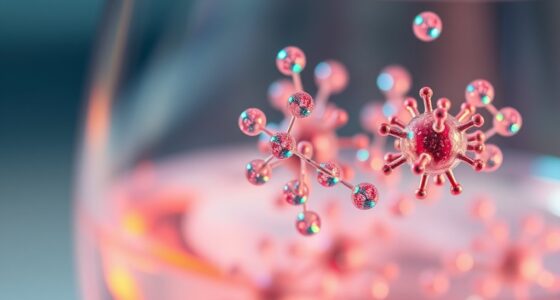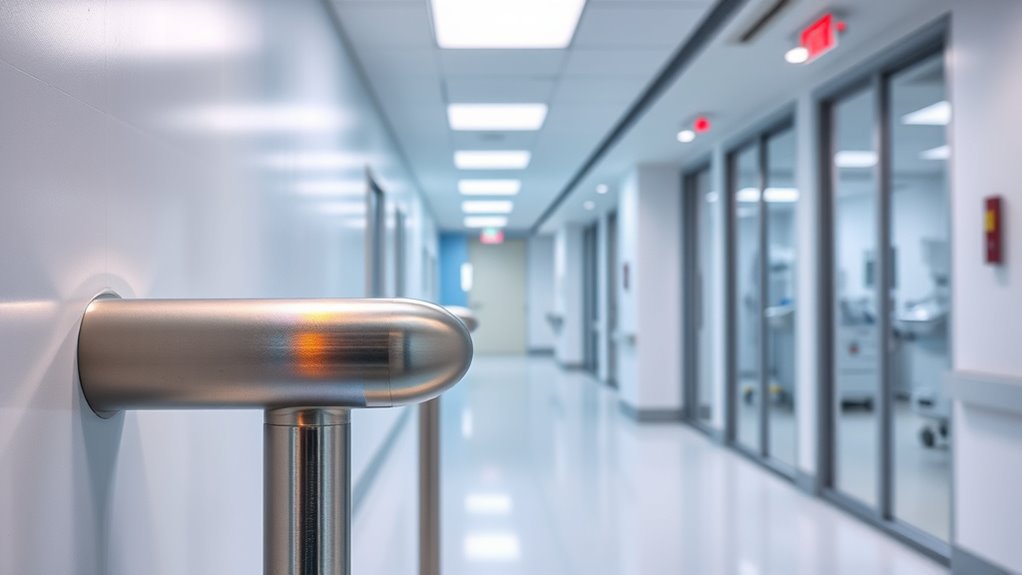

Anti-microbial nanomaterials in hospitals are revolutionizing infection control by providing durable surface coatings that actively kill bacteria, viruses, and fungi. You’ll find these tiny particles integrated into high-touch surfaces like door handles and bed rails, helping prevent microbial spread. They are designed to withstand wear and cleaning, ensuring long-lasting protection. By confirming these advancements, you’ll gain insights into how nanomaterials improve safety and reduce infection risks across healthcare environments. Continue to discover more about their innovative applications and benefits.
Key Takeaways
- Nanomaterials with antimicrobial properties are incorporated into hospital surface coatings to inhibit bacteria, viruses, and fungi.
- These coatings are designed for durability, resisting wear and cleaning, ensuring long-term antimicrobial activity.
- Proper engineering embeds nanomaterials securely within coatings, preventing loss of efficacy over time.
- The use of anti-microbial nanomaterials reduces microbial transmission and cross-contamination in high-touch hospital areas.
- Advances in nanotechnology continue to improve the safety, stability, and effectiveness of antimicrobial solutions in healthcare environments.

Have you ever wondered how hospitals combat the persistent threat of harmful microbes? The answer lies in cutting-edge innovations like anti-microbial nanomaterials. These tiny particles, often just a few nanometers in size, pack a powerful punch against bacteria, viruses, and fungi. Their effectiveness, known as nanomaterial efficacy, is a game-changer in infection control. Because of their enormous surface area relative to volume, these nanomaterials can interact more intimately with microbes, disrupting their cellular functions and rendering them harmless. This heightened activity makes them ideal for use in hospital environments, where preventing infections is crucial.
One of the key advantages of nanomaterials is their ability to be integrated into surface coatings. Hospitals frequently use surfaces that are touched often—door handles, bed rails, medical devices—making them hotspots for microbial transmission. Incorporating nanomaterials into surface coating formulations significantly boosts their antimicrobial properties. When applied correctly, these coatings can continuously inhibit microbial growth, reducing the risk of cross-contamination. But, to truly be effective in a busy hospital setting, these coatings need to maintain their protective qualities over time. This is where surface coating durability becomes critical.
Nanomaterial-infused coatings boost antimicrobial protection on high-touch hospital surfaces, ensuring long-lasting safety and infection control.
Surface coating durability refers to how well a nanomaterial-infused coating can withstand the daily wear and tear of hospital use. It’s not enough for a coating to be antimicrobial initially; it must continue to inhibit microbes after months of cleaning, disinfecting, and physical contact. Durable coatings resist peeling, scratching, and degradation, ensuring that the antimicrobial agents remain active. The better the durability, the longer the protective barrier lasts, which reduces the need for frequent reapplications and minimizes operational disruptions.
Achieving an optimal balance between nanomaterial efficacy and surface coating durability involves sophisticated chemistry and engineering. Manufacturers develop formulations that ensure nanomaterials are securely embedded within the coating matrix, preventing them from washing away or losing activity over time. This stability is vital because it guarantees consistent antimicrobial performance, even in high-traffic hospital areas. Ultimately, the combination of high nanomaterial efficacy with resilient surface coatings helps hospitals create safer environments. It’s a proactive approach that continuously fights microbial threats, safeguarding both patients and healthcare workers. As research advances, these nanotechnology-based solutions will become even more robust, making hospital spaces not just cleaner but significantly safer for everyone.
Top picks for "anti microbial nanomaterial"
Open Amazon search results for this keyword.
As an affiliate, we earn on qualifying purchases.
Frequently Asked Questions
Are Anti-Microbial Nanomaterials Safe for Patient Health?
Anti-microbial nanomaterials can be safe for patient health if thorough toxicity assessments are done. While they effectively reduce infections, you should consider potential risks from long-term exposure, as some nanomaterials may cause adverse effects. It is crucial to stay informed about ongoing research and regulations to guarantee their safe use. Proper monitoring and adherence to safety guidelines help minimize health concerns for patients and staff alike.
How Long Do Nanomaterials Retain Their Anti-Microbial Properties?
Nanomaterials typically retain their antimicrobial durability for months to years, depending on usage and environmental conditions. While nanomaterial longevity varies, their effectiveness gradually diminishes due to wear, cleaning, and chemical exposure. You can maximize antimicrobial durability by proper maintenance and choosing advanced formulations. Remember, ongoing research aims to improve nanomaterial longevity, ensuring you benefit from sustained antimicrobial protection longer, even as these tiny warriors face real-world challenges.
Can Bacteria Develop Resistance to Nanomaterials Over Time?
Bacteria can develop resistance to nanomaterials over time through bacterial adaptation and resistance mechanisms. As they encounter these materials repeatedly, they may evolve ways to neutralize or evade their effects. While nanomaterials initially offer broad-spectrum antimicrobial activity, you should stay vigilant, monitor for signs of resistance, and combine strategies to prevent bacteria from adapting effectively. Continuous research helps guarantee nanomaterials remain a valuable tool in infection control.
What Are the Environmental Impacts of Nanomaterial Disposal?
You should consider that improper disposal of nanomaterials can lead to environmental contamination, affecting soil, water, and ecosystems. Waste management becomes vital to prevent these impacts, as nanomaterials may persist and accumulate, posing risks to wildlife and human health. By following proper disposal procedures and regulatory guidelines, you can help minimize environmental impacts and guarantee that nanomaterials don’t harm the environment over time.
Are There Regulatory Standards for Using Nanomaterials in Hospitals?
Yes, regulatory frameworks and safety guidelines exist for using nanomaterials in hospitals. You need to adhere to agencies like the EPA and FDA, which set standards for safe handling, application, and disposal of nanomaterials. These regulations aim to protect patients, staff, and the environment. It’s essential that you stay updated on evolving policies to ensure compliance and minimize potential health and environmental risks associated with nanomaterial use in healthcare settings.
Conclusion
Just as shields protect ancient warriors, anti-microbial nanomaterials guard hospitals against unseen threats. By integrating these tiny warriors into surfaces and equipment, you create a fortress where germs struggle to survive. Embrace this cutting-edge defense, turning the battlefield of infection into a safer sanctuary. Like a beacon in the night, these nanomaterials illuminate the path toward healthier, infection-free environments—because in this fight, innovation is your strongest ally, guiding you toward a future of cleaner, safer hospitals.