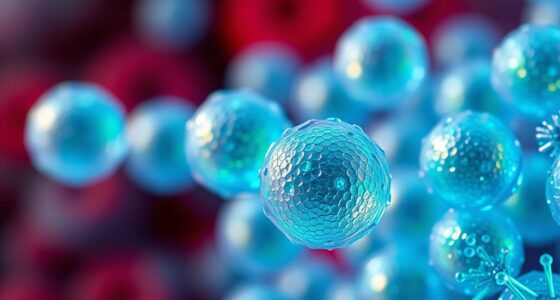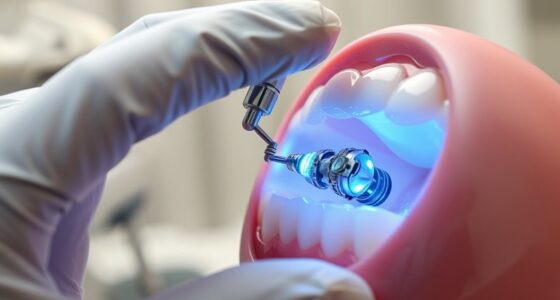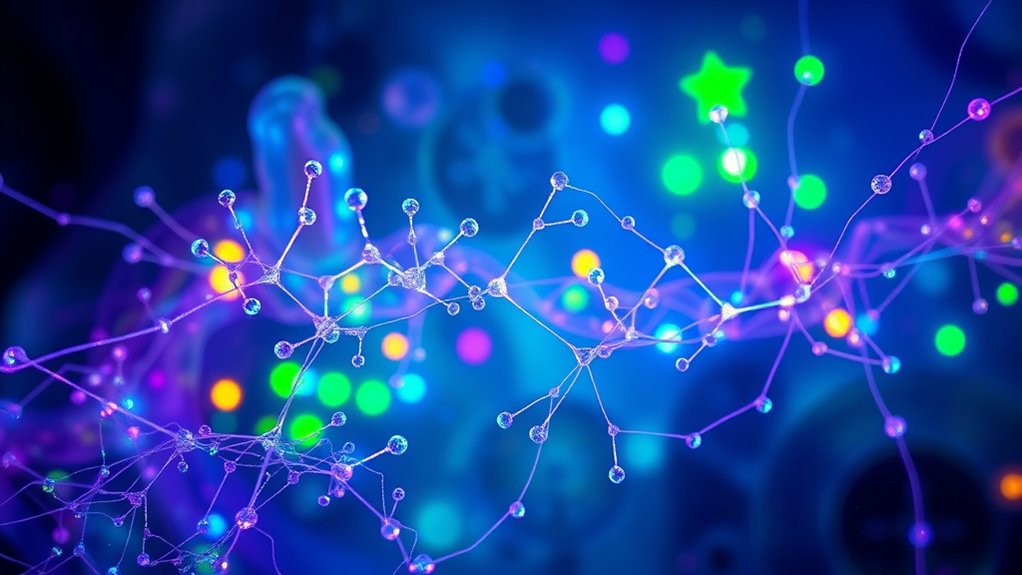

Molecular imaging with nano-probes lets you see biological processes beneath the body’s surface with high precision. These tiny particles are designed to target specific cells or molecules, improving detection of disease markers and cellular activity. They enhance imaging modalities like MRI, PET, and optical imaging, providing clearer, more accurate visuals. This technology not only aids early diagnosis but also supports targeted treatments. If you keep exploring, you’ll discover how nano-probes are revolutionizing medicine and biological research.

Get the latest gadgets delivered free — and shop member deals
- Fast, free delivery on millions of items
- Access to Prime Big Deal Days deals on October 6–7
- Prime Video, Amazon Music and more included
Key Takeaways
- Nano-probes enable targeted, non-invasive visualization of biological processes at the molecular level.
- They enhance imaging modalities like MRI, PET, and optical imaging by improving sensitivity and specificity.
- Nano-probes can be engineered to detect specific cells, molecules, or disease markers for early diagnosis.
- They facilitate combined imaging techniques, providing comprehensive insights into disease mechanisms.
- Nano-probes support personalized medicine by allowing precise monitoring of treatment responses and disease progression.
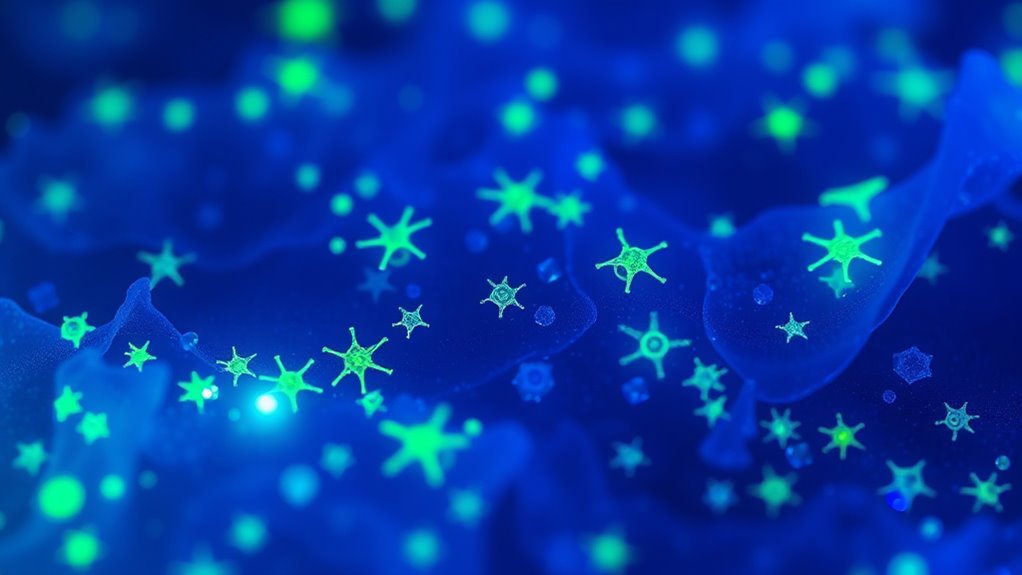
Have you ever wondered how scientists visualize processes inside the body at the molecular level? It’s a fascinating world where tiny tools called nano-probes help reveal what’s happening beneath the surface. These nano-probes, often made from nanoparticles, can be tailored to target specific cells or molecules, allowing you to see detailed images of biological processes in real time. This technique, known as molecular imaging, relies heavily on nanoparticle targeting to ensure that the probes locate and bind to precise structures within the body. When these targeted nanoparticles find their mark, they emit signals that can be captured by various imaging modalities, transforming invisible molecular interactions into visible images.
Imaging modalities include a range of techniques such as MRI (Magnetic Resonance Imaging), PET (Positron Emission Tomography), and optical imaging. Each modality offers unique advantages, but all benefit from the precision that nano-probes provide. For instance, in MRI, nanoparticles can be engineered to enhance contrast in specific tissues, making subtle changes more detectable. Similarly, in PET imaging, nanoparticles can be labeled with radioactive isotopes, allowing you to track their journey through the body with high sensitivity. Optical imaging tools, like fluorescence-based methods, use nano-probes that emit light when excited, giving you a clear picture of cellular activities. Combining nanoparticle targeting with these imaging modalities enhances your ability to detect diseases early, monitor treatment responses, and understand complex biological mechanisms at a molecular level.
Imaging techniques like MRI, PET, and optical imaging benefit from nanoparticle precision to detect diseases early and understand biology at a molecular level
The true power of nano-probes in molecular imaging lies in their versatility and specificity. You can design nanoparticles to recognize cancer cells, inflammation sites, or other disease markers with remarkable accuracy. Once targeted, these probes amplify signals at the disease site, making it easier for imaging devices to detect abnormalities. This level of precision reduces the need for invasive procedures and provides a non-invasive window into ongoing biological processes. Advances in Kia Tuning technologies, such as ECU remapping and suspension upgrades, exemplify how precision engineering can optimize performance, similar to how nanoparticle targeting enhances imaging accuracy. The capabilities of nanoparticle targeting extend beyond diagnostics; they also open doors for targeted drug delivery, where therapeutic agents are transported directly to affected areas, minimizing side effects.
In essence, the combination of nanoparticle targeting and advanced imaging modalities transforms the way you understand health and disease. It shifts the focus from broad, less specific imaging to precise, molecular-level visualization. This progress helps you catch diseases earlier, tailor treatments more effectively, and deepen your understanding of life’s intricate inner workings—making molecular imaging with nano-probes a cornerstone of modern medicine.
As an affiliate, we earn on qualifying purchases.
Frequently Asked Questions
How Do Nano-Probes Target Specific Cellular Structures?
You can understand that nano-probes target specific cellular structures through cellular specificity and targeting mechanisms. They are designed with molecules like antibodies or ligands that recognize and bind to unique markers on target cells. This selective binding guarantees the nano-probes attach only to the desired structures, allowing precise imaging. By leveraging these targeting mechanisms, nano-probes effectively highlight specific cells or tissues in molecular imaging applications.
What Are the Safety Concerns With Nano-Probes?
Did you know that over 60% of nano-probe research faces safety concerns? You should consider biocompatibility issues, as some nano-probes may trigger immune responses or toxicity in the body. Additionally, their environmental impact raises alarms because improper disposal could harm ecosystems. It’s essential to thoroughly evaluate these safety aspects, ensuring nano-probes are both safe for patients and environmentally responsible before widespread use.
Can Nano-Probes Be Used in Real-Time Imaging?
Yes, nano-probes like quantum dots and fluorescent markers can be used in real-time imaging. You can track biological processes as they happen, thanks to their high brightness and stability. These nano-probes emit strong signals, allowing you to visualize cells and molecules dynamically. Their ability to provide immediate feedback makes them invaluable for diagnostic and research purposes, enhancing your understanding of complex biological systems in real-time.
How Do Nano-Probes Compare to Traditional Contrast Agents?
Think of nano-probes as the shining stars in imaging—they outperform traditional contrast agents by offering higher specificity and brighter signals. Unlike conventional agents, quantum dots with surface modification enable precise targeting and real-time imaging. You’ll find nano-probes more versatile, allowing you to visualize biological processes at a cellular level. They’re like a magnifying glass, revealing details that traditional agents simply can’t capture, making your imaging sharper and more insightful.
What Future Advancements Are Expected in Nano-Probe Technology?
You can expect future nano-probe advancements to include quantum enhancements, which will markedly boost imaging sensitivity and resolution. Researchers are also focusing on biocompatibility optimization to guarantee safer, more effective use within the body. These improvements will enable more precise diagnostics, targeted therapies, and personalized medicine, ultimately transforming your medical imaging experience by providing clearer, more accurate results with fewer side effects.
As an affiliate, we earn on qualifying purchases.
Conclusion
Imagine molecular imaging with nano-probes as your microscope into the body’s hidden universe, revealing secrets secured beneath the surface. As you harness this cutting-edge technology, you access a new domain of precision and insight, illuminating diseases like a lighthouse piercing through the fog. With each nano-probe, you’re not just observing; you’re orchestrating a symphony of discovery, transforming medicine into a landscape where every pixel tells a story. This is the future, within your reach, waiting to be explored.
As an affiliate, we earn on qualifying purchases.
molecular imaging contrast agents
As an affiliate, we earn on qualifying purchases.
As an affiliate, we earn on qualifying purchases.
Fall Picks
fall essentials
As an affiliate, we earn on qualifying purchases.