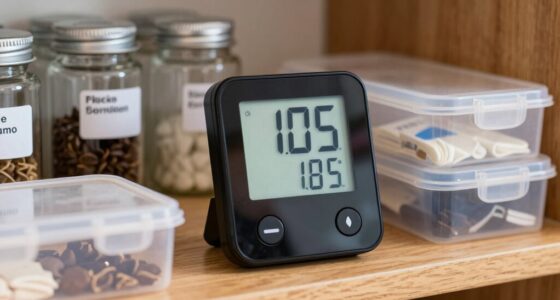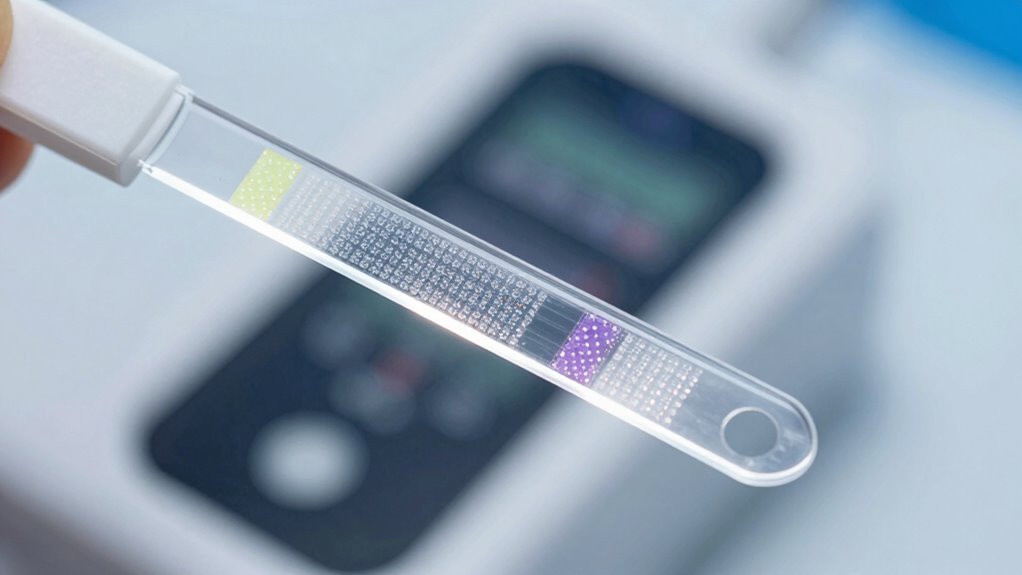

Nano sensors can revolutionize food safety by providing rapid, highly sensitive detection of contaminants and pathogens, even at very low levels. They are small enough to be embedded in packaging, processing lines, or handheld devices, enabling real-time, on-the-spot testing. Their advanced properties allow you to identify threats quickly, reducing health risks and preventing contaminated products from reaching consumers. Keep exploring to learn more about how these innovations are shaping a safer food industry.

Get the latest gadgets delivered free — and shop member deals
- Fast, free delivery on millions of items
- Access to Prime Big Deal Days deals on October 6–7
- Prime Video, Amazon Music and more included
Key Takeaways
- Nano sensors enable rapid, highly sensitive detection of food contaminants at extremely low concentrations.
- Their miniaturization allows integration into packaging and processing lines for real-time monitoring.
- Enhanced surface properties improve detection accuracy for specific pathogens and chemical hazards.
- Multiplexed systems facilitate simultaneous identification of multiple threats, reducing testing time and costs.
- Ongoing innovation ensures increased stability, affordability, and widespread adoption in food safety systems.
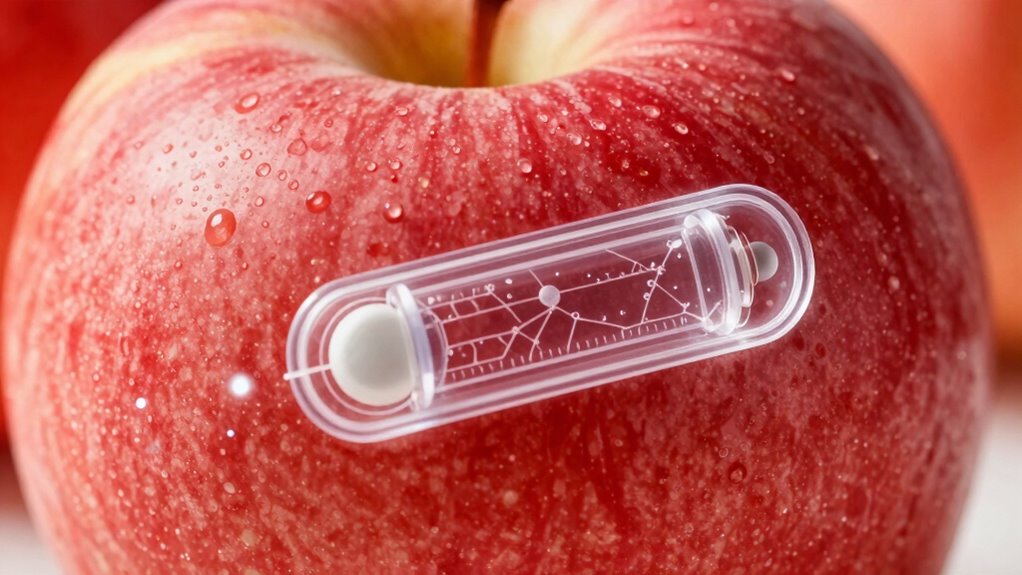
Nano sensors are revolutionizing food safety by providing rapid, accurate detection of contaminants and pathogens. These tiny devices leverage nanoparticle detection, enabling them to identify harmful substances at incredibly low concentrations that traditional methods might miss. Because of their small size, nanomaterials can interact more efficiently with target molecules, making detection faster and more sensitive. This means you can catch potential threats well before they reach consumers, reducing the risk of foodborne illnesses markedly.
Nano sensors enable rapid, ultra-sensitive detection of food contaminants, preventing threats before they reach consumers.
Sensor miniaturization plays an essential role in this transformation. As sensors become smaller, they can be integrated directly into packaging, processing lines, or even handheld devices, offering real-time monitoring without bulky equipment. This miniaturization allows for on-the-spot testing, saving both time and resources. Imagine being able to scan a food product and instantly know if it’s contaminated, all thanks to a compact sensor embedded within the packaging or a portable device you carry with you. This level of convenience and immediacy will overhaul traditional lab-based testing procedures, which often take days to yield results.
When it comes to nanoparticle detection, the unique properties of nanomaterials—like increased surface area and enhanced reactivity—make sensors remarkably more sensitive. These sensors can detect specific pathogens like Salmonella or E. coli, or chemical contaminants such as pesticides and heavy metals, with high precision. Because of their enhanced sensitivity, nano sensors can identify even trace amounts of harmful substances, providing a much earlier warning than conventional methods. This early detection capability means you can prevent contaminated products from reaching consumers, thereby safeguarding public health.
Additionally, sensor miniaturization supports the development of multiplexed detection systems. Instead of running separate tests for different contaminants, you could have a single nano sensor capable of identifying multiple threats simultaneously. That’s a game-changer in ensuring all-encompassing safety checks, especially in complex food production environments. Furthermore, these sensors are often designed to be reusable or disposable at low cost, making them practical for widespread use. Advances in sensor technology continue to drive improvements in detection speed, accuracy, and affordability, further transforming the landscape of food safety monitoring. Researchers are also exploring nanomaterial stability to ensure long-term performance and reliability of these sensors in various food processing conditions. In addition, miniaturization allows for integration into various food safety systems, expanding their versatility. Additionally, ongoing innovations in detection methods are helping to refine sensor capabilities and expand their applications across different sectors of food safety. Moreover, developing cost-effective nano sensors remains a priority to facilitate large-scale adoption and integration into existing food safety protocols.
nano sensor food contamination detection device
As an affiliate, we earn on qualifying purchases.
As an affiliate, we earn on qualifying purchases.
Frequently Asked Questions
What Are the Cost Implications of Implementing Nano Sensors Globally?
Implementing nano sensors globally will initially cost more, but you’ll benefit from increased cost efficiency over time as technology advances and production scales up. Market adoption may face hurdles due to high upfront expenses, yet widespread use could lower costs and improve food safety standards worldwide. As demand grows, you’ll likely see prices decrease, making nano sensors more accessible and supporting better, real-time food safety monitoring across various regions.
How Do Nano Sensors Compare to Traditional Food Safety Testing Methods?
You might think nano sensors are just a modern twist, but studies show their sensor sensitivity surpasses traditional methods, detecting contaminants at much lower levels. They also boast faster detection speeds, enabling real-time monitoring instead of waiting hours or days. This rapid response can drastically improve food safety, reducing outbreaks. While traditional tests rely on lab analysis, nano sensors offer a portable, immediate solution, transforming how we guarantee food safety.
Are Nano Sensors Safe for Human Health and the Environment?
Nano sensors are generally considered safe for human health and the environment when properly developed and tested. However, Nano sensor ethics emphasize the importance of thorough safety evaluations, transparency, and regulation. As a consumer, you should stay informed about potential risks, as increased consumer awareness helps promote responsible use. Continued research and regulation guarantee these innovative sensors benefit food safety without compromising health or environmental integrity.
What Regulations Govern the Use of Nano Sensors in Food Monitoring?
Think of nano sensors as guardians, symbolizing trust and innovation. Regulations around their use in food monitoring focus on nano sensor ethics, ensuring safety and transparency. Agencies like the FDA and EFSA set guidelines, but public awareness influences policy adjustments. You, as a consumer, should stay informed about these regulations to advocate for safe, ethical practices. Ultimately, clear rules empower you to trust the technology safeguarding your food.
How Quickly Can Nano Sensors Detect Contamination in Food Products?
Nano sensors can detect contamination within seconds to a few minutes, thanks to their rapid detection speed. Their high sensor sensitivity allows them to identify even trace levels of harmful substances quickly and accurately. This quick response enables you to address food safety issues promptly, reducing risks and preventing contaminated products from reaching consumers. As technology advances, detection times are expected to become even faster, enhancing overall food safety monitoring.
portable food safety testing kit
As an affiliate, we earn on qualifying purchases.
As an affiliate, we earn on qualifying purchases.
Conclusion
Imagine a future where nano sensors can detect contaminants instantly, ensuring your food is always safe. Studies show that foodborne illnesses affect over 600 million people worldwide annually, highlighting the urgent need for better monitoring. With nano sensors, you could enjoy fresher, safer meals with real-time alerts. As technology advances, these tiny devices could revolutionize food safety, giving you peace of mind and protecting your health every day.
multiplex nano sensors for food inspection
As an affiliate, we earn on qualifying purchases.
As an affiliate, we earn on qualifying purchases.
embedded nano sensors in food packaging
As an affiliate, we earn on qualifying purchases.
As an affiliate, we earn on qualifying purchases.
Fall Picks
fall essentials
As an affiliate, we earn on qualifying purchases.