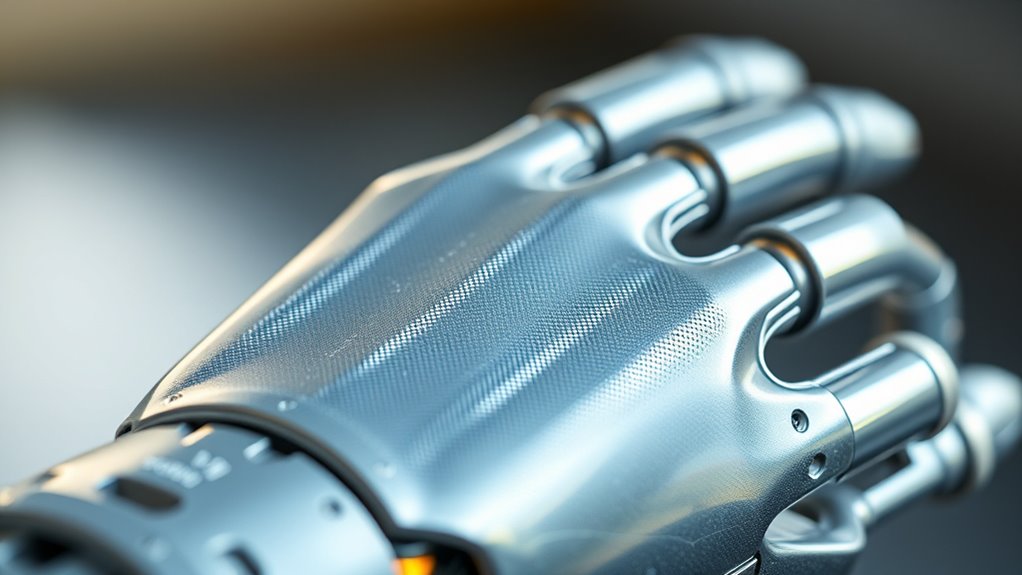

Nano-enhanced prosthetics use advanced nanomaterials to make devices stronger, lighter, and more adaptable so you can perform daily tasks with greater confidence. These prosthetics are designed to mimic natural movement better, respond to environmental changes, and offer increased durability by resisting cracks and corrosion. Their smart, self-healing features mean they last longer and feel more comfortable. If you want to learn how these innovations are revolutionizing support for users like you, keep exploring further.
Key Takeaways
- Nanotechnology integrates nanomaterials into prosthetics, enhancing strength, flexibility, and natural movement.
- Nano-engineered materials increase prosthetic durability, resistance to wear, corrosion, and fatigue.
- Lightweight nanomaterials improve comfort while maintaining structural integrity for active use.
- Smart nanomaterials enable self-healing and adaptive responses to environmental stimuli.
- Overall, nano-enhancement results in more resilient, efficient, and life-like prosthetic devices.
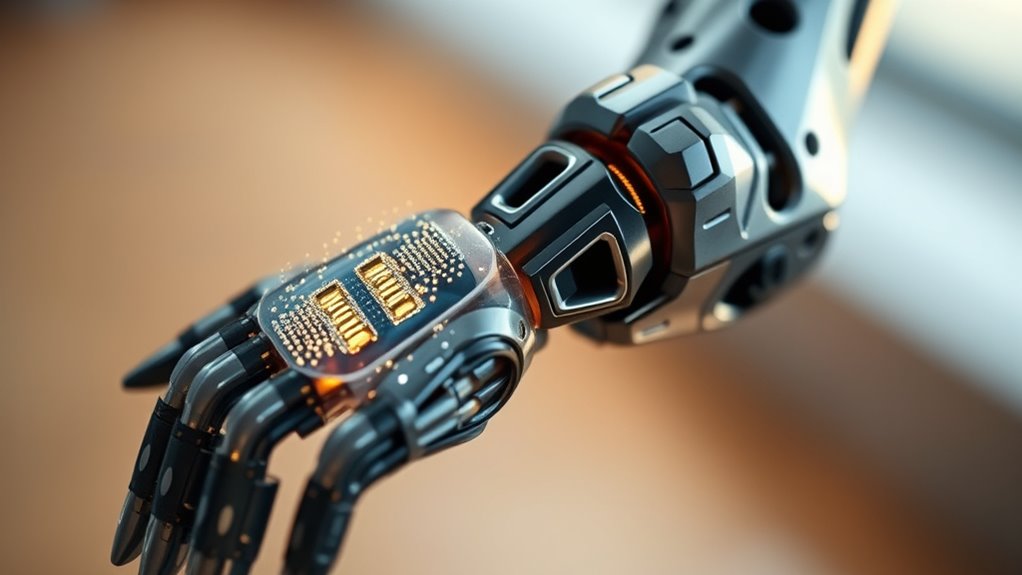
Advancements in nanotechnology are revolutionizing prosthetic devices, making them more functional, durable, and responsive than ever before. When you explore the latest innovations, you’ll notice how nanotechnology integration plays a pivotal role in enhancing the overall performance of prosthetics. Tiny nanomaterials are embedded into the device’s structure, creating a seamless blend of strength and flexibility that wasn’t possible before. This integration allows the prosthetic to better mimic natural movement, respond to environmental stimuli, and withstand daily wear and tear.
The focus on material durability is essential because it directly affects how long your prosthetic will last and how well it can handle the rigors of everyday use. Nano-engineered materials are considerably more resilient, reducing the likelihood of cracks, fractures, or degradation over time. These materials are engineered at the molecular level, which means they have enhanced resistance to corrosion, fatigue, and other forms of deterioration that typically limit traditional prosthetics. For you, this translates into a device that doesn’t just last longer but also maintains its functionality and appearance over time.
Nanotechnology enables the creation of lightweight yet incredibly strong materials. As you wear your prosthetic, you’ll benefit from a device that offers improved comfort without compromising durability. The integration of nanomaterials like carbon nanotubes or nanocomposites enhances the structural integrity, ensuring your prosthetic can withstand daily impacts and stress without losing its shape or strength. This durability is especially important for active individuals who need their prosthetic to keep up with their lifestyle.
Moreover, nanotechnology integration facilitates the development of smarter materials capable of self-healing or adapting to different conditions. Imagine a prosthetic that can automatically repair minor damages or adjust its stiffness depending on your activity level. Such advancements are on the horizon, promising to provide you with more reliable and adaptable prosthetic solutions.
In essence, the combination of nanotechnology integration and enhanced material durability is transforming prosthetic devices into more resilient, efficient, and life-like tools. These innovations empower you to perform daily tasks confidently, knowing that your prosthetic can handle the challenges of real-world use while offering improved comfort and longevity. As these technologies continue to evolve, you’ll see prosthetics that are not only more durable but also more integrated with your body, offering a natural feel and exceptional performance.
As an affiliate, we earn on qualifying purchases.
Frequently Asked Questions
How Durable Are Nano-Enhanced Prosthetic Materials Over Time?
Nano-enhanced prosthetic materials are quite durable, offering excellent material longevity and wear resistance over time. You’ll find that these advanced materials can withstand daily stresses better than traditional options, reducing the need for frequent replacements. Their enhanced properties help maintain functionality and strength, even after extended use. With proper maintenance, nano-enhanced prosthetics can serve you reliably, ensuring long-term performance and minimizing the impact of wear and tear.
Are Nano-Technology Prosthetics Safe for Long-Term Use?
Imagine holding a delicate, glowing orb—nano-technology prosthetics are similarly designed to be safe. They undergo rigorous testing to address biocompatibility concerns, ensuring they don’t harm your body over time. While they promise improved function, you should also consider environmental impact, as manufacturing processes may have ecological effects. Overall, current research indicates these prosthetics are safe for long-term use, but ongoing studies continue to refine their safety and sustainability.
What Is the Cost Comparison Between Traditional and Nano-Enhanced Prosthetics?
You’ll find that nano-enhanced prosthetics tend to be more expensive upfront compared to traditional ones, mainly due to higher manufacturing expenses and advanced technology. However, their cost efficiency over time improves because they often last longer and offer better functionality. While the initial investment is higher, the long-term benefits can outweigh the costs, making them a worthwhile option for those seeking cutting-edge prosthetic solutions.
How Do Nano-Augmented Prosthetics Improve Sensory Feedback?
You experience improved sensory feedback through nano-augmented prosthetics by enhancing sensory integration and neural interfacing. These advanced devices detect subtle stimuli, transmit signals more precisely, and stimulate nerves effectively. As a result, you gain a more natural sense of touch, pressure, and temperature. This seamless communication between your nervous system and the prosthetic creates a more intuitive, responsive experience, helping you regain confidence and functionality in daily activities.
Can Nano-Technology Be Used in Pediatric Prosthetic Development?
Yes, nano-technology can be used in pediatric prosthetic development, but you need to take into account biocompatibility concerns to ensure safety and reduce rejection risks. You also must address ethical implications, like long-term effects and informed consent. By carefully designing nano-enhanced materials, you can create more adaptable, lightweight, and functional prosthetics that grow with children, improving their quality of life while prioritizing safety and ethical standards.
As an affiliate, we earn on qualifying purchases.
Conclusion
As you explore nano-enhanced prosthetics, you’ll see how tiny innovations make a big difference—like increasing prosthetic strength by up to 50%. These advancements not only improve durability but also bring more natural movement and comfort. With ongoing research, the future of prosthetics is brighter than ever, offering hope and enhanced quality of life to millions. Embrace these cutting-edge innovations, and you’ll be part of a remarkable journey transforming lives through nanotechnology.

8 Pcs Prosthetic Liner Patches, Durable Prosthetic Leg Pads, Liners for Prosthetic Leg for Lower Limb Amputees, Below the Knee Amputee Accessories Reduce Friction and Skin Irritation(2.6in)
- Pain Relief: Reduces friction, redness, and swelling
- Premium Materials: Includes 8 durable silicone pads
- Secure Fit: Ensures snug fit with prosthetic socks
As an affiliate, we earn on qualifying purchases.
As an affiliate, we earn on qualifying purchases.
As an affiliate, we earn on qualifying purchases.