
Nanotechnology targets antibiotic resistance by delivering drugs directly to infection sites with precision, improving their effectiveness and minimizing side effects. Nanoparticles, usually smaller than 100 nanometers, can physically disrupt bacterial membranes, causing cell leakage and death, even in resistant strains. They also protect antibiotics from degradation and enable dual attack strategies. If you keep exploring, you’ll discover how nanotech is revolutionizing infection treatments and shaping the future of antimicrobial therapies.
Key Takeaways
- Nanoparticles enable targeted delivery of antimicrobials, increasing effectiveness against resistant bacteria while reducing side effects.
- They physically disrupt bacterial membranes, overcoming mechanisms that confer antibiotic resistance.
- Nanotechnology facilitates combination therapies, integrating antibiotics with surface modifications for enhanced targeting.
- Stimuli-responsive nanoparticles enable precise, controlled drug release at infection sites, minimizing resistance development.
- Incorporating nanomaterials offers novel, less resistance-prone strategies to combat multidrug-resistant bacterial infections.

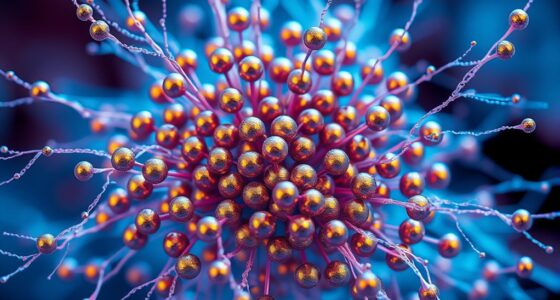
Could nanotechnology be the key to overcoming antibiotic resistance? It’s a question many researchers are asking as traditional antibiotics become less effective against stubborn bacteria. One promising approach involves using nanotechnology to develop advanced delivery systems. With nanoparticle delivery, you can transport antimicrobial agents directly to the infection site, increasing the concentration of drugs where they’re needed most. These tiny particles, often smaller than 100 nanometers, can navigate through biological barriers more efficiently than conventional antibiotics. By encapsulating drugs within nanoparticles, you not only protect the active ingredients from degradation but also ensure they reach their target with minimal loss. This targeted delivery minimizes side effects and reduces the chances of bacteria developing resistance, which often happens when drugs are improperly distributed or used in subtherapeutic doses.
Nanoparticles enhance drug delivery, targeting infection sites and reducing resistance risks.
Furthermore, nanoparticles can be engineered to interact directly with bacterial cells, leading to bacterial membrane disruption. When bacteria encounter these nanoparticles, their cell membranes often suffer damage due to physical interactions or chemical reactions. This disturbance compromises the bacteria’s integrity, causing leakage of vital cellular contents and eventual cell death. Unlike traditional antibiotics that target specific bacterial processes, nanoparticle-induced membrane disruption acts as a physical assault, making it harder for bacteria to develop resistance. This mechanism is especially effective against multidrug-resistant strains, which have evolved defenses against conventional drugs but remain vulnerable to physical damage.
You can also think of nanoparticle delivery systems as versatile tools that combine multiple strategies. For example, nanoparticles can be loaded with antibiotics and surface-modified to enhance bacterial targeting. Once they reach the infection site, they release their payload directly into the bacterial environment, disrupting membranes and killing bacteria swiftly. This dual action—physical disruption plus chemical attack—reduces the likelihood of bacteria adapting and surviving. Plus, nanoparticles can be designed to respond to specific stimuli, such as pH changes or enzymes produced by bacteria, ensuring the release occurs precisely where it’s needed.
In essence, nanotechnology provides a multifaceted approach to combat antibiotic resistance. By focusing on nanoparticle delivery and bacterial membrane disruption, you can develop treatments that are more effective, less prone to resistance, and capable of tackling even the most stubborn infections. As research advances, these tiny tools might become the cornerstone of future antimicrobial therapies, transforming how we fight bacterial diseases and curb resistance.
Frequently Asked Questions
What Are the Potential Environmental Impacts of Nanotechnology?
You should consider that nanotechnology might cause environmental contamination when nanoparticles are released into ecosystems. These tiny particles can accumulate in soil and water, potentially disrupting ecological balance. You might also face ecological disruption, as nanomaterials could harm wildlife or plants. It is crucial to carefully study and regulate nanotech use to minimize these risks, ensuring that technological advances don’t inadvertently damage the environment you depend on.
How Cost-Effective Is Nanotechnology for Large-Scale Healthcare?
You might be surprised, but nanotechnology can be cost-effective for large-scale healthcare if you consider its long-term benefits. While initial cost analysis shows high setup expenses, scalability challenges decrease as production techniques improve. Over time, it reduces the need for costly antibiotics and minimizes resistance, saving money. With continued innovation, nanotech’s potential to transform healthcare becomes not just promising but increasingly affordable for widespread use.
Are There Any Known Long-Term Health Risks Associated With Nanomaterials?
You should be aware that nanomaterial toxicity and long-term health effects are still under research, and some concerns exist about potential risks. While nanomaterials offer promising medical benefits, prolonged exposure could cause unforeseen health issues, such as cellular damage or immune responses. It is crucial to continue studying these long-term health effects to guarantee safe application of nanotechnology in healthcare, and regulatory agencies are actively monitoring this evolving field.
How Does Nanotechnology Compare to Traditional Antibiotics in Effectiveness?
Imagine a scenario where a nano-enhanced drug targets resistant bacteria more effectively than traditional antibiotics. You’ll find nanotechnology often shows superior efficacy because it can penetrate bacterial defenses better, reducing bacteria resistance. Unlike conventional antibiotics, nanomaterials can be engineered for targeted action, minimizing side effects and improving outcomes. Overall, nanotech offers a promising advantage in combatting resistant infections, making it more effective in many cases.
What Regulatory Challenges Exist for Implementing Nanotech Solutions?
You face regulatory challenges like obtaining approval and meeting safety standards for nanotech solutions. Regulatory agencies require thorough testing to guarantee safety and efficacy, which can delay implementation. You must navigate complex approval processes and address concerns about potential long-term effects. Staying compliant with evolving regulations is essential, so you should engage with authorities early, provide detailed data, and prioritize safety to successfully bring nanotech innovations to market.
Conclusion
By harnessing nanotechnology, you can combat antibiotic resistance more effectively than ever before. These tiny tools offer targeted, powerful solutions that could save lives and curb superbugs. Just like a modern-day alchemist transforming metals into gold, you’re pioneering a new era in medicine—one where nanotech helps us outsmart resistant bacteria. Embrace this cutting-edge approach, and you’ll be part of the revolution that turns the tide against infections. The future’s in your hands, so don’t dawdle!