
Nanotechnology in wound healing enhances dressings with advanced hydrogels and nanofibers that support tissue regeneration, prevent infections, and deliver drugs precisely where needed. These materials mimic the natural extracellular matrix, guiding cell migration and promoting faster healing. They also incorporate antimicrobial nanoparticles like silver or zinc oxide to reduce bacteria. If you want to explore how these innovative approaches can improve wound care and healing outcomes, there’s more to discover below.
Key Takeaways
- Nanotechnology enhances wound healing by creating nanoscale scaffolds that mimic the extracellular matrix, promoting cell attachment and tissue regeneration.
- Hydrogels and nanofibers are designed with biocompatible materials to support tissue growth and facilitate controlled drug and growth factor delivery.
- Nanofibers’ orientation and degradability influence cell migration, organization, and scaffold integration in wound dressings.
- Incorporating antimicrobial nanoparticles like silver or zinc oxide provides infection prevention while minimizing toxicity risks.
- Responsive nanomaterials enable targeted, on-demand release of therapeutics, improving healing efficiency and reducing side effects.

AMERIGEL Hydrogel Wound Dressing (1 oz.) – Provides Moisture-Rich Healing Environment for Dry Wounds
HIGHLY RATED – AMERIGEL Hydrogel Wound Dressing is the #1 Physician-Rated for topical dressing following nail surgery since…
As an affiliate, we earn on qualifying purchases.
As an affiliate, we earn on qualifying purchases.
The Role of Nanomaterials in Accelerating Wound Closure
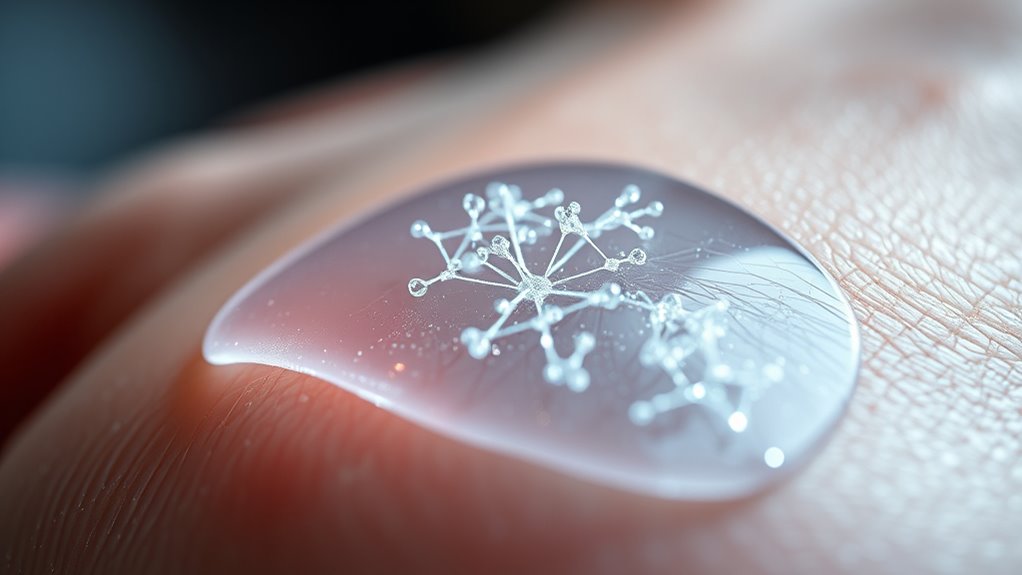
Nanomaterials have revolutionized wound healing by actively promoting faster closure. Nano-enabled scaffolds provide a supportive framework that mimics the extracellular matrix, facilitating cell attachment and migration. These scaffolds enhance cellular signaling pathways, which are essential for coordinating healing processes. By delivering growth factors or bioactive molecules at the nanoscale, they stimulate the proliferation and differentiation of skin cells. This targeted approach accelerates tissue regeneration and reduces healing time. You’ll notice that the high surface area of nanomaterials allows for better interaction with surrounding tissues, boosting the overall healing response. As a result, wounds close more quickly, and the quality of repaired tissue improves. Nano-enabled scaffolds, thus, play a pivotal role by actively engaging cellular signaling to speed up wound closure effectively. Enhanced cellular communication is facilitated by nanomaterials, further optimizing the healing process.
nanofiber wound healing scaffolds
As an affiliate, we earn on qualifying purchases.
As an affiliate, we earn on qualifying purchases.
Designing Hydrogels for Enhanced Tissue Regeneration

When designing hydrogels for tissue regeneration, you need to focus on selecting biocompatible materials that support cell growth without causing adverse reactions. You should also incorporate controlled drug release mechanisms to deliver growth factors effectively over time. Additionally, optimizing the structural and mechanical properties of the hydrogel guarantees it can withstand the wound environment while promoting healing. Incorporating fiber-rich components such as nanofibers can further enhance cell attachment and tissue integration within the hydrogel matrix.
Biocompatible Material Selection
Selecting the right biocompatible materials is essential for designing hydrogels that effectively promote tissue regeneration. You need to prioritize material biocompatibility, ensuring the hydrogel supports cell growth without provoking immune responses. Conduct thorough toxicity evaluations to confirm the material’s safety, as any toxic effects could hinder healing or cause adverse reactions. Choose natural polymers like collagen or hyaluronic acid, which naturally integrate with tissue, or synthetic polymers such as PEG that can be tailored for compatibility. Always assess how the material interacts with surrounding tissues and fluids. By carefully evaluating biocompatibility and toxicity, you guarantee your hydrogel provides a safe, supportive environment that accelerates healing and minimizes complications.
Controlled Drug Release Mechanisms
To maximize the effectiveness of wound healing, hydrogels must deliver therapeutic agents precisely when and where they’re needed. Controlled drug release mechanisms rely on nanoparticle synthesis to create carriers that respond to specific stimuli, guaranteeing targeted delivery. You can incorporate drug encapsulation into nanoparticles within the hydrogel matrix, allowing for sustained and controlled release over time. This approach prevents burst release and maintains therapeutic levels at the wound site. By tailoring the properties of nanoparticles—such as size, surface charge, and composition—you optimize release kinetics. This precision ensures that growth factors, antibiotics, or anti-inflammatory agents are released gradually, enhancing tissue regeneration and reducing healing time. Effective controlled release therefore plays a vital role in designing hydrogels for advanced wound care.
Structural and Mechanical Properties
Designing hydrogels with ideal structural and mechanical properties is essential for supporting tissue regeneration. You need to guarantee the material stiffness matches the native tissue to promote proper cell signaling and function. A hydrogel’s structural integrity provides the necessary framework to withstand physiological stresses without collapsing or losing shape. When you optimize these properties, the scaffold can better support cell adhesion, proliferation, and differentiation. Balancing flexibility with strength is critical; too stiff, and it hampers movement; too soft, and it lacks support. Fine-tuning the mechanical properties helps create an environment conducive to healing. By carefully selecting materials and crosslinking methods, you can enhance the hydrogel’s structural integrity, leading to improved tissue regeneration outcomes.

Natural Biopolymers in Drug Delivery and Tissue Engineering (Woodhead Publishing Series in Biomaterials)
As an affiliate, we earn on qualifying purchases.
As an affiliate, we earn on qualifying purchases.
The Structure and Function of Nanofibers in Wound Dressings

Nanofibers in wound dressings are composed of ultra-fine fibers that mimic the natural extracellular matrix, providing a supportive environment for tissue regeneration. Their fiber orientation can be aligned or random, influencing cell attachment and growth. Aligned fibers guide cell migration, promoting organized tissue formation, while random orientation supports more uniform regeneration. Nanofiber degradation ensures the scaffold gradually breaks down as new tissue forms, avoiding the need for removal. This controlled degradation rate maintains structural support during healing without impeding tissue development. The nanoscale size increases surface area, enhancing cell interaction and nutrient exchange. By understanding the structure and function of nanofibers, you can appreciate their role in creating ideal wound healing environments that facilitate rapid and effective tissue regeneration.

Dimora Upgrade Silver Calcium Alginate Wound Dressing -Antibacterial Non Stick Gauze, Highly Absorbent Sterile Bandage Pads,4'' x 4'' Patches 5 Packs
5 PACK UPGRADE SILVER ALGINATE DRESSING – It is a sterile, single-use dressing composed of calcium alginate and…
As an affiliate, we earn on qualifying purchases.
As an affiliate, we earn on qualifying purchases.
Targeted Drug Delivery Using Nanotechnology

Targeted drug delivery with nanotechnology allows you to precisely locate medications at the wound site, increasing effectiveness. You can also benefit from controlled release mechanisms that provide steady treatment over time. This approach helps minimize side effects by reducing drug exposure to healthy tissues. Additionally, the use of vetted products ensures safety and efficacy in treatment applications.
Precise Drug Localization
Have you ever wondered how nanotechnology can deliver drugs precisely where they’re needed in a wound? It all comes down to nanoparticle targeting, which allows for accurate localization of therapeutic agents. By designing nanoparticles that recognize specific markers on damaged tissue or pathogens, you guarantee the drug goes directly to the affected area. This targeted approach minimizes side effects and maximizes healing efficiency. Precise localization means your treatment concentrates on the wound site, reducing unnecessary exposure to healthy tissue. Nanoparticles can be engineered to respond to environmental cues like pH or enzymes, further enhancing delivery accuracy. With this technology, you can deliver drugs exactly where they’re needed, promoting faster healing and reducing complications. It’s a powerful step toward more effective, personalized wound care.
Controlled Release Mechanisms
Controlled release mechanisms in nanotechnology enable precise timing and dosing of drugs at the wound site. You benefit from systems that leverage polymer degradation, allowing the gradual breakdown of nanomaterials to release medication over time. Osmotic control plays a crucial role by regulating fluid movement, ensuring consistent drug delivery without spikes or drops. Imagine a nanocarrier that dissolves slowly, releasing healing agents steadily, or a system that responds to the wound’s environment to trigger drug release exactly when needed. These mechanisms create a dynamic, responsive healing process, reducing the need for frequent interventions. With controlled release, you can optimize the healing process, minimize drug wastage, and ensure targeted therapy precisely when the wound requires it most.
Minimized Side Effects
Nanotechnology enhances wound healing by delivering drugs directly to the affected cells, which substantially reduces the risk of side effects. Targeted delivery minimizes systemic exposure, lowering the chances of nanoparticle toxicity. By focusing treatment precisely where needed, you avoid unnecessary drug distribution that can cause adverse reactions. Additionally, researchers are designing nanomaterials with long-term biocompatibility in mind, ensuring they don’t provoke immune responses or toxicity over time. This approach helps prevent chronic inflammation and other complications associated with traditional therapies. As a result, your healing process becomes safer and more efficient. The combination of targeted delivery and biocompatible nanomaterials means you experience fewer side effects, making nanotechnology a promising option for safer wound management and improved patient outcomes.
Antimicrobial Properties of Nanoparticle-Infused Dressings
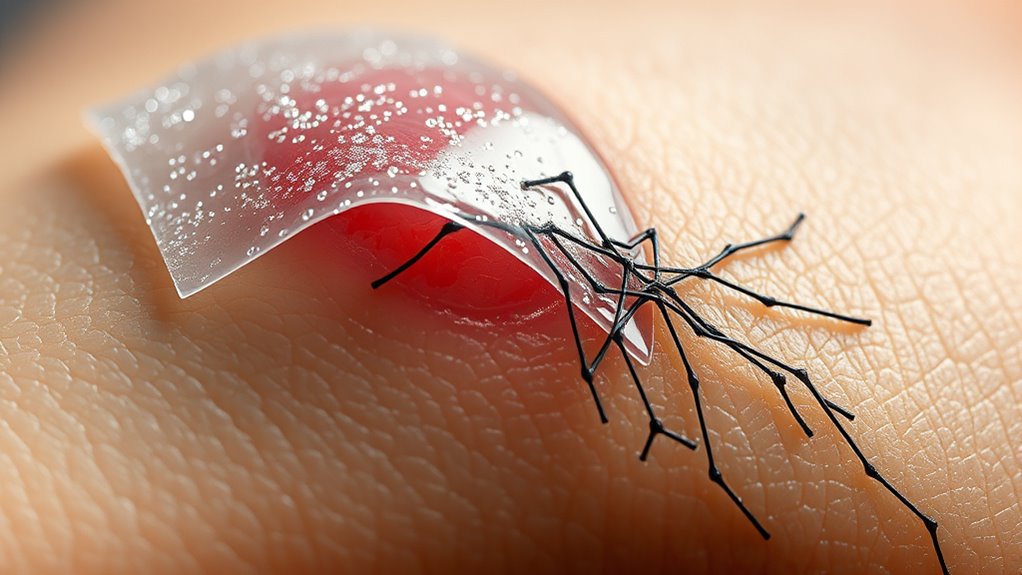
Nanoparticle-infused dressings are gaining attention for their remarkable antimicrobial properties, which can markedly reduce infection risks in wound care. These dressings release nanoparticles like silver or zinc oxide that target bacteria directly, helping prevent infections and promote faster healing. Imagine a thin, transparent film actively fighting microbes beneath your dressing, creating a safer environment for tissue regeneration. However, nanoparticle toxicity remains a concern, as high concentrations can harm healthy cells. Regulatory challenges also arise because ensuring safety and efficacy requires rigorous testing and approval processes. You must consider both the benefits of infection control and potential risks associated with nanoparticle use. Developing standardized guidelines and understanding long-term effects are *fundamental* steps toward wider adoption of these innovative wound dressings.
Mimicking the Extracellular Matrix With Nanoscale Materials

Since the extracellular matrix (ECM) plays a crucial role in guiding cell behavior and tissue regeneration, replicating its structure at the nanoscale offers significant advantages for wound healing. Nanoscale materials, such as engineered nanoparticles, can mimic the ECM’s fibrous architecture, providing a supportive environment for cells. You can achieve this through nanoparticle synthesis techniques that produce biomimetic structures resembling natural ECM components. These nanomaterials promote cell attachment, proliferation, and differentiation by recreating the physical and biochemical cues of the native matrix. By integrating nanoscale features into wound dressings, you enhance tissue regeneration and accelerate healing processes. Mimicking the ECM at this scale not only improves biocompatibility but also offers a platform for delivering growth factors and bioactive agents, further supporting effective wound management.
Advantages of Nanotechnology-Based Wound Management
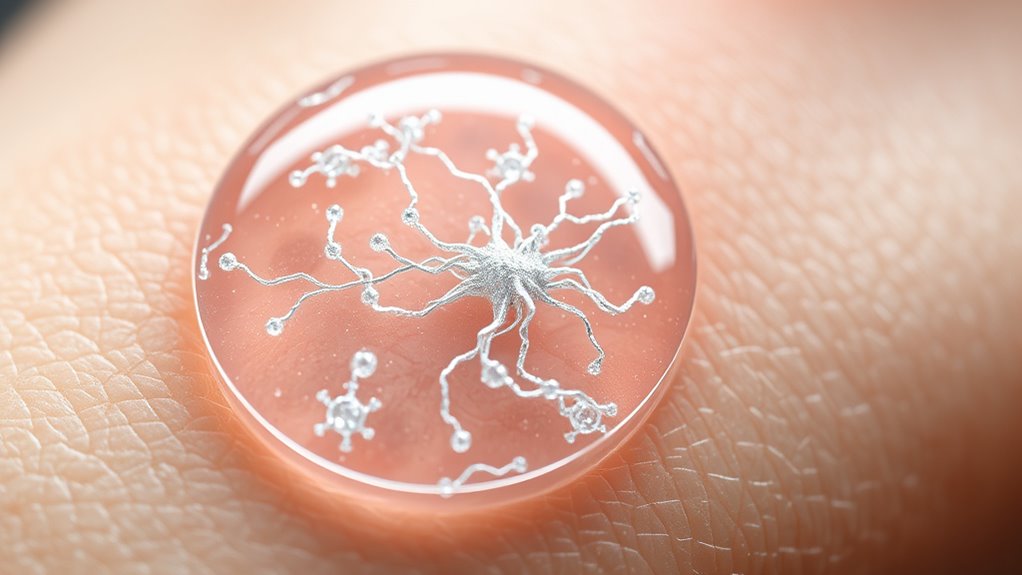
The application of nanotechnology in wound management offers several compelling advantages that can markedly improve healing outcomes. First, nanotech allows for targeted delivery of drugs and growth factors, accelerating tissue regeneration. Second, nanomaterials provide enhanced antimicrobial properties, reducing infection risks. Third, nanotechnology enables the development of sophisticated dressings that mimic natural tissue, promoting faster healing. Fourth, the integration of nanotechnology into wound dressings can facilitate controlled drug release, ensuring medications are delivered precisely when needed. However, factors like nanotech cost can be high initially, potentially limiting widespread use. Additionally, regulatory hurdles pose challenges for approval and clinical adoption, slowing down innovation. Visualize dressings that seamlessly conform to wounds, releasing medication precisely when needed, all while fighting bacteria effectively. These benefits underscore nanotechnology’s potential to revolutionize wound care, despite current economic and regulatory challenges.
Challenges and Safety Considerations in Nanomedicine

Despite the promising benefits of nanomedicine in wound healing, numerous challenges and safety concerns must be addressed before widespread adoption. Regulatory hurdles pose significant barriers, as authorities need clear guidelines for approving nanomaterials, ensuring safety without stifling innovation. You must also consider the environmental impact, since nanoparticles can accumulate in ecosystems, potentially harming wildlife and contaminating water sources. Ensuring consistent manufacturing processes and thorough toxicity assessments is essential to prevent unintended side effects. Public acceptance may also be affected by concerns over long-term safety and environmental risks. Before integrating nanotechnology into standard wound care, researchers and clinicians must work together to develop protocols that prioritize safety, transparency, and sustainability to build trust and facilitate regulatory approval. Additionally, understanding the top 5 projectors for gaming enthusiasts can inform the development of visual aids and educational tools to better communicate safety data and research findings to the public.
Emerging Trends and Future Directions in Nanowound Care

Advancements in nanotechnology are opening new horizons for wound care, promising more effective and targeted treatments. As these innovations evolve, future trends include smarter nanomaterials that respond to wound environments, personalized nanotherapies tailored to individual healing needs, and integration with digital health platforms for real-time monitoring. You might envision nanobots working precisely at the cellular level or hydrogels releasing drugs on demand. Additionally, the development of sustainable nanomaterials aims to reduce environmental impact and improve biocompatibility. However, these advances raise important considerations around nanotech ethics and regulation standards. Ensuring safety, transparency, and responsible use will be *vital* for widespread adoption. Staying informed about emerging policies will help you navigate the rapidly changing landscape and advocate for responsible innovation that benefits patient outcomes without compromising safety.
Case Studies Highlighting Nanotech Innovations in Healing

You’ll see how specific nanotech solutions speed up wound healing and reduce infection risks through real-world case studies. These examples demonstrate how nanomaterials act as effective accelerators and protectants in wound care. Exploring these innovations highlights the tangible benefits nanotechnology offers in healing processes. Additionally, research into nanotechnology in education suggests that such advanced materials could also contribute to improved medical training and patient care techniques.
Wound Healing Accelerators
Nanotechnology has revolutionized wound healing by providing targeted, efficient solutions that accelerate tissue regeneration. Researchers have developed nanotech-based wound accelerators, such as nanoparticles delivering growth factors directly to injury sites. These innovations promote faster cell proliferation and collagen synthesis. Imagine:
- Nanoparticles threading through tissue, releasing healing agents precisely where needed
- Fluorescently labeled nanocarriers illuminating the wound bed for real-time monitoring
- Smart nanofibers responding to environmental cues, releasing drugs on demand
However, challenges remain. Nanoparticle toxicity must be carefully evaluated to prevent adverse effects. Additionally, regulatory challenges hinder widespread adoption, requiring thorough safety and efficacy assessments before clinical use. These hurdles highlight the importance of balancing innovation with safety in advancing wound healing technologies.
Infection Prevention Strategies
Building on the progress made in accelerating tissue regeneration, nanotechnology also offers powerful solutions for preventing infections in wound care. You can incorporate antimicrobial coatings into hydrogels and nanofibers, providing a continuous release of agents that inhibit bacterial growth. These coatings serve as effective infection barriers, reducing the risk of contamination and biofilm formation. For example, case studies highlight nanocomposite dressings embedded with silver or copper nanoparticles, which deliver targeted antimicrobial action without harming healthy tissue. Such innovations not only prevent infections but also promote faster healing by maintaining a sterile environment. By integrating advanced nanotech-based infection barriers and antimicrobial coatings, you enhance wound management strategies, leading to better outcomes and reduced reliance on traditional antibiotics.
Frequently Asked Questions
How Do Nanomaterials Influence the Immune Response During Wound Healing?
Nanomaterials influence your immune response during wound healing by modulating inflammation and immune activity. They help reduce excessive inflammatory responses, preventing tissue damage, and promote a balanced immune modulation that accelerates healing. By interacting with immune cells, nanomaterials can enhance antimicrobial effects and stimulate regenerative processes, ensuring your body efficiently manages inflammation and supports faster, healthier wound recovery.
What Are the Cost Implications of Implementing Nanotechnology-Based Dressings?
You might find that implementing nanotechnology-based dressings is a costly endeavor upfront. However, a thorough cost analysis can reveal long-term savings through faster healing and fewer complications. While the initial investment may seem steep, the economic feasibility improves as these advanced dressings reduce hospital stays and treatment costs. Ultimately, balancing innovation with budget constraints is key, making these cutting-edge solutions a smart move in the long run.
How Do Regulatory Agencies Evaluate the Safety of Nanomaterials in Medicine?
Regulatory agencies perform a thorough safety evaluation through regulatory assessment by reviewing scientific data on nanomaterials. You’ll find they examine potential toxicity, biocompatibility, and environmental impact before approving nanotechnology-based medical products. They often require detailed characterization of nanomaterials, including size, shape, and surface properties. This guarantees that the innovative treatments you rely on are safe, effective, and meet strict standards before reaching patients.
Can Nanotechnology Be Personalized for Individual Wound Types?
Yes, nanotechnology can be personalized for individual wound types by designing wound-specific nanomaterials, tailoring drug delivery, and customizing hydrogel or nanofiber compositions. This approach guarantees targeted treatment, enhances healing efficiency, and reduces side effects. You can leverage personalized treatment strategies by analyzing wound characteristics, such as infection level or tissue type, and then developing nanomaterials that precisely address those needs, optimizing healing outcomes for each patient.
What Are the Environmental Impacts of Producing Nanomaterials for Wound Care?
You should consider that producing nanomaterials for wound care can contribute to environmental pollution through the release of hazardous chemicals and waste. Additionally, resource consumption during manufacturing, like energy and raw materials, increases environmental strain. These impacts may affect ecosystems and public health, so it is crucial to develop greener, more sustainable production methods to minimize environmental pollution and reduce resource use in nanotechnology-based wound care solutions.
Conclusion
Imagine transforming wound healing so fast, it feels like magic—thanks to nanotechnology! With hydrogels and nanofibers working tirelessly, you’ll see wounds close in a flash, infections vanish instantly, and recovery become almost legendary. This isn’t just science; it’s a revolution that’ll make traditional healing seem like ancient history. Get ready to witness the future of medicine, where tiny nanomaterials create giant leaps in healing power—truly, miracles in the making!