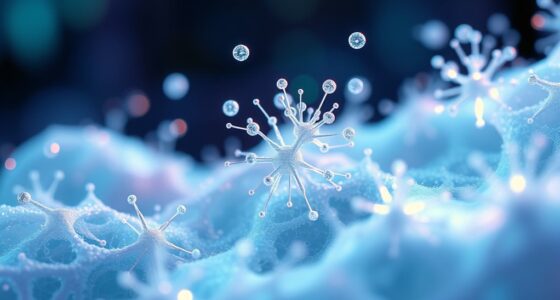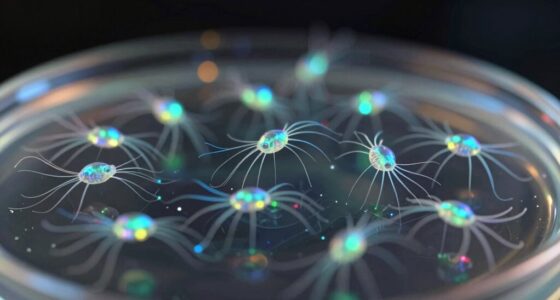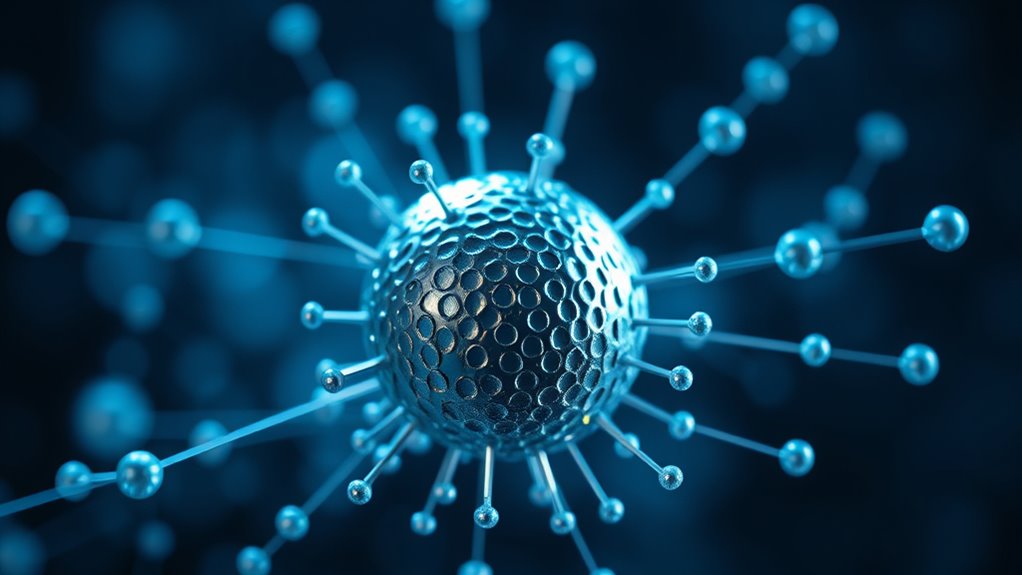

Personalized vaccines delivered through nanoparticles allow you to receive more targeted and effective immunizations. These tiny carriers are engineered to optimize size, shape, and surface features, ensuring they reach your immune system precisely where needed. They can be customized based on your genetic and health data, improving safety and boosting responses. This innovative approach promises future healthcare breakthroughs. Keep exploring to discover how nanotechnology is revolutionizing personalized medicine for better health outcomes.
Key Takeaways
- Nanoparticles enable customization of vaccine components based on individual genetic and immunological profiles.
- Engineered nanoparticles improve targeted delivery and controlled release of antigens for personalized immune responses.
- Personalization reduces side effects by minimizing unnecessary immune activation and optimizing vaccine efficacy.
- Nanoparticle design allows for vaccines tailored to specific diseases like cancer or autoimmune disorders.
- This technology advances precision medicine, offering safer, more effective, and individualized vaccine solutions.

Advancements in nanotechnology are transforming how vaccines are developed, allowing for personalized approaches that target individual immune responses. By harnessing the power of nanoparticle engineering, scientists can design tiny carriers that deliver vaccine components directly to specific cells, enhancing effectiveness and reducing side effects. This innovation means you could soon receive vaccines tailored precisely to your immune system’s needs, offering better protection against diseases. The key lies in how these nanoparticles are constructed and used for vaccine delivery. Engineers optimize their size, shape, and surface properties to maximize their ability to navigate the body and reach target tissues. These engineered nanoparticles can be loaded with antigens, adjuvants, or genetic material, ensuring that the immune system recognizes and responds appropriately. More importantly, nanoparticle engineering allows for customization at a level previously thought impossible, which means vaccines can be personalized based on genetic, immunological, or health data unique to you.
When you receive a nanoparticle-based vaccine, the delivery mechanism ensures that the active ingredients are protected until they reach their intended destination. Traditional vaccines often rely on weaker or less targeted delivery systems, which can lead to inconsistent immune responses. Nanoparticles, on the other hand, improve vaccine stability and facilitate controlled release, ensuring your immune system encounters the right signals at the right time. This precise vaccine delivery also means lower doses are needed, reducing the risk of adverse reactions. Additionally, because these particles can be engineered to target specific immune cells, they can stimulate a more robust and tailored immune response, effectively training your body to fight off particular pathogens more efficiently.
Personalized vaccines via nanoparticle technology are especially promising for diseases that vary markedly between individuals, such as cancer or autoimmune disorders. By analyzing your genetic makeup, scientists can design nanoparticles that carry the most relevant antigens, boosting your immune system’s ability to recognize and combat the disease. This level of customization not only enhances efficacy but also minimizes unnecessary immune activation, which can cause side effects. As research progresses, you’ll likely see these advanced vaccines becoming more common, offering a new era of precision medicine. The combination of nanoparticle engineering and targeted vaccine delivery holds the potential to revolutionize healthcare, making vaccines more effective, safer, and tailored specifically to your unique biological profile.
personalized nanoparticle vaccine kits
As an affiliate, we earn on qualifying purchases.
As an affiliate, we earn on qualifying purchases.
Frequently Asked Questions
How Long Does It Take to Develop Personalized Nanoparticle Vaccines?
You can expect the development of personalized nanoparticle vaccines to take several months, primarily due to the manufacturing timeline and regulatory approval process. Initially, it involves designing and testing the vaccine, which can take weeks to months. Afterwards, you’ll need to navigate regulatory approval, which varies but often adds additional time. Overall, the entire process might take around 6 to 12 months before you receive a ready-to-use, personalized vaccine.
What Are the Potential Side Effects of Nanoparticle-Based Personalized Vaccines?
You might experience immune reactions like swelling, redness, or mild fever after receiving nanoparticle-based personalized vaccines. While generally safe, there’s potential for nanoparticle toxicity, which could lead to inflammation or tissue damage if particles accumulate. However, ongoing research aims to minimize these risks. It’s important to monitor for side effects and discuss any concerns with your healthcare provider, ensuring safe and effective vaccination.
How Cost-Effective Are Personalized Nanoparticle Vaccines Compared to Traditional Ones?
Personalized nanoparticle vaccines can be more cost-effective than traditional vaccines over time due to potential cost savings from targeted manufacturing and reduced waste. While initial manufacturing expenses are higher, their ability to be tailored to individual needs can lower overall healthcare costs by increasing efficacy and reducing adverse effects. As technology advances, production becomes more streamlined, making these vaccines increasingly affordable and competitive with traditional options.
Can Nanoparticle Vaccines Be Used for Autoimmune Diseases?
Yes, nanoparticle vaccines can be used for autoimmune diseases by focusing on autoimmune targeting. They deliver antigens precisely, helping to modulate the immune response. You should consider that nanoparticle safety is vital; ongoing research aims to ensure these vaccines don’t trigger unwanted reactions. With careful design, nanoparticle vaccines hold promise for treating autoimmune conditions effectively and safely, offering a new approach to managing these complex diseases.
Are There Any Ethical Concerns With Personalized Vaccine Development?
Yes, there are ethical concerns with personalized vaccine development. You need to guarantee informed consent, so patients understand how their data is used and potential risks involved. Data privacy is vital, as personal genetic information must be protected from misuse or unauthorized access. Balancing innovation with ethical responsibility, you should also consider equitable access and transparency to prevent disparities and build public trust in these advanced therapies.

Nanoparticulate Vaccine Delivery Systems
As an affiliate, we earn on qualifying purchases.
As an affiliate, we earn on qualifying purchases.
Conclusion
As you explore personalized vaccines via nanoparticles, it’s amazing how technology and biology collide to create tailored solutions. Sometimes, it feels like nature and innovation work hand in hand, reminding you that progress often comes from unexpected connections. Just as tiny particles can trigger immense change, your own actions can lead to groundbreaking breakthroughs. Embrace the coincidence — it’s a sign that the future of medicine is within your reach, waiting to be accessed by your curiosity.

Can't stay home Medical Frontliner Throw Pillow
If you love Can't stay home then this Can't stay home Medical Frontliner is a perfect design for…
As an affiliate, we earn on qualifying purchases.
As an affiliate, we earn on qualifying purchases.

Molecular Pharmaceutics and Nano Drug Delivery: Fundamentals and Challenges
As an affiliate, we earn on qualifying purchases.
As an affiliate, we earn on qualifying purchases.