

Nanotech advancements are making it possible to noninvasively influence brain activity using magnetic nanoparticles and precise nanomaterials. These technologies can target deep brain circuits, potentially altering behaviors or restoring functions, raising concerns about mind control. While promising for therapies, they also pose ethical questions about privacy and manipulation. If you explore further, you’ll uncover how scientists are working to balance innovation with safety and ethics in this emerging field.
Listen free for 30 days with Audible
Thousands of audiobooks and originals — cancel anytime.
As an affiliate, we earn on qualifying purchases.
Key Takeaways
- Nanotech can modulate brain activity noninvasively using magnetized nanoparticles and nano-magnetoreceptors.
- Targeted delivery across the blood-brain barrier is challenging but essential for precise nanotech-based brain control.
- Ethical risks include behavioral manipulation, privacy invasion, and potential misuse of neural data.
- Long-term safety concerns involve neuroinflammation, immune responses, and unintended behavioral effects.
- Regulatory and ethical frameworks are needed to prevent malicious use and ensure responsible development of nanotech brain interfaces.
magnetic nanoparticles for brain modulation
As an affiliate, we earn on qualifying purchases.
As an affiliate, we earn on qualifying purchases.
Advances in Wireless Neural Modulation With Magnetic Nanoparticles
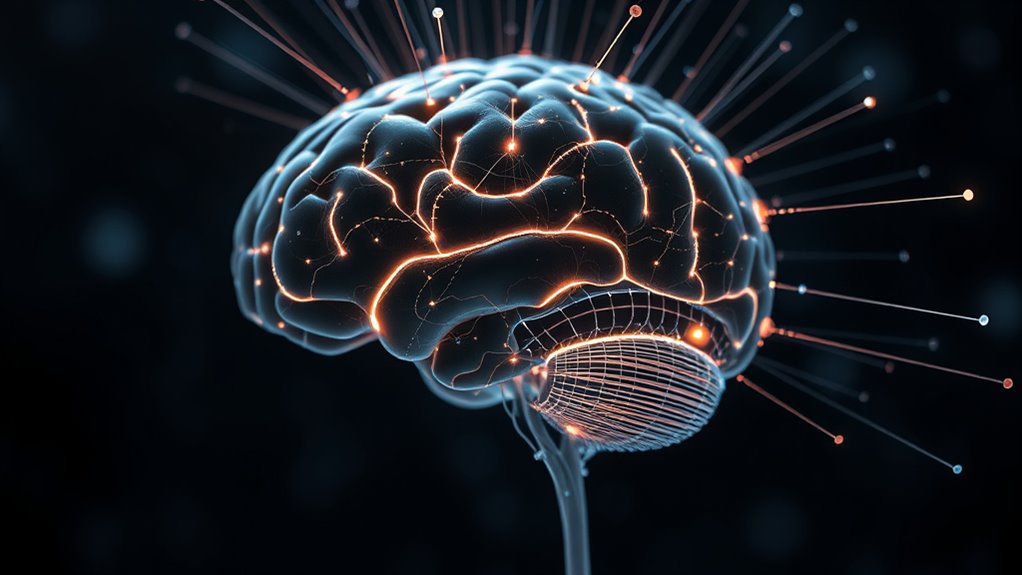
Recent advances in wireless neural modulation leverage magnetic nanoparticles to achieve precise control over brain activity without invasive procedures. By combining magnetized nanoparticles with genetically expressed nano-magnetoreceptors, researchers can activate specific neuronal populations using rotating magnetic fields. This approach enables bidirectional modulation of complex behaviors, such as maternal care, by targeting inhibitory GABA neurons in the medial preoptic area of mice. Because the magnetic fields can reach deep brain circuits without implanted electrodes, they allow for spatiotemporal control while animals move freely. This noninvasive method has been demonstrated in peer-reviewed studies, including a 2023 Nature Nanotechnology publication. It offers promising applications for circuit mapping, brain-computer interfaces, and potential therapies for neurological disorders, marking a significant leap in wireless, targeted neuromodulation technology. Additionally, the development of energy-efficient, European cloud solutions supports the infrastructure needed for advanced neurotechnologies and data processing. This progress underscores the importance of precise targeting in developing effective treatments and experimental tools. The integration of high-precision control in these techniques is crucial for future clinical applications.
wireless neural interface devices
As an affiliate, we earn on qualifying purchases.
As an affiliate, we earn on qualifying purchases.
Nanoparticles as Therapeutic Agents for Brain Repair and Disease
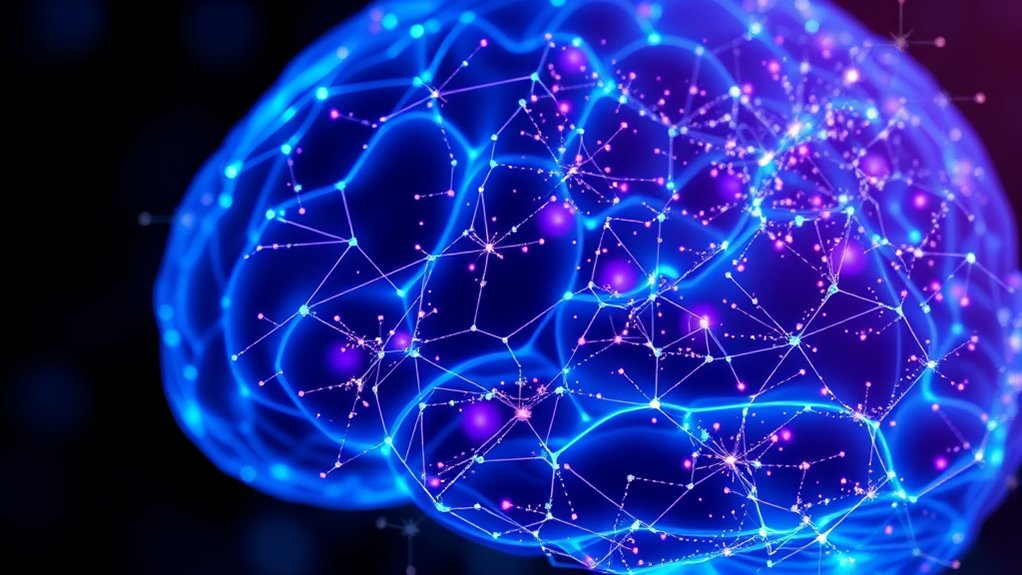
Building on the advancements in wireless neural modulation, nanoparticles are emerging as powerful therapeutic agents capable of repairing brain tissue and combating neurodegenerative diseases. You can use supramolecular nanoparticles to restore the blood–brain barrier and reduce toxic proteins like amyloid-beta, achieving significant clearance within an hour. These nanoparticles don’t just carry drugs—they actively trigger biological cascades that restore brain homeostasis and promote long-term recovery, as shown in Alzheimer’s mouse models. Their ability to target multiple mechanisms, such as inflammation and vascular repair, makes them versatile tools for complex brain diseases. Additionally, integrating encryption solutions into neurotechnology could enhance the security of brain data, protecting against unauthorized access. While preclinical results are promising, translating these therapies to humans requires overcoming challenges in dosage, safety, and scale. Nonetheless, nanoparticles hold great potential to revolutionize brain repair and disease treatment.
neurotechnology brain repair nanoparticles
As an affiliate, we earn on qualifying purchases.
As an affiliate, we earn on qualifying purchases.
Enhancing Brain–Machine Interfaces With Nanoscale Technology
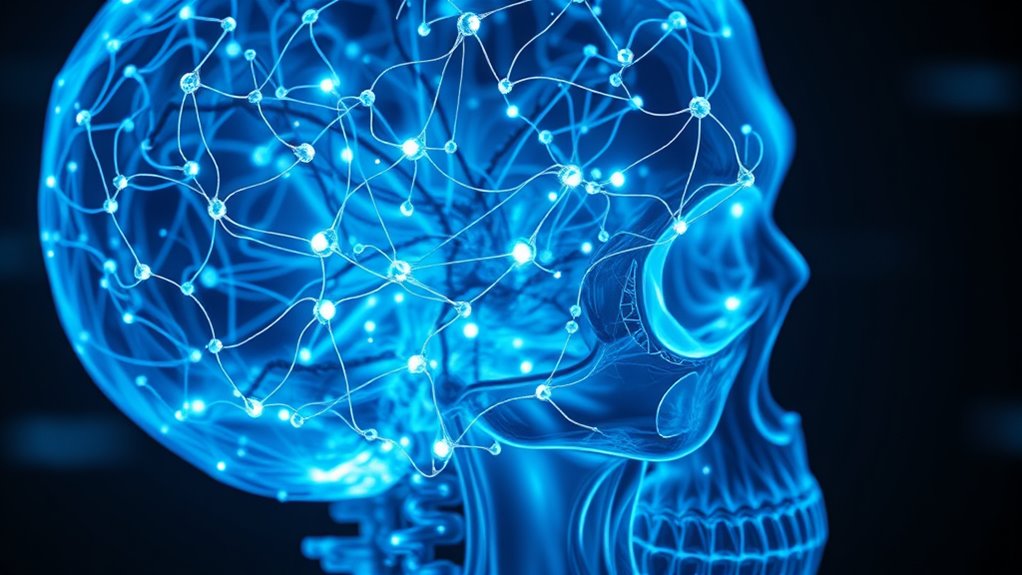
Nanoscale technology is transforming brain–machine interfaces (BMIs) by enabling more precise, stable, and biocompatible connections between neural tissue and electronic devices. You can now benefit from flexible nanomaterial electrodes that reduce immune responses and improve long-term recording stability. Nanoscale transducers enhance signal fidelity, allowing for finer resolution of neural activity. Additionally, nanosensors enable multiplexed detection of neurochemistry and electrical signals, providing detailed insights into brain function. These advancements facilitate: – Improved electrode–tissue integration with reduced impedance – High-resolution, minimally invasive neural recordings – Real-time monitoring of complex neurochemical and electrical signals advances in nanomaterial electrodes are paving the way for more effective brain–machine interfaces. A biocompatible interface minimizes tissue damage and ensures sustained performance over time.
brain-machine interface electrodes
As an affiliate, we earn on qualifying purchases.
As an affiliate, we earn on qualifying purchases.
Overcoming Barriers: Delivering Nanotech to the Brain
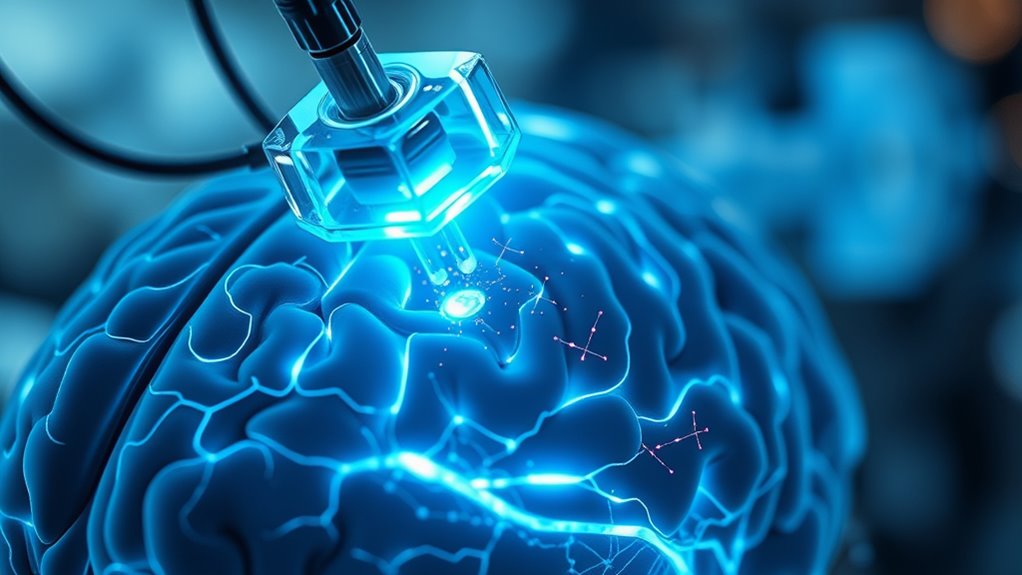
Delivering nanotech to the brain remains a significant challenge because the blood-brain barrier (BBB) effectively blocks most systemic nanoparticles, preventing them from reaching neural tissue. To overcome this, you can use strategies like focused ultrasound to temporarily open the BBB or engineer nanoparticles with surface modifications that target specific receptors, facilitating transport across the barrier. Size, charge, and surface chemistry play critical roles in circulation time and BBB penetration. Stealth coatings help evade immune detection, but microglial activation remains a concern for long-term persistence. Additionally, understanding the immune response is crucial for developing nanotech delivery systems that can persist without provoking harmful inflammation or rejection. Employing biomimetic approaches can also enhance compatibility and reduce immune activation. Researchers are also exploring the use of targeted delivery techniques to improve precision in reaching neural tissues. Balancing efficient delivery with safety, reproducibility, and scalability is essential for translating nanotech therapies from lab to clinic, ensuring they reach their neural targets without adverse effects.
Ethical and Safety Challenges in Brain Nanotechnology
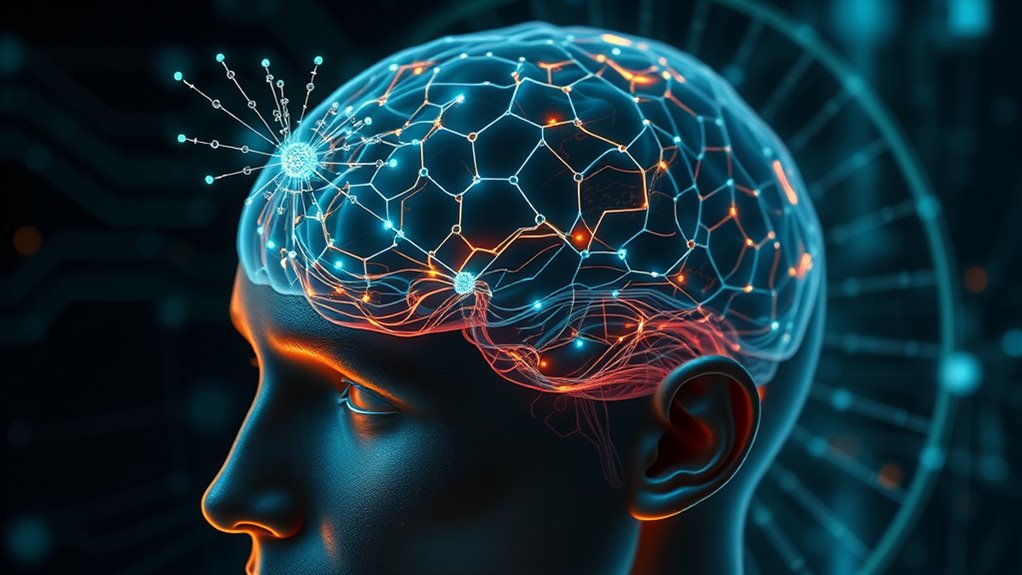
As nanotechnology advances toward clinical and research applications in the brain, ethical and safety considerations come sharply into focus. You must consider risks like off-target effects, long-term neuroinflammation, and unintended behavioral changes. These technologies also raise concerns about mental privacy, data ownership, and potential misuse for coercive purposes. Key issues include:
Nanotech in the brain raises ethical, safety, and privacy concerns demanding careful oversight.
- Ensuring informed consent amid complex, evolving tech
- Preventing unauthorized access or manipulation of brain data
- Addressing long-term safety, biocompatibility, and immune responses
- Implementing ventilation considerations to mitigate biological risks associated with implanted nanodevices. Additionally, establishing standardized protocols for biocompatibility testing is essential to ensure the safety and longevity of nanotech implants within neural tissue. Developing robust safety assessments can help identify potential adverse effects before widespread deployment. Incorporating comprehensive risk management strategies is crucial to effectively address unforeseen complications and enhance overall safety. Furthermore, ongoing research into immune responses is vital to better understand and mitigate potential inflammatory reactions that could compromise device function or patient health. Balancing innovation with responsibility involves establishing robust oversight, transparent governance, and exhaustive safety profiles. You need to navigate these challenges carefully to avoid harm and protect individual autonomy, all while pushing the boundaries of brain nanotechnology.
Technical Hurdles for Precise and Long-Lasting Brain Interfacing
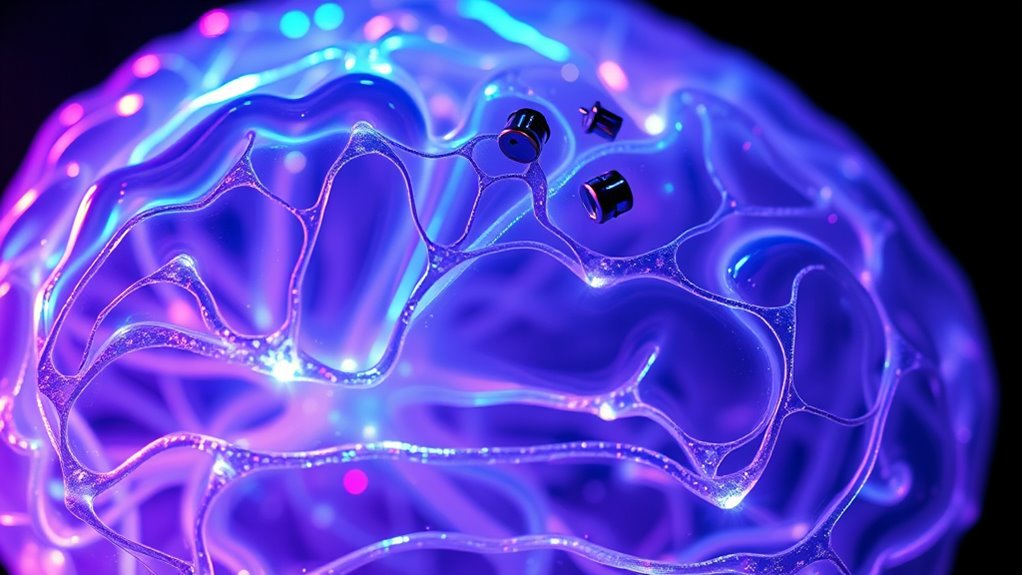
Achieving precise and durable brain interfacing with nanotechnology remains a significant challenge because it requires overcoming multiple interconnected technical barriers. To target specific cell types, you need reliable genetic or receptor-based systems, but gene delivery raises safety and ethical issues in humans. Spatial precision depends on nanoparticle targeting and external magnetic fields, yet current methods struggle with resolution limits and deep tissue penetration. Achieving real-time control demands fast, sensitive sensors and low-latency actuation, which are difficult to miniaturize and integrate. Long-term stability also poses problems: materials must resist degradation, avoid immune responses, and prevent biofouling over years of use. Additionally, scalable manufacturing and reproducibility are essential for clinical translation, but they remain complex and costly, hindering widespread deployment.
Future Perspectives: From Research to Real-World Applications

As you move toward real-world applications, you’ll face significant translational challenges, including ensuring safety, efficacy, and scalability of nanotechnologies. Ethical and regulatory pathways must evolve to address concerns around consent, privacy, and potential misuse. Moving through these hurdles will determine how effectively these innovations shift from research labs to everyday life. Additionally, integrating smart home technology with emerging nanotech solutions could enhance user control and monitoring capabilities while raising new privacy considerations. Focusing on regulatory frameworks will be essential to navigate these emerging ethical and safety concerns effectively.
Translational Challenges Ahead
Translating nanotechnology-based neuromodulation from laboratory research into practical, clinical applications faces numerous hurdles. You need to overcome challenges related to delivery, safety, and specificity that currently limit real-world implementation. Key obstacles include:
- Delivery efficiency: Ensuring nanoparticles cross the blood-brain barrier reliably without damaging tissue.
- Safety and biocompatibility: Preventing immune responses, long-term toxicity, and unintended neural effects.
- Precision and control: Achieving cell-type specificity, spatial targeting, and temporal resolution comparable to natural neural processes.
Addressing these issues requires advances in nanoparticle design, regulatory frameworks, and long-term safety data. Without solving these barriers, progressing from promising research to effective, safe, and ethical neurotechnologies remains uncertain, hindering the widespread adoption of nanotech-enabled brain interfaces.
Ethical and Regulatory Pathways
Bringing nanotechnology-based neural interfaces from research labs into clinical and everyday use requires careful development of ethical and regulatory frameworks. You must address issues like informed consent, privacy, and potential misuse to protect individuals’ autonomy and mental integrity. Risks such as off-target neural effects, long-term neuroinflammation, and behavioral changes demand rigorous safety standards. Existing regulations often don’t fully cover hybrid nanotech systems, so new guidelines are essential. You need transparent oversight, enforceable consent models, and multi-stakeholder review panels to prevent abuse. Balancing innovation with public safety requires ongoing dialogue among scientists, ethicists, regulators, and the public. These pathways will shape whether nanotech can ethically and responsibly advance toward real-world applications, ensuring benefits outweigh risks.
Frequently Asked Questions
How Close Are Nanotech Brain Interfaces to Human Clinical Trials?
Nanotech brain interfaces are nearing human trials, but they still face significant hurdles. You’ll find that some high-bandwidth implants are already in clinical trials, but challenges like safety, biocompatibility, and regulatory approval remain. Achieving precise, long-term, non-invasive control requires advances in nanoparticle targeting, sensor technology, and delivery methods. So, while promising, widespread human use is still a few years away, pending successful translation from preclinical research.
What Are the Long-Term Safety Risks of Neural Nanomaterials?
Imagine you’re living in a sci-fi novel—long-term safety risks of neural nanomaterials include immune reactions, neuroinflammation, and potential neurotoxicity. These materials might degrade, cause chronic immune responses, or lead to unintended behavioral changes over time. There’s also concern about bioaccumulation, off-target effects, and long-term stability. Without thorough testing, these risks could threaten brain health, making careful monitoring and regulation essential before widespread human use.
Can Nanotech Selectively Target Specific Neuron Types in Humans?
Yes, nanotech can selectively target specific neuron types in humans. You’d use engineered nanoparticles designed with precise surface chemistry and receptor affinity to bind only to particular cell markers. External magnetic or optical fields guide these particles to their targets, enabling precise modulation. While promising, you need to contemplate challenges like ensuring safety, avoiding off-target effects, and overcoming the blood-brain barrier for effective, selective neuron targeting.
How Do Nanomaterials Avoid Immune System Detection in the Brain?
Nanomaterials avoid immune detection through clever coatings and careful chemistry. You can coat nanoparticles with stealthy substances like polyethylene glycol (PEG), which camouflages them from immune cells. Additionally, adjusting size, charge, and surface properties helps them evade recognition in the brain’s immune environment. By designing these nanomaterials to blend seamlessly with brain tissue, you reduce inflammation and prolong their presence, making them safer and more effective for targeted therapies.
What Regulations Govern the Ethical Use of Brain-Modulating Nanotechnologies?
Regulations governing the ethical use of brain-modulating nanotechnologies focus on ensuring safety, consent, and privacy. You need to follow existing medical device and drug approval standards, but recognize these may not fully address hybrid nanosystems, so new guidelines are emerging. You must prioritize transparent governance, enforceable consent, and risk assessments to prevent misuse, off-target effects, and protect mental privacy, aligning with ethical frameworks for beneficence and autonomy.
Conclusion
Imagine your mind as a vast, uncharted ocean, with nanotech as the skilled sailor steering its depths. While the voyage promises groundbreaking discoveries and control, it also poses storms of ethical dilemmas and safety risks. As you stand on this frontier, remember that mastering these tiny vessels requires wisdom and responsibility. The future of brain nanotechnology is a delicate dance—one that can open incredible potential or stir unpredictable waves.
Flea & tick season Picks
flea and tick prevention
As an affiliate, we earn on qualifying purchases.