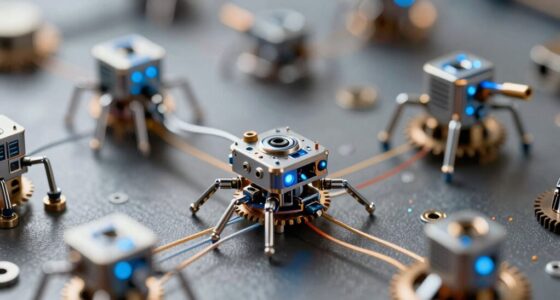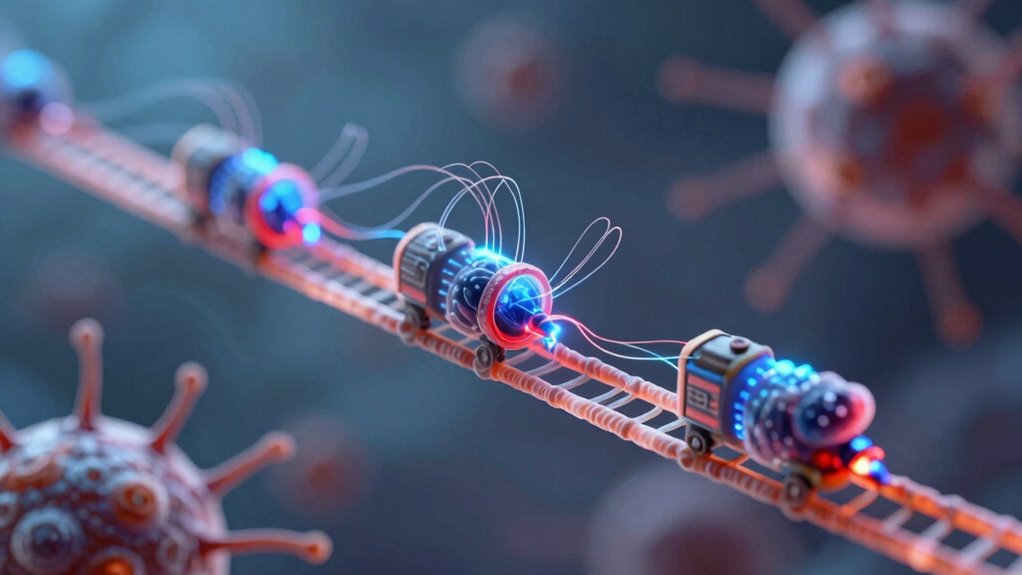

Inside your cells, molecular motors are tiny machines like myosin, kinesin, and dynein that generate movement by converting chemical energy into motion. They transport organelles, proteins, and signals along filaments, ensuring your cells function properly. These specialized proteins work like microscopic engines, essential for processes like muscle contraction and cell division. If you keep exploring, you’ll uncover how these remarkable nanomachines drive life at the cellular level.
Key Takeaways
- Molecular motors like myosin, kinesin, and dynein convert chemical energy from ATP hydrolysis into mechanical work.
- They move directionally along cytoskeletal filaments such as actin and microtubules within cells.
- These nanomachines facilitate essential processes like organelle transport, cell division, and intracellular signaling.
- Their conformational changes amplify small shifts into nanometer-scale steps, enabling efficient movement.
- Understanding these natural nanomachines inspires development of artificial nanotechnology and targeted medical therapies.
molecular motor model kits
As an affiliate, we earn on qualifying purchases.
As an affiliate, we earn on qualifying purchases.
The Diverse Families of Molecular Motors
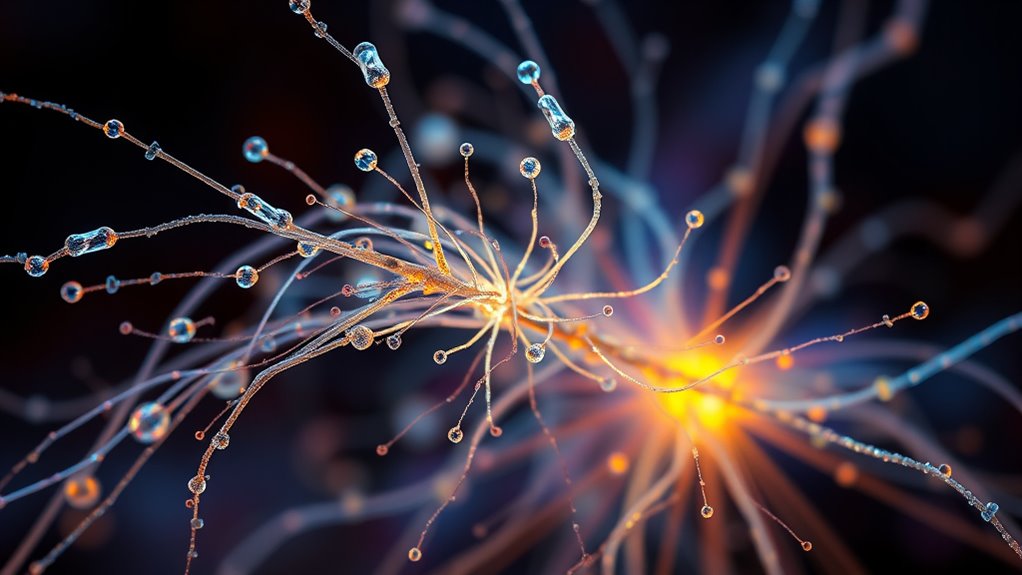
Molecular motors in cells fall into three primary families: myosin, kinesin, and dynein. You’ll find myosin proteins mainly working with actin filaments, powering muscle contractions, ciliary movement, and vesicle transport. Kinesin travels along microtubules toward their plus ends, carrying cargo like mitochondria or secretory vesicles. Dynein moves in the opposite direction, toward microtubules’ minus ends, playing crucial roles in mitosis, spindle formation, and retrograde transport. Each family has unique structures but shares a common motor head domain that binds filaments and hydrolyzes ATP to generate movement. Your cells rely on these motors to organize internal components, maintain shape, and support essential processes like cell division and intracellular trafficking. Youngster Choice Their coordinated actions keep your cells functioning smoothly.
biological nanomachine educational kit
As an affiliate, we earn on qualifying purchases.
As an affiliate, we earn on qualifying purchases.
Structural Secrets of Motor Proteins
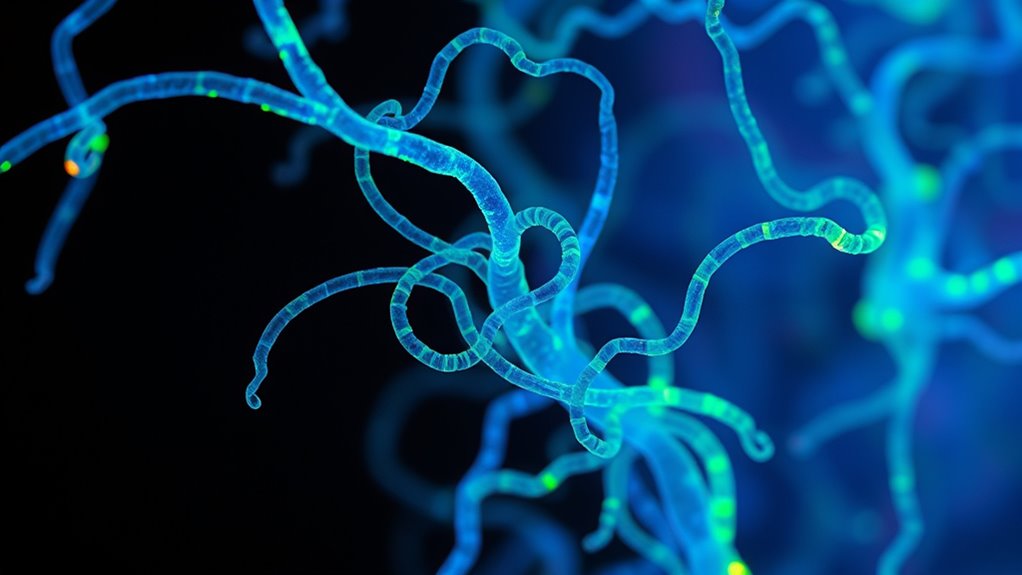
The unique structures of motor proteins enable them to convert chemical energy into mechanical work efficiently. You’ll find that their core is the motor head domain, which binds to tracks and hydrolyzes ATP. Myosin uses a lever arm to amplify conformational changes from ATP hydrolysis, pushing movement. Kinesin relies on a linker region to transmit ATP-induced shifts to the microtubule interface. Dynein’s legs, tagged with fluorescent markers, move in a staggering, irregular pattern that resembles a drunken sailor. The tail regions attach to various cargos, giving each motor specialized functions beyond the head domain. These structural features work together, ensuring precise, forceful movement within cells. Understanding these secrets reveals how motor proteins power essential cellular processes with remarkable efficiency. Additionally, recent research highlights how sustainable practices in biotech manufacturing can reduce environmental impacts of cellular studies. Incorporating biotech sustainability strategies not only benefits the environment but can also improve the overall efficiency of cellular research and manufacturing processes. To achieve these goals, scientists are exploring energy-efficient technologies that support sustainable cellular operations, aligning biotechnology with ecological responsibility. Moreover, advances in protein engineering are enabling the design of motor proteins with enhanced performance for various biomedical applications. Such innovations are often driven by insights from AI-powered content creation tools, which accelerate the development of new biotechnological solutions.
cell biology molecular motor poster
As an affiliate, we earn on qualifying purchases.
As an affiliate, we earn on qualifying purchases.
How Molecular Motors Move: The Mechanics Behind the Motion
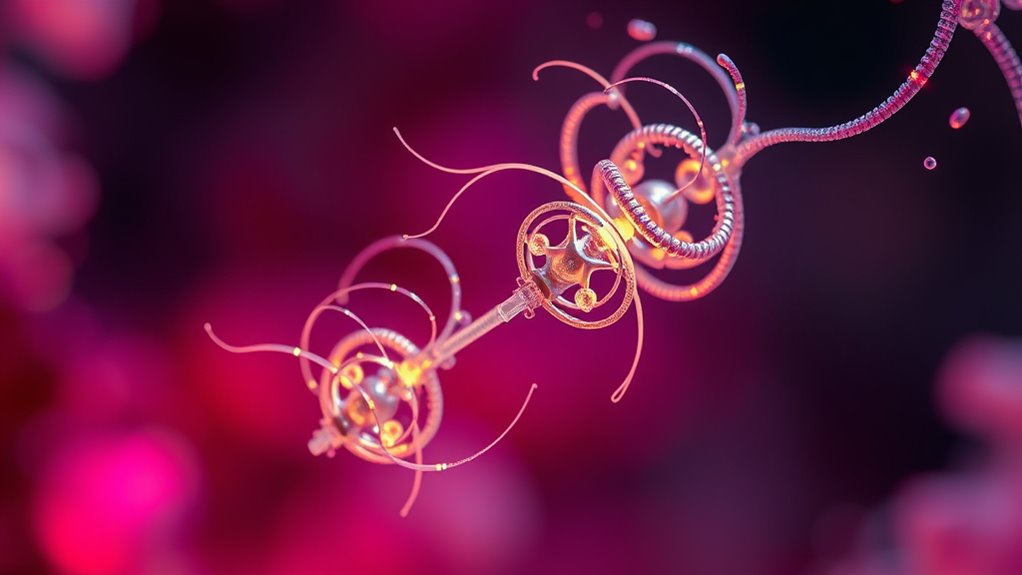
Understanding how molecular motors generate movement begins with their ATP hydrolysis cycle, which triggers small conformational changes in their structure. These tiny shifts are amplified into nanometer-scale steps along cytoskeletal tracks. You can think of it as a cyclical process where ATP binds, is hydrolyzed to ADP and inorganic phosphate, causing the motor to change shape. This conformational change propels the motor forward, releasing ADP and resetting the cycle for the next step. Different motors utilize distinct structural elements to convert chemical energy into mechanical work. Here’s a simplified overview:
| Step | Nucleotide State | Mechanical Change |
|---|---|---|
| 1 | ATP binding | Motor attaches to track |
| 2 | ATP hydrolysis | Power stroke occurs |
| 3 | ADP release | Motor prepares for next |
| 4 | Pi release | Detachment or reset |
| 5 | New ATP binding | Cycle repeats |
Additionally, the energy transduction process involves intricate protein structures that enable these tiny conformational shifts to produce actual movement. Recent studies have highlighted how protein conformational changes are essential for efficient energy conversion. A deeper understanding of these processes can shed light on broader cellular functions such as transport and division. These molecular mechanisms rely on precise structural dynamics that facilitate the conversion of chemical energy into mechanical work, ensuring the proper functioning of cellular activities. Understanding these molecular mechanisms reveals how complex biological motion arises from fundamental chemical processes.
ATP hydrolysis model
As an affiliate, we earn on qualifying purchases.
As an affiliate, we earn on qualifying purchases.
Cellular Roles of Molecular Motors in Health and Disease
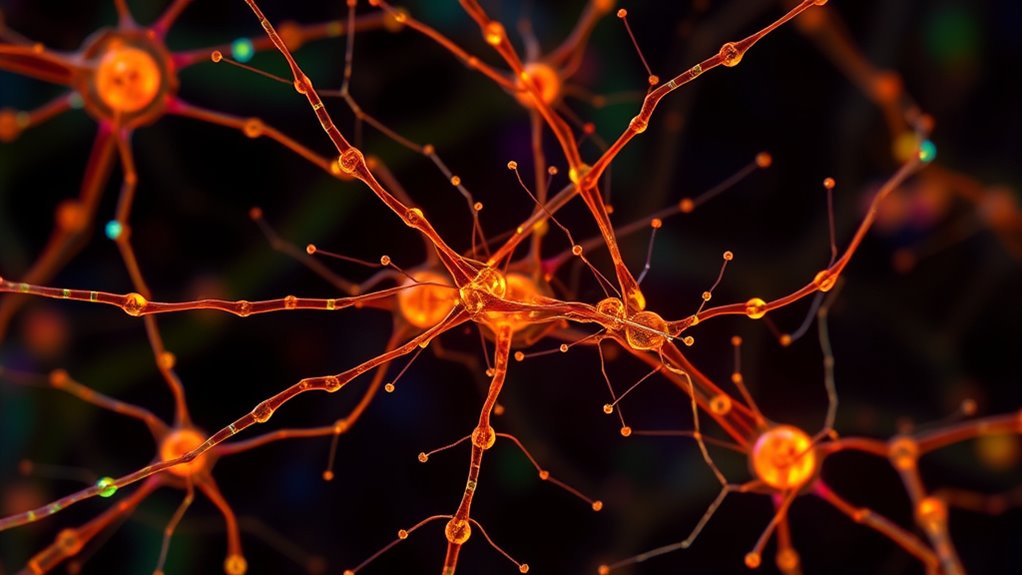
Molecular motors play essential roles in maintaining cellular health by facilitating the precise transport of organelles, proteins, and RNA. Without these motors, cells can’t organize or adapt efficiently, leading to disease. For instance, impaired kinesin function can cause neurodegenerative conditions by disrupting axonal transport. Dynein malfunctions are linked to motor neuron diseases, while myosin defects affect muscle function. Proper motor activity ensures accurate cell division, preventing genetic errors. Failures in these systems can result in cell death or dysfunction. You should know that these motors also contribute to cellular signaling, maintaining polarity, and response to stress. Additionally, their activity is crucial for timeless cellular processes, such as responding to environmental changes and sustaining cellular integrity. These processes depend on the dynamic movement of molecules and organelles, which is orchestrated by molecular motors to preserve cellular function. Moreover, they are vital for cellular communication, coordinating complex interactions within the cellular environment. Recent studies highlight how motor protein regulation is essential for adapting to cellular needs under various conditions. For example, the regulation of motor proteins influences how cells respond to stress signals and adapt accordingly.
The Future of Research on Molecular Nanomachines
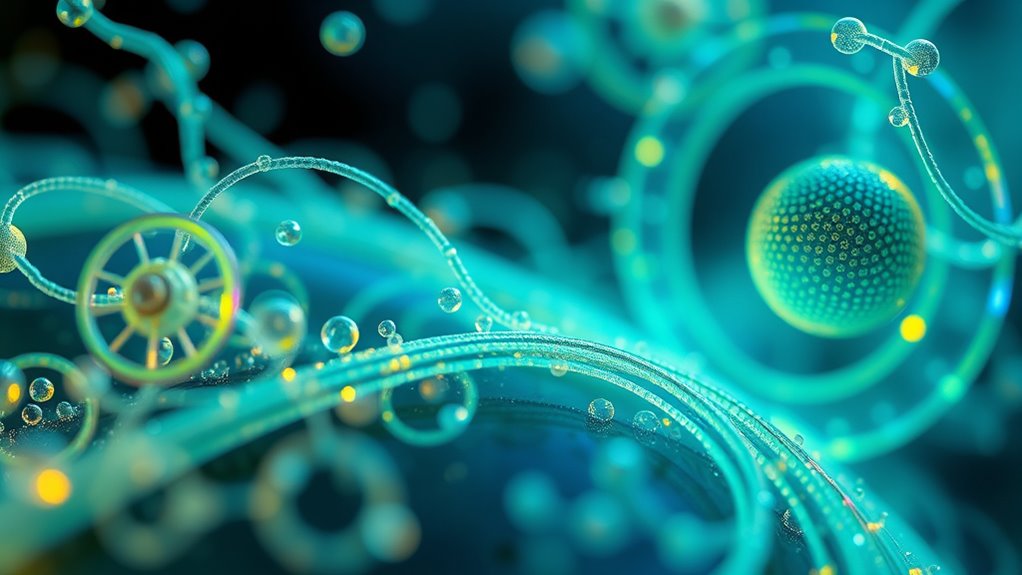
Advances in studying molecular motors open exciting possibilities for designing artificial nanomachines that mimic their precise and efficient movements. You’ll see researchers leveraging structural insights to craft synthetic motors capable of targeted, controlled motion at the nanoscale. You may also see researchers exploring the latest nanotechnology techniques, which could further enhance the capabilities of artificial nanomachines. Future work may involve integrating these motors into drug delivery systems, where they navigate complex cellular environments to release therapeutics exactly where needed. Innovations in bioengineering could produce hybrid machines combining biological and artificial components, enhancing stability and function. Additionally, understanding motor regulation and energy efficiency will guide the development of sustainable, durable nanodevices. Researchers are also exploring streamline Your Life With Easy Document Management, which could inspire more efficient ways to organize and control complex systems. Moreover, insights from local culture and traditions may influence the design of culturally adaptive nanomachines that respect diverse user needs. As you follow this research, expect breakthroughs enabling machines that operate seamlessly within living systems, revolutionizing medicine, materials science, and nanotechnology—turning molecular motors from biological marvels into versatile tools.
Frequently Asked Questions
How Do Molecular Motors Recognize and Bind Specific Cargoes?
You recognize and bind specific cargoes through specialized tail domains on molecular motors. These tails contain binding sites that attach to cargo adaptor proteins or directly to the cargo itself, like organelles or vesicles. This selective interaction guarantees the motor transports the right cargo to its destination. You can think of the tail as a lock-and-key mechanism, finely tuned to recognize particular molecules or structures within the cell.
What Factors Regulate Motor Activity Within the Cell?
You might be surprised to learn that over 80% of cellular transport is driven by molecular motors. Their activity is regulated by factors like ATP availability, which fuels movement, and the binding of adaptor proteins that activate or inhibit them. Additionally, post-translational modifications, such as phosphorylation, fine-tune motor functions, ensuring they respond appropriately to cellular needs and coordinate transport, division, and other critical processes.
Can Molecular Motors Function Independently or Only in Groups?
You might wonder if molecular motors can work alone or only in groups. They can function independently, but often they team up for efficiency and reliability. For example, single motors transport small cargo, but complex tasks like moving large organelles or chromosomes usually involve multiple motors working together. This collaboration assists in overcoming obstacles, increases force, and ensures smooth, continuous movement within your cells.
How Do Mutations Affect the Function of Molecular Motors?
Mutations can disrupt your molecular motors by changing their structure or function. You might see reduced ATP hydrolysis, impaired movement, or inability to bind to filaments. This can lead to faulty cargo transport, errors in cell division, or muscle weakness. In neurons, it might cause transport blockages, resulting in neurodegenerative diseases. Fundamentally, mutations compromise the motors’ efficiency, which can have serious consequences for cell health and overall bodily functions.
Are There Synthetic or Artificial Molecular Motors Inspired by Nature?
Yes, there are synthetic and artificial molecular motors inspired by nature. Researchers design these tiny machines using principles from biological motors, enabling controlled movement at the nanoscale. You might see them in nanotechnology and drug delivery systems, where they mimic natural motor functions to transport molecules precisely. These artificial motors often use chemical energy, light, or electrical signals to power movement, opening new possibilities for medical and technological innovations.
Conclusion
Imagine your cells as busy factories powered by tiny molecular motors working tirelessly behind the scenes. These nanomachines transport nutrients, repair damage, and keep you alive. For instance, a malfunction in kinesin could disrupt nerve signal transmission, leading to neurological issues. As research advances, you’ll gain a deeper understanding of these incredible motors, opening doors to innovative treatments. Embrace the marvel of nature’s nanomachines—they’re truly the microscopic engines driving your health.