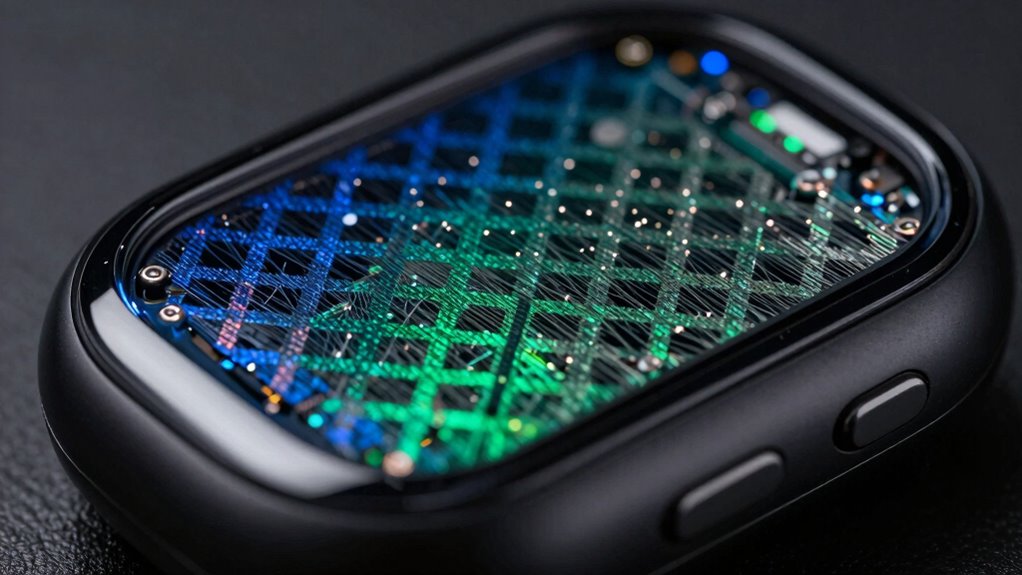

Nanomaterials like carbon nanotubes, graphene, MXene, silver nanowires, and conductive polymers are revolutionizing your wearables by making fabrics more sensitive, flexible, durable, and energy-efficient. They enable integrated sensors, self-powered energy harvesting, and transparent conductors, enhancing comfort and long-term performance. Although challenges like stability and mass production exist, ongoing innovations are paving the way for smarter, washable, and multifunctional garments. Exploring these tiny tech advancements reveals how your devices are becoming more advanced and reliable.
Key Takeaways
- Nanomaterials like carbon nanotubes, graphene, and MXene enhance the flexibility, conductivity, and durability of wearable electronics.
- They enable integration of sensors for real-time health monitoring, temperature regulation, and biomarker detection.
- Nanomaterials power energy harvesting devices such as nanogenerators and flexible solar panels embedded in clothing.
- Advanced fabrication techniques allow scalable, lightweight, and high-performance nanostructures for smart textiles.
- Challenges include ensuring biocompatibility, stability, and scalable manufacturing for widespread adoption.

Carbon Nanotube Fibres and Yarns: Production, Properties and Applications in Smart Textiles (The Textile Institute Book Series)
As an affiliate, we earn on qualifying purchases.
As an affiliate, we earn on qualifying purchases.
Unveiling the Power of Carbon Nanotubes in Wearable Textiles

Carbon nanotubes (CNTs) have transformed wearable textiles by markedly enhancing their electrical, mechanical, and chemical properties. You’ll notice how CNTs improve conductivity, allowing fabrics to function as sensors, antennas, or energy conductors. Their exceptional strength makes textiles more durable and resistant to wear and tear, ensuring longevity even under vigorous movement. Additionally, CNTs boost chemical stability, enabling fabrics to withstand environmental factors like moisture and sweat. Their lightweight nature keeps textiles comfortable, while their ability to form flexible, conductive networks preserves fabric flexibility. This chemical stability is crucial for maintaining performance in various environmental conditions. The integration of CNTs can also improve the mechanical durability of fabrics, making them more resistant to tearing and abrasion. This enhancement is especially important for wearable devices that are subjected to frequent movement and stress. Overall, CNTs enable a new generation of smart textiles that are stronger, more responsive, and better suited for everyday wear. Electrical conductivity is a key factor that enhances the integration of electronic functionalities within wearable fabrics.
graphene health monitoring clothing
As an affiliate, we earn on qualifying purchases.
As an affiliate, we earn on qualifying purchases.
Graphene’s Role in Temperature Regulation and Health Monitoring
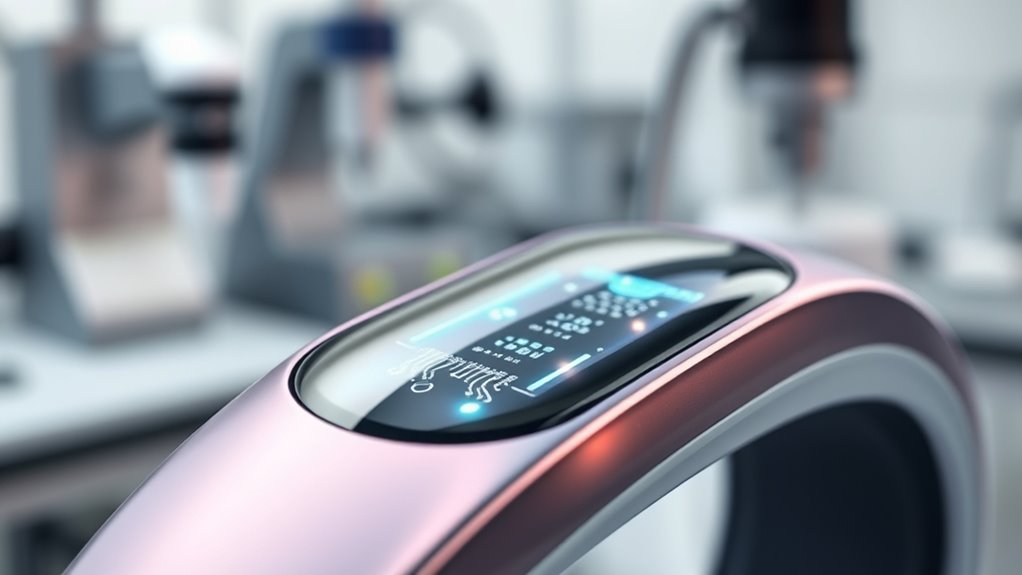
Building on the strength and flexibility provided by carbon nanotubes, graphene introduces new possibilities for smart textiles by enabling precise temperature regulation and health monitoring. Its exceptional thermal conductivity allows fabrics to adapt to external conditions, keeping you comfortable or alerting you to temperature changes. Thermal management is enhanced through the integration of graphene, which efficiently distributes heat across the fabric surface. Graphene-based sensors can monitor vital signs like heart rate, respiration, and body temperature in real time, providing continuous health data. Its transparency and thinness make it ideal for unobtrusive integration into clothing without sacrificing comfort or breathability. These sensors are highly sensitive, detecting even slight physiological variations, which improves early diagnosis and personalized healthcare. Additionally, nanomaterials enhance the durability and functionality of wearable devices, making them more reliable over time. The incorporation of biocompatible materials ensures that these advanced textiles are safe for prolonged skin contact. Incorporating advanced nanomaterials into clothing further boosts their resilience and performance. By embedding graphene into your wearables, you gain a lightweight, durable, and efficient system capable of maintaining optimal thermal balance and providing critical health insights seamlessly throughout your day, while also enhancing comfort.
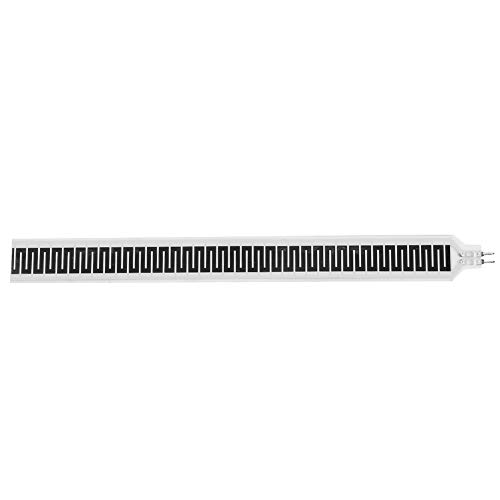
SF15-150 Thin Film Pressure Sensor, Flexible Force Sensor with Design, Ultra – Thin High – Sensitivity Nanomaterial for Sleep Monitoring and Smart Wearables
Ultra-Fast Response & High Sensitivity: The SF15-150 thin film pressure sensor uses advanced flexible nanomaterials to detect even…
As an affiliate, we earn on qualifying purchases.
As an affiliate, we earn on qualifying purchases.
MXene-Enhanced Biosensors and Conductive Networks

MXene materials have revolutionized biosensors and conductive networks in wearable electronics by offering exceptional electrical conductivity and surface chemistry. You benefit from their ability to enhance sensor sensitivity, enabling real-time detection of biomarkers, pH levels, and electrophysiological signals with high accuracy. MXene’s layered structure allows easy integration into flexible textiles and polymer matrices, maintaining breathability and comfort. Their surface chemistry facilitates functionalization, improving selectivity for specific analytes. In conductive networks, MXenes form lightweight, durable, and highly conductive pathways that withstand bending and stretching. This makes your wearable devices more reliable during daily activities. Furthermore, MXene’s excellent charge storage capacity supports energy-efficient operation, reducing power demands. This property is particularly important for wearable energy storage solutions, ensuring longer device usage without frequent charging. The high surface area of MXenes also contributes to increased sensor performance by providing more active sites for analyte interaction. Additionally, the compatibility of MXenes with safety standards ensures their safe use in consumer electronics. Incorporating advanced nanomaterials like MXenes into your devices can further optimize their overall performance and durability. Overall, MXene-enhanced biosensors and networks enable smarter, more responsive wearables for health monitoring and personalized healthcare. Wiring basics can help optimize the integration and performance of MXene-based components in your devices.

Self-Powered Smart Fabrics for Wearable Technologies (Springer Theses)
As an affiliate, we earn on qualifying purchases.
As an affiliate, we earn on qualifying purchases.
Silver Nanowires: Transparent Conductors for Flexible Devices

Silver nanowires have become a key material in creating transparent, flexible conductors for wearable electronics because of their excellent electrical conductivity and optical transparency. Their high aspect ratio allows them to form percolating networks on flexible substrates, enabling efficient charge transport without sacrificing clarity. You can incorporate these nanowires into touchscreens, sensors, and displays that bend and stretch with your movements. Silver nanowire films are lightweight and maintain conductivity even after repeated flexing, making them ideal for wearable devices. The fabrication process is scalable and cost-effective, allowing integration into large-area textiles and flexible circuits. Additionally, their biocompatibility ensures safe contact with skin, broadening their applicability in wearable tech. The durability of silver nanowire networks under mechanical stress is enhanced by nanostructure engineering, which helps maintain performance over time. Advances in manufacturing techniques are making it easier to produce high-quality nanowire films at scale. Moreover, ongoing research into material stability is improving the longevity of silver nanowire-based components in real-world conditions. Understanding environmental factors is crucial for ensuring the long-term performance of these nanomaterials. As a result, silver nanowires help you enjoy seamless, durable, and visually unobtrusive electronic functions in your smart clothing and accessories.
Conductive Polymers Enabling Large-Area Displays
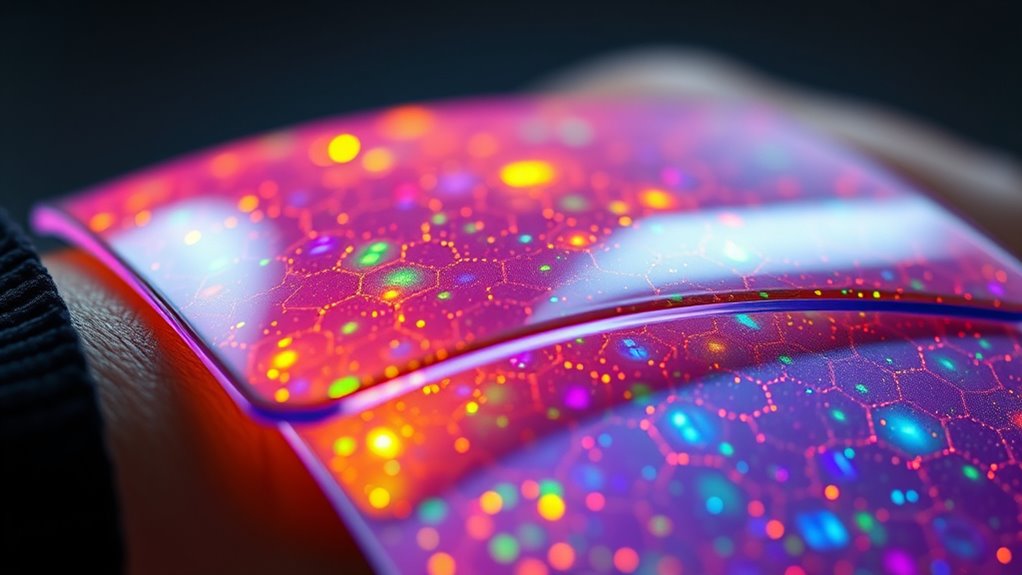
Conductive polymers play a pivotal role in enabling large-area displays for wearable electronics by providing flexible, lightweight, and efficient conductive layers. These polymers, such as PEDOT:PSS, are easily processed into thin, transparent films that can stretch and bend without losing conductivity. Their adaptability allows you to create seamless, conformal displays directly on clothing or skin. Unlike rigid materials, conductive polymers enable smooth integration with textiles, ensuring comfort and durability. They also consume less power, making them ideal for energy-efficient, large-area screens. You can incorporate them into roll-to-roll manufacturing processes, reducing costs and enabling scalable production. Overall, conductive polymers empower you to develop flexible, durable, and visually appealing displays that enhance wearable device functionality and user experience.
Energy Harvesting Technologies Embedded in Clothing

You can harness your movement and body heat with nanogenerators woven into your clothing, turning everyday activity into usable energy. Wearable solar panels made from nanomaterials capture sunlight to power devices on the go. These energy harvesting techs help create self-sufficient wearables that keep you connected without relying solely on batteries. Additionally, advancements in nanomaterials are improving the efficiency and durability of these energy-harvesting systems, making them more practical for everyday use and expanding their potential applications in green technology. The development of flexible electronics further enhances the integration of energy harvesting components into various fabrics and accessories. Moreover, innovations in wearable tech are continuously pushing the boundaries of how these energy solutions can be seamlessly incorporated into daily life.
Nanogenerators From Movement
Have you ever wondered how clothing can generate power from your daily movements? Nanogenerators, such as triboelectric and piezoelectric types, convert mechanical energy from motion into electrical energy. These tiny devices are embedded into fabrics, capturing energy from walking, stretching, or bending. They can power low-energy sensors or assist in energy storage, reducing reliance on batteries. This technology relies on nanomaterials like CNTs, graphene, and MXenes, which enhance flexibility, durability, and efficiency. Understanding nanomaterials is essential to appreciating how these devices achieve their remarkable performance, especially as advancements in nanomaterial engineering continue to evolve. Additionally, ongoing research is expanding the range of energy harvesting applications in wearable technology, making it more versatile and efficient.
Wearable Solar Energy
Imagine powering your wearable devices seamlessly throughout the day—wearable solar energy technologies make this possible by integrating thin, flexible solar panels directly into clothing. These nanomaterial-based panels harvest sunlight efficiently while remaining lightweight and comfortable. They adapt to your movements and can be embedded into fabrics without sacrificing breathability or style. With this innovation, you can enjoy uninterrupted data monitoring, communication, and health tracking.
Here are four reasons you’ll love wearable solar energy:
- Stay connected longer without needing to recharge.
- Experience freedom from bulky batteries.
- Enjoy eco-friendly energy harvesting on the go.
- Keep your devices powered in remote or outdoor settings.
This technology transforms your clothing into a renewable power source, making wearables smarter and more sustainable.
Cutting-Edge Fabrication Techniques for Nanoscale Integration

Cutting-edge fabrication techniques are transforming how nanoscale materials are integrated into wearable electronics, enabling highly functional and flexible smart textiles. You leverage methods like electron beam lithography and nanoimprint lithography to create precise nanostructures, ensuring ideal performance. Incorporating nanomaterials such as CNTs, graphene, and MXenes involves building conductive networks directly within fibers or coatings, allowing seamless integration. You also use nanocomposites, embedding conductive particles into polymers like thermoplastic polyurethane, to produce stretchable, durable fabrics. Liquid metal nanodroplets and 2D materials enhance soft electronics, providing conductivity without sacrificing flexibility. These advanced techniques minimize electrical resistance and improve mechanical stability, making wearable devices more reliable and comfortable. By mastering these fabrication methods, you push the boundaries of nanoscale integration in smart textiles.
Benefits of Nanomaterials: Sensitivity, Comfort, and Durability

Nanomaterials substantially enhance the performance of wearable electronics by providing high sensitivity, which allows sensors to detect minute physiological changes with precision. This means you can get early alerts for health issues and more accurate data. Their small size also makes devices lightweight and flexible, so they won’t weigh you down or restrict movement. Plus, nanomaterials boost durability, ensuring your wearables last longer through everyday wear and tear. Here’s what you gain:
Nanomaterials boost wearable sensors with high sensitivity, durability, and flexibility for better health monitoring.
- Unmatched sensitivity for early disease detection and precise monitoring.
- Enhanced comfort with flexible, breathable fabrics that feel natural on your skin.
- Long-lasting durability to keep your device functioning reliably over time.
- Superior stability under dynamic conditions, maintaining performance during active lifestyles.
This combination of benefits truly transforms your wearable experience.
Overcoming Challenges: Stability, Biocompatibility, and Commercialization

To bring tiny tech in wearables to market, you need to focus on enhancing material durability and stability, so devices can withstand daily use. Ensuring biocompatibility standards is essential to prevent adverse reactions and maintain user trust. Scaling manufacturing processes is also critical to produce consistent, high-quality products efficiently and affordably.
Enhancing Material Durability
Enhancing the durability of materials in wearable electronics is essential for their long-term reliability and user safety. You need nanomaterials that withstand daily wear and environmental stress without losing performance. Here’s how you can achieve this:
- Surface coatings: Apply protective layers to prevent corrosion, mechanical damage, and wear.
- Flexible binders: Use advanced polymers and composites that absorb strain and prevent cracking.
- Encapsulation techniques: Seal sensitive nanomaterials to shield them from moisture, sweat, and chemicals.
- Robust fabrication methods: Employ precise nanostructuring that enhances mechanical strength while maintaining flexibility.
These strategies ensure your devices stay functional, safe, and comfortable over time, making them reliable companions in your daily life.
Ensuring Biocompatibility Standards
Achieving biocompatibility in wearable nanomaterials is essential for ensuring user safety and device longevity. You need materials that won’t cause skin irritation or adverse reactions. To meet standards, researchers test for toxicity, stability, and compatibility with body tissues. Selecting inert nanomaterials like graphene or coated CNTs reduces risks. Here’s a quick overview:
| Material | Benefits | Challenges |
|---|---|---|
| Graphene | Excellent conductivity, biocompatibility | Ensuring long-term stability |
| Silver Nanowires | Antimicrobial, flexible | Potential skin irritation |
| MXene | Good biosensor support | Biocompatibility testing needed |
Scaling Manufacturing Processes
Scaling up manufacturing processes for wearable nanomaterials faces significant hurdles related to stability, biocompatibility, and commercialization. You must guarantee that tiny components maintain their properties at scale, which is no easy feat. Challenges include integrating nanomaterials into flexible textiles without losing functionality, securing biocompatibility for long-term wear, and steering regulatory pathways. To overcome these obstacles:
- Develop robust, scalable fabrication techniques like nanoimprint lithography.
- Optimize material formulations to improve stability and durability.
- Implement quality control systems that ensure consistent performance.
- Collaborate with regulatory agencies early to streamline approval processes.
Future Trends: Self-Powered, Washable, and Multifunctional Smart Wearables
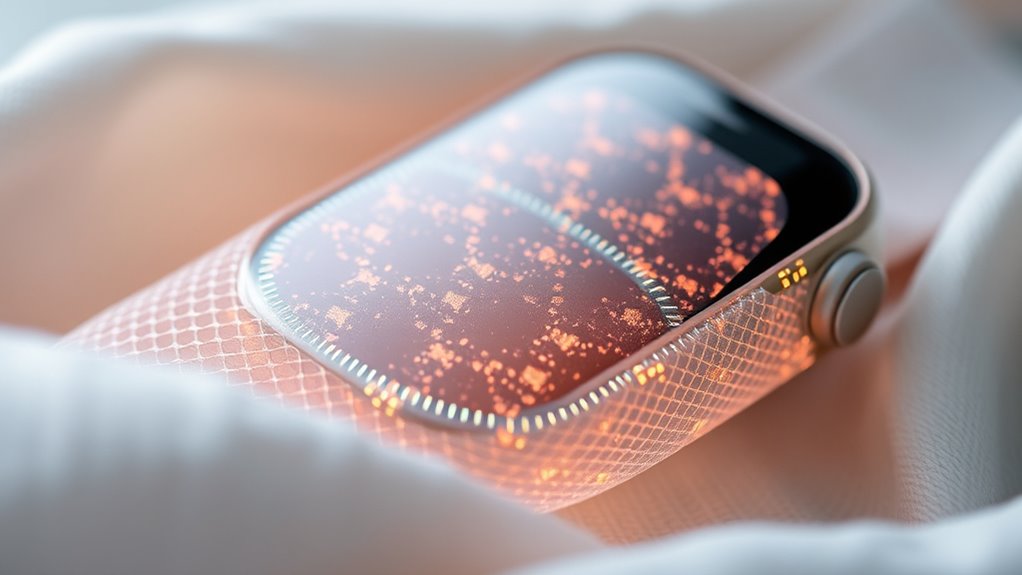
As wearable technology continues to evolve, the focus shifts toward developing self-powered, washable, and multifunctional smart garments that seamlessly integrate into daily life. Advances in nanomaterials enable textiles that generate energy from movement and body heat, reducing reliance on batteries. Researchers are creating fabrics with embedded sensors that monitor health metrics while remaining washable and durable. Multifunctional textiles combine sensing, energy storage, and communication features, making wearables more versatile. To understand these trends, consider this table:
| Feature | Benefit | Example |
|---|---|---|
| Self-Powered | Extended use without batteries | Piezoelectric nanowires |
| Washable | Practical daily wear | Durable nanomaterial coatings |
| Multifunctional | Combined sensing and energy storage | Graphene-integrated textiles |
| Flexibility | Comfort and mobility | CNT-based fibers |
| Durability | Long-term reliability | MXene-enhanced fabrics |
Frequently Asked Questions
How Do Nanomaterials Ensure Comfort and Breathability in Smart Textiles?
Nanomaterials guarantee comfort and breathability in smart textiles by maintaining flexibility and lightweight properties, so you don’t feel bulky or restricted. They are embedded into fabrics without compromising softness, allowing air to circulate efficiently. Their high surface area enhances moisture wicking and temperature regulation, keeping you dry and comfortable. Plus, nanomaterials’ durability means your smart clothing stays functional and comfortable, even after repeated wear and washing.
What Are the Safety Considerations for Nanomaterials in Wearable Devices?
You need to take into account potential health risks from nanomaterials like CNTs or silver nanowires, which can pose toxicity or cause skin irritation if released. To stay safe, guarantee proper encapsulation within textiles and follow strict manufacturing standards. Regular testing for nanoparticle release and biocompatibility helps prevent exposure. Protect your skin and environment by choosing wearables that prioritize safety, durability, and responsible nanomaterial integration.
How Scalable Are Fabrication Methods for Commercial Smart Clothing Production?
You’ll find that fabrication methods for smart clothing are increasingly scalable, thanks to advancements like nanoimprint lithography and embedding techniques. These processes allow mass production of nanocomposites and conductive networks efficiently. While challenges like maintaining consistency and ensuring biocompatibility remain, ongoing innovations aim to streamline manufacturing, making large-scale commercial production more feasible. This progress enables the widespread adoption of smart textiles with integrated nanomaterials.
Can Nanomaterials Maintain Performance After Repeated Washing and Wear?
Nanomaterials can maintain performance after repeated washing and wear if properly integrated and protected. You should choose robust materials like conductive polymers or coated nanowires that resist degradation. Using encapsulation techniques and durable bonding methods helps preserve functionality. Regular testing and selecting flexible, biocompatible nanomaterials also guarantee your smart fabrics stay reliable, comfortable, and effective through long-term use, making them suitable for everyday wear.
What Are the Environmental Impacts of Nanomaterial Disposal From Wearables?
You should know that disposing of nanomaterials from wearables can impact the environment by releasing potentially toxic particles into soil and water. These particles may accumulate, harm aquatic life, and disrupt ecosystems. When you throw away devices containing nanomaterials, they can break down and release harmful substances. To minimize this, recycle your wearables properly, and support regulations that guarantee safe disposal of nanomaterials.
Conclusion
By embracing nanomaterials, you can enjoy smarter, more comfortable wearables with enhanced durability and functionality. While some worry about stability or biocompatibility, ongoing research guarantees these materials are safe and reliable. As technology advances, you’ll see wearables that are not only self-powered and washable but also seamlessly integrated into your daily life. So, don’t let concerns hold you back—these innovations are shaping a smarter, more connected future that benefits you.