
📊 Full opportunity report: DDR5 Now, DDR6 Soon: A Buyer’s Field Guide on ThorstenMeyerAI.com — validation score, market gap, and execution plan.

Get the latest gadgets delivered free with Prime
- Fast, free delivery on millions of items
- Prime Video, Amazon Music and more included
- Member-only deals all year
TL;DR
DDR5 memory remains the best choice for mainstream builds in 2026, with prices stable at DDR5-6000 CL30. DDR6 is not yet ready for mainstream adoption and will arrive around 2027 on new platforms. Buyers should prioritize DDR5 now and avoid DDR4 and early DDR6 investments.
DDR5 memory remains the recommended choice for mainstream PCs in 2026, with prices stable and performance well-suited for current platforms. DDR6 is still in development and not expected to be available for consumer desktops until 2027, at a significantly higher cost. This development impacts buyers planning new builds or upgrades this year, emphasizing the importance of choosing DDR5 now rather than waiting.
Market forecasts indicate that DDR5-6000 CL30 memory offers the best value for most users, providing optimal performance at a reasonable price point. Higher-speed kits like DDR5-8000 are generally unnecessary for gaming or typical workloads and represent a poor cost-to-performance ratio. Memory capacity decisions should be based on actual workload needs, with 32GB suitable for most gaming and desktop tasks, and 64GB preferable for content creators or heavy multitasking. Buying 128GB modules now risks locking in high prices for capacity that may remain unused for years.
Regarding platform compatibility, newer motherboards support CUDIMMs for higher stability at overclocked speeds, and workstation users should verify support for registered DDR4 or DDR5 modules, depending on their platform. Importantly, DDR4 is no longer advisable for new builds, as it is nearing end-of-life and costs roughly the same as DDR5, with no future upgrade path.
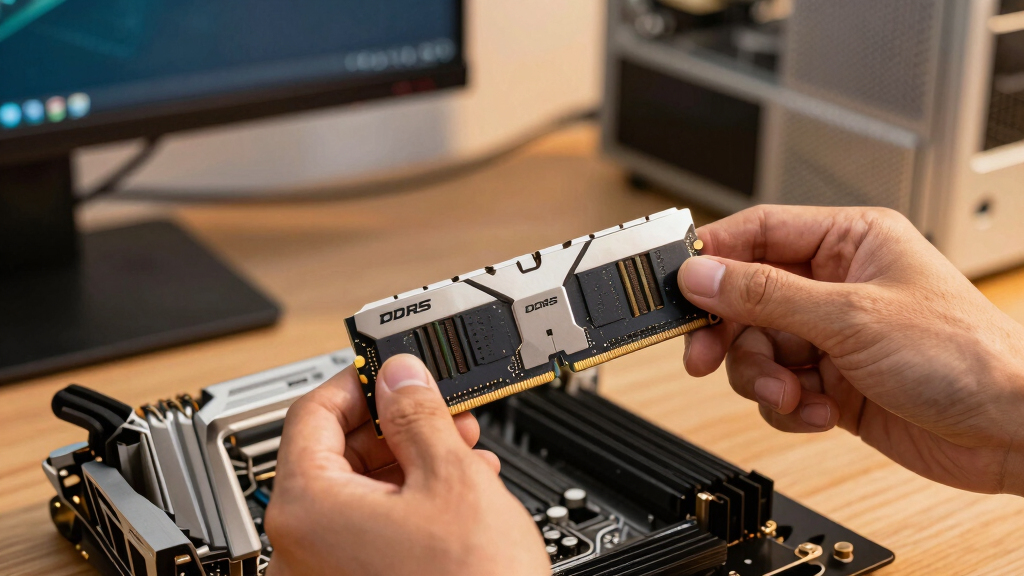
As for DDR6, it promises significant performance improvements with wider channels and higher transfer speeds, starting around 8,800 MT/s and reaching up to 17,600 MT/s, but it requires entirely new hardware, including a new CPU, chipset, and memory modules. Its physical form factor, CAMM2, is a departure from traditional DIMMs, mounting directly onto the motherboard for signal integrity at high speeds.
DDR5 now, DDR6 soon
A buyer’s field guide. The 20-year instinct — wait for prices to drop, or wait for the next generation — is broken this cycle. Buy the DDR5 you actually need now; don’t wait for DDR6. Here’s the reasoning.
Driven to end-of-life, production slashed. Same money, dead-end socket. Leave a working DDR4 box alone — but never start a new build on DDR4 to “save.”
A framework, not a gamble. Buy the DDR5 you need now, at the sweet spot, in the capacity you’ll actually use — don’t buy DDR4, don’t wait for DDR6. The two costliest mistakes in this market are the ones that feel prudent: waiting for a price drop that isn’t coming, and waiting for a next-gen part that launches dearer than what’s on the shelf. Next: The SSD Squeeze.
Why DDR5 Is the Smart Choice for 2026 Buyers
Choosing DDR5 now aligns with current platform support, offers better value, and avoids the high costs and limited capacities associated with early DDR6 adoption. Waiting for DDR6 would mean delaying builds by at least two years, paying a premium, and missing out on platform and CPU advancements in the meantime. For most users, DDR5 provides the best balance of performance, price, and future-proofing, making it the recommended memory standard for 2026 and beyond.
As an affiliate, we earn on qualifying purchases.
Memory Market Trends and Future Developments in 2026
The memory market experienced a surge in prices due to supply shortages and increased demand, leading to a significant price premium for DDR5. Meanwhile, DDR4 is being phased out, and manufacturers are focusing on DDR5 as the standard for new platforms. DDR6 is in the early stages of development, with standards finalized but products not yet available for mainstream consumers. The rollout is staged, with enterprise and AI applications first, followed by high-end desktops and laptops in 2027, with broad adoption not expected until around 2030.
Industry experts, including JEDEC, confirm DDR6 will be a substantial upgrade but caution that early adoption involves risks such as immature technology and limited capacity options. The transition to DDR6 will mirror the slow adoption curve seen with DDR4, emphasizing the importance of strategic timing for buyers.
“DDR6 will significantly increase bandwidth but requires new hardware, and widespread adoption will take several years.”
— JEDEC standards committee
As an affiliate, we earn on qualifying purchases.
Unclear Aspects of DDR6 Adoption Timeline and Compatibility
While DDR6 standards are finalized, actual product availability, pricing, and platform support remain uncertain. Early DDR6 modules may face compatibility issues, and prices are expected to be high initially. The timeline for mainstream adoption is projected around 2027–2030, but delays could occur due to manufacturing or technological challenges.
As an affiliate, we earn on qualifying purchases.
Next Steps for Buyers Considering Memory Upgrades in 2026
Buyers should prioritize DDR5-6000 CL30 modules for current builds, focusing on capacity aligned with workload needs. Keep an eye on motherboard support for newer memory standards and verify compatibility, especially if considering high-speed or enterprise-grade modules. For those planning long-term systems, monitor the development and eventual release of DDR6, but avoid early adoption until products are mature and prices stabilize.
Expect further updates from JEDEC and hardware manufacturers throughout 2026, clarifying DDR6 support and availability. Planning for a DDR5-based upgrade now is the most practical approach, with DDR6 remaining a future consideration for late 2020s builds.
As an affiliate, we earn on qualifying purchases.
Key Questions
Should I buy DDR4 memory in 2026?
No. DDR4 is nearing end-of-life, and new platforms are moving exclusively to DDR5. Buying DDR4 now offers no future upgrade path and is not cost-effective compared to DDR5.
When will DDR6 be available for mainstream desktops?
DDR6 is expected to become available around 2027 on new platforms, with broad adoption unlikely until 2030. Early versions will be expensive and limited in capacity.
Is it worth waiting for DDR6 to save money?
Currently, no. Waiting for DDR6 means delaying your build by at least two years and paying a premium for early models. DDR5 offers better value and performance for now.
Will DDR6 significantly improve gaming performance?
Probably not. DDR6’s bandwidth benefits are more relevant for data-intensive workloads like AI and scientific computing. For gaming, DDR5 provides sufficient speed.
What should I look for when buying DDR5 in 2026?
Focus on DDR5-6000 CL30 modules, buy capacity suited to your workload (32GB or 64GB), and ensure motherboard support for high-speed memory. Avoid over-investing in capacity or speed beyond your needs.
Source: ThorstenMeyerAI.com
Columbus Day / Indigenous Peoples' Day Picks
long weekend sales
As an affiliate, we earn on qualifying purchases.