
📊 Full opportunity report: HBM Ate the Fab on ThorstenMeyerAI.com — validation score, market gap, and execution plan.
TL;DR
High Bandwidth Memory (HBM) has shifted from niche tech to the dominant memory component, consuming a large share of wafer production and causing widespread RAM shortages. This development affects GPU availability and prices.
High Bandwidth Memory (HBM) has become the dominant component driving the global memory shortage in 2026, with its production consuming a significant portion of wafer capacity. This shift is affecting the supply and pricing of RAM and graphics cards worldwide, impacting consumers and industry players alike.
Since 2023, HBM has evolved from a specialized memory type to a critical element in AI accelerators and high-performance GPUs, with major suppliers like SK Hynix, Samsung, and Micron ramping up production for the 2026 Rubin platform. The market value of HBM surged from $35 billion in 2025 to an estimated $100 billion in 2028, accounting for around 41% of all DRAM revenue in 2026.
Manufacturing HBM is highly inefficient, requiring complex stacking, leading to lower yields and higher costs. Each HBM stack consumes 3-4 times the wafer area of DDR5, meaning that every wafer dedicated to HBM reduces the supply of standard memory. As demand for HBM-driven products grows, manufacturers prioritize HBM production, squeezing out other memory types.
By mid-2026, all three major suppliers—SK Hynix, Samsung, and Micron—had qualified and begun volume production of HBM4 for Nvidia’s Rubin platform. SK Hynix currently holds around 50–62% of the HBM market, with Nvidia sourcing approximately 90% of its HBM from SK Hynix alone. This tight coupling has caused supply constraints, leading to increased prices and shortages across the industry.
HBM ate the fab
The thing the factories make instead of your RAM is a tower of stacked memory bolted to every AI chip. In three years it went from niche part to the component that sets the price of nearly all the world’s memory — and now a chunk of its GPUs.
A tower, not a sheet
HBM stacks DRAM dies vertically, links them with thousands of through-silicon vias, and sits beside the GPU to deliver 5–10× the bandwidth of normal graphics memory. AI is bandwidth-bound — without it, the world’s most expensive silicon sits starved for data. But stacking is inefficient: one HBM bit eats 3–4× the wafer area of DDR5, and one defect can ruin a whole tower.
≈ 8 HBM stacks wrap every AI GPUThis isn’t artificial scarcity — AI really is bandwidth-bound, HBM really is the fix, and it really does eat 3–4× its weight in fab capacity. The discomfort is structural: one component, coupled to one customer’s demand, now sets the price of nearly all memory and a slice of GPUs. The market is now $35B → ~$100B by 2028, ~41% of all DRAM revenue (was 8% in 2023), and sold out through 2026. The one hope: with all three suppliers finally racing on HBM4, competition can add supply. The matching risk: if AI demand corrects, HBM is where it breaks first. Next: DDR5 now, DDR6 soon.
Impact of HBM Dominance on Global Memory Supply
The dominance of HBM in the memory industry has shifted the focus from traditional RAM to high-value, wafer-intensive components. This transition has caused a significant shortage of RAM and GPUs, affecting PC builders, gamers, and data centers. The trend indicates that as HBM demand grows, other memory markets will face continued supply pressures, potentially leading to higher prices and limited availability.

ADATA DDR5 5600 SO-DIMM Memory Module – 16GB High Bandwidth Laptop Memory Module (RAM) – High-Speed 5600MHz – Automatic Error Correction – Compatible with AMD & Intel Platforms – AD5S560016G-S
- High-Speed DDR5 Memory: 5600MHz performance for fast computing
- 16GB Capacity: Ample memory for multitasking
- Compact SO-DIMM Design: Ideal for laptop upgrades
As an affiliate, we earn on qualifying purchases.
As an affiliate, we earn on qualifying purchases.
Rise of HBM and Its Market Expansion in 2023–2026
Starting from a niche product, HBM has rapidly expanded due to its superior bandwidth, essential for AI training and inference. The technology’s complexity and manufacturing challenges have kept supply tight, with SK Hynix leading the market since 2024. The 2026 qualification of all three major suppliers for Nvidia’s Rubin platform marked a turning point, intensifying demand and supply constraints across the industry.
“All three HBM suppliers qualified and in production for Rubin, marking a new phase of supply tightness.”
— Nvidia spokesperson
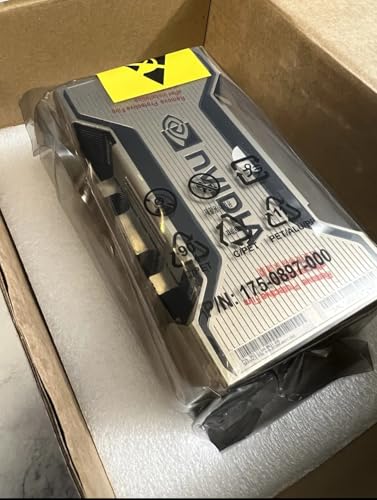
A100 SXM4 GPU Module, 80GB HBM2e Memory, 6912 CUDA Cores, 400W TDP 900-2G506-0210-320/965-2G506-0031-200
- CUDA Cores: 6912 CUDA cores for high performance
- Tensor Cores: 432 third-gen Tensor cores
- Performance: Up to 19.5 TFLOPS FP32
As an affiliate, we earn on qualifying purchases.
As an affiliate, we earn on qualifying purchases.
Unresolved Aspects of HBM Supply and Industry Impact
It remains unclear how quickly manufacturers can increase HBM yields and capacity to meet the rising demand. The exact impact on consumer RAM and GPU prices in the coming months is also still developing, with some industry insiders suggesting potential relief but no certainty.
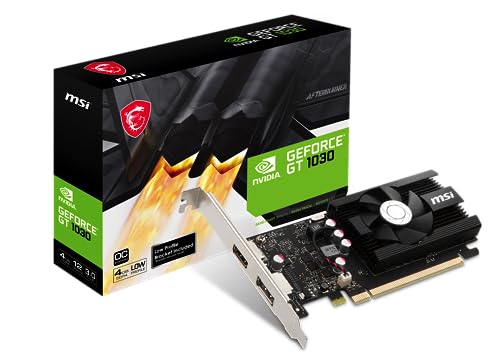
msi Gaming GeForce GT 1030 4GB DDR4 64-bit HDCP Support DirectX 12 DP/HDMI Single Fan OC Graphics Card (GT 1030 4GD4 LP OC)
- Chipset: NVIDIA GeForce GT 1030
- Video Memory: 4GB DDR4
- Boost Clock: 1430 MHz
As an affiliate, we earn on qualifying purchases.
As an affiliate, we earn on qualifying purchases.
Expected Developments in HBM Production and Industry Response
Manufacturers are likely to continue investing in HBM fabrication improvements, but supply constraints may persist through 2026 and possibly into 2027. Industry analysts anticipate that as HBM supply stabilizes, prices may plateau or decrease, but the current shortage is expected to influence market dynamics for the foreseeable future.

youyeetoo AI Accelerator Card up to 64TOPS, PCIe Gen3 x16, Based on 16 x G-oogle Coral Edge TPU Processor, Enabling AI-Based Real-time Decision Process at Edge(CRL-G116U-P3DF)
- Maximum TPU Modules Supported: Supports 8-16 Google Coral Edge TPU modules
- TPU Performance: Up to 64 TOPS with 16 Edge TPUs
- Framework Compatibility: Supports TensorFlow Lite
As an affiliate, we earn on qualifying purchases.
As an affiliate, we earn on qualifying purchases.
Key Questions
Why is HBM causing a RAM shortage in 2026?
Because HBM consumes significantly more wafer area per unit than DDR5, its high demand and manufacturing difficulty reduce the overall wafer supply available for standard memory, leading to shortages and higher prices.
Will HBM shortages affect gaming GPUs?
Yes, the tight supply of HBM is contributing to GPU shortages and increased prices, especially for high-end models that rely on HBM memory, impacting gamers and PC builders.
Can manufacturing improvements solve the HBM shortage?
Manufacturers are working to improve yields and capacity, but given the complexity of HBM production, significant relief may not occur until late 2026 or later, if at all.
How does HBM’s growth compare to other memory types?
HBM’s market share has grown rapidly, projected to reach over 40% of DRAM revenue in 2026, far outpacing traditional DDR5 growth and dominating the high-performance memory sector.
Source: ThorstenMeyerAI.com