
TL;DR

Get the latest gadgets delivered free with Prime
- Fast, free delivery on millions of items
- Prime Video, Amazon Music and more included
- Member-only deals all year
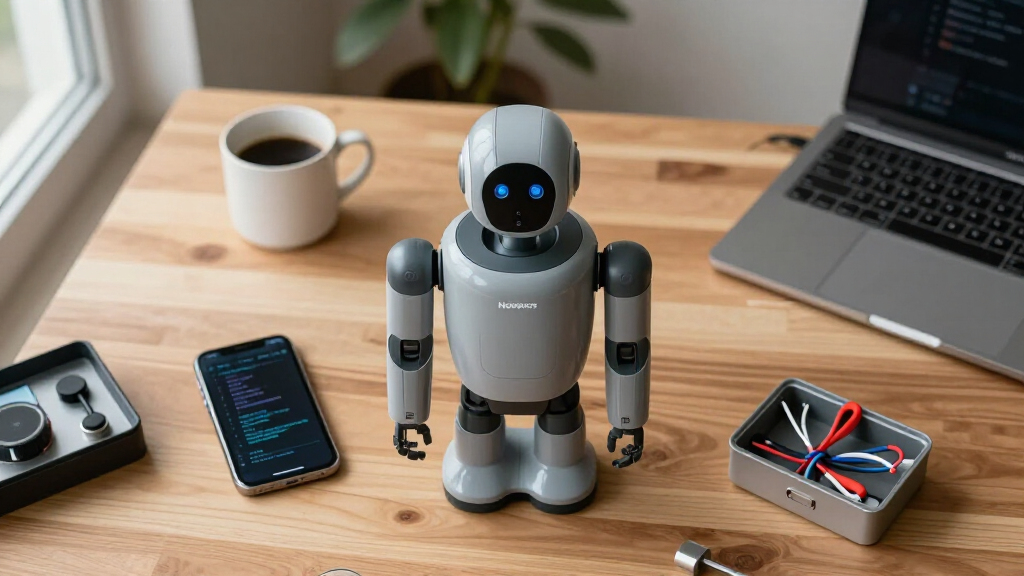
Nori Robotics has announced a new low-cost humanoid robot priced at $1,688, targeting developers and researchers. The startup aims to democratize access to humanoid robotics hardware, with more details expected soon.
Nori Robotics, a startup from Y Combinator’s S26 batch, has revealed a low-cost humanoid robot priced at $1,688, intended for developers and researchers. The robot aims to make humanoid robotics more accessible by offering a compact, bimanual mobile platform that can be used for a variety of applications.
The robot, built in San Francisco, features a bimanual design with mobile capabilities, targeting the robotics development community. Nori Robotics describes it as a cost-effective platform meant to lower the barrier to entry for robotics experimentation and innovation. The company has not yet disclosed full technical specifications but emphasizes its affordability and versatility.
According to a company representative, Antonio, the robot is priced at $1,688, positioning it as one of the most affordable humanoid platforms in its class. The startup is currently in the early stages of deployment, with initial units expected to be available for purchase soon. The announcement has already generated significant interest among developers, startups, and academic institutions seeking accessible humanoid robotics hardware.
Impact on Robotics Development Accessibility
This development could significantly lower the financial barriers for robotics researchers and startups, enabling more experimentation with humanoid robots. The affordability of Nori Robotics’ platform may accelerate innovation and democratize access to advanced robotics hardware, potentially leading to broader adoption and new applications in research, education, and industry. However, the full capabilities and technical details are still to be confirmed, and the actual performance of the robot remains to be seen.Popular right now

Ninja NC501 CREAMi XL Deluxe 11-in-1 Ice Cream and Frozen Treat Maker with Two XL Containers

KitchenAid Artisan 5-Qt Tilt-Head Stand Mixer – Dried Rose (KSM150PS)

TCL T7 Series 85-Inch 4K 144Hz QLED Smart Google TV
As an affiliate, we earn on qualifying purchases.
Growing Interest in Affordable Humanoid Robots
Interest in humanoid robots has surged in recent years, driven by advancements in AI, sensors, and actuation technologies. Major tech companies and startups alike have been investing in humanoid platforms, but high costs have limited widespread adoption outside of large research labs. The trend signal for affordable humanoids has been rising, with coverage and search interest spiking, likely fueled by the broader push toward democratizing robotics hardware.
While many existing humanoid robots remain expensive and complex, startups like Nori Robotics aim to fill a gap by offering more accessible options. The unconfirmed trigger for this particular announcement appears to be a broader industry push toward lower-cost, development-focused hardware, but details are still emerging. The landscape remains competitive, with other companies also exploring affordable robotics platforms, though none have yet matched the specific price point or design focus announced by Nori.
“We built a $1,688 bimanual mobile robot aimed at making humanoid robotics accessible for developers and researchers.”
— Antonio, Nori Robotics
Technical Details and Performance Remain Unclear
Details about the robot’s technical specifications, such as sensors, actuators, AI integration, and durability, are not yet publicly available. It is also unclear how the robot performs in real-world scenarios or how it compares to higher-end humanoid platforms. The company has not confirmed the release timeline beyond initial availability, and third-party testing or reviews are still pending.
Availability and Further Technical Disclosure Expected Soon
Nori Robotics is expected to release more detailed specifications and demonstration videos in the coming weeks. The company may also open pre-orders or start pilot programs with select partners. Observers will be watching for independent evaluations of the robot’s capabilities, as well as broader industry reactions to its affordability and design.
Key Questions
What makes Nori Robotics’ humanoid robot different from existing options?
The robot is priced at $1,688, making it significantly more affordable than many comparable humanoid platforms, and is designed specifically for development and research, emphasizing versatility and accessibility.
When will the robot be available for purchase?
Initial units are expected to be available soon, though the exact release date has not been officially confirmed. More details are anticipated in the coming weeks.
What technical features are included in the robot?
Specific technical specifications have not yet been disclosed. The company emphasizes affordability and versatility but has not provided detailed hardware or software information at this stage.
Who is the target audience for this robot?
The primary target audience includes robotics developers, startups, academic researchers, and educational institutions seeking affordable humanoid platforms for experimentation and development.
How might this impact the robotics industry?
If successful, the robot could democratize access to humanoid robotics hardware, fostering innovation and broadening participation in humanoid robot development beyond well-funded labs and corporations.
Source: hn