
TL;DR

Get the latest gadgets delivered free — and shop member deals
- Fast, free delivery on millions of items
- Access to Prime Big Deal Days deals on October 6–7
- Prime Video, Amazon Music and more included
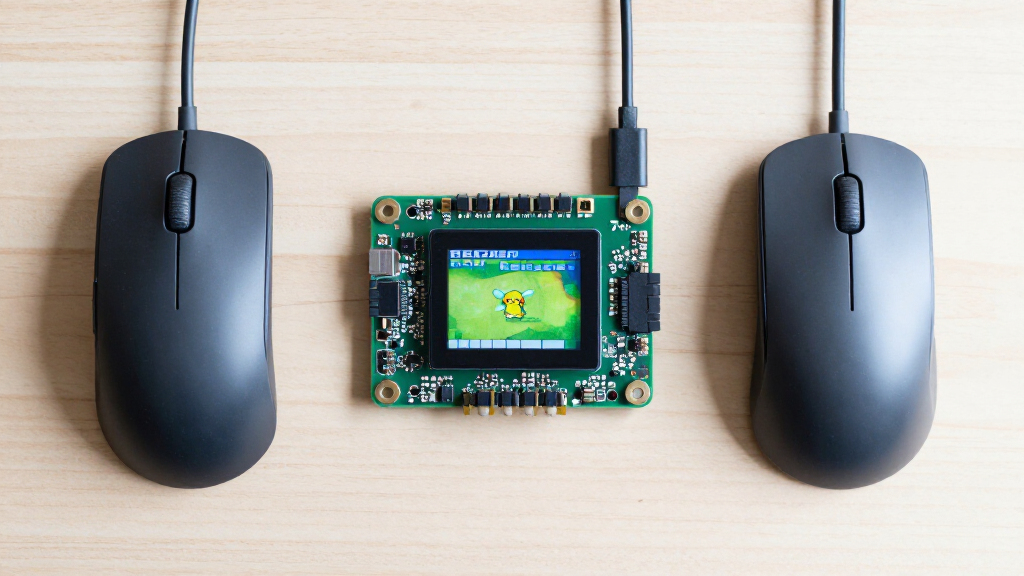
A developer successfully ported Pokémon Emerald to the Raspberry Pi Pico 2 microcontroller, enabling it to run directly with 60 fps HDMI output. This was achieved by reimplementing the GBA hardware in software and recompiling the game from ARMv4T to Cortex-M33.
A developer has successfully ported Pokémon Emerald to the Raspberry Pi Pico 2 microcontroller, achieving a smooth 60 frames per second HDMI output without using an emulator. This development showcases the Pico 2’s capabilities for running complex Game Boy Advance (GBA) games directly on its hardware.
The port was accomplished by recompiling the game from ARMv4T architecture to Cortex-M33, which is the core used in the Pico 2. Additionally, the GBA’s video hardware was reimplemented entirely in software, allowing the game to run natively on the microcontroller.
This project, shared on Show HN, marks a significant technical achievement, as it bypasses traditional emulation methods and directly utilizes the hardware of the Pico 2 for high-performance gaming. The developer reports achieving a consistent 60 fps output via HDMI, a notable feat for such a small device.
Why Running Pokémon Emerald on Pico 2 Matters
This development demonstrates the potential for high-performance gaming on microcontrollers not traditionally associated with complex emulation or gaming. It highlights the Pico 2’s processing power and flexibility, opening possibilities for homebrew projects and custom gaming hardware.
Furthermore, this achievement could inspire further software optimization and hardware experimentation in the maker community, pushing the boundaries of what small, low-cost devices can achieve in terms of gaming performance and multimedia output.
Raspberry Pi Pico 2 microcontroller
As an affiliate, we earn on qualifying purchases.
As an affiliate, we earn on qualifying purchases.
Background of GBA Emulation and Pico 2 Capabilities
The Raspberry Pi Pico 2, powered by the Cortex-M33 core, is primarily designed for embedded applications rather than high-performance gaming. Previous efforts to run GBA games on microcontrollers relied heavily on emulators, which often resulted in lower frame rates and latency issues.
Recent advances in software reimplementation of hardware components have enabled more direct execution of game code, reducing overhead and improving performance. The developer’s approach of recompiling the game binary and reimplementing the video hardware marks a departure from traditional emulation methods.
Prior to this, the Pico 2 was used mainly for embedded projects, sensor data processing, and simple multimedia tasks, making this port a notable technical milestone.
“Recompiling Pokémon Emerald from ARMv4T to Cortex-M33 and reimplementing the GBA hardware in software allowed us to run the game directly on the Pico 2 with smooth 60 fps output.”
— the developer
As an affiliate, we earn on qualifying purchases.
Unanswered Questions About Performance and Compatibility
It is not yet clear how broadly this port can be applied to other GBA games or whether performance remains consistent across different titles. The long-term stability and potential limitations of this approach are still unknown, as the project appears to be a proof of concept rather than a fully developed emulator-free platform.
Additional details about the port’s compatibility with various game features, save states, and potential hardware modifications are still emerging.
As an affiliate, we earn on qualifying purchases.
Next Steps for Pico 2 GBA Projects and Community Involvement
The developer is expected to share detailed documentation, source code, and possibly a step-by-step guide for others to replicate or improve upon this port. Community interest may lead to further optimizations, porting other GBA titles, and exploring multimedia applications on the Pico 2.
Future milestones could include achieving more comprehensive compatibility, enhancing performance, and integrating user-friendly interfaces for game loading and control.
As an affiliate, we earn on qualifying purchases.
Key Questions
How does this port differ from traditional GBA emulators?
This port runs the game directly on the Pico 2 hardware by recompiling the game binary and reimplementing the GBA video hardware in software, avoiding emulation overhead and achieving higher frame rates.
Can this approach be used for other GBA games?
Potentially, but compatibility and performance may vary depending on the game’s complexity and the specific porting process used. Further testing is needed.
What hardware modifications are necessary, if any?
No hardware modifications are reported; the port runs on a standard Raspberry Pi Pico 2 with HDMI output, assuming appropriate software setup.
Is this project publicly available?
The developer shared the project on Show HN, and detailed code or instructions may be released in the future for community use and experimentation.
Source: hn
Fall Picks
fall essentials
As an affiliate, we earn on qualifying purchases.