Advanced technology is no longer confined to specialized research centers or the largest manufacturers. Tools such as industrial 3D printers, programmable logic platforms, automated laboratory systems, precision scanners, and high-speed cameras now support work across engineering, product development, biotechnology, quality assurance, education, and small-scale manufacturing.
That wider availability creates a new challenge: choosing equipment that genuinely fits the application. Specification sheets can be dense, similarly named products may serve very different users, and the highest numbers do not always translate into the best results. A useful evaluation starts with the work itself—what must be produced, measured, captured, or automated—and then identifies the capabilities needed to do it reliably.
This hub offers an orientation to the major categories covered by Nanomachines. Whether you are building a prototyping lab, upgrading an inspection workflow, automating repetitive liquid handling, or preparing an advanced electronics project, the sections below will help you identify the right questions and find the relevant deep-dive guides.
Start With the Application, Not the Product Category
Technical equipment purchases often go wrong when a broad label becomes the starting point. “3D scanner,” for example, could mean a portable device for capturing large objects, a metrology system for dimensional inspection, or an optical instrument designed for profile comparison. These tools overlap in purpose but differ substantially in accuracy, portability, workflow, and output.
Before comparing models, define the task in concrete terms. Identify the materials or samples involved, the dimensions and tolerances that matter, the working environment, the expected throughput, and the people who will operate the equipment. A system that performs well in a controlled laboratory may be awkward on a factory floor, while a rugged portable instrument may not provide the measurement workflow required for formal inspection.
- What is the smallest feature, movement, or volume the system must resolve?
- How large or varied are the parts, samples, or datasets involved?
- Will the equipment be used occasionally or as part of a continuous workflow?
- Which file formats, software tools, and existing systems must it support?
- How much setup, calibration, training, and maintenance can the team accommodate?
- Does the result need to support exploration, production, documentation, or compliance?
These questions turn impressive specifications into meaningful selection criteria. They also make it easier to compare equipment across price and performance tiers without assuming that the most elaborate option is automatically the most suitable one.

FLASHFORGE Adventurer 5M 3D Printer with Fully Auto Leveling, Max 600mm/s High Speed Printing, 280°C Direct Extruder with 3S Detachable Nozzle, CoreXY All Metal Structure, Print Size 220x220x220mm
- Automatic Bed Leveling: One-click hassle-free printing
- High-Speed Printing: 600mm/s travel speed for rapid output
- Powerful Extruder: 280°C direct extruder with detachable nozzle
As an affiliate, we earn on qualifying purchases.
As an affiliate, we earn on qualifying purchases.
Digital Manufacturing and Industrial 3D Printing
Industrial additive manufacturing extends beyond desktop prototyping. Heavy-duty fused deposition modeling systems may be used for functional prototypes, tooling, fixtures, patterns, replacement components, and low-volume production. The appropriate machine depends on more than build size: material compatibility, thermal management, repeatability, workflow integration, and serviceability can all affect whether a printer works well in practice.
Start by considering the parts you intend to make. Large components require sufficient build volume, but tall specifications alone do not guarantee consistent results throughout that space. Engineering materials may demand controlled chamber temperatures, suitable extrusion hardware, careful storage, and validated process settings. Production environments also benefit from dependable job management, traceability, and predictable maintenance.
The guide to the best industrial FDM 3D printers for heavy-duty manufacturing provides a focused starting point for comparing machines intended for demanding use.
Questions for an Industrial Printing Workflow
- Which polymers, composites, or support materials are essential?
- What usable build dimensions are required for typical parts?
- Are heated chambers or specialized extrusion systems necessary?
- How will printed parts be removed, finished, inspected, and documented?
- Will one machine handle varied projects, or is repeatable production the priority?
Remember to evaluate the complete workflow rather than the printer alone. Slicing software, material handling, ventilation, post-processing, inspection, operator time, and downtime all contribute to the practical cost and usefulness of an additive manufacturing system.

Revopoint MetroY Ultra 3D Scanner, Up to 90 FPS, for 3D Printing, Standard
- High Precision: 0.01 mm single-frame accuracy
- Multiple Scanning Modes: 5 versatile scanning options
- Fast Scanning Speed: Up to 90 FPS
As an affiliate, we earn on qualifying purchases.
As an affiliate, we earn on qualifying purchases.
3D Capture, Reverse Engineering, and Dimensional Inspection
3D scanning converts physical geometry into digital information, but not every scanner is designed to answer the same question. Some systems prioritize mobility and rapid capture, while others emphasize traceable dimensional analysis. The right choice depends on object size, surface properties, required accuracy, working distance, environmental conditions, and the software steps that follow acquisition.
Handheld 3D Laser Scanners
Portable scanners are useful when objects cannot easily be moved or when operators need to capture geometry in workshops, field locations, studios, or production areas. Potential applications include reverse engineering, fit assessment, documentation, and digital model creation. Handling comfort and tracking behavior matter because the operator is part of the measurement process.
When evaluating portable systems, consider how they deal with reflective, dark, repetitive, or low-feature surfaces. Also examine the practical capture envelope, target or marker requirements, scanning software, mesh processing, and export compatibility. The roundup of the best handheld 3D laser scanners explores this mobile category in greater depth.
High-End Metrology Scanners
Metrology-oriented scanning places greater emphasis on dimensional confidence and inspection workflows. A compelling accuracy figure is only one part of the picture. Measurement volume, repeatability, calibration procedures, environmental sensitivity, alignment methods, reporting tools, and compatibility with quality systems can be equally important.
Organizations comparing equipment for precision inspection can consult the guide to high-end metrology scanners for precision and performance. The best match will depend on whether the system is intended for incoming inspection, in-process verification, tooling analysis, final quality control, or investigative engineering.
Optical Comparators
Not every inspection problem requires a full three-dimensional scan. Optical comparators remain relevant for examining profiles, edges, radii, angles, and other visible features. They can be especially useful when an operator needs an enlarged silhouette or a straightforward comparison against a drawing or reference.
Selection factors include stage capacity, screen size, illumination, magnification options, measurement features, and the dimensions of the parts under inspection. For this more specialized category, review the guide to the best optical comparators for precise quality control.
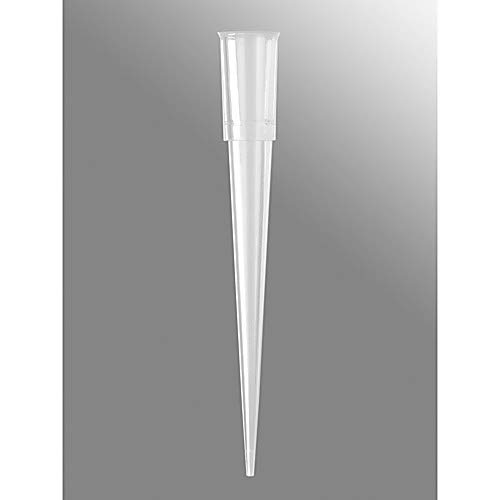
Corning 20A00F716PK, EV-50-R Axygen Pipet Tip for Tecan EVO/Caliper Zephyr Automated Liquid Handling System, Non-Sterile, Clear, 50µl Capacity, Pack of 960
- Compatible with Tecan EVO/Caliper Zephyr: Designed for specific liquid handling systems
- Non-Sterile: Suitable for general laboratory use
- Clear color: Allows easy visibility of liquids
As an affiliate, we earn on qualifying purchases.
As an affiliate, we earn on qualifying purchases.
Laboratory Automation and Sample Preparation
Laboratory equipment should be evaluated as part of a method, not as an isolated device. Sample properties, contamination controls, volume ranges, consumables, throughput, cleaning requirements, and operator training all influence performance. Automation can reduce repetitive work and improve consistency, but only when the instrument is appropriate for the protocol and properly maintained.
Automated Pipetting Systems
Automated liquid handling may support repetitive transfers, plate preparation, serial dilution, assay setup, and other structured workflows. The value of automation usually comes from consistency and throughput rather than automation for its own sake. A platform must handle the required volume ranges, labware, liquids, and deck configuration without creating excessive programming or supervision overhead.
Prospective users should map a representative protocol before choosing a system. Count transfers, note tip changes, identify mixing or incubation steps, and record any manual interventions. Software usability and error recovery can be as consequential as nominal speed. The comparison of the best automated pipetting systems for precision and efficiency helps frame the available options.
Ultrasonic Homogenizers
Ultrasonic homogenizers apply acoustic energy to processes such as disruption, dispersion, emulsification, and particle-size reduction. Matching a system to an application requires attention to sample volume, vessel geometry, probe configuration, processing duration, and temperature management. More power is not necessarily better if it produces excessive heating or makes a process difficult to reproduce.
Teams should consider amplitude control, pulse operation, compatible probes, noise management, cleaning, and the ability to record or standardize settings. The guide to the best ultrasonic homogenizers for precision and efficiency offers a dedicated overview of this equipment category.

High Speed USB3.0 0.3MP Color Machine Vision Industrial Camera 790fps
- High-speed USB 3.0 transfer: Fast data transfer rate
- Includes SDK for easy integration: User-friendly software development kit
- Supports external trigger and flash: Flexible triggering and lighting options
As an affiliate, we earn on qualifying purchases.
As an affiliate, we earn on qualifying purchases.
Advanced Electronics and FPGA Development
Field-programmable gate arrays give engineers a configurable hardware platform for applications involving digital signal processing, communications, embedded systems, acceleration, control, and interface development. Choosing a board requires a clear understanding of the intended architecture because processing resources are only one part of the system.
Logic capacity, memory, transceivers, converters, clocks, connectors, expansion standards, power requirements, and development tools all influence suitability. Documentation and example designs can substantially shorten the path from initial setup to a working prototype. Teams must also consider toolchain licensing, supported operating systems, and whether collaborators already have experience with the relevant device family.
For demanding projects, the guide to the best high-end FPGA development boards provides a more detailed comparison. Before selecting a board, sketch the complete data path—including input, processing, memory movement, and output—so that bandwidth constraints or missing interfaces are visible early.
High-Speed Imaging for Research and Engineering
High-speed cameras reveal events that ordinary video cannot resolve, from mechanical impacts and vibration to fluid motion and transient material behavior. Yet the highest advertised frame rate rarely tells the full story. Frame rate, resolution, exposure time, lighting, sensor sensitivity, memory, and recording duration are interdependent.
Begin with the event you need to observe. Estimate its duration, the smallest relevant motion, the required field of view, and the number of frames needed to interpret it. A short exposure may reduce motion blur but demand substantially more illumination. Higher resolution may limit available frame rates or reduce recording time. Triggering and synchronization can also be critical when imaging must align with sensors, actuators, or other instruments.
The guide to the best high-speed cameras for experiments is the appropriate next step for readers comparing systems for ultra-fast capture.
Software, Data, and Workflow Compatibility
Hardware selection is incomplete without examining what happens to the data afterward. Scanners create point clouds or meshes that may require cleanup, alignment, inspection, or conversion. Cameras generate large recordings that need storage and analysis. Automated laboratory platforms rely on protocol software and instrument-specific file formats. FPGA boards depend on toolchains, libraries, and reusable intellectual-property blocks.
Check whether outputs can be opened by the software your team already uses and whether export requires extra licenses or conversion steps. Consider file size, storage capacity, backup, naming conventions, version control, and long-term access. If results must be shared with customers, suppliers, or regulators, confirm that the workflow produces suitable reports and preserves relevant metadata.
Safety, Training, and Ownership Costs
Advanced equipment introduces responsibilities beyond installation. Industrial printers may involve hot surfaces, moving assemblies, fumes, or material-handling requirements. Laser and optical systems call for appropriate operating procedures. Ultrasonic processing can create noise and aerosols, while automated laboratory systems require contamination controls and safe handling of samples and reagents.
Review manufacturer documentation and applicable workplace requirements before use. Assign responsibility for training, calibration, maintenance, consumables, software administration, and incident response. These operational details determine whether sophisticated equipment remains dependable after the initial purchase.
Total ownership planning should include accessories, probes, lenses, targets, calibration artifacts, build surfaces, consumables, replacement parts, software, computing hardware, storage, training, and service. It is also sensible to consider utilization: a highly specialized instrument may be better accessed through a service provider when demand is occasional, while frequently repeated work may justify bringing the capability in-house.
How to Build a Defensible Shortlist
A structured shortlist makes complex purchases easier to explain and less vulnerable to specification-driven bias. Separate mandatory requirements from preferences, then score candidates against a representative workflow. Treat missing information as something to verify rather than assuming that an unlisted capability is included.
- Define the use case, operating environment, and required result.
- Set measurable minimums for capacity, compatibility, and performance.
- Identify software, accessory, facility, and training dependencies.
- Compare complete workflows rather than isolated headline specifications.
- Request documentation or demonstrations for critical capabilities.
- Plan acceptance checks using representative parts, samples, or datasets.
- Account for maintenance, calibration, consumables, support, and data management.
The central principle across every category is fit for purpose. Industrial fabrication, precision measurement, laboratory automation, programmable hardware, and scientific imaging each reward careful problem definition. Use the specialized Nanomachines guides to understand the available equipment, then evaluate the strongest candidates against your own materials, tolerances, protocols, infrastructure, and team capabilities.