
Complete the kit




Get the latest gadgets delivered free with Prime
- Fast, free delivery on millions of items
- Prime Video, Amazon Music and more included
- Member-only deals all year
Key Takeaways
- The StarSense Explorer DX 130AZ is the strongest all-around balance in this group: 130mm aperture paired with phone guidance, without a computerized GoTo mount.
- The NexStar 127SLT and NexStar 6SE suit buyers who value automated object locating; their powered mounts add setup and power needs, while the 6SE is the premium option.
- The MEEZAA 150EQ has the largest listed aperture among the conventional beginner reflectors here, but an equatorial mount asks for more learning than a simple alt-azimuth setup.
- Several 90mm, 800mm refractors offer similar basic observing territory; compare the exact tripod, included accessories, and seller support instead of assuming the shared aperture makes them interchangeable.
- The ZWO Seestar S30 Pro is a distinct smart-imaging choice, while the SVBONY SV503 102mm ED is an optical tube only and needs a compatible mount and accessories before it can be used as a complete telescope.
| Celestron StarSense Explorer DX 130AZ Smartphone Guided Newtonian Telescope |  | Best for Smartphone-Guided Beginners | Optical design: Newtonian reflector | Aperture: 130 mm | Mount: Manual altazimuth | VIEW ON AMAZON | See Our Full Breakdown |
| 90mm Telescope with 600mm Focal Length and 24–180× Magnification |  | Best for Daytime and Nighttime Versatility | Aperture: 90 mm | Focal length: 600 mm | Stated magnification range: 24×–180× | VIEW ON AMAZON | See Our Full Breakdown |
| HUGERSTAR 90mm Aperture 800mm Refractor Telescope for Adults and Beginners with Tripod, Moon Filter, Phone Adapter, and Carrying Bag |  | Best Refractor for Lunar Viewing | Optical design: Refractor | Aperture: 90 mm | Focal length: 800 mm | VIEW ON AMAZON | See Our Full Breakdown |
| Celestron NexStar 127SLT Computerized GoTo Maksutov-Cassegrain Telescope |  | Best for Automatic Finding and Tracking | Optical design: Maksutov-Cassegrain | Aperture: 127 mm | Object database: More than 40,000 celestial objects | VIEW ON AMAZON | See Our Full Breakdown |
| MEEZAA 150EQ Newtonian Reflector Telescope with Equatorial Mount |  | Best for Aperture and Deep-Sky Reach | Optical design: Newtonian reflector | Aperture: 150 mm | Focal length: 650 mm | VIEW ON AMAZON | See Our Full Breakdown |
| Dianfan 90mm Aperture 800mm Refractor Telescope with Stainless Steel Tripod, Phone Adapter, and Carry Bag |  | Best for Versatile Beginner Viewing | Type: Refractor telescope | Objective lens: 90 mm | Focal length: 800 mm | VIEW ON AMAZON | See Our Full Breakdown |
| 70mm Refracting Telescope with Phone Adapter |  | Best for Young First-Time Observers | Type: Refracting telescope | Aperture: 70 mm | Focal length: 300 mm | VIEW ON AMAZON | See Our Full Breakdown |
| 70mm Aperture 300mm Refractor Telescope with Tripod and Phone Adapter |  | Best Compact Starter Kit | Aperture: 70 mm | Focal length: 300 mm | Magnification range: 15×–150× | VIEW ON AMAZON | See Our Full Breakdown |
| ZWO Seestar S30 Pro Smart Telescope |  | Best for App-Controlled Astrophotography | Objective lens diameter: 30 mm | Focal length: 160 mm | Field of view: 4.6 degrees | VIEW ON AMAZON | See Our Full Breakdown |
| Gskyer 600x90mm AZ Astronomical Refractor Telescope |  | Best 90mm Value Starter | Aperture: 90 mm | Focal length: 600 mm | Focal ratio: f/6.7 | VIEW ON AMAZON | See Our Full Breakdown |
| SVBONY SV503 102mm ED Refractor Telescope OTA (F7) |  | Best for Astrophotography Upgrades | Aperture: 102mm | Focal length: 714mm (f/7) | Optical glass: S-FPL51 ED | VIEW ON AMAZON | See Our Full Breakdown |
| Celestron StarSense Explorer LT 114AZ Newtonian Smartphone-Guided Telescope |  | Best for Finding Targets | Optical design: Newtonian reflector | Aperture: 114mm (4.5in) | Mount: Manual altazimuth | VIEW ON AMAZON | See Our Full Breakdown |
| MEEZAA 90mm Aperture 800mm Refractor Telescope for Adults |  | Best Beginner Refractor Kit | Aperture: 90mm | Focal length: 800mm (f/8.88) | Magnification: 32X–240X | VIEW ON AMAZON | See Our Full Breakdown |
| Celestron NexStar 6SE Computerized Schmidt-Cassegrain Telescope | 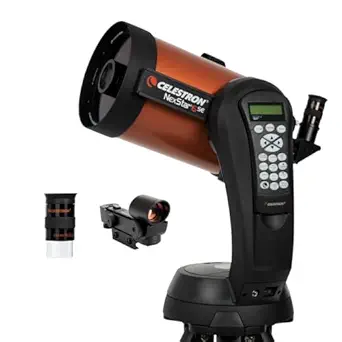 | Best Premium GoTo | Optical design: Schmidt-Cassegrain | Aperture: 6in | Mount type: Computerized GoTo | VIEW ON AMAZON | See Our Full Breakdown |
| Celestron AstroMaster 130EQ Telescope for Deep-Sky Beginners |  | Best Manual Light-Gathering Value | Optical design: Newtonian reflector | Aperture: 130mm (5.1in) | Optical coatings: Aluminum and SiO₂ | VIEW ON AMAZON | See Our Full Breakdown |
| astronomical telescope for amateur | Aperture | Focal length | Mount |
|---|---|---|---|
| Celestron StarSense Explorer D | 130 mm | — | Manual altazimuth |
| 90mm Telescope with 600mm Foca | 90 mm | 600 mm | Altazimuth |
| HUGERSTAR 90mm Aperture 800mm | 90 mm | 800 mm | — |
| Celestron NexStar 127SLT Compu | 127 mm | — | — |
| MEEZAA 150EQ Newtonian Reflect | 150 mm | 650 mm | German equatorial with slow-motion controls |
| Dianfan 90mm Aperture 800mm Re | — | 800 mm | Altazimuth |
| 70mm Refracting Telescope with | 70 mm | 300 mm | — |
| 70mm Aperture 300mm Refractor | 70 mm | 300 mm | — |
| ZWO Seestar S30 Pro Smart Tele | — | 160 mm | Alt-azimuth with equatorial mode |
| Gskyer 600x90mm AZ Astronomica | 90 mm | 600 mm | Altazimuth |
| SVBONY SV503 102mm ED Refracto | 102mm | 714mm (f/7) | — |
| Celestron StarSense Explorer L | 114mm (4.5in) | — | Manual altazimuth |
| MEEZAA 90mm Aperture 800mm Ref | 90mm | 800mm (f/8.88) | — |
| Celestron NexStar 6SE Computer | 6in | — | — |
| Celestron AstroMaster 130EQ Te | 130mm (5.1in) | — | German equatorial with slow-motion control knobs |
More Details on Our Top Picks
Celestron StarSense Explorer DX 130AZ Smartphone Guided Newtonian Telescope
StarSense guidance gives this 130 mm reflector a clear advantage for newcomers who are unsure where to point a telescope. The app uses the phone’s camera to help locate targets, while the 130 mm aperture gathers more light than the 90 mm refractors in this batch, including the HUGERSTAR 90 mm. That makes this a stronger fit for exploring faint deep-sky objects as well as the Moon and planets. Its manual altazimuth mount keeps setup simpler than the computerized Celestron NexStar 127SLT, but it also means you must move the scope yourself and objects can drift out of view. The phone dependency is a real constraint: check compatibility before choosing it, and skip it if you want motorized tracking or a phone-free setup.
Pros:- StarSense app guides users toward celestial targets using on-screen arrows.
- 130 mm aperture gathers more light than the 90 mm refractors in this group.
- Dual-axis slow-motion controls allow more measured manual adjustments.
- Includes two eyepieces, a red dot finder, tripod, and smartphone dock.
Cons:- Requires a compatible smartphone; older devices may not work.
- Manual mount does not automatically locate or track objects.
- The app-guided workflow may be less appealing to buyers who prefer a phone-free observing session.
Best for: New amateur astronomers with a compatible smartphone who want help finding a broad range of sky targets.
Not ideal for: Buyers with unsupported phones or those who want a motorized mount to locate and track objects automatically.
- Optical design:Newtonian reflector
- Aperture:130 mm
- Mount:Manual altazimuth
- Controls:Dual-axis slow-motion controls
- Included eyepieces:10 mm and 25 mm
- Finder:Red dot finderscope
- Smartphone dock:StarSense smartphone dock
- Compatibility:Android 12 and later; iOS 18 and newer, including iPhone XR and newer
Our verdict“Choose the DX 130AZ if phone-guided target finding and a larger aperture matter more than automatic tracking.”
90mm Telescope with 600mm Focal Length and 24–180× Magnification
This 90 mm refractor is the flexible choice for someone who wants one beginner scope for the Moon, landscapes, and wildlife. Its upright-image diagonal supports daytime viewing, a use that is less central to the reflector designs of the Celestron StarSense Explorer DX 130AZ and MEEZAA 150EQ. The included case and phone adapter also make it easier to pack than a full-height, larger-aperture setup, though the 29–49 inch tripod is still a compromise for different viewing heights. Its 600 mm focal length and supplied eyepieces cover a stated 24×–180× range, but the high end should not be treated as a guarantee of a crisp view. Compared with the HUGERSTAR 90 mm refractor’s longer 800 mm focal length, this model leans toward a broader, more multipurpose kit rather than a longer tube.
Pros:- 90 mm refractor design supports astronomy and daytime landscape viewing.
- Includes a carrying case and smartphone adapter.
- Supplied 10 mm and 25 mm eyepieces and 3× Barlow offer several viewing configurations.
- Adjustable tripod height ranges from 29 to 49 inches.
Cons:- Manual focusing and pointing require the user to make adjustments.
- The 90 mm aperture gathers less light than the 130 mm and 150 mm reflectors in this batch.
- The provided listing gives no evidence about mount stability or image quality.
Best for: First-time observers who want a portable scope for lunar viewing, landscapes, and occasional wildlife observation.
Not ideal for: Buyers prioritizing faint deep-sky viewing or a mount with automatic target tracking.
- Aperture:90 mm
- Focal length:600 mm
- Stated magnification range:24×–180×
- Eyepieces:10 mm and 25 mm
- Barlow lens:3×
- Mount:Altazimuth
- Finderscope:3×24 reflex
- Tripod height:29–49 in
- Optics coating:Fully multi-coated
Our verdict“Pick this refractor for a beginner kit that can handle daytime scenes as well as basic lunar observing.”
HUGERSTAR 90mm Aperture 800mm Refractor Telescope for Adults and Beginners with Tripod, Moon Filter, Phone Adapter, and Carrying Bag
The HUGERSTAR pairs a 90 mm aperture with an 800 mm focal length, giving it a longer focal-length setup than the 600 mm 90 mm refractor in this lineup. That makes it the more focused refractor pick for lunar and planetary sessions, while its supplied moon filter can help cut glare when viewing the Moon. The no-tool assembly, phone adapter, and carrying bag suit beginners who want a ready-to-carry kit. Its aperture remains smaller than the Celestron StarSense Explorer DX 130AZ’s 130 mm reflector, so it is less suited to gathering light from dimmer deep-sky targets. The stated range reaches 240×, but high magnification can make views dimmer and harder to steady; the manual mount also asks beginners to learn target finding and tracking without app guidance.
Pros:- 800 mm focal length differentiates it from the 600 mm 90 mm refractor in the batch.
- Included moon filter can reduce glare during lunar observation.
- No-tool assembly and carrying bag support straightforward setup and transport.
- Fully multi-coated optics and two eyepieces are included.
Cons:- 90 mm aperture gathers less light than the DX 130AZ and MEEZAA 150EQ reflectors.
- High magnification can reduce brightness and make the view harder to steady.
- Manual target finding and tracking may take practice.
Best for: Beginners who expect to spend most of their observing time on the Moon and brighter planets, with some daytime use.
Not ideal for: Observers focused on faint deep-sky objects or those who want smartphone-guided target locating or automatic tracking.
- Optical design:Refractor
- Aperture:90 mm
- Focal length:800 mm
- Focal ratio:f/8.89
- Stated magnification range:32×–240×
- Eyepieces:10 mm and 25 mm
- Barlow lens:3×
- Finder scope:5×24
- Included accessories:Tripod, accessory tray, moon filter, phone adapter, carrying bag
Our verdict“Choose the HUGERSTAR for a portable beginner refractor centered on the Moon, with a filter and longer focal length included.”
Celestron NexStar 127SLT Computerized GoTo Maksutov-Cassegrain Telescope
The NexStar 127SLT is the clear choice here for observers who want the mount to locate and track targets. Its computerized GoTo system draws on a database of more than 40,000 objects, a different approach from the phone-guided but manually moved StarSense Explorer DX 130AZ. The 127 mm aperture is close to the DX 130AZ’s 130 mm, while the Maksutov-Cassegrain optical design keeps the telescope portable for backyard sessions or trips. The tradeoff is a setup process: SkyAlign requires aligning on three bright objects before observing, so the automation does not remove all learning or preparation. Buyers should also note the product description’s inconsistency about which SLT model receives the included software; the telescope’s stated control and alignment features are clearer than that accessory detail.
Pros:- GoTo control locates and tracks targets from a database of more than 40,000 objects.
- 127 mm aperture is comparable in size to the DX 130AZ’s 130 mm aperture.
- Maksutov-Cassegrain design is described as compact and portable.
- SkyAlign provides a guided alignment method.
Cons:- Requires alignment on three bright objects before use.
- Computerized mount adds setup steps compared with a manual altazimuth telescope.
- The listing is inconsistent about the model associated with the included software.
Best for: Amateurs who want a compact telescope that can automatically locate and track listed celestial objects after alignment.
Not ideal for: Observers who want immediate manual setup, dislike alignment routines, or prefer an uncomplicated phone-guided mount.
- Optical design:Maksutov-Cassegrain
- Aperture:127 mm
- Object database:More than 40,000 celestial objects
- Mount and control:Computerized NexStar+ hand control with GoTo and tracking
- Alignment:SkyAlign
- Finderscope:StarPointer
- Tripod:Adjustable steel tripod
- Warranty:2-year US warranty
Our verdict“Pick the NexStar 127SLT if automatic locating and tracking justify a more involved alignment routine.”
MEEZAA 150EQ Newtonian Reflector Telescope with Equatorial Mount
The MEEZAA 150EQ offers the largest aperture in this five-product batch: its 150 mm reflector gathers more light than the 130 mm DX 130AZ and the 127 mm NexStar 127SLT, giving it the strongest stated aperture advantage for brighter views of deep-sky targets. Its German equatorial mount and slow-motion controls support deliberate manual following as objects move across the sky, unlike the NexStar’s motorized tracking. That mount is also the main learning curve: new observers must understand how to set it up and guide it, while the DX 130AZ offers smartphone guidance for finding targets. The supplied 2× Barlow and eyepieces are listed for 26×–130×, a more restrained stated ceiling than the HUGERSTAR refractor’s 240×. Choose this for light gathering and manual control, not hands-off operation.
Pros:- 150 mm aperture is the largest in this batch and gathers more light than the other four options.
- German equatorial mount includes slow-motion controls for manual following.
- Tool-free assembly and carry bag support setup and transport.
- Includes a red dot finder, moon filter, phone adapter, and accessory tray.
Cons:- Equatorial mount has a steeper learning curve than the manual altazimuth mounts.
- Manual movement means it cannot automatically locate or track targets like the NexStar 127SLT.
- Stated magnification range tops out at 130×.
Best for: Amateur observers willing to learn an equatorial mount in exchange for the largest aperture among these five options.
Not ideal for: Beginners who want phone-guided target finding, automatic tracking, or the simplest possible mount setup.
- Optical design:Newtonian reflector
- Aperture:150 mm
- Focal length:650 mm
- Stated magnification range:26×–130×
- Eyepieces:25 mm and 10 mm
- Barlow lens:2×
- Mount:German equatorial with slow-motion controls
- Tripod:Adjustable stainless steel
- Included accessories:Red dot finderscope, moon filter, phone adapter, carry bag, accessory tray
Our verdict“Choose the MEEZAA 150EQ if aperture and learning manual equatorial tracking matter more than automated pointing.”
Dianfan 90mm Aperture 800mm Refractor Telescope with Stainless Steel Tripod, Phone Adapter, and Carry Bag
The 90mm aperture gives this Dianfan more light-gathering capacity than the 70mm models in this group, making it a better fit for lunar detail and brighter views of planets. Its 800mm focal length also favors higher magnification viewing, while the included 45° mirror keeps daytime subjects upright. Compared with the Gskyer 600x90mm AZ, this model has a longer focal length and a wider stated magnification range, but its basic altazimuth mount still calls for manual aiming and steady hands. The phone adapter and carry bag make it a useful starter kit, though the 4.7 kg weight is a consideration for walking to a viewing spot. Treat 240× as an upper kit range, not a guarantee of usable detail; seeing and mount stability set practical limits.
Pros:- 90mm objective gathers more light than the two 70mm refractors here
- 800mm focal length suits lunar and planetary viewing
- 45° mirror produces upright images for terrestrial subjects
- Includes phone adapter, carry bag, and two eyepieces
Cons:- Manual altazimuth mount requires hand tracking
- 4.7 kg weight makes it less convenient to carry over distance
- The advertised 240× upper magnification depends on stable conditions
Best for: New observers who want one 90mm refractor for the Moon, bright planets, and occasional daytime viewing.
Not ideal for: Buyers seeking automated tracking, advanced astrophotography, or a lightweight telescope for long walks.
- Type:Refractor telescope
- Objective lens:90 mm
- Focal length:800 mm
- Magnification range:32×–240×
- Mount:Altazimuth
- Optics:Fully coated
- Field of view:1.56 degrees
- Weight:4.7 kg
- Included accessories:Stainless steel tripod, phone adapter, carry bag, two eyepieces, 3× Barlow lens, 45° zenith mirror
Our verdict“Choose the Dianfan if you want a relatively capable 90mm starter refractor for both celestial and daytime targets and can manage its weight and manual mount.”
70mm Refracting Telescope with Phone Adapter
This 70mm refractor is aimed squarely at younger beginners, with tool-free setup, an adjustable tripod, and a phone adapter with wireless remote. Those extras can make a first Moon-viewing session easier to start than with the heavier Dianfan 90mm, though the Dianfan’s larger aperture and longer focal length give it more room for celestial detail. Here, the 300mm focal length offers a wide, approachable view, but the short tube is less suited to close planetary observation. The included 3× Barlow raises the stated range to 150×, yet that number does not remove the limits of a 70mm aperture or a light tripod. Its 5×24 finderscope can help locate targets, but its inverted image may take new users a little adjustment.
Pros:- Tool-free setup suits young first-time users
- Adjustable tripod reaches up to 45 inches
- Phone adapter and wireless remote support basic image capture
- Fully multi-coated optics are specified for celestial and daytime viewing
Cons:- 70mm aperture offers less light gathering than the 90mm refractors
- Short 300mm focal length is less suited to detailed planetary viewing
- Finderscope image is inverted and high magnification needs careful tracking
Best for: Families introducing children ages 8–12 to the Moon, bright planets, and simple phone-assisted snapshots.
Not ideal for: Observers prioritizing fine planetary detail, steady high-power views, or a conventional upright finderscope image.
- Type:Refracting telescope
- Aperture:70 mm
- Focal length:300 mm
- Magnification range:15×–150×
- Eyepieces:6 mm and 20 mm
- Barlow lens:3×
- Finderscope:5×24
- Tripod height:Adjustable up to 45 inches
- Recommended age:8–12 years
Our verdict“Pick this model for a child’s first guided sessions and easy phone capture, but choose the Dianfan or Gskyer for a larger aperture and more serious visual observing.”
70mm Aperture 300mm Refractor Telescope with Tripod and Phone Adapter
The appeal here is a low-friction kit: no-tool setup, a tripod, phone adapter, wireless remote, and even a star chart are included. That makes it a practical introduction for casual Moon viewing and daytime targets, especially for someone who values portability over fine detail. Its optical setup matches the 70mm Refracting Telescope with Phone Adapter—a 70mm aperture, 300mm focal length, two eyepieces, and a 3× Barlow—so the main distinction is the stated star chart and maintenance support. Both remain entry-level instruments; the Dianfan 90mm gathers more light and has a longer focal length for a more astronomy-focused session. The lightweight tripod makes transport easier, but can wobble in wind, and the 150× upper range is unlikely to deliver consistently sharp views.
Pros:- Tool-free setup helps beginners start quickly
- Includes phone adapter and wireless remote
- Star chart is supplied for basic target finding
- Lightweight kit is easier to transport than the 90mm refractors
Cons:- 70mm aperture limits fine detail compared with the 90mm options
- Lightweight tripod may be unstable in wind
- No automated tracking for keeping objects centered
Best for: Casual beginners or families who want a portable, quick-to-assemble telescope with accessories for basic sky viewing.
Not ideal for: Observers who want detailed planetary study, dependable high-power stability, or automated sky tracking.
- Aperture:70 mm
- Focal length:300 mm
- Magnification range:15×–150×
- Optics:Fully multi-coated
- Eyepieces:20 mm and 6 mm
- Barlow lens:3×
- Finderscope:5×24
- Setup:No tools required
- Included accessories:Tripod, phone adapter, wireless remote, star chart
Our verdict“Choose this as a portable, easy-start kit for casual observing, while the Dianfan is the stronger choice when aperture and lunar detail matter more.”
ZWO Seestar S30 Pro Smart Telescope
The Seestar S30 Pro takes a different route from the manual refractors: app-controlled GOTO and tracking handle target finding while its cameras collect images. That makes it the most approachable pick here for beginners who want to record deep-sky targets rather than inspect them through an eyepiece. Its 30mm objective is far smaller than the 70mm and 90mm apertures on the conventional scopes, so direct visual observing is not its strength; its imaging system, filters, and processing features define the experience. Compared with the Celestron StarSense Explorer DX 130AZ, it automates more of the capture process, while the Celestron offers a much larger aperture for visual use. The Seestar is compact at 3.6 lb, but requires a phone or tablet and a stationary setup for stable imaging.
Pros:- Automatic GOTO targeting and tracking simplify locating and following targets
- Dual-camera 4K imaging and AI-assisted noise reduction support image capture
- Built-in light pollution filters suit some urban observing conditions
- Compact 3.6 lb design is convenient for travel
Cons:- 30mm objective is much smaller than the visual refractors in this roundup
- Smartphone or tablet is required for operation
- Deep-sky imaging needs a stationary setup for stable tracking
Best for: Beginners who want app-guided deep-sky imaging and shareable results with minimal manual target tracking.
Not ideal for: Visual observers who want eyepiece views, a large aperture, or to operate without a smartphone or tablet.
- Objective lens diameter:30 mm
- Focal length:160 mm
- Field of view:4.6 degrees
- Mount:Alt-azimuth with equatorial mode
- Focus:Autofocus and manual focus
- Coating:Fully multi-coated
- Weight:3.6 lb
- Compatible devices:Smartphone and tablet
- Additional features:App control, auto tracking, EQ mode, Plan mode
Our verdict“Choose the Seestar S30 Pro if your priority is app-driven astrophotography; choose the StarSense Explorer DX 130AZ if you want a larger telescope for visual viewing.”
Gskyer 600x90mm AZ Astronomical Refractor Telescope
The Gskyer pairs a 90mm aperture with a 600mm focal length, giving beginners more light gathering than the two 70mm refractors without the Dianfan’s longer 800mm tube. That shorter focal length supports a broader view, which can make initial lunar and bright-planet sessions feel less constrained. The kit includes a 6×30 finderscope, three eyepieces, an erecting prism, and an adjustable tripod, making it a flexible visual starter for astronomy and terrestrial use. Compared with the Dianfan 90mm, it has a lower stated top magnification and less focal length, but includes a larger finderscope and a 48° erecting prism. Its altazimuth mount is simple to set up, though it needs manual tracking and is not suited to serious long-exposure astrophotography.
Pros:- 90mm aperture gathers more light than the 70mm starter scopes
- 600mm focal length supports comparatively broad views
- Includes three eyepieces, a 3× Barlow, and 6×30 finderscope
- Adjustable tripod and erecting prism support both celestial and daytime use
Cons:- Altazimuth mount requires manual target tracking
- Included 120× eyepiece magnification may exceed useful detail in some conditions
- Shorter focal length gives less reach than the Dianfan 800mm model
Best for: New observers who want a 90mm visual telescope with a broad set of included accessories for sky and terrestrial viewing.
Not ideal for: Buyers seeking computerized tracking, serious astrophotography, or the longer focal length of the Dianfan 90mm.
- Aperture:90 mm
- Focal length:600 mm
- Focal ratio:f/6.7
- Eyepiece magnifications:24×, 60×, 120×
- Barlow lens:3×
- Finderscope:6×30
- Mount:Altazimuth
- Optics:Fully multi-coated glass
- Tripod height:31.5–49 inches
Our verdict“Choose the Gskyer for a well-equipped 90mm starter with broader viewing, or the Dianfan if you prefer a longer focal length for lunar and planetary targets.”
SVBONY SV503 102mm ED Refractor Telescope OTA (F7)
The SVBONY SV503 102mm is the most imaging-ready optical tube in this group. Its S-FPL51 ED glass helps control color fringing around bright objects, while the dual-speed focuser gives finer control when focusing a camera. Compared with the all-in-one MEEZAA 90mm Refractor, it offers more aperture and more provisions for adding imaging accessories, but arrives without a mount, tripod, or finder. That makes it a better fit for amateurs who already have compatible gear than for someone opening a first telescope box. Its 714mm focal length is suited to a range of celestial targets, though the manual focuser and need to supply the rest of the setup add work and cost.
Pros:- ED glass helps reduce chromatic aberration and preserve color around bright targets.
- Dual-speed focuser supports precise manual focusing.
- 90mm focus travel accommodates imaging accessories such as filter wheels and flatteners.
- Retractable lens hood helps block stray light and protect the objective from dew.
Cons:- Mount, tripod, and finderscope are not included.
- Manual focusing requires hands-on adjustment during imaging.
Best for: Amateur astrophotographers who already own a compatible mount and want an ED refractor with room for imaging accessories.
Not ideal for: First-time buyers seeking a complete visual setup, since the optical tube comes without a mount, tripod, or finderscope.
- Aperture:102mm
- Focal length:714mm (f/7)
- Optical glass:S-FPL51 ED
- Coating:Fully multi-coated
- Focuser:Manual dual-speed (1:10)
- Focus travel:90mm
- Optical-tube length:63cm
- Weight:3.95kg
Our verdict“Choose the SV503 if you have compatible support gear and want an ED refractor that can grow into astrophotography.”
Celestron StarSense Explorer LT 114AZ Newtonian Smartphone-Guided Telescope
The StarSense Explorer LT 114AZ puts its emphasis on helping beginners locate objects, using a smartphone app to guide the telescope across the sky. That gives it a different advantage from the Celestron AstroMaster 130EQ: the AstroMaster has a larger aperture, while this 114mm reflector offers app-based navigation and a simpler manual altazimuth mount. Slow-motion altitude adjustment can make small aiming changes easier, but the mount still needs the user to move and track targets by hand. The app also depends on having a compatible smartphone available. This is a sensible match for new observers who want help getting oriented, though the phone guidance does not replace learning to aim or keep an object in view.
Pros:- StarSense Explorer app helps guide users toward celestial targets.
- 114mm reflector aperture supports views of the Moon, planets, and brighter deep-sky objects.
- Slow-motion altitude adjustment helps with fine manual aiming.
- Includes a two-year US warranty and Celestron support.
Cons:- Guided navigation requires a smartphone.
- The manual altazimuth mount requires hand aiming and tracking.
- Smaller aperture than the AstroMaster 130EQ in this roundup.
Best for: Beginners with a compatible smartphone who want guided help locating planets, star clusters, and brighter deep-sky objects.
Not ideal for: Observers who prefer a phone-free session or want motorized tracking to keep targets centered.
- Optical design:Newtonian reflector
- Aperture:114mm (4.5in)
- Mount:Manual altazimuth
- Altitude adjustment:Slow-motion adjustment with sliding rod
- Navigation:StarSense Explorer smartphone app
- Warranty:Two-year US warranty
Our verdict“Pick the StarSense LT 114AZ if app guidance will help you find targets and you are comfortable tracking them manually.”
MEEZAA 90mm Aperture 800mm Refractor Telescope for Adults
The MEEZAA 90mm Refractor is the straightforward starter kit in this group: it includes a tripod, two eyepieces, a Barlow lens, a phone adapter, and a carry bag. Those extras make it easier to begin observing than with the tube-only SVBONY SV503, which requires a separate mount and other equipment. The 90mm aperture and 800mm focal length suit lunar and planetary viewing, while the supplied eyepieces and Barlow offer several magnification combinations. The broad stated magnification range does not guarantee useful detail at its highest setting; seeing conditions and mount stability matter. Its tripod also tops out at 46 inches, which may feel short to taller adults. This pick favors an accessible kit over specialist optics or imaging flexibility.
Pros:- 90mm aperture gathers more light than smaller beginner refractors.
- Two eyepieces and a 3X Barlow provide several viewing magnifications.
- Includes an adjustable tripod, carry bag, and phone adapter.
- Beginner-oriented package is designed for quick assembly.
Cons:- Tripod height is limited to 46 inches and may be uncomfortable for taller adults.
- Included beginner accessories may not satisfy advanced observers.
- High stated magnification depends on viewing conditions and stable support.
Best for: Adult beginners who want a ready-to-assemble refractor kit with basic accessories and a phone adapter.
Not ideal for: Taller observers who need a higher eyepiece position, or experienced users seeking advanced optical and mount performance.
- Aperture:90mm
- Focal length:800mm (f/8.88)
- Magnification:32X–240X
- Eyepieces:10mm and 25mm
- Barlow lens:3X
- Tripod:Adjustable stainless steel, 28–46in
- Included accessories:Phone adapter, carry bag, paper manual
Our verdict“Choose the MEEZAA if you want a beginner refractor with its core observing accessories included in one kit.”
Celestron NexStar 6SE Computerized Schmidt-Cassegrain Telescope
The Celestron NexStar 6SE is the automation-focused choice here, pairing a 6-inch Schmidt-Cassegrain with a computerized GoTo mount that can locate and track objects from its large database. Compared with the manual AstroMaster 130EQ, it reduces the amount of hand aiming needed after alignment and gathers light with a larger stated aperture. That convenience comes with a more involved setup: users must align the system, operate the hand control, and manage a computerized mount. It also offers less grab-and-go simplicity than a basic manual telescope. For amateurs ready to learn the GoTo routine, SkyAlign and object tracking make longer observing sessions easier to navigate; those wanting a simple first instrument may find the manual alternatives more approachable.
Pros:- Six-inch aperture supports lunar, planetary, and deep-sky observing.
- Computerized GoTo mount locates and tracks catalogued objects.
- SkyAlign is designed to simplify initial alignment.
- Compatible with Celestron accessories for future upgrades.
Cons:- Computerized alignment and controls add complexity for first-time users.
- Some automation and wireless accessories may need to be purchased separately.
- Less immediate to set up than a basic manual telescope.
Best for: Amateurs ready for a computerized telescope who want automated target locating and tracking for varied observing sessions.
Not ideal for: Buyers who want a low-complexity manual telescope or an imaging-ready package without separately sourced accessories.
- Optical design:Schmidt-Cassegrain
- Aperture:6in
- Mount type:Computerized GoTo
- Hand control:NexStar+
- Object database:40,000+ objects
- Alignment technology:SkyAlign
- Warranty:Two years
Our verdict“Choose the NexStar 6SE if you value automated locating and tracking and are comfortable learning a computerized mount.”
Celestron AstroMaster 130EQ Telescope for Deep-Sky Beginners
With a 130mm Newtonian mirror and German equatorial mount, the AstroMaster 130EQ gives beginners a larger-aperture manual route into lunar, planetary, and deep-sky observing. Its aperture exceeds the StarSense LT 114AZ’s 114mm, but the AstroMaster does not provide that model’s smartphone-guided target finding. Instead, slow-motion controls support deliberate manual aiming, and the included red-dot finder helps point the tube. The equatorial mount can take practice to set up and use, and without motorized tracking, targets drift out of view unless the observer adjusts the controls. At 17 pounds, it is also less convenient for frequent transport than a lighter beginner kit. It suits learners willing to build manual sky skills and handle a more substantial setup.
Pros:- 130mm primary mirror gathers light for lunar, planetary, and deep-sky views.
- German equatorial mount has slow-motion controls for manual aiming.
- Includes 20mm and 10mm eyepieces and a StarPointer red-dot finder.
- Tool-free assembly, adjustable tripod, software download, and two-year US warranty are included.
Cons:- Manual tracking takes practice and requires ongoing adjustments.
- At 17 pounds, it may be cumbersome for younger users or travel.
- The included 33X and 65X magnifications may prompt accessory upgrades.
Best for: Beginners who want a 130mm reflector, included finder, and manual controls for learning to locate and track objects.
Not ideal for: Very young observers or frequent travelers who need a light setup, and beginners who want app guidance or automated tracking.
- Optical design:Newtonian reflector
- Aperture:130mm (5.1in)
- Optical coatings:Aluminum and SiO₂
- Mount:German equatorial with slow-motion control knobs
- Eyepieces:20mm (33X) and 10mm (65X)
- Finderscope:StarPointer red dot
- Weight:17lb (7.71kg)
- Included software:Starry Night astronomy software download
Our verdict“Pick the AstroMaster 130EQ if you want a larger-aperture manual reflector and are willing to learn equatorial aiming and tracking.”

How We Picked
I ranked these telescopes around the needs of amateur observers: how much useful aperture they offer, how approachable the mount and setup are, what kinds of observing they suit, and how easily a buyer can transport, store, and maintain them. I also separated complete kits from optical tubes and smart imaging systems, since they serve different expectations and may need additional equipment.
The order favors a useful balance of sky access and learnability. Phone guidance or GoTo can help new observers find objects, but automation does not replace aperture or a stable mount. Larger instruments can show more, yet their weight, alignment, and setup demands matter; compact and entry-level refractors rank for convenience, not for matching the faint-object reach of larger reflectors. Similar models are distinguished by their stated equipment and intended use, while manufacturer specifications should be checked for the exact package being sold.
| astronomical telescope for amateur | Mount |
|---|---|
| Celestron StarSense Explorer D | Manual altazimuth |
| 90mm Telescope with 600mm Foca | Altazimuth |
| HUGERSTAR 90mm Aperture 800mm | — |
| Celestron NexStar 127SLT Compu | — |
| MEEZAA 150EQ Newtonian Reflect | German equatorial with slow-motion controls |
| Dianfan 90mm Aperture 800mm Re | Altazimuth |
| 70mm Refracting Telescope with | — |
| 70mm Aperture 300mm Refractor | — |
| ZWO Seestar S30 Pro Smart Tele | Alt-azimuth with equatorial mode |
| Gskyer 600x90mm AZ Astronomica | Altazimuth |
| SVBONY SV503 102mm ED Refracto | — |
| Celestron StarSense Explorer L | Manual altazimuth |
| MEEZAA 90mm Aperture 800mm Ref | — |
| Celestron NexStar 6SE Computer | — |
| Celestron AstroMaster 130EQ Te | German equatorial with slow-motion control knobs |
Factors to Consider When Choosing Astronomical Telescope For Amateurs
Choosing an amateur telescope starts with deciding what you want to observe and how often you are willing to set up. These broader tradeoffs can help you avoid paying for features that do not fit your observing routine.
Choose aperture for the objects you want to see
Aperture controls how much light a telescope collects, so it has a direct effect on views of faint objects and fine detail. For the Moon and brighter planets, a modest telescope can be rewarding; dim galaxies and nebulae call for more aperture and darker skies. A common mistake is treating advertised magnification as the main measure of performance. High magnification cannot recover detail the optics have not captured, and it often makes an image dimmer and harder to keep centered. Reflectors can offer more aperture for their size, while refractors avoid a central obstruction and generally need less optical maintenance. Match aperture to your target list, storage space, and willingness to carry the instrument.
Think about the mount before choosing the tube
The mount affects whether observing feels steady and intuitive. Alt-azimuth mounts move up, down, left, and right, which is easy to learn but requires frequent nudges to follow objects as Earth rotates. Equatorial mounts can track along one axis after polar alignment, but the setup and orientation take practice. GoTo mounts locate targets electronically, yet require power, alignment, and time to configure; they do not automatically make the view brighter or sharper. Phone-guided systems can simplify finding objects without motorized tracking, though the phone and app become part of the observing process. If possible, prioritize stable movement and a mount you will use regularly over a long accessory list.
Be realistic about portability and setup time
A telescope that stays indoors because it is cumbersome will see fewer clear nights than a smaller one you can carry outside. Consider the weight and number of pieces, where the instrument will be stored, and whether you need to transport it by car. A long refractor can be awkward despite a straightforward optical design, while a compact Maksutov-Cassegrain packs into a shorter tube but may need time to adjust to outdoor temperatures. Larger reflectors can offer more light gathering, with a broader footprint and more setup steps. Check whether the tripod is appropriate for the tube rather than assuming every included tripod will be steady at useful magnification. Your usual observing location may matter as much as the telescope’s listed dimensions.
Plan around your sky and observing targets
Light pollution limits what you can see regardless of the telescope, especially faint galaxies and nebulae. From a bright neighborhood, the Moon, planets, double stars, and a number of bright clusters can make sensible early targets. If you can reach darker skies, portability becomes a bigger part of the decision because the trip may reveal more than a small increase in aperture at home. For visual observing, a smart telescope’s app-driven imaging approach is a different activity from looking through an eyepiece. Buyers sometimes expect a single instrument to excel at both live visual viewing and automated image capture; decide which experience you want before choosing. A basic star chart or observing app can also help you learn the sky without requiring computerized pointing.
Budget for the complete observing setup
The telescope package is only part of what shapes a useful session. Eyepieces affect framing and magnification, while a red-light torch, observing chair, and dew control can improve comfort in ways a bigger specification cannot. An optical tube assembly, such as the SVBONY SV503 102mm ED, needs a compatible mount, diagonal, and eyepiece before it is a ready-to-use setup. Smart and computerized models may depend on batteries or other power, so account for that equipment and charging routine. Avoid buying a large accessory bundle before learning which focal lengths and tools suit your targets. Spending on a steady mount and a small number of useful accessories often has a more practical effect than chasing maximum magnification.
Frequently Asked Questions
Should I choose the StarSense Explorer DX 130AZ or a computerized GoTo telescope?
The DX 130AZ is a strong fit if you want phone-assisted directions while keeping a manual mount and a simpler power setup. A GoTo model such as the NexStar 127SLT can locate listed targets and track them, but you need to align the system and provide power. Both approaches still depend on clear skies and an adequately stable setup. Choose phone guidance if learning the sky matters and you are comfortable moving the telescope yourself. Choose GoTo if target finding and tracking are the main hurdles you want the telescope to handle.
Is a 70mm refractor enough for a first telescope?
A 70mm refractor can introduce you to the Moon, bright planets, and some prominent star clusters without the bulk of a larger instrument. It is less suited to faint deep-sky objects, where its smaller aperture gathers less light than the 90mm refractors or 130mm reflectors in this roundup. A short 300mm focal length model also frames the sky differently from a longer 600mm or 800mm telescope, so magnification and target choice will vary. A small telescope can be a sensible first choice if portability and quick setup are your main needs. If you expect to pursue dimmer objects, consider whether starting with more aperture would better fit your plans.
Can I use the SVBONY SV503 102mm ED as soon as it arrives?
The SV503 listing is for an optical tube assembly, so it is not a complete observing kit by itself. You will need a compatible mount and tripod, plus the viewing accessories required to focus and direct light to an eyepiece. Check the focuser and connection standards against the equipment you already own before ordering. This route can suit an amateur who wants to choose components separately or already has a mount. A first-time buyer who wants one package ready for setup may find a complete telescope kit easier.
Does the ZWO Seestar S30 Pro replace an eyepiece telescope?
The Seestar is a smart telescope designed around app-controlled observing and imaging, so its experience differs from looking through an eyepiece. It may suit someone who wants a guided electronic workflow for capturing celestial objects. A conventional telescope such as the DX 130AZ is a better match for learning manual aiming and viewing directly through an eyepiece. Neither approach is universally better; the choice depends on whether visual observing or automated imaging is the goal. Read the current package details to confirm which functions and accessories are included.
When does it make sense to choose the NexStar 6SE over a smaller telescope?
The NexStar 6SE is the premium pick for an amateur who values a computerized mount and a compact optical tube in one system. Its larger aperture than the 127SLT can gather more light, but the complete instrument still has to suit your storage, transport, power, and setup routine. A smaller manual telescope may be easier to carry out for a quick session, while the 6SE’s electronics add alignment steps. Consider where you will observe and whether you will use the automation regularly. If portability or a simpler learning curve matters most, compare it with the DX 130AZ before choosing.
Conclusion
For the best overall balance, I recommend the Celestron StarSense Explorer DX 130AZ, especially for an amateur who wants useful aperture and guided target finding without a motorized mount. The MEEZAA 150EQ is a value-minded choice for buyers who prioritize a larger reflector and are ready to learn equatorial setup; the NexStar 6SE is the best premium fit for computerized observing in a compact tube. Beginners seeking a straightforward refractor can start by comparing the 90mm, 800mm kits and checking the included tripod and accessories. For automated imaging, choose the Seestar S30 Pro; for a component-by-component optical setup, consider the SVBONY SV503 102mm ED. The right pick is the one whose targets, mount, and setup demands fit the nights you actually plan to observe.