
The right centrifuge for a lab depends almost entirely on what you are spinning: PRP and PRF protocols demand precise low-speed control, while microtube and PCR work needs high RPM in a compact footprint. The ONiLAB Scientific Mini Centrifuge stands out as the best overall pick for general lab benchtop work thanks to its dual rotors, quick-spin convenience, and small footprint. If plasma and PRP separation are your priority, the LABHOUSE LC500-6 and ONiLAB PRP Benchtop models offer the adjustable speed ranges and tube flexibility those protocols require. The main tradeoff in this category is speed versus control — many budget models top out at 4000 RPM with no true RCF readout, while PRP-focused units trade raw speed for finer gradients. Read on for the full breakdown of which model fits your workflow and budget.

Get the latest gadgets delivered free with Prime
- Fast, free delivery on millions of items
- Prime Video, Amazon Music and more included
- Member-only deals all year
Complete the kit


Key Takeaways
- The ONiLAB Scientific Mini Centrifuge (green and blue lid versions) earned the top spot because its dual-rotor design handles both microtubes and PCR strips, covering the widest range of everyday lab tasks in one compact unit.
- Speed ceilings split this lineup sharply: mini centrifuges like the LCD model reaching 12,000 RPM suit nucleic acid and protein work, while 4000 RPM benchtop units are limited to basic plasma and cell separation.
- PRP-specific models — the LABHOUSE LC500-6, ONiLAB PRP, and Lab PRF units — justify their niche by offering low starting speeds (300–500 RPM) that generic benchtop centrifuges cannot match.
- Several budget options (CALU LUKY, Mxmoonant, and the generic Electric Laboratory Centrifuge) share nearly identical 4000 RPM / 6 x 20 mL specs, so rotor build quality and timer precision become the real differentiators.
- Tube compatibility varies more than specs suggest: the LAB FISH LC-8S and ONiLAB PRP models accept multiple tube sizes natively, while most competitors lock you into either 15 mL or microtubes only.
| ONiLAB Scientific Mini Centrifuge, 7000 RPM / 2680 x g |  | Best for PCR Quick Spins | Max Speed: 7000 RPM | Max RCF: 2680 x g | Noise Level: ≤45 dB | VIEW ON AMAZON | See Our Full Breakdown |
| LABHOUSE LC500-6 PRP PRF Plasma Centrifuge |  | Best for PRP/PRF Protocols | Speed Range: 500–4000 RPM | Max RCF: 2146 x g | Rotor Capacity: 6 x (50/15/10 mL) tubes or 6 x (2–5/10 mL) vacuum tubes | VIEW ON AMAZON | See Our Full Breakdown |
| CGOLDENWALL Benchtop Lab Centrifuge, 100-4000 RPM, 8 x 15ml | 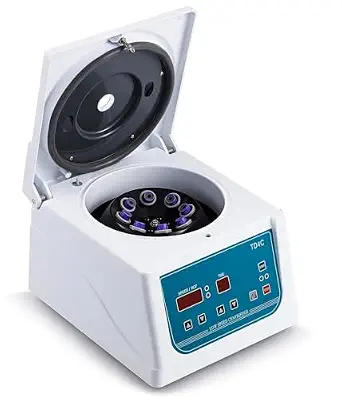 | Best Value Benchtop Workhorse | Speed Range: 100–4000 RPM | Max RCF: 1880 x g | Capacity: 8 x 15 mL | VIEW ON AMAZON | See Our Full Breakdown |
| CALU LUKY Benchtop Laboratory Centrifuge, 4000 RPM, 6 × 20 mL | 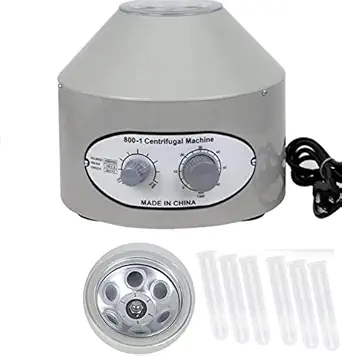 | Best Budget Starter Unit | Power: AC 110 V, 60 Hz | Max Speed: 4000 RPM | Max RCF: 1790 x g | VIEW ON AMAZON | See Our Full Breakdown |
| Laboratory Mini Centrifuge with LCD, 100–12,000 RPM |  | Best High-Speed Mini | Speed Range: 100–12,000 RPM | Max RCF: 7245 x g | Rotors: 8-place (0.2/0.5/1.5/2 mL tubes); 16-place strip rotor | VIEW ON AMAZON | See Our Full Breakdown |
| Electric Laboratory Centrifuge, 4000 RPM, 6 x 20 mL |  | Best for Teaching Labs | Maximum speed: 4000 RPM | Capacity: 6 x 20 mL | Timer: 0–60 minutes or continuous operation | VIEW ON AMAZON | See Our Full Breakdown |
| Mxmoonant Benchtop Lab Centrifuge, 4000 RPM, 15 mL x 6 |  | Best Budget Pick | Speed Range: 0–4000 rpm | Maximum RCF: 1685×g | Tube Capacity: 15 mL x 6 | VIEW ON AMAZON | See Our Full Breakdown |
| ONiLAB PRP Benchtop Lab Centrifuge, 300-5000 RPM, Max 2600×g |  | Best Overall | Capacity: 6 x 15/10/7/1.5–5 mL tubes | Speed Range: 300–5000 RPM | Maximum RCF: 2600×g | VIEW ON AMAZON | See Our Full Breakdown |
| Lab PRP/PRF Benchtop Low-Speed Centrifuge, 300–5000 RPM |  | Best for Protocol Precision | Speed range: 300–5000 RPM | Maximum RCF: 2600×g | Speed accuracy: ±20 RPM | VIEW ON AMAZON | See Our Full Breakdown |
| ONiLAB Scientific Mini Centrifuge, 7000 RPM / 2680 x g, 2 Rotors |  | Best Compact Pick | Max Speed: 7000 RPM | Max RCF: 2680 x g | Rotors: 2 (8 x 0.2/0.5/1.5/2.0 mL; 0.2 mL x 32 PCR strips) | VIEW ON AMAZON | See Our Full Breakdown |
| Mxmoonant Centrifuge Machine, 15ml x 6 Lab Benchtop PRP Centrifuge |  | Best Budget Pick for PRP Work | Capacity: 15ml x 6 tubes | Speed Range: 300-4000 RPM | Max RCF: 1953xg | VIEW ON AMAZON | See Our Full Breakdown |
| LAB FISH LC-8S Benchtop Centrifuge, 8 x 2/5/10/15ml Tubes | 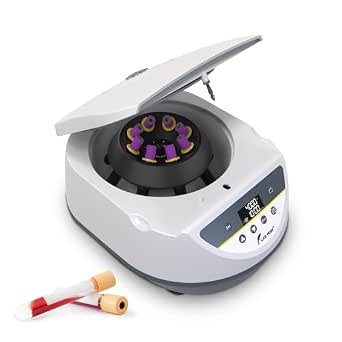 | Best for Tube-Size Flexibility | Speed Range: 500-5000 RPM | Max RCF: 3074 xg | Timer Range: 10s – 99min 59s | VIEW ON AMAZON | See Our Full Breakdown |
| JOANLAB LC500-6 Lab Centrifuge, 500-4000 RPM, 2146 x g |  | Best Overall for Small Labs | Speed Range: 500-4000 RPM | Max RCF: 2146 x g | Rotor Capacity: 6 tubes (10/15/50ml centrifuge; 2/5ml vacuum with adapters) | VIEW ON AMAZON | See Our Full Breakdown |
| ONiLAB DM0506 Lab PRP Centrifuge, 6x15ml/10ml/7ml/1.5-5ml |  | Best Build Quality and Safety | Capacity: 6 tubes (15/10/7/1.5-5mL) | Speed Range: 300-5000 RPM | Max RCF: 2600×g | VIEW ON AMAZON | See Our Full Breakdown |
| NEWTRY Mini Centrifuge Machine, Electric Desktop Benchtop Lab Centrifuge |  | Best Portable Option | Speed Range: 300-4000 r/min | Timing Range: 0-60h (5-minute steps) | Capacity: 10ml x 6 rotor (10ml, 5ml tubes) | VIEW ON AMAZON | See Our Full Breakdown |
| centrifuges for lab | Speed Range | Max RCF | Noise Level | Capacity |
|---|---|---|---|---|
| ONiLAB Scientific Mini Centrif | — | 2680 x g | ≤45 dB | — |
| LABHOUSE LC500-6 PRP PRF Plasm | 500–4000 RPM | 2146 x g | — | — |
| CGOLDENWALL Benchtop Lab Centr | 100–4000 RPM | 1880 x g | ≤65 dB | 8 x 15 mL |
| CALU LUKY Benchtop Laboratory | — | 1790 x g | — | 6 x 20 mL |
| Laboratory Mini Centrifuge wit | 100–12,000 RPM | 7245 x g | — | — |
| Electric Laboratory Centrifuge | — | — | — | 6 x 20 mL |
| Mxmoonant Benchtop Lab Centrif | 0–4000 rpm | — | ≤50 dB | — |
| ONiLAB PRP Benchtop Lab Centri | 300–5000 RPM | — | ≤56 dB | 6 x 15/10/7/1.5–5 mL tubes |
| Lab PRP/PRF Benchtop Low-Speed | 300–5000 RPM | — | — | — |
| ONiLAB Scientific Mini Centrif | — | 2680 x g | ≤45 dB | — |
| Mxmoonant Centrifuge Machine | 300-4000 RPM | 1953xg | ≤50 dB | 15ml x 6 tubes |
| LAB FISH LC-8S Benchtop Centri | 500-5000 RPM | 3074 xg | — | 8 x 2ml/5ml/10ml/15ml tubes |
| JOANLAB LC500-6 Lab Centrifuge | 500-4000 RPM | 2146 x g | — | — |
| ONiLAB DM0506 Lab PRP Centrifu | 300-5000 RPM | 2600×g | ≤56 dB | 6 tubes (15/10/7/1.5-5mL) |
| NEWTRY Mini Centrifuge Machine | 300-4000 r/min | — | ≤50 dB | 10ml x 6 rotor (10ml, 5ml tubes) |
More Details on Our Top Picks
ONiLAB Scientific Mini Centrifuge, 7000 RPM / 2680 x g
This option stands out for workflows built around PCR strips and microtubes, where the click-on rotor system swaps between an 8-place tube rotor and a 32-place strip rotor without tools. Compared with the Laboratory Mini Centrifuge with LCD (100–12,000 RPM), it gives up raw speed and programmability, but it wins on quiet operation at ≤45 dB — quiet enough to sit beside a PCR hood without becoming background noise. The auto-braking when the lid opens or power cuts is a genuine safety advantage over simpler units like the CALU LUKY, which lacks equivalent stopping logic. The tradeoff is real: 2680 x g is a quick-spin ceiling, so it cannot replace a benchtop workhorse for plasma or cell separation duties.
Pros:- Two tool-free click-on rotors cover tubes and 32-well PCR strips
- Whisper-quiet at ≤45 dB for shared bench spaces
- Auto-braking when the lid opens or power cuts
- Accepts 0.2/0.5/1.5/2.0 mL tubes on one rotor
Cons:- Microtube-only capacity — no 15/50 mL compatibility
- Max 2680 x g is far below clinical or cell-separation requirements
Best for: Molecular biology labs and teaching benches that primarily spin down PCR strips, 0.2–2.0 mL tubes, and brief reagent mixes
Not ideal for: Labs needing PRP/plasma separation or any protocol above 2680 x g — the rotor simply won’t take larger tubes or deliver the force
- Max Speed:7000 RPM
- Max RCF:2680 x g
- Noise Level:≤45 dB
- Rotors:8 x 0.2/0.5/1.5/2.0 mL tubes; 32 x 0.2 mL PCR strips
- Safety:Auto-braking on lid open or power cut
- Voltage:100–240V
- Lid Color:Green
Our verdict“If your day is dominated by PCR setups and micro-volume spin-downs, this is the most convenient and quietest way to do them.”
LABHOUSE LC500-6 PRP PRF Plasma Centrifuge
Among the plasma-focused units in this lineup, the LC500-6 earns its spot through protocol repeatability: nine memory programs let a clinic recall exact speed/time combinations for PRP, PRF, or plasma in one button press. That matters more here than raw specs — the CGOLDENWALL 8 x 15 mL covers a similar speed range but requires re-entering settings every run. The ventilated chamber is a meaningful sample-protection feature during long spins, and the vibration auto-shutoff guards the rotor against imbalance damage, something the CALU LUKY doesn’t offer. Tradeoffs: tubes must be manually balanced symmetrically, and the 4000 RPM / 2146 x g ceiling is tuned for blood fractions, not high-force pelleting.
Pros:- 9 memory programs for instant recall of repeatable PRP/PRF protocols
- Ventilated chamber prevents sample overheating on long runs
- Vibration auto-shutoff protects the motor and rotor
- Handles 50/15/10 mL centrifuge tubes and 2–5/10 mL vacuum tubes
Cons:- Manual symmetric balancing required before every run
- 4000 RPM ceiling limits non-clinical applications
Best for: PRP/PRF clinics and medical labs running repeatable blood-fraction protocols who need stored programs and thermal protection
Not ideal for: Labs pelleting bacteria or needing RCF above ~2100 x g — this speed ceiling is deliberately low
- Speed Range:500–4000 RPM
- Max RCF:2146 x g
- Rotor Capacity:6 x (50/15/10 mL) tubes or 6 x (2–5/10 mL) vacuum tubes
- Memory Programs:9
- Timer:30 seconds – 99 minutes
- Dimensions:17.75 x 13.75 x 10 inches
- Weight:20.1 lbs
Our verdict“For a clinic running the same blood-separation protocols daily, the stored programs and ventilation make this the most reliable choice.”
CGOLDENWALL Benchtop Lab Centrifuge, 100-4000 RPM, 8 x 15ml
This model makes the most sense for a general lab that needs one machine to cover routine spins without paying for clinical-specific features. Compared with the LABHOUSE LC500-6, you lose the memory programs and vacuum-tube flexibility but gain an 8-place rotor (versus 6) and an LED display showing time, speed, and RCF simultaneously — handy when a protocol specifies force rather than RPM. Against the budget CALU LUKY, the lid lock and continuous-run option push it ahead on safety and flexibility. The quirks are worth knowing: the timer only starts counting once the rotor reaches set speed, and the 1880 x g ceiling keeps it firmly in low-speed territory.
Pros:- 8 x 15 mL capacity beats most 6-place rivals in this price band
- LED readout of time, speed, and RCF at a glance
- 1–99 minute timer plus continuous run option
- Safety lid lock with sub-65 dB operation
Cons:- Timer doesn’t start until set speed is reached, which can skew short runs
- 1880 x g ceiling rules out denser pellet work
Best for: Hospital and biochemistry labs wanting an everyday low-speed spinner for 10–15 mL tubes at a moderate spend
Not ideal for: High-speed applications or labs that run many identical protocols — no stored programs means manual setup every time
- Speed Range:100–4000 RPM
- Max RCF:1880 x g
- Capacity:8 x 15 mL
- Timer:1–99 minutes (plus continuous)
- Compatible Tubes:5–10 mL vacuum tubes; 10–15 mL centrifuge tubes
- Noise Level:≤65 dB
- Display:LED (time, speed, RCF)
Our verdict“A sensible middle ground: more capacity and display detail than budget models, without the clinical programming premium.”
CALU LUKY Benchtop Laboratory Centrifuge, 4000 RPM, 6 × 20 mL
Stripped-down is the point here. The CALU LUKY delivers a 6 x 20 mL rotor, adjustable speed, and a 0–60 minute timer at the simplest level of operation — no programs, no RCF display, no auto-braking. Against the CGOLDENWALL 8 x 15 mL, it trades capacity and readout sophistication for a lower entry cost and slightly larger 20 mL tubes, which suits teaching labs and basic particle separation. Compared with the ONiLAB mini centrifuge, it covers a completely different job — larger tubes at modest force — so the two complement rather than compete. The absence of documentation on finer safety systems is the real drawback: this is a manual, trust-the-operator machine.
Pros:- Six 20 mL tubes included in the box
- Adjustable speed and 0–60 minute timer or continuous run
- Compact footprint for crowded benches
- Handles larger tubes than mini centrifuges at this price
Cons:- No RCF display or programmable settings
- Sparse documentation and basic safety provisions compared with rivals
Best for: Budget-conscious teaching labs, classroom demos, and low-stakes separations with 20 mL tubes
Not ideal for: Clinical or protocol-driven labs — no RCF display, no memory settings, and minimal documentation of safety features
- Power:AC 110 V, 60 Hz
- Max Speed:4000 RPM
- Max RCF:1790 x g
- Capacity:6 x 20 mL
- Timer:0–60 minutes or continuous
- Included Tubes:6
Our verdict“Buy it for simple, low-cost separations where precision isn’t the priority — skip it for anything protocol-critical.”
Laboratory Mini Centrifuge with LCD, 100–12,000 RPM
Speed is the story: 12,000 RPM and 7245 x g from a 6.7-inch-wide housing puts this model in a different performance class from the ONiLAB mini (2680 x g), while still offering a similar dual-rotor setup with an 8-place tube rotor and 16-place strip rotor. The LCD with settable speed and run time gives precise control that fixed-speed minis can’t match, and the brushless DC motor means no carbon-brush maintenance over the machine’s life. The limitation is thermal: continuous runs are capped at 30 minutes, so it’s built for short, forceful spins rather than extended protocols. If your protocols involve pelleting from small volumes, this is the mini that can actually do it.
Pros:- 7245 x g from a compact 6.7-inch footprint
- LCD control over exact speed and run time
- Two rotors: 8-place tubes (0.2–2 mL) and 16-place strips
- Maintenance-free brushless motor with lid safety cutoff
Cons:- Max 30 minutes of continuous operation
- Manual symmetric balancing required — no imbalance detection
Best for: Researchers who need high-RCF micro-volume pelleting from a benchtop mini rather than a full-size floor unit
Not ideal for: Long-duration protocols or larger tubes — the 30-minute duty limit and microtube-only rotors are hard constraints
- Speed Range:100–12,000 RPM
- Max RCF:7245 x g
- Rotors:8-place (0.2/0.5/1.5/2 mL tubes); 16-place strip rotor
- Timer:1–99 minutes
- Motor:Brushless DC
- Dimensions:6.7 x 5.7 x 4.7 in
- Power Supply:100–240 V
- Housing:Transparent ABS
Our verdict“The rare mini centrifuge with genuine pelleting force, provided your runs stay short and your volumes stay small.”
Electric Laboratory Centrifuge, 4000 RPM, 6 x 20 mL
This option stands out for educational and light-production settings rather than precision clinical work. The 6 x 20 mL capacity is the largest tube volume in this batch — bigger than the 15 mL tubes the Mxmoonant and ONiLAB PRP units accept — which makes sense when a classroom is spinning larger, cheaper glassware. The 0–60 minute timer with continuous mode is a genuinely useful touch for long settling runs. The tradeoff is blunt: 4000 RPM is the ceiling, and there’s no RCF display or programmable presets like you get on the ONiLAB PRP model, so protocols that demand repeatable force settings will frustrate users. Compared with the ONiLAB mini, this unit trades portability and speed for raw tube volume, a swap that only makes sense in teaching contexts.
Pros:- Largest tube capacity in the lineup at 6 x 20 mL
- Timer runs 0–60 minutes or continuous for long separations
- Compact footprint fits crowded benchtops
- Quiet, low-vibration operation when properly balanced
Cons:- 4000 RPM ceiling limits what mixtures it can actually separate
- No digital display, RCF readout, or programmable presets
Best for: Schools, teaching labs, and hobbyist producers who need to spin larger 20 mL tubes cheaply
Not ideal for: PRP or clinical protocols needing precise, repeatable RCF values — there’s no force display or presets
- Maximum speed:4000 RPM
- Capacity:6 x 20 mL
- Timer:0–60 minutes or continuous operation
- Voltage:110V
- Operation:Electric
Our verdict“A sensible budget pick for classrooms and light-duty separation work where tube volume matters more than precision.”
Mxmoonant Benchtop Lab Centrifuge, 4000 RPM, 15 mL x 6
For buyers who want digital control without paying for programmable features, this model splits the difference between the bare-bones Electric Laboratory Centrifuge and the pricier ONiLAB PRF-style units. The high-contrast LCD showing speed, time, and status is the main reason to choose it over the analog 6 x 20 mL unit — you can actually reproduce a run. At ≤50 dB, it’s among the quietest mid-size options here, quieter than the ONiLAB PRP’s 56 dB. The tradeoffs are real: it tops out at 4000 RPM and 1685×g, well below the 2600×g the ONiLAB PRP and PRF units deliver, so denser separations take longer or simply stall. The 110V-only power also rules it out for international labs without a converter.
Pros:- LCD display for real-time speed and time monitoring
- Very quiet operation at ≤50 dB
- Light 5-pound benchtop footprint
- Adjustable speed and 60-minute timer at a low price point
Cons:- Maximum RCF of 1685×g limits separation performance
- Manual symmetric tube balancing required to avoid vibration
- 110V only — unusable in 220V regions without an adapter
Best for: Budget-conscious small labs and students who want an LCD readout and timer for basic PRP or sample prep
Not ideal for: Labs outside 110V regions or protocols requiring forces above 1685×g
- Speed Range:0–4000 rpm
- Maximum RCF:1685×g
- Tube Capacity:15 mL x 6
- Time Range:0–60 minutes
- Motor Power:60W
- Noise Level:≤50 dB
- Voltage:110V
- Item Weight:5.09 lbs
Our verdict“The cheapest credible path to digital speed control, as long as your protocols don’t need more than 1685×g.”
ONiLAB PRP Benchtop Lab Centrifuge, 300-5000 RPM, Max 2600×g
This is the pick I’d point most working labs toward, because it solves the repeatability problem the cheaper units create. Two one-key quick-start programs mean a PRP protocol becomes a single button press instead of dialing in settings every run — nothing else in this price bracket offers that so cleanly. Safety engineering is another differentiator: lid interlock, overspeed detection, and automatic lid release put it a class above the Mxmoonant and the 6 x 20 mL unit. The cast iron base with suction feet keeps it planted where lighter units walk across the bench. Drawbacks: the fixed rotor means no capacity upgrades later, and at 11.4 lbs it’s twice the weight of the Mxmoonant — fine for a dedicated station, awkward if you move equipment around.
Pros:- Two programmable one-key quick-start routines for repeatable PRP runs
- Full safety suite: lid interlock, overspeed detection, automatic lid release
- Brushless maintenance-free motor on a stable cast iron base
- CE, cTUVus, and FCC certified for clinical settings
Cons:- Fixed rotor locks you into 1.5–15 mL tubes permanently
- At 11.4 lbs, it’s heavy for shared or mobile bench space
Best for: PRP/PRF and clinical prep labs that run the same protocol daily and need certified, repeatable operation
Not ideal for: Labs expecting to expand tube formats later — the fixed rotor can’t be upgraded
- Capacity:6 x 15/10/7/1.5–5 mL tubes
- Speed Range:300–5000 RPM
- Maximum RCF:2600×g
- Timer:30 sec – 99 min or continuous
- Programs:2 (P1/P2) quick-start
- Motor:Maintenance-free brushless DC
- Noise Level:≤56 dB
- Certifications:CE, cTUVus, FCC
Our verdict“The most complete package for daily PRP work — safe, programmable, and stable, if you never need to change rotors.”
Lab PRP/PRF Benchtop Low-Speed Centrifuge, 300–5000 RPM
Where the ONiLAB PRP unit asks you to trust its presets, this model gives you the controls themselves: speed adjustable in 10 RPM steps, a display that switches between RPM and relative centrifugal force, and ±20 RPM stated accuracy. For anyone following a published protocol written in ×g rather than RPM — which is how most clinical literature specifies PRP spins — that RCF readout is the deciding feature over the Mxmoonant or the 6 x 20 mL unit. Two saved programs and two braking levels cover most workflows, and included adapters for 1.5–15 mL tubes match the ONiLAB’s flexibility. The honest tradeoff: ±20 RPM accuracy is fine for PRP but not chromatography-grade, and two braking levels feel thin next to units with variable braking curves.
Pros:- Displays speed in RPM or RCF, matching how clinical protocols are written
- 10 RPM / 10×g increments with ±20 RPM accuracy for tight control
- Two user-defined programs plus included multi-size tube adapters
- Overspeed detection, diagnostics alarm, and door interlock with CE and cTUVus certification
Cons:- Speed accuracy of ±20 RPM may not satisfy precision applications
- Only two braking levels, limiting control over run endings
Best for: Labs following literature protocols specified in RCF who need documented, repeatable force settings
Not ideal for: High-precision analytical work — ±20 RPM accuracy and two-stage braking aren’t tight enough
- Speed range:300–5000 RPM
- Maximum RCF:2600×g
- Speed accuracy:±20 RPM
- Timer range:0–99 minutes or continuous
- Programs:2 user-defined (P1/P2)
- Braking levels:2
- Compatible tubes:15/10/7 mL and 1.5–5 mL x 6
- Certifications:CE, cTUVus, FCC
Our verdict“The right choice when your protocol is written in ×g and you need the readout to prove you hit it.”
ONiLAB Scientific Mini Centrifuge, 7000 RPM / 2680 x g, 2 Rotors
This model plays a completely different role from the 15 mL-class units above: it’s a personal benchtop spinner for microtubes, and within that job it’s excellent. At 1.1 pounds and under 7 inches wide, it occupies a corner of any workstation — something the 11.4-pound ONiLAB PRP can’t claim. The two tool-free click-on rotors (8-place microtube and 32-place PCR strip) swap in seconds, a flexibility the fixed-rotor PRP unit simply doesn’t offer. The lid-open auto-brake is a genuinely smart safety touch for busy molecular benches. The catch is scope: 7000 RPM / 2680×g and microtube-only capacity mean it cannot replace a PRP or clinical centrifuge for blood separation tubes — it’s a complement, not a substitute.
Pros:- Ultra-compact 1.1-pound design fits any bench corner
- Two tool-free interchangeable rotors for tubes and PCR strips
- Whisper-quiet at ≤45 dB, the quietest in this lineup
- Lid-open automatic braking adds real safety for shared spaces
Cons:- Microtube-only compatibility rules out clinical and PRP applications
- 7000 RPM ceiling is low for mini centrifuges in general
Best for: Molecular biology and PCR workflows needing quick microtube spins at a personal bench
Not ideal for: PRP, blood, or any work with tubes larger than 2 mL — capacity and format rule it out
- Max Speed:7000 RPM
- Max RCF:2680 x g
- Rotors:2 (8 x 0.2/0.5/1.5/2.0 mL; 0.2 mL x 32 PCR strips)
- Noise Level:≤45 dB
- Voltage:100–240V
- Dimensions:6.7 x 6.3 x 4.8 inches
- Weight:1.1 lbs
Our verdict“A superb second centrifuge for microtube and PCR work — just don’t expect it to handle anything bigger.”
Mxmoonant Centrifuge Machine, 15ml x 6 Lab Benchtop PRP Centrifuge
At just 5.44 lbs, the Mxmoonant 15ml x 6 is the lightest full-featured benchtop option in this lineup, and that portability is its main selling point. The LCD display plus adjustable speed and a 0-100 minute timer give it more control flexibility than similarly priced fixed-speed units like the CALU LUKY 6 x 20 mL, while the ≤50 dB noise rating keeps it office-friendly for small clinics. Compared with the JOANLAB LC500-6, however, it gives up rotor versatility — no 50ml tube support and no adapters — and its 1953xg maximum force is the lowest in this batch. The real friction point is symmetric loading: run a single sample and you’ll need a counterweight every time, which slows down small-batch workflows.
Pros:- Very lightweight at 5.44 lbs for easy repositioning or transport
- Adjustable speed (300-4000 RPM) and long 0-100 min timer
- Quiet operation at ≤50 dB
- Clear LCD display for real-time run monitoring
Cons:- Single or odd-number samples require a counterweight tube
- Six 15ml tube capacity limits batch throughput
- Lowest max RCF (1953xg) in this batch for fine separations
Best for: Small clinics and home PRP practitioners who need a light, quiet machine for occasional 15ml tube runs on a tight budget
Not ideal for: Labs processing varied tube sizes or running frequent single-sample spins, since the six-tube limit and mandatory counterweighting slow throughput
- Capacity:15ml x 6 tubes
- Speed Range:300-4000 RPM
- Max RCF:1953xg
- Timer Range:0-100 minutes
- Noise Level:≤50 dB
- Motor Power:50W
- Weight:5.44 lbs
Our verdict“Buy it if you need an affordable, portable PRP centrifuge for modest 15ml workloads; skip it if your protocols demand higher g-forces or mixed tube sizes.”
LAB FISH LC-8S Benchtop Centrifuge, 8 x 2/5/10/15ml Tubes
What separates the LAB FISH LC-8S from most rivals here is its aluminum alloy rotor that accepts eight tubes across the 2ml to 15ml range — vacuum collection tubes included — so one machine covers plasma, PRP, and general sample prep without buying adapters separately. The momentary spin function is a genuinely useful touch for quick pulsed separations that the Mxmoonant and CGOLDENWALL 8 x 15ml units lack, and the brushless motor should outlast brushed designs. The tradeoff is capacity discipline: it’s capped at 15ml tubes, so unlike the JOANLAB LC500-6 there’s no 50ml option, and at 5000 RPM / 3074xg max it stays firmly in low-speed territory — no nucleic acid or microorganism pellet work here.
Pros:- Single rotor handles 8 x 2ml through 15ml tubes plus vacuum collection tubes
- Momentary/short-spin function for pulsed separations
- Brushless motor for durability and quieter operation
- Electronic lid lock and automatic malfunction alarm
Cons:- Tube compatibility capped at 15ml — no larger-format support
- Low-speed only; unsuitable for high-g applications
- Heavier than budget options at 14.27 lbs
Best for: Labs and clinical settings running mixed workflows across vacuum tubes and 10-15ml centrifuge tubes who want one rotor for everything
Not ideal for: Labs needing 50ml tube support or high-speed protocols, since the fixed rotor and 3074xg ceiling rule both out
- Speed Range:500-5000 RPM
- Max RCF:3074 xg
- Timer Range:10s – 99min 59s
- Capacity:8 x 2ml/5ml/10ml/15ml tubes
- Motor:Brushless
- Rotor:Aluminum alloy fixed-angle
- Weight:14.27 lbs
- Warranty:1 year limited
Our verdict“This pick makes the most sense for buyers whose workflows jump between tube formats and want one versatile rotor instead of multiple machines.”
JOANLAB LC500-6 Lab Centrifuge, 500-4000 RPM, 2146 x g
The JOANLAB LC500-6 earns the top slot because it solves the workflow problem its competitors ignore: 9 programmable presets mean a repeated PRP protocol is one button press instead of dialing speed and time every run — something none of the four other units in this batch match. Its rotor takes 10ml, 15ml, and 50ml tubes plus 2ml/5ml vacuum tubes with included adapters, giving it the broadest tube coverage here alongside the LAB FISH LC-8S (which lacks 50ml support). Safety is also a step above the Mxmoonant: automatic imbalance shutoff and dual electronic lid locks protect both samples and operators. The compromises are real, though — at 20.1 lbs it’s the heaviest unit in this group, and 4000 RPM won’t touch high-speed applications.
Pros:- 9 programmable presets for repeatable one-touch protocols
- Rotor supports 10ml/15ml/50ml tubes plus 2ml/5ml vacuum tubes with adapters
- Automatic imbalance shutoff and dual lid locks
- Brushless motor with ventilation to prevent overheating
Cons:- Heaviest unit in this batch at 20.1 pounds
- 4000 RPM ceiling limits high-speed applications
- Newer product with a shorter market track record
Best for: Small labs and clinical practices running repeatable PRP/plasma protocols who want presets, mixed tube sizes, and strong safety engineering in one unit
Not ideal for: Benchspaces with tight footprints or weight limits, and anyone needing high-speed separations beyond 4000 RPM
- Speed Range:500-4000 RPM
- Max RCF:2146 x g
- Rotor Capacity:6 tubes (10/15/50ml centrifuge; 2/5ml vacuum with adapters)
- Programmable Presets:9
- Motor Type:Brushless
- Weight:20.1 lbs
- Model:JLLC500-6
Our verdict“If repeatable protocols and tube versatility drive your purchasing decision, this is the most complete package in the lineup despite its weight.”
ONiLAB DM0506 Lab PRP Centrifuge, 6x15ml/10ml/7ml/1.5-5ml
Where the ONiLAB DM0506 justifies its position is engineering: a cast iron base, vacuum suction feet, and ABS casing make it the most physically stable unit here, and its certification stack (CE, cTUVus, FCC) reflects testing rigor the budget options like the NEWTRY Mini don’t advertise. The two quick-start programs with memory fall short of the JOANLAB’s nine presets but beat everything else in this batch for repeat-run convenience. Its self-testing and overspeed detection add a safety layer beyond the LAB FISH’s lid lock and alarm. The catch is rigidity: the fixed-angle A6-15P rotor can’t be swapped out, so unlike the ONiLAB Scientific Mini with its two interchangeable rotors, you’re locked into one configuration forever.
Pros:- Certified build (CE, cTUVus, FCC) with cast iron base and vacuum suction feet
- Two quick-start programs with settings saved in memory
- Lid interlock, overspeed detection, and automatic self-testing
- Maintenance-free brushless DC motor with 1-year warranty
Cons:- Fixed-angle rotor is not interchangeable or upgradable
- 2600xg max force limits demanding separations
- Only two presets versus the JOANLAB’s nine
Best for: Professional clinics and labs that prioritize certified safety engineering and stable operation for routine PRP workloads
Not ideal for: Labs anticipating future protocol changes, since the non-interchangeable rotor locks you into 1.5-15ml tubes permanently
- Capacity:6 tubes (15/10/7/1.5-5mL)
- Speed Range:300-5000 RPM
- Max RCF:2600×g
- Timer:30 sec – 99 min or continuous
- Noise Level:≤56 dB
- Motor:Brushless DC
- Certifications:CE, cTUVus, FCC
- Warranty:1 year
Our verdict“Choose this model when certified safety features and rock-stable bench operation matter more than rotor flexibility or preset count.”
NEWTRY Mini Centrifuge Machine, Electric Desktop Benchtop Lab Centrifuge
Weighing just 3.5 lbs with a 9 x 8.6 x 6.8 inch footprint, the NEWTRY Mini is the most transportable centrifuge in the entire roundup — it fits in a tote bag in a way the 20-lb JOANLAB LC500-6 never could. The standout spec is the 0-60 hour timing range, far beyond the 99-minute caps on the ONiLAB and LAB FISH units, which suits extended low-speed runs. Stepless speed regulation gives finer control than click-stopped dials on cheaper six-tube machines like the Mxmoonant 4000 RPM. But the constraints are tight: a single 10ml x 6 rotor means no 15ml tubes, no adapters, no vacuum tubes — and if your samples are temperature-sensitive, the absence of any cooling provision is a hard stop.
Pros:- Ultra-portable at 3.5 lbs with a tiny desktop footprint
- Exceptional 0-60 hour timing range for extended runs
- Stepless speed regulation for fine control
- Quiet at ≤50 dB with anti-slip feet for stability
Cons:- Single fixed rotor limited to 6 x 10ml/5ml tubes
- No cooling or temperature control for sensitive samples
- 4000 RPM ceiling with modest separation power
Best for: Mobile practitioners, educators, and field researchers who need a genuinely portable spinner for small 5-10ml tubes
Not ideal for: Labs working with 15ml+ tubes or temperature-sensitive samples, given the single small rotor and no cooling capability
- Speed Range:300-4000 r/min
- Timing Range:0-60h (5-minute steps)
- Capacity:10ml x 6 rotor (10ml, 5ml tubes)
- Noise Level:≤50 dB
- Motor Power:50W
- Weight:3.5 lbs
- Dimensions:9″ x 8.6″ x 6.8″
Our verdict“Grab this one if portability is your number one requirement and your tubes are small; anyone with larger tubes or cooling needs should look elsewhere.”

How We Picked
I evaluated each centrifuge against the factors that actually determine day-to-day lab performance: speed range and RCF output, rotor and tube versatility, timing control, and build quality relative to intended use. A centrifuge marketed for PRP work was judged on its low-speed precision and buffy-layer separation consistency, not on raw RPM — a 4000 RPM ceiling is fine for plasma but useless for micro-pellet work. Similarly, mini centrifuges were ranked on convenience factors like lid design, rotor interchange, and footprint rather than maximum force.
The ranking order also reflects workflow fit. Models that serve multiple applications (microtubes plus PCR strips, or multiple tube sizes in one rotor) placed higher than single-purpose units with similar specs. Where two products were nearly identical on paper — a pattern common among the 4000 RPM benchtop clones — I separated them using secondary factors like timer range, speed adjustability, and documented rotor quality. Price was never the deciding factor on its own, but value for the intended protocol was.
Factors to Consider When Choosing Centrifuges For Labs
Before choosing a lab centrifuge, it helps to understand the specs that actually affect your results and the mistakes labs commonly make when buying one. These are the factors that separated the strong picks in this roundup from the lookalikes.Speed Range and Relative Centrifugal Force
RPM gets all the attention, but RCF (relative centrifugal force, measured in x g) is what actually drives separation, and it depends on rotor radius — a 7000 RPM mini centrifuge may generate less force than a larger 4000 RPM benchtop unit. Match the force to your application: PRP protocols typically work between 200 and 800 x g, plasma separation around 1500–2200 x g, and nucleic acid pelleting often requires well above 10,000 x g. A common mistake is buying a centrifuge because its top speed looks impressive when your protocol needs precision at the low end — which is why units with a 300 or 500 RPM floor outperform generic models for PRP. Also check whether speed is adjustable at all; some budget models run at a single fixed speed with no way to soften a protocol. If your work spans multiple force requirements, prioritize a wide adjustable range over a high ceiling.
Rotor Capacity and Tube Compatibility
Capacity determines throughput, but compatibility determines whether the centrifuge is usable at all. A 6 x 15 mL rotor cannot spin 50 mL conicals, and adapters that shim smaller tubes into larger rotors can affect balance and separation quality. Labs frequently buy for their current protocol and discover within months they need a different tube format — which is why models like the LAB FISH LC-8S and ONiLAB PRP units, which accept 2 mL through 15 mL tubes natively, rank higher than single-format competitors. If you run PCR strips, confirm a dedicated strip rotor exists; not every mini centrifuge includes one. For PRP work, verify the rotor accommodates the specific blood collection tubes your kit uses, since their dimensions vary between brands. Buying one flexible rotor now is cheaper than replacing the whole centrifuge later.
Timer Precision and Programmability
Spin time directly affects separation quality, and in PRP and PRF work it can make the difference between a usable platelet layer and a discarded sample. Fixed-interval or crude dial timers are acceptable for simple plasma work, but protocols calling for short pulses or precise intervals demand a digital timer with at least one-minute resolution. Several models in this comparison offer 1–99 minute ranges, which covers nearly all clinical and teaching protocols. A frequent buyer mistake is assuming every centrifuge has a timer at all — some basic units stop only when you open the lid. Momentary/short-spin functions, common on mini centrifuges, are more useful than they sound for quick 10-second spins during PCR setup. If reproducibility matters to your results, avoid anything without a digital display.
Safety and Build Features
A centrifuge is one of the few benchtop devices that can fail dangerously, so lid-lock interlocks and imbalance protection should be treated as requirements, not luxuries. Check whether the unit refuses to start with an open lid and how it handles an unbalanced load — better models shut down automatically rather than walking across the bench. Housing material matters too: metal shells absorb vibration better than thin plastic, which affects both noise and longevity. Noise level is an underrated factor in shared lab spaces; larger rotors at high speeds can be loud enough to disrupt nearby work. Balance your loads symmetrically as a matter of habit, even on units with protection, since chronic imbalance wears bearings prematurely regardless of the safety features. For clinical environments, also confirm the unit’s electrical certification is recognized in your region.
Footprint and Application Fit
Bench space is a real constraint in most labs, and footprint often dictates whether a centrifuge gets daily use or stays in storage. Mini centrifuges earn their place through convenience — a unit small enough to sit beside your pipetting station gets used constantly, while a full benchtop model may be treated as a shared resource. Consider who will operate the machine: teaching labs and multi-user spaces benefit from simple controls, while a dedicated PRP clinic benefits from a unit tuned to one protocol. Temperature control is absent from everything in this price class, so if you are working with temperature-sensitive samples, factor in spin durations and ambient conditions. Finally, think about serviceability — check whether replacement rotors and lids are available, because rotor damage from a dropped tube is far more common than motor failure.
Frequently Asked Questions
Is a 4000 RPM centrifuge enough for PRP and PRF preparation?
For most PRP and PRF protocols, yes — the force levels required typically fall between 200 and 1500 x g, which a 4000 RPM benchtop unit can reach comfortably. What matters more than top speed is the starting speed floor: PRP protocols often call for a soft spin around 300–500 RPM to isolate platelets without activating them, and units that cannot go that low will compromise your yield. That is why the PRP-specific models in this comparison start at 300–500 RPM while generic 4000 RPM units often have a much higher minimum. Also confirm the unit accepts your blood collection tubes, since PRP kits vary in tube diameter and length. If your protocol specifies exact x g values rather than RPM, you will need to calculate the conversion using the rotor radius.
What is the difference between RPM and RCF, and which should I shop for?
RPM measures rotor speed while RCF (or x g) measures the actual force applied to your sample, and RCF is what your protocol specifies — two centrifuges at the same RPM can produce very different forces if their rotors have different radii. When comparing products, always look at the maximum x g rating rather than RPM alone. For example, the ONiLAB mini centrifuge spins at 7000 RPM but generates only 2680 x g because of its small rotor, while larger benchtop units at 4000 RPM can exceed 2100 x g. If a product listing omits RCF entirely, treat that as a warning sign about the manufacturer’s documentation quality. Protocols in clinical and research literature almost universally report forces in x g, so matching that number is the only way to reproduce results reliably.
Can I use one centrifuge for both microtubes and larger blood collection tubes?
Only if the rotor or adapters support both formats, and this is one of the most common compatibility surprises buyers encounter. Most centrifuges ship with a rotor sized for one tube class — 1.5/2 mL microtubes for minis, or 10–15 mL tubes for benchtop models — and forcing mismatched tubes risks imbalance, rotor damage, and sample loss. Some picks in this roundup handle the problem natively: the ONiLAB PRP models accept tubes from 1.5 mL up to 15 mL, and the LAB FISH LC-8S covers 2 mL through 15 mL with included adapters. Adapters can work but must be designed for the rotor, not improvised. If your lab runs both micro-volume and clinical-scale work, a dual-rotor or multi-format unit costs less than buying two separate machines.
Do I need a refrigerated centrifuge for lab work?
Refrigerated units exist to protect temperature-sensitive samples — enzymes, certain cell types, and some clinical preparations — during long or high-force spins, and none of the compact units in this price class include cooling. For short spins under 15 minutes at moderate force, sample heating is usually minimal and ambient operation is fine for plasma separation, PCR cleanup, and most teaching-lab applications. Problems arise with extended runs or repeated back-to-back cycles, where rotor friction can raise sample temperature several degrees. Workarounds include pre-chilling tubes, spacing out runs, and keeping the unit away from heat sources. If your protocol explicitly requires 4°C, you need a refrigerated centrifuge and no compact benchtop unit will substitute.
Why do so many budget benchtop centrifuges look identical?
A large share of entry-level lab centrifuges are built around a common 4000 RPM / 6 x 20 mL platform from a small number of OEM factories, then rebranded — which explains why the CALU LUKY, Mxmoonant, and generic electric models in this comparison share nearly identical specs. The practical differences between them come down to quality control, timer accuracy, motor longevity, and after-sale support, which are not visible in a spec table. This is where brand reputation and documentation quality earn their premium: established lab brands like ONiLAB, JOANLAB, and LAB FISH tend to publish real RCF data and offer replacement parts. When choosing between lookalikes, favor the seller with clear specs, available spare rotors, and responsive support. The cheapest listing is rarely the best value if the motor fails outside any warranty coverage.
Conclusion
For most labs, the ONiLAB Scientific Mini Centrifuge is the best overall choice — its dual rotors, compact footprint, and reliable construction cover daily microtube and PCR-strip work without occupying serious bench space. Buyers focused on PRP and plasma protocols should choose the LABHOUSE LC500-6 or ONiLAB PRP Benchtop, both of which offer the low speed floor and tube flexibility that blood-separation work demands. For value, the CGOLDENWALL 8 x 15 mL benchtop delivers genuine capacity and a long timer range at a modest price, making it a smart pick for teaching labs and multi-user spaces. Beginners and low-throughput users will find the NEWTRY Mini or the ONiLAB blue-lid variant approachable, safe, and difficult to misuse. If raw speed for micro-pelleting is the priority, the Laboratory Mini Centrifuge with its 12,000 RPM ceiling is the standout — just accept its smaller tube capacity. Match the centrifuge to your most frequent protocol rather than the most impressive spec sheet, and the right choice becomes obvious.
Halloween Picks
halloween
As an affiliate, we earn on qualifying purchases.