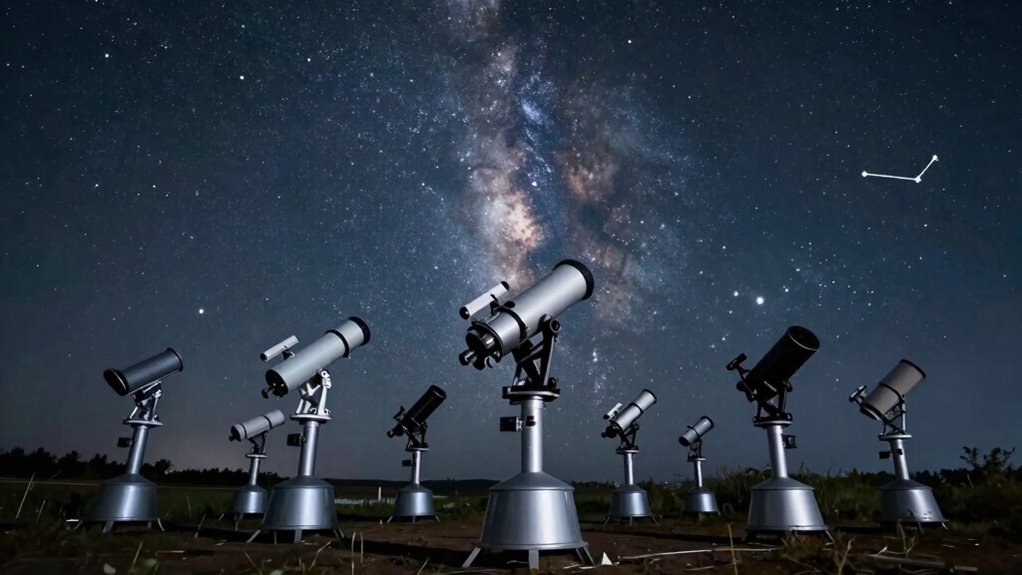
Professional telescopes for amateurs range from guided visual instruments to dedicated astrophotography systems, and the Celestron NexStar 8SE is my best overall pick for its balance of aperture, portability, and computerized tracking. The Advanced VX 8-Inch Schmidt-Cassegrain suits buyers who want an equatorial platform for imaging, while the StarSense Explorer LT 114AZ offers a simpler, phone-guided path into observing. The main tradeoffs are aperture versus portability, automation versus hands-on control, and visual observing versus photography. A larger telescope can reveal more, but it also asks more of your mount, setup time, and storage space. Read on for the full breakdown and guidance on which type fits your observing plans.

Get the latest gadgets delivered free — and shop member deals
- Fast, free delivery on millions of items
- Access to Prime Big Deal Days deals on October 6–7
- Prime Video, Amazon Music and more included
Complete the kit



Key Takeaways
- The NexStar 8SE is the most balanced visual choice: its 8-inch aperture and computerized alt-azimuth mount pair useful light gathering with a setup that is less involved than the Advanced VX systems.
- The Advanced VX models earn their place through equatorial tracking: the 8-inch version is a more approachable imaging platform, while the 9.25-inch model adds aperture and demands more from transport and setup.
- Automation comes in two distinct forms: the NexStar scopes point and track conventional eyepiece views, while the Dwarf 3 is a compact app-controlled camera built around capturing and processing images.
- Refractors trade aperture for simpler handling: the 102SLT and SV503 102mm ED OTA suit different priorities—computerized visual use versus a more specialized optical tube for imaging setups.
- Small-aperture packages favor access and learning: the StarSense 114AZ, 90mm refractor, Koolpte 80mm, and 70mm model are easier entry points, but their light gathering and mounts limit them beside the 8-inch instruments.
| Celestron NexStar 8SE Computerized Schmidt-Cassegrain Telescope |  | Best Overall | Optical design: Schmidt-Cassegrain | Aperture: 8 inches | Mount: Computerized GoTo | VIEW ON AMAZON | See Our Full Breakdown |
| Celestron StarSense Explorer LT 114AZ Smartphone Telescope |  | Best for Beginners | Aperture: 114mm (4.5 inches) | Optical design: Newtonian reflector | Mount: Manual altazimuth with slow-motion altitude adjustment | VIEW ON AMAZON | See Our Full Breakdown |
| 90mm Refractor Telescope, 600mm Focal Length, 24x-180x Magnification |  | Best Portable Starter Kit | Aperture: 90mm | Focal length: 600mm | Magnification range: 24x–180x | VIEW ON AMAZON | See Our Full Breakdown |
| Celestron Advanced VX 9.25″ Schmidt-Cassegrain Computerized Telescope |  | Best for Entry-Level Astrophotography | Aperture: 235mm (9.25 inches) | Optical design: Schmidt-Cassegrain | Mount type: Computerized German equatorial (Advanced VX) | VIEW ON AMAZON | See Our Full Breakdown |
| Celestron NexStar 102SLT Computerized Refractor Telescope |  | Best Compact GoTo Refractor | Aperture: 102mm | Optical design: Refractor | Database: More than 40,000 celestial objects | VIEW ON AMAZON | See Our Full Breakdown |
| Koolpte 80mm Refractor Telescope with AZ Mount, Tripod, Phone Adapter, and Carrying Bag | 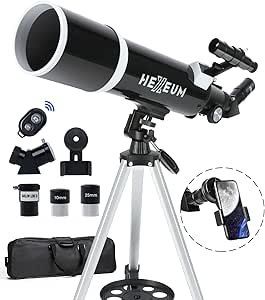 | Best Complete Starter Setup | Aperture: 80mm | Focal length: 600mm | Focal ratio: f/6.7 | VIEW ON AMAZON | See Our Full Breakdown |
| Celestron Advanced VX 8-Inch Schmidt-Cassegrain Computerized Equatorial Telescope |  | Best for Serious Visual Observing and Tracking | Optical design: Schmidt-Cassegrain | Aperture: 8 inches | Focal length: 2032mm | VIEW ON AMAZON | See Our Full Breakdown |
| Telescope for Kids and Adults, 70mm Aperture 300mm Refractor Telescope with Fully Multi-Coated Optics, 15X-150X Magnification, Phone Adapter & Tripod |  | Best for Family First Views | Aperture: 70mm | Focal length: 300mm | Optics: Fully multi-coated glass | VIEW ON AMAZON | See Our Full Breakdown |
| SVBONY SV503 102mm F7 ED Refractor Telescope OTA |  | Best Optical Upgrade for Imaging | Aperture: 102mm | Focal length and ratio: 714mm; f/7 | Optical design: ED achromatic refractor with S-FPL51 glass | VIEW ON AMAZON | See Our Full Breakdown |
| DWARFLAB Dwarf 3 Smart Telescope, App-Controlled Astrophotography Camera |  | Best Compact Smart Imaging Pick | Weight: 3lb / 1.35kg | Video resolution: 4K | Imaging system: Dual lens: telephoto and wide-angle | VIEW ON AMAZON | See Our Full Breakdown |
| professional telescopes for amateur | Aperture | Optical design | Warranty |
|---|---|---|---|
| Celestron NexStar 8SE Computer | 8 inches | Schmidt-Cassegrain | 2 years |
| Celestron StarSense Explorer L | 114mm (4.5 inches) | Newtonian reflector | 2-year US warranty |
| 90mm Refractor Telescope | 90mm | — | 2 years |
| Celestron Advanced VX 9.25" Sc | 235mm (9.25 inches) | Schmidt-Cassegrain | 2-year US warranty |
| Celestron NexStar 102SLT Compu | 102mm | Refractor | 2 years |
| Koolpte 80mm Refractor Telesco | 80mm | — | — |
| Celestron Advanced VX 8-Inch S | 8 inches | Schmidt-Cassegrain | 2 years (USA) |
| Telescope for Kids and Adults | 70mm | — | — |
| SVBONY SV503 102mm F7 ED Refra | 102mm | ED achromatic refractor with S-FPL51 glass | — |
| DWARFLAB Dwarf 3 Smart Telesco | — | — | — |
More Details on Our Top Picks
Celestron NexStar 8SE Computerized Schmidt-Cassegrain Telescope
The 8-inch Schmidt-Cassegrain optics give the NexStar 8SE the reach to show lunar craters, planetary detail, and a wider range of deep-sky targets than the smaller-aperture refractors here. Its GoTo mount and 40,000-plus-object database help an amateur spend more observing time on targets and less time searching. Compared with the Advanced VX 9.25, this model gives up light gathering and equatorial tracking features, but its more compact setup is a more manageable fit for visual observing. SkyAlign eases alignment, though the computerized mount still needs that step before viewing, and expanding the setup may call for additional accessories. I’d choose it as the roundup’s strongest balance of substantial aperture, automated finding, and practical portability.
Pros:- 8-inch aperture supports detailed views across lunar, planetary, and deep-sky targets
- GoTo mount selects and tracks objects from a database of more than 40,000
- SkyAlign can align using three bright stars or planets without requiring their identification
- Compatible with Celestron accessories for expanding the setup
Cons:- Computerized mount requires alignment before observing
- Additional accessories may be needed to expand its capabilities
- Offers less aperture and fewer astrophotography-oriented mount features than the Advanced VX 9.25
Best for: Amateur observers who want substantial aperture and automated target finding for both planetary and deep-sky viewing.
Not ideal for: Observers prioritizing entry-level astrophotography or a no-alignment setup; its GoTo mount needs alignment and lacks the Advanced VX 9.25’s equatorial features.
- Optical design:Schmidt-Cassegrain
- Aperture:8 inches
- Mount:Computerized GoTo
- Object database:More than 40,000 objects
- Alignment:SkyAlign
- Included hand control:NexStar+
- Warranty:2 years
Our verdict“Choose the NexStar 8SE if you want a portable, automated telescope with enough aperture for more than introductory lunar viewing.”
Celestron StarSense Explorer LT 114AZ Smartphone Telescope
The StarSense Explorer LT 114AZ makes learning the night sky more approachable with smartphone-guided star recognition: the app identifies the telescope’s position and points the way to a target. That guidance suits new observers who want help locating planets, clusters, and brighter deep-sky objects without using a computerized GoTo mount. Its 114mm Newtonian aperture gathers more light than the 90mm refractor in this roundup, while keeping the telescope manually controlled. That manual mount is also the tradeoff: you steer and track the target yourself, unlike the NexStar 102SLT, which slews and tracks automatically. A compatible smartphone is needed for the app, and city light pollution will hide many faint targets. I’d pick it for a beginner who wants guided discovery and is willing to learn hands-on tracking.
Pros:- StarSense app recognizes star patterns and guides the observer toward targets
- 114mm Newtonian aperture offers more light gathering than the 90mm refractor in this batch
- Manual altazimuth mount with slow-motion altitude adjustment gives direct control
- Includes a 2-year US warranty and US-based expert support
Cons:- Manual mount requires the observer to track objects as they move across the sky
- Full smartphone guidance depends on a compatible iOS or Android device
- Light pollution limits the number of visible deep-sky targets
Best for: First-time amateur astronomers with a compatible smartphone who want guided help finding targets and are ready to operate a manual mount.
Not ideal for: Observers who want automatic tracking, lack a compatible smartphone, or expect to see many faint deep-sky objects from a light-polluted city.
- Aperture:114mm (4.5 inches)
- Optical design:Newtonian reflector
- Mount:Manual altazimuth with slow-motion altitude adjustment
- Guidance:StarSense Explorer smartphone app for iOS and Android
- Coatings:High-reflectivity
- Warranty:2-year US warranty
- Brand:Celestron
Our verdict“Choose this model if app-led guidance will help you learn the sky and you’re comfortable tracking objects by hand.”
90mm Refractor Telescope, 600mm Focal Length, 24x-180x Magnification
This 90mm refractor is the straightforward kit pick for an amateur who wants lunar and bright-target observing without a computerized setup. The fully multi-coated optics, two eyepieces, and 3x Barlow provide several magnification choices, while the included case and adjustable tripod make transport easier. Compared with the StarSense Explorer LT 114AZ, it has less aperture and no app to guide target finding; in return, it is supplied with a carrying case and smartphone adapter. The 24x–180x range describes available magnification, but the stated maximum does not guarantee useful detail at the top end, especially for planets. Its manual focus and altazimuth mount also mean that finding and following objects remain hands-on tasks. I’d favor it for an amateur who values a bundled, portable lunar-viewing kit over automated navigation or larger-aperture reach.
Pros:- Fully multi-coated 90mm optics are suited to high-contrast lunar viewing
- Two eyepieces and a 3x Barlow offer multiple magnification combinations
- Carrying case and adjustable tripod support transport and flexible setup
- Smartphone adapter is included for basic phone-assisted imaging
Cons:- Manual altazimuth mount requires hands-on aiming and tracking
- The 180x upper magnification figure may exceed what conditions and optics can usefully support
- Smaller aperture and no target-guidance app give it less reach and easier navigation than the 114AZ
Best for: Amateur beginners who want a portable, ready-to-carry refractor for the Moon and bright targets, with several eyepiece options in the box.
Not ideal for: Observers seeking automatic target finding, steady tracking, or dependable high-power planetary detail; the mount is manual and the listed maximum magnification may not be useful in practice.
- Aperture:90mm
- Focal length:600mm
- Magnification range:24x–180x
- Eyepieces:10mm and 25mm
- Barlow lens:3x
- Mount:Altazimuth
- Tripod height range:29–49 inches
- Warranty:2 years
Our verdict“Choose this refractor for a portable, supplied kit focused on the Moon and bright targets, rather than automated observing or high-power performance.”
Celestron Advanced VX 9.25″ Schmidt-Cassegrain Computerized Telescope
The Advanced VX 9.25 pairs 235mm Schmidt-Cassegrain optics with a computerized German equatorial mount, giving an amateur a stronger platform for detailed visual observing and a first step into astrophotography. Its aperture gathers 33% more light than an 8-inch telescope, while All-Star Polar Alignment and periodic error correction add tools for equatorial tracking. Compared with the NexStar 8SE, it offers more aperture and a mount aimed at imaging, but setup is more involved and the steel tripod and larger tube are less convenient to transport. The 40,000-plus-object database and SkyAlign assist with finding and alignment, though they do not remove the learning curve of an equatorial system. I’d choose it when imaging potential and added light gathering matter more than a quick, compact visual setup.
Pros:- 235mm aperture gathers 33% more light than an 8-inch telescope
- Computerized German equatorial mount provides GoTo and tracking
- All-Star Polar Alignment and periodic error correction support astrophotography use
- NexStar+ hand control provides access to more than 40,000 objects
Cons:- Equatorial setup can be complex for a complete beginner
- Larger optical tube and steel tripod are less portable than the NexStar 8SE
- Entry-level astrophotography features still require learning alignment and tracking
Best for: Amateur astronomers ready for a heavier equatorial setup who want strong visual reach and a path into entry-level astrophotography.
Not ideal for: Complete beginners or frequent travelers who need simple setup and easier portability; its larger tube, steel tripod, and equatorial mount add complexity and bulk.
- Aperture:235mm (9.25 inches)
- Optical design:Schmidt-Cassegrain
- Mount type:Computerized German equatorial (Advanced VX)
- Highest useful magnification:555x
- Hand control database:More than 40,000 objects
- Included eyepiece:25mm
- Finderscope:6×30
- Warranty:2-year US warranty
Our verdict“Choose the Advanced VX 9.25 if you’re ready to manage a larger equatorial rig for greater aperture and a first imaging setup.”
Celestron NexStar 102SLT Computerized Refractor Telescope
The NexStar 102SLT puts computerized target finding in a compact refractor, making it a travel-friendly choice for amateurs who want a guided observing session without carrying the larger NexStar 8SE. SkyAlign and a database of more than 40,000 objects help locate and track targets; that is a clear step up in automation from the manual 90mm refractor. Its 102mm aperture suits lunar and planetary viewing, but gathers less light than the 8-inch and 9.25-inch Schmidt-Cassegrains, limiting its advantage on faint deep-sky targets. The computerized mount also needs power from batteries or an external source, adding a practical dependency on outings. I’d choose this when portability and automatic tracking take priority over maximum aperture or a hands-on, no-power setup.
Pros:- Computerized hand control locates and tracks objects from a database of more than 40,000
- SkyAlign supports setup by centering three bright objects
- Compact design suits camping trips and dark-sky excursions
- Includes Starry Night software download and a 2-year warranty
Cons:- Computerized mount requires batteries or external power
- 102mm aperture gathers less light than the 8-inch and 9.25-inch Schmidt-Cassegrains
- Alignment is still required before automated observing
Best for: Traveling amateurs who want a compact refractor with automatic target finding for lunar, planetary, and brighter deep-sky observing.
Not ideal for: Observers focused on faint deep-sky objects or those who want to avoid power and alignment requirements; its aperture is smaller than the Schmidt-Cassegrain options.
- Aperture:102mm
- Optical design:Refractor
- Database:More than 40,000 celestial objects
- Alignment technology:SkyAlign
- Control:Computerized hand control
- Software:Starry Night free download
- Warranty:2 years
Our verdict“Choose the 102SLT if you want GoTo convenience in a portable refractor and can accept its smaller aperture and power needs.”
Koolpte 80mm Refractor Telescope with AZ Mount, Tripod, Phone Adapter, and Carrying Bag
I’d choose the Koolpte 80mm for an amateur who wants a ready-to-use telescope without sourcing a mount or basic accessories separately. Its 600mm focal length and 80mm aperture suit lunar viewing and general observing, while the two eyepieces and Barlow provide several magnification options. Compared with the 70mm kids-and-adults refractor in this lineup, the Koolpte has a larger aperture and a longer focal length, giving it a more substantial starting point for night-sky use. The included phone adapter, remote, and carrying bag also make it easier to take out and try imaging. The tradeoff is that its alt-azimuth mount and adjustable aluminum tripod are a simpler platform than the computerized tracking on the Celestron Advanced VX 8-inch. I’d skip it if precise tracking or serious astrophotography is the priority.
Pros:- 80mm aperture and fully multi-coated optics are suited to bright lunar and celestial views
- Includes 25mm and 10mm eyepieces plus a 3× Barlow lens
- Phone adapter and wireless remote support simple viewing photos
- Tool-free setup and included carrying bag make it convenient to take along
Cons:- Alt-azimuth mount does not provide the computerized tracking of the Celestron Advanced VX 8-inch
- Included magnification options do not make it equivalent to a larger-aperture telescope for faint objects
- The product data does not specify tripod stability or tracking features
Best for: First-time amateur astronomers who want a complete, tool-free setup for lunar and casual celestial viewing
Not ideal for: Observers who need computerized tracking, a stable astrophotography platform, or advanced deep-sky capability
- Aperture:80mm
- Focal length:600mm
- Focal ratio:f/6.7
- Eyepieces:25mm and 10mm
- Magnification:24× and 60×; up to 72× and 180× with included 3× Barlow lens
- Finder scope:5×24
- Mount and tripod:Alt-azimuth mount; adjustable aluminum tripod
- Included accessories:3× Barlow lens, phone adapter, wireless remote, carrying bag
Our verdict“Choose the Koolpte if you want an accessible, mostly complete 80mm setup for lunar and casual observing without buying a separate mount.”
Celestron Advanced VX 8-Inch Schmidt-Cassegrain Computerized Equatorial Telescope
For an amateur ready to manage a more involved setup, the Advanced VX 8-inch offers the strongest combination here of substantial aperture and computerized tracking. Its 8-inch Schmidt-Cassegrain optics gather far more light than the Koolpte 80mm or the 70mm beginner refractor, while the NexStar+ controller can direct the telescope to objects in its database and track them. That makes extended observing sessions and astrophotography more practical than with a basic alt-azimuth telescope. The tradeoff is complexity: the German equatorial mount and its alignment take more setup than the tool-free refractors. The included 25mm eyepiece provides 102×, but the stated 480× maximum requires optional eyepieces and is not a promise of useful detail in every condition. I’d pass if portability or fast setup matters most.
Pros:- 8-inch aperture gathers substantially more light than the smaller refractors in this batch
- NexStar+ GoTo controller includes a database of more than 40,000 objects
- Computerized German equatorial mount supports tracking during observing
- Includes tripod, finderscope, 25mm eyepiece, and diagonal
Cons:- Equatorial mount setup and alignment are more involved than the simple AZ refractors
- Additional eyepieces are needed to reach the stated maximum magnification
- The product description is incomplete, limiting detail about included capabilities
Best for: Experienced amateurs who want an 8-inch telescope with GoTo locating and equatorial tracking for visual observing and astrophotography
Not ideal for: Beginners seeking a lightweight, tool-free telescope or buyers who do not want to learn equatorial mount setup
- Optical design:Schmidt-Cassegrain
- Aperture:8 inches
- Focal length:2032mm
- Included eyepiece:25mm
- Magnification:102× with included eyepiece; up to 480× with optional eyepieces
- Mount:Advanced VX computerized German equatorial; 30lb payload capacity
- Controller:NexStar+ hand control with 40,000+ object database
- Tripod:Adjustable stainless steel with 2-inch legs
- Warranty:2 years (USA)
Our verdict“Pick the Advanced VX 8-inch if you want a light-gathering telescope with computerized equatorial tracking and are comfortable with a more involved setup.”
Telescope for Kids and Adults, 70mm Aperture 300mm Refractor Telescope with Fully Multi-Coated Optics, 15X-150X Magnification, Phone Adapter & Tripod
This 70mm refractor is the easiest fit in the batch for families who want a modest, approachable telescope for the Moon, scenery, and first attempts at sky viewing. Its 300mm focal length and 15× to 150× range cover wider views as well as closer lunar looks, while the tool-free setup and tripod that extends to 45 inches lower the barrier for younger users. Compared with the Koolpte 80mm, it has less aperture and a shorter focal length, so I’d favor the Koolpte for a more capable general-purpose starter telescope. The 5×24 finderscope can help with aiming, though its inverted image may confuse beginners. Also, the headline 150× reaches the limit of what this 70mm aperture is likely to support usefully for planetary viewing. This is a family introduction, not a substitute for a tracking telescope.
Pros:- 70mm aperture with fully multi-coated optics for beginner lunar and scenery viewing
- Two eyepieces and a 3× Barlow provide a broad range of magnification options
- Tool-free setup is accessible to children and first-time users
- Phone adapter and wireless remote support simple image capture
Cons:- The 150× upper magnification may exceed what the 70mm aperture can usefully deliver for planets
- Inverted finderscope image may make aiming less intuitive for beginners
- Smaller aperture and shorter focal length than the Koolpte 80mm
Best for: Families with children ages 8–12 who want a lightweight first telescope for the Moon and daytime scenery
Not ideal for: Amateurs seeking sustained high-magnification planetary detail, computerized tracking, or a step-up instrument for faint objects
- Aperture:70mm
- Focal length:300mm
- Optics:Fully multi-coated glass
- Eyepieces:6mm and 20mm
- Magnification:15×–150×
- Barlow lens:3×
- Finderscope:5×24
- Tripod height:Up to 45 inches
- Setup and accessories:Tool-free; phone adapter, wireless remote, tripod, manual
Our verdict“Choose this model for a family’s first guided looks at the Moon and scenery, but choose the Koolpte 80mm for a more capable amateur starter scope.”
SVBONY SV503 102mm F7 ED Refractor Telescope OTA
The SVBONY SV503 suits an amateur who already owns a mount and wants better color correction and precise focusing for visual observing or astrophotography. Its S-FPL51 ED glass is designed to reduce chromatic aberration, helping bright objects appear with less distracting color fringing than a basic achromatic refractor such as the Koolpte 80mm. A dual-speed 1:10 focuser and 360° field rotator also make fine focus and camera framing easier. That focus control is useful when adding imaging accessories, but this is an optical tube only: there is no mount, tripod, finderscope, or eyepiece in the supplied data. By comparison, the Celestron Advanced VX 8-inch is a complete computerized setup with much greater aperture, though it lacks this refractor’s stated ED glass design. I’d skip the SV503 if you need a ready-to-observe package.
Pros:- S-FPL51 ED glass is designed to reduce chromatic aberration
- Dual-speed 1:10 focuser supports precise focus adjustments
- 360° field rotator helps align a camera without rotating the tube
- 90mm focus travel accommodates imaging accessories such as filter wheels and field flatteners
Cons:- Optical tube only; no mount, tripod, finderscope, or eyepieces included
- Manual focuser rather than computerized focus
- Requires compatible equipment and accessories before it can be used as a complete telescope
Best for: Amateur astrophotographers and visual observers who already have a compatible mount and want an ED refractor with fine focus control
Not ideal for: First-time buyers who need a complete telescope package, including mount, tripod, finder, and eyepiece
- Aperture:102mm
- Focal length and ratio:714mm; f/7
- Optical design:ED achromatic refractor with S-FPL51 glass
- Coating:Fully multi-coated
- Focuser:Manual dual-speed 1:10
- Focus travel:90mm
- Field rotator:360°
- Field of view:1.45°
- Optical tube:63cm long; 3.95kg
Our verdict“Buy the SV503 if you have a mount and want a color-corrected refractor with camera-friendly focus and framing controls.”
DWARFLAB Dwarf 3 Smart Telescope, App-Controlled Astrophotography Camera
The DWARFLAB Dwarf 3 is for amateurs whose main goal is capturing images, not looking through a traditional eyepiece. At 3lb, with a dual-lens system for daytime and nighttime subjects, it is much easier to carry than the Celestron Advanced VX 8-inch and its tripod and equatorial mount. App-controlled auto-tracking and cloud-powered processing can make imaging more approachable for someone who would rather not start with a separate camera and computer workflow. That convenience comes with a different kind of limitation: phone control and internet access are part of the processing setup, and the supplied data doesn’t list aperture or focal length for comparing optical observing performance. Unlike the SVBONY SV503, it is a compact integrated imaging device rather than an optical tube for pairing with a separate mount. Choose it for portability and automated capture, not classic eyepiece observing.
Pros:- Lightweight 3lb design is easy to carry
- Dual-lens system supports daytime and nighttime imaging
- 4K auto-tracking follows celestial and moving subjects
- Cloud-powered processing reduces the need for a separate computer workflow
Cons:- Cloud-based image processing requires the app and internet connectivity
- Smartphone and app control may not suit traditional telescope users
- Product data does not provide aperture or focal length for comparison with conventional telescopes
Best for: Travel-minded amateurs who want app-guided astrophotography and daytime wildlife capture in a backpack-sized device
Not ideal for: Traditional observers who want eyepiece viewing, manual optical control, or imaging without an app and internet-dependent processing
- Weight:3lb / 1.35kg
- Video resolution:4K
- Imaging system:Dual lens: telephoto and wide-angle
- Tracking:Smart auto-tracking
- Connectivity:DWARFLAB app-controlled
- Image processing:Cloud-powered via app
- Power connection:USB-C
- Included accessories:Carrying bag, magnetic filters, filter pouch, wipe cloth, USB-C cable
Our verdict“Pick the Dwarf 3 if portable, app-guided imaging matters more to you than conventional eyepiece viewing.”
How We Picked
I ranked these telescopes for amateurs seeking serious observing capability, weighing optical performance, mount stability, tracking, setup demands, and versatility. Aperture matters because it gathers light and supports higher useful resolution, but a large optical tube is only an advantage when the mount and the owner’s observing habits can support it. I also separated instruments designed for direct visual observing from camera-led systems, since they serve different goals.
The NexStar 8SE leads for its blend of substantial aperture and approachable computerized operation. The Advanced VX models follow for buyers who value equatorial tracking, with the larger 9.25-inch version gaining aperture while asking more of its owner. Smaller refractors and the StarSense scope rank as accessible or specialized alternatives rather than peers in light gathering; the Dwarf 3 has a distinct imaging role and does not replace an eyepiece telescope.
| professional telescopes for amateur | Optical design |
|---|---|
| Celestron NexStar 8SE Computer | Schmidt-Cassegrain |
| Celestron StarSense Explorer L | Newtonian reflector |
| 90mm Refractor Telescope | — |
| Celestron Advanced VX 9.25" Sc | Schmidt-Cassegrain |
| Celestron NexStar 102SLT Compu | Refractor |
| Koolpte 80mm Refractor Telesco | — |
| Celestron Advanced VX 8-Inch S | Schmidt-Cassegrain |
| Telescope for Kids and Adults | — |
| SVBONY SV503 102mm F7 ED Refra | ED achromatic refractor with S-FPL51 glass |
| DWARFLAB Dwarf 3 Smart Telesco | — |
Factors to Consider When Choosing Professional Telescopes For Amateurs
Choosing among these telescopes starts with deciding what you want to do at the eyepiece or on screen. I would settle the observing goal, available setup space, and tolerance for alignment before comparing magnification claims or accessory bundles.
Choose Visual Observing or Imaging First
Visual observing means looking through an eyepiece, while astrophotography records light with a camera or imaging sensor. These paths place different demands on the equipment: visual observers benefit directly from aperture, while long-exposure imaging depends heavily on precise tracking and a stable equatorial mount. A computerized alt-azimuth telescope can make finding and following objects convenient, yet its field rotation limits long exposures. A smart telescope such as the Dwarf 3 uses its camera and software to create an app-based imaging experience, which is different from viewing through an eyepiece. Before buying, decide whether your goal is seeing objects directly, making images, or doing both. A hybrid setup can work, but it often costs more in setup time and accessories than a focused choice.
Treat Aperture and Mount as a Pair
Aperture determines how much light the telescope collects, but the mount determines how steadily and usefully that view is delivered. A large telescope on a shaky tripod can frustrate focusing and make high magnification impractical. Magnification figures alone are a poor shopping shortcut because atmospheric conditions and optical quality set the useful limit on a given night. Buyers often stretch for the largest tube without checking its weight, counterweights, or the stability of the included support. Equatorial mounts can track the sky’s motion in a way that helps imaging, but they require polar alignment and balancing. For visual use, a manageable mount that gets used often can be a better choice than a heavier system left indoors.
Account for Setup, Alignment, and Maintenance
Computerized telescopes can locate objects for you, but they still need correct setup and alignment before their catalogs become useful. Some systems rely on location and time settings, alignment stars, or a phone app; a clear view of the sky and a charged device may also be necessary. Schmidt-Cassegrain designs pack substantial aperture into a relatively short tube, though their optical alignment and cooldown needs differ from those of many refractors. Refractors generally avoid routine collimation, which can make them easier to maintain, but their optical design and focal length still shape what they show best. In cold weather, a large instrument may take time to reach outdoor temperature, affecting sharpness early in a session. Check the maker’s setup requirements and maintenance guidance before assuming automation means no learning curve.
Plan Around Portability and Storage
The best telescope is one you can carry to a clear observing site and store without hassle. A compact optical tube does not automatically make a complete setup portable: the mount, tripod, counterweights, power supply, and cases all contribute to what you must move. If you observe from a balcony or travel to darker skies, measure the route from storage to setup and check whether the tripod can be placed securely. Larger apertures can show more, but they often bring longer setup, more weight, and greater sensitivity to mount stability. Small refractors and smart telescopes reduce some of that burden, although they give up the light gathering of larger instruments. Make the portability decision using the full assembled kit, not just the telescope tube.
Budget for the Complete Setup
A telescope package rarely covers every need for a productive observing session. Depending on the model, you may need power, additional eyepieces, a dew shield or heater, a finder, storage, or camera adapters. For astrophotography, the camera is only one part of the system; mount tracking, focus control, image capture, and post-processing also shape the result. Buyers can overspend on high magnification eyepieces before learning which focal lengths suit their targets. It may be wiser to keep room for practical accessories and a stable support than to buy the largest optical tube available. Compare what is included and what each intended use will require before committing to a system.
Match Optical Design to Your Targets
No single optical design is best for every target. Schmidt-Cassegrains offer substantial aperture in a compact tube, making them flexible for lunar, planetary, and many deep-sky observations, while their longer effective focal lengths can make wide-field views harder to achieve. Refractors often provide crisp, high-contrast views and straightforward upkeep, though a smaller aperture gathers less light than a much larger reflector or compound telescope. A short focal-length refractor can frame broad star fields more easily, while an ED refractor is aimed at users who care about color correction for visual work or imaging. Smart telescopes prioritize automated image capture and processing over traditional eyepiece use. Start with the objects you most want to observe, then choose the design whose strengths match them.
Frequently Asked Questions
Is the NexStar 8SE a better choice than an Advanced VX telescope for a first serious setup?
For mainly visual observing, I would favor the NexStar 8SE because its computerized alt-azimuth mount offers a less involved route to finding and tracking objects. The Advanced VX mounts are more suited to buyers who want equatorial tracking and expect to explore astrophotography. That capability brings extra setup, balancing, and alignment work. The 9.25-inch Advanced VX also adds aperture but is a larger commitment to transport and manage. Choose the 8SE for visual versatility; choose an Advanced VX when its mount design matches a real imaging plan.
Can I use an alt-azimuth telescope for astrophotography?
Yes, an alt-azimuth telescope can capture the Moon, planets, and short exposures of brighter deep-sky targets. As it tracks across the sky, the view rotates relative to the camera, which limits long exposures without field rotation. That makes an alt-azimuth setup a practical starting point for some imaging, but not a direct substitute for an equatorial mount when pursuing longer exposures. The Advanced VX models are the more suitable choices here for that type of tracking. If your priority is simple app-based capture, the Dwarf 3 takes a different approach with an integrated camera system.
Will a 70mm or 80mm telescope be enough for serious amateur astronomy?
A 70mm or 80mm telescope can support regular observing of the Moon, planets, bright star clusters, and other prominent targets. Its smaller aperture will show less detail and fainter objects than the 8-inch NexStar or Advanced VX models under comparable conditions. The smaller instruments can still be a good fit when low weight, easy storage, and a quick start matter more than maximum light gathering. Be cautious about package claims based on very high magnification; the sky and optics determine how much detail is actually visible. For an ambitious observer who expects to pursue faint deep-sky targets, I would look to a larger aperture.
Do I need an equatorial mount if I only want to look through the telescope?
No. An equatorial mount can track the sky with a single axis after alignment, but its setup may add steps that a visual observer does not need. Computerized alt-azimuth mounts can locate and follow objects while keeping the setup more direct for many sessions. A manual or phone-guided mount can also suit someone who wants to learn the sky without a powered tracking system. I would choose equatorial tracking when long-exposure imaging is part of the plan, not simply because it sounds more advanced. The best mount is the one whose tracking benefits justify its setup demands for your use.
Should I buy a smart telescope or a conventional telescope for my first astrophotography setup?
A smart telescope such as the Dwarf 3 is designed to automate image capture through an app, making it appealing if you want a compact, camera-led experience. A conventional telescope gives you direct eyepiece views and lets you choose separate mount and camera components, but imaging usually involves more alignment and setup decisions. The Advanced VX systems offer a more traditional path when you want an equatorial mount and room to build an imaging rig. Smart telescope images also depend on the device’s software and workflow, while conventional rigs offer more component flexibility. Decide whether ease of automated capture or control over a modular system matters more to you.
Conclusion
For the best overall visual telescope, I recommend the Celestron NexStar 8SE for its combination of substantial aperture and computerized tracking. The best premium choice for buyers prioritizing aperture and equatorial tracking is the Advanced VX 9.25-inch, provided its size and setup demands fit their routine; the Advanced VX 8-inch is a more manageable imaging-oriented alternative. For a best beginner pick, the StarSense Explorer LT 114AZ makes finding objects more approachable, while the best value-minded entry is the 90mm refractor for buyers who want a straightforward, smaller-aperture start. Choose the SV503 102mm ED OTA for a refractor-based imaging setup, the Dwarf 3 for compact automated astrophotography, and the Koolpte 80mm or 70mm model when portability and a complete starter package matter most.
Evergreen bestsellers Picks
bestsellers
As an affiliate, we earn on qualifying purchases.