Thermal imaging cameras help locate heat patterns that can point to insulation gaps, electrical hot spots, or equipment problems, but image detail, ease of use, and portability vary widely. My best overall pick is the FLIR E5 Pro for its MSX image detail and Wi-Fi sharing, while the TOPDON TC004 stands out as a versatile handheld option and the REVASRI phone camera offers high stated super-resolution in a compact format. Buyers must weigh a dedicated camera’s simplicity against a phone attachment’s portability, and decide how much resolution, ruggedness, and image-sharing matter for their work. More pixels can help reveal smaller temperature patterns, but they do not replace correct focus, a suitable temperature range, or sound interpretation. Read on for the full comparison and guidance on choosing a camera for your tasks.

Get the latest gadgets delivered free with Prime
- Fast, free delivery on millions of items
- Prime Video, Amazon Music and more included
- Member-only deals all year
Complete the kit



Key Takeaways
- The FLIR E5 Pro leads for general inspection because MSX detail and Wi-Fi sharing make thermal images easier to interpret and pass along, though its dedicated-camera format is less pocketable than a phone attachment.
- Handheld models offer different balances of screen size and portability: the TOPDON TC004 has a 3.5-inch display, while the TC004 Mini is easier to carry.
- Resolution claims need context. Several cameras list TISR or super-resolution figures, so buyers should compare native sensor resolution, image processing, and actual task needs rather than relying on the largest number alone.
- Scene detection and measurement aids reduce setup friction on models such as the HSFTOOLS HF96 and HP96, but automated modes do not replace choosing the right emissivity or measurement range.
- Phone-connected picks suit compact workflows: REVASRI lists broad iPhone and Android compatibility, while the FLIR One Pro is aimed at newer USB-C iPhones and ties the camera to the phone you carry.
| FOXWELL RT280 Thermal Imaging Camera, 2.8″ LCD, 240×180 TISR |  | Best for Rugged Field Inspections | Thermal resolution: 120×90 sensor; 240×180 with TISR | Display: 2.8-inch, 320×240 LCD | Field of view: 50° × 38° | VIEW ON AMAZON | See Our Full Breakdown |
| FLIR E5 Pro Thermal Imaging Camera with Wi-Fi and MSX |  | Best for Cloud-Based Documentation | Thermal resolution: 160×120 (19,200 pixels) | Temperature range: -4°F to 752°F | Image technology: MSX | VIEW ON AMAZON | See Our Full Breakdown |
| GT14S Thermal Imaging Camera with Edge Enhancement and Thermometer Mode |  | Best for Simple Spot Checks | Measurement range: -4°F to 1022°F | Sensor sensitivity: NETD <50mK | Temperature difference detection: As small as 0.05°C | VIEW ON AMAZON | See Our Full Breakdown |
| TOPDON TC004 3.5″ Thermal Imaging Camera |  | Best for a Large Screen and Storage | Display: 3.5 inches | Infrared resolution: 256×192; up to 512×384 with TISR | Temperature range: -4°F to 1022°F | VIEW ON AMAZON | See Our Full Breakdown |
| HSFTOOLS HF96 Thermal Camera with AI Scene Detection and Laser Pointer |  | Best for Guided Home Diagnostics | Temperature range: -4°F to 1022°F | Accuracy: ±3.6°F | Thermal sensitivity: <50mK (0.05°C) | VIEW ON AMAZON | See Our Full Breakdown |
| GT14S Thermal Imaging Camera with Thermometer Mode |  | Best for Long Inspection Sessions | Weight: 240g | Battery: 2500mAh rechargeable; up to 14 hours | Temperature range: -4°F to 1022°F | VIEW ON AMAZON | See Our Full Breakdown |
| MILESEEY TR10 Thermal Imaging Camera, 192 × 192 Resolution, 25 Hz |  | Best for Smooth Live Scanning | Infrared resolution: 192 × 192 | Refresh rate: 25 Hz | Thermal sensitivity: NETD <50mK | VIEW ON AMAZON | See Our Full Breakdown |
| H128 Handheld Thermal Camera, 240×240 TISR Resolution, 25Hz, IP65 |  | Best for Rugged, All-Day Inspections | Resolution: 240 × 240 TISR, upscaled from 128 × 128 | Thermal sensitivity: 40mK | Frame rate: 25 Hz | VIEW ON AMAZON | See Our Full Breakdown |
| HP96 Thermal Imaging Camera with 3.5″ Touch Screen and Intelligent Scene Detection | 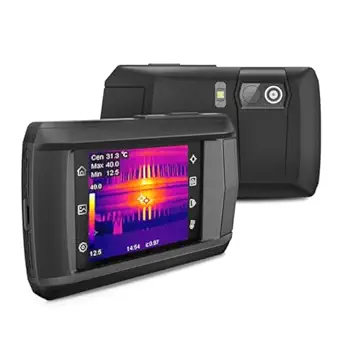 | Best for Guided Building Inspections | Screen: 3.5-inch touchscreen | Infrared sensor: 96 × 96; up to 240 × 240 with Live Super Resolution | Visible camera: 640 × 480 | VIEW ON AMAZON | See Our Full Breakdown |
| FLIR TG165-X Thermal Imaging Camera with Bullseye Laser and Spot IR |  | Best for Clearer Context in a Compact Thermal Image | Infrared resolution: 4,800 pixels | Temperature range: -25°C to 300°C (-13°F to 572°F) | Image enhancement: MSX | VIEW ON AMAZON | See Our Full Breakdown |
| Flagfront YXI96 Thermal Camera, 240×240 TISR Resolution |  | Best for Harsh Worksites | Resolution: 240 × 240 TISR | Refresh rate: 25 Hz | Temperature range: -4°F to 1022°F | VIEW ON AMAZON | See Our Full Breakdown |
| REVASRI Thermal Camera for iPhone and Android, 320 × 240 Super Resolution | 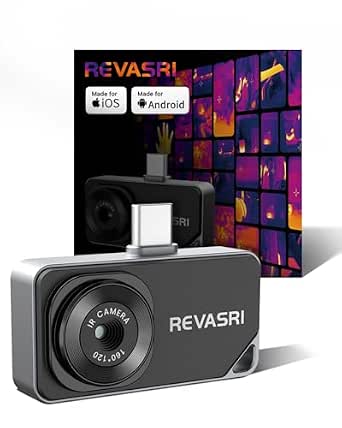 | Best for Cross-Device Phone Inspections | Compatibility: USB-C phones, tablets, and computers; iOS, Android, and Windows | Resolution: 320 × 240 | Refresh rate: 25 Hz | VIEW ON AMAZON | See Our Full Breakdown |
| FLIR One Pro Thermal Imaging Camera for iOS Smartphones (iPhone 15 and Newer, USB-C) |  | Best for Guided iPhone Inspections | Compatibility: iPhone 15 and newer with USB-C | Native IR resolution: 160 × 120 | Super-resolution output: 480 × 360 | VIEW ON AMAZON | See Our Full Breakdown |
| TOPDON TC004 Mini Thermal Imaging Camera, 240 × 240 TISR Resolution |  | Best for Long Inspection Sessions | Thermal sensor resolution: 128 × 128 | Enhanced resolution: 240 × 240 TISR | Field of view: 40° × 30° | VIEW ON AMAZON | See Our Full Breakdown |
| Klein Tools TI250 Rechargeable Thermal Imaging Camera |  | Best for Adjustable Emissivity | Resolution: 19,200+ pixels | Emissivity range: 0.01–0.99 | Temperature alarm range: -4°F to 752°F | VIEW ON AMAZON | See Our Full Breakdown |
| thermal imaging camera | Temperature range |
|---|---|
| FOXWELL RT280 Thermal Imaging | -4°F to 1022°F |
| FLIR E5 Pro Thermal Imaging Ca | -4°F to 752°F |
| GT14S Thermal Imaging Camera w | — |
| TOPDON TC004 3.5" Thermal Imag | -4°F to 1022°F |
| HSFTOOLS HF96 Thermal Camera w | -4°F to 1022°F |
| GT14S Thermal Imaging Camera w | -4°F to 1022°F |
| MILESEEY TR10 Thermal Imaging | -4°F to 1022°F |
| H128 Handheld Thermal Camera | -4°F to 842°F |
| HP96 Thermal Imaging Camera wi | — |
| FLIR TG165-X Thermal Imaging C | -25°C to 300°C (-13°F to 572°F) |
| Flagfront YXI96 Thermal Camera | -4°F to 1022°F |
| REVASRI Thermal Camera for iPh | -4°F to 842°F |
| FLIR One Pro Thermal Imaging C | — |
| TOPDON TC004 Mini Thermal Imag | -4°F to 842°F |
| Klein Tools TI250 Rechargeable | — |
More Details on Our Top Picks
FOXWELL RT280 Thermal Imaging Camera, 2.8″ LCD, 240×180 TISR
The FOXWELL RT280 pairs a 120×90 base sensor with TISR enhancement to produce a 240×180 effective image, giving home inspectors and maintenance crews more detail than the FLIR E5 Pro’s 160×120 sensor on paper. Its IP54 build and 6.6-foot drop resistance suit work that takes a camera between job sites, while onboard 8GB storage keeps a large set of inspection images close at hand. PC software adds 2D and 3D analysis and report generation, which can help turn findings into documentation. The tradeoff is that the enhanced resolution is not native sensor detail, and the software is Windows-only. Buyers who rely on a Mac or prefer cloud-based sharing may find the FLIR’s Ignite workflow a better fit.
Pros:- TISR enhancement raises the effective image resolution to 240×180 from a 120×90 sensor.
- 8GB of storage holds over 20,000 images.
- PC software supports 2D and 3D analysis and report generation.
- IP54 protection and 6.6-foot drop resistance suit field work.
Cons:- The 240×180 resolution is software-enhanced rather than native.
- The analysis software does not support Mac.
- Its 2.8-inch screen is smaller than the TOPDON TC004’s 3.5-inch display.
Best for: Home inspectors, HVAC technicians, and electrical maintenance workers who need a durable handheld camera with onboard image storage and Windows reporting tools.
Not ideal for: Mac users who need compatible analysis software, or buyers who require native 240×180 sensor resolution.
- Thermal resolution:120×90 sensor; 240×180 with TISR
- Display:2.8-inch, 320×240 LCD
- Field of view:50° × 38°
- Frame rate:25 Hz
- Temperature range:-4°F to 1022°F
- Accuracy:±3.6°F / ±2%
- Storage:8GB eMMC
- Protection:IP54; 6.6-foot drop resistance
Our verdict“Choose the RT280 for rugged inspections and Windows-based reporting, provided its enhanced resolution and PC-only software fit your workflow.”
FLIR E5 Pro Thermal Imaging Camera with Wi-Fi and MSX
The FLIR E5 Pro is a strong fit for technicians who value a connected image workflow over chasing the highest stated resolution. Its 160×120 thermal sensor has fewer pixels than the FOXWELL RT280’s TISR-enhanced 240×180 image, but FLIR’s MSX adds visual detail to thermal images, helping users place a heat pattern in its surroundings. Wi-Fi and FLIR Ignite support image storage, editing, and sharing, and the listed detector warranty runs for 10 years. That combination favors teams who need to organize and pass along inspection images. The stated frame rate of 9 Hz or less is a limitation for moving targets, and the E5 Pro’s temperature ceiling of 752°F falls below the 1022°F offered by the FOXWELL and TOPDON cameras.
Pros:- MSX overlays visual detail to help locate thermal patterns in a scene.
- Wi-Fi and FLIR Ignite support image storage, editing, and sharing.
- Detector coverage is listed for 10 years.
- Temperature measurement extends from -4°F to 752°F.
Cons:- 160×120 thermal resolution is lower than the FOXWELL RT280’s enhanced 240×180.
- The listed frame rate is 9 Hz or less.
- Its 752°F upper limit is lower than the 1022°F range of several alternatives.
Best for: Building service technicians and small inspection teams who want Wi-Fi sharing, cloud image management, and visual context in thermal images.
Not ideal for: Users who inspect fast-moving heat sources, need temperatures above 752°F, or prioritize higher stated thermal resolution.
- Thermal resolution:160×120 (19,200 pixels)
- Temperature range:-4°F to 752°F
- Image technology:MSX
- Connectivity:Wi-Fi
- Cloud service:FLIR Ignite
- Frame rate:9 Hz or less
- Weight:1.27 pounds
- Warranty:2 years on camera; 10 years on detector
Our verdict“Pick the E5 Pro if cloud sharing and MSX scene detail matter more to your work than faster imaging or a higher temperature ceiling.”
GT14S Thermal Imaging Camera with Edge Enhancement and Thermometer Mode
The GT14S suits buyers who want to scan a surface and check a point temperature without needing a detailed image archive or a specified high-resolution sensor. Its thermometer mode, adjustable high and low alarms, and stated ability to detect temperature differences as small as 0.05°C support quick anomaly checks. At 240g, it is lighter than the 1.46-pound HSFTOOLS HF96, and its battery is rated for up to 14 hours compared with the HF96’s 11. That makes the GT14S easier to carry for extended rounds. The central gap is that the product data gives no image resolution, so buyers cannot compare its imaging detail directly with the FOXWELL RT280 or TOPDON TC004. It also provides little information on included accessories or use-specific software.
Pros:- Thermometer mode provides point temperature readings alongside thermal imaging.
- Adjustable high and low alarms help flag temperature anomalies.
- Listed battery life is up to 14 hours.
- At 240g, it is light to carry during inspection rounds.
Cons:- The product data does not specify image resolution.
- The description does not identify included accessories or a clear software workflow.
- Its one-year warranty is shorter than the detector coverage listed for the FLIR E5 Pro.
Best for: Facility staff and homeowners who want a lightweight camera for periodic temperature anomaly checks and point readings.
Not ideal for: Inspectors who need a stated thermal resolution, report-generation software, or well-documented accessories and workflow features.
- Measurement range:-4°F to 1022°F
- Sensor sensitivity:NETD <50mK
- Temperature difference detection:As small as 0.05°C
- Field of view:50°
- Color palettes:7
- Battery capacity:2500mAh
- Battery life:Up to 14 hours
- Weight:240g
- Warranty:1 year
Our verdict“Choose the GT14S for lightweight spot checks and long rated battery life, but look elsewhere if image detail is central to your inspections.”
TOPDON TC004 3.5″ Thermal Imaging Camera
The TOPDON TC004 stands apart with a 3.5-inch display and 64GB of built-in storage, useful for reviewing and keeping many inspection images on the camera itself. Its 256×192 infrared resolution is higher than the FOXWELL RT280’s 120×90 base sensor, while TISR can raise the stated output to 512×384. That makes the TC004 a good match for inspectors who want a larger on-device view and ample file capacity. It also has Wi-Fi connectivity, a laser pointer, and an IP54-rated design with 2-meter drop resistance. Wireless transfer and reporting rely on the TopInfrared app, however, and the higher enhanced resolution is still based on a 256×192 sensor. Buyers who prefer a standalone PC workflow may favor the FOXWELL’s included analysis software.
Pros:- Large 3.5-inch display makes on-camera image review easier.
- 256×192 infrared sensor with TISR enhancement up to 512×384.
- 64GB of built-in storage provides substantial file capacity.
- IP54 protection and 2-meter drop resistance support field use.
Cons:- Wireless transfer and reporting depend on the TopInfrared app.
- The 512×384 output is enhanced from a 256×192 sensor.
- Its 2-meter drop rating is lower than the 6.6-foot rating listed for the FOXWELL RT280.
Best for: Building and maintenance inspectors who review images on-camera, capture many files, and can use the TopInfrared app for wireless transfer.
Not ideal for: Buyers who need app-independent wireless reporting or expect 512×384 native sensor detail.
- Display:3.5 inches
- Infrared resolution:256×192; up to 512×384 with TISR
- Temperature range:-4°F to 1022°F
- Storage:64GB built-in
- Connectivity:Wi-Fi via TopInfrared app
- Drop resistance:2 meters
- Ingress protection:IP54
- Additional tools:Red laser pointer and LED light
Our verdict“The TC004 is the clearest fit for buyers who want a large viewing screen and generous onboard storage, with app-based transfer in their workflow.”
HSFTOOLS HF96 Thermal Camera with AI Scene Detection and Laser Pointer
The HSFTOOLS HF96 is aimed at home inspectors and HVAC users who want prompts to help interpret common problems, not just a thermal image. Its IntellFault scene recognition is designed to flag water leaks and insulation gaps, and the 3-in-1 format combines a thermal camera, infrared thermometer, and laser pointer. The stated 240×240 live super resolution and 25Hz refresh rate give it a more clearly described imaging setup than the GT14S, whose resolution is unspecified. The HF96 also stores over 30,000 images and includes Windows PC analysis software. There are limits: it does not measure moisture, so a suspected leak still needs another tool to confirm it, and AI features require a firmware update. Its 11-hour rated battery life is shorter than the GT14S’s 14 hours.
Pros:- IntellFault scene recognition is designed to identify water leaks and insulation gaps.
- Combines thermal imaging, infrared thermometer, and laser pointer functions.
- 240×240 live super resolution and a 25Hz refresh rate are specified.
- 4GB storage is listed for over 30,000 images and 14 hours of video.
Cons:- It does not provide moisture readings to confirm suspected leaks.
- AI scene features require a firmware update from the HSFTOOLS website.
- The 11-hour battery rating is shorter than the GT14S’s stated 14 hours.
Best for: Home inspectors and HVAC technicians who want assisted screening for insulation gaps or suspected leaks alongside thermal imaging.
Not ideal for: Buyers who need direct moisture readings, do not want to update firmware, or need Mac-compatible analysis software.
- Temperature range:-4°F to 1022°F
- Accuracy:±3.6°F
- Thermal sensitivity:<50mK (0.05°C)
- Resolution:240×240 live super resolution
- Field of view:50°
- Refresh rate:25Hz
- Battery life:Up to 11 hours
- Storage:4GB
- Weight:1.46 pounds
Our verdict“Choose the HF96 for guided thermal screening of common home and HVAC issues, but pair it with a separate moisture meter when checking leaks.”
GT14S Thermal Imaging Camera with Thermometer Mode
The GT14S suits inspectors who need to scan for patterns and take quick point readings without carrying a heavier camera. Its 240g weight and stated battery life of up to 14 hours make it easier to keep in hand through a long route than the MILESEEY TR10, which is specified for up to 8 hours. The 50° field of view covers a broad area at once, while custom alarms can call attention to temperature anomalies. Its thermometer mode adds a quick reading workflow alongside full-screen imaging. The tradeoff is that accurate readings across different materials depend on correctly setting emissivity and distance, so it is less suited to users who want point-and-shoot measurements without setup knowledge. The temperature range also reaches higher than the FLIR TG165-X, though that camera adds MSX image enhancement.
Pros:- Lightweight 240g body with a non-slip grip
- Dual thermal imaging and thermometer modes
- Stated battery life of up to 14 hours
- 50° field of view and custom temperature alarms
Cons:- Accurate readings across materials require knowledge of emissivity and distance settings
- The supplied data does not specify an infrared image resolution
Best for: HVAC and building inspectors who want a lightweight camera for extended scans and understand how material settings affect readings
Not ideal for: New users who need reliable measurements without configuring emissivity or distance for different surfaces
- Weight:240g
- Battery:2500mAh rechargeable; up to 14 hours
- Temperature range:-4°F to 1022°F
- Thermal sensitivity:NETD <50mK
- Field of view:50°
- Color palettes:7
- Temperature alarms:Custom alarms
- Warranty:1 year
Our verdict“Choose the GT14S for long handheld inspection sessions and flexible temperature checks if you are comfortable configuring measurement settings.”
MILESEEY TR10 Thermal Imaging Camera, 192 × 192 Resolution, 25 Hz
The MILESEEY TR10 is a practical pick for users who move the camera across equipment or building surfaces and want the thermal view to update smoothly. Its 25 Hz refresh rate supports fluid scanning, and 192 × 192 infrared resolution gives it a defined native image specification compared with the HSFTOOLS HP96, whose 96 × 96 sensor relies on Live Super Resolution for a larger output. Adjustable emissivity and maximum, minimum, and center-point readings help users adapt measurements and locate hot or cold spots. The TR10 also records images to 8 GB of storage and is drop-tested to 6.6 feet. Its stated battery life is up to 8 hours, shorter than the GT14S‘s 14 hours, and the provided information does not list an IP rating. That makes it better for routine mobile checks than for the longest or wettest field jobs.
Pros:- 25 Hz refresh rate for smooth thermal image updates
- 192 × 192 infrared resolution
- Maximum, minimum, and center-point readings with temperature alarms
- 8 GB storage and a 6.6-foot drop test
Cons:- Up to 8 hours of battery life is shorter than the GT14S and H128 specifications
- No IP rating is provided in the supplied product data
Best for: Maintenance technicians who scan moving work areas and want smooth updates, hotspot readings, and onboard image storage
Not ideal for: Inspectors who need a documented ingress-protection rating or battery life beyond a typical workday
- Infrared resolution:192 × 192
- Refresh rate:25 Hz
- Thermal sensitivity:NETD <50mK
- Temperature range:-4°F to 1022°F
- Temperature accuracy:±2°C
- Battery capacity:3000mAh
- Battery life:Up to 8 hours
- Storage:8 GB; more than 30,000 pictures
- Drop test:6.6 feet
Our verdict“Pick the TR10 for smooth handheld scanning and useful hotspot tools when its 8-hour battery specification fits your inspection schedule.”
H128 Handheld Thermal Camera, 240×240 TISR Resolution, 25Hz, IP65
The AMPBANK H128 stands out for crews who need a camera that can stay on through a long inspection and tolerate rough handling. Its stated up to 24-hour battery life exceeds the GT14S and MILESEEY TR10 specifications, while an IP65 rating, 6.56-foot drop resistance, and tripod mount suit demanding field work. The 25 Hz frame rate supports smooth scanning, and temperature tracking can flag maximum, minimum, and center readings. Its 240 × 240 TISR image is upscaled from a native 128 × 128 sensor, so the displayed resolution should not be mistaken for native sensor detail. It also measures only up to 842°F, below the GT14S and TR10 limits of 1022°F. With ±3% accuracy, it makes more sense for general maintenance checks than laboratory measurements requiring tighter tolerances.
Pros:- Stated battery life of up to 24 hours
- IP65-rated design with 6.56-foot drop resistance
- 25 Hz imaging with automatic max, min, and center tracking
- Standard tripod mount for hands-free viewing
Cons:- 240 × 240 TISR output is upscaled from a 128 × 128 native sensor
- ±3% accuracy may not suit precision work
- 842°F upper limit is lower than the GT14S and TR10 limits
Best for: Field maintenance teams who need long operating time, weather-resistant construction, and drop protection for routine inspections
Not ideal for: Laboratory users or high-temperature inspectors who need tighter stated accuracy or measurements above 842°F
- Resolution:240 × 240 TISR, upscaled from 128 × 128
- Thermal sensitivity:40mK
- Frame rate:25 Hz
- Temperature range:-4°F to 842°F
- Temperature accuracy:±3%
- Battery life:Up to 24 hours
- Drop resistance:6.56 feet
- Weight:1.06 pounds
Our verdict“Choose the H128 for rugged, extended field inspections if its upscaled resolution and ±3% accuracy meet your measurement needs.”
HP96 Thermal Imaging Camera with 3.5″ Touch Screen and Intelligent Scene Detection
The HSFTOOLS HP96 is designed to make building checks easier to interpret, especially for users who want the camera to help identify insulation gaps and water leaks. Its IntellFault scene detection and 3.5-inch touchscreen offer a more guided workflow than the MILESEEY TR10, which instead emphasizes adjustable emissivity and direct hotspot readings. Five image modes, including fusion and picture-in-picture, combine thermal and visible context; the 640 × 480 visible camera can help show where a suspected issue sits. The thermal sensor itself is 96 × 96, with Live Super Resolution producing output up to 240 × 240, so it has less native thermal detail than the H128’s 128 × 128 sensor. Its up-to-4-hour battery life is also a clear limit for extended routes, and it does not provide moisture readings.
Pros:- IntellFault detection targets water leaks and insulation gaps
- 3.5-inch touchscreen and five imaging modes
- 640 × 480 visible camera adds scene context
- IP54 rating and 6.6-foot drop test
Cons:- 96 × 96 native infrared sensor is lower resolution than the H128’s 128 × 128 sensor
- Up to 4 hours of battery life limits extended inspections
- No moisture readings capability
Best for: Home energy auditors and building inspectors who value guided leak and insulation checks with visible-light context
Not ideal for: Technicians running long inspection routes or buyers who need native thermal detail or direct moisture readings
- Screen:3.5-inch touchscreen
- Infrared sensor:96 × 96; up to 240 × 240 with Live Super Resolution
- Visible camera:640 × 480
- Field of view:50°
- Thermal sensitivity:<50mK
- Frame rate:25 Hz
- Temperature accuracy:±2%
- Imaging modes:Thermal, Visual, Fusion, PIP, Blending
- Battery life:Up to 4 hours
Our verdict“Choose the HP96 for guided building diagnostics and thermal-visible image modes if its short battery life suits your inspection route.”
FLIR TG165-X Thermal Imaging Camera with Bullseye Laser and Spot IR
The FLIR TG165-X takes a different approach from the higher-resolution MILESEEY TR10: its 4,800-pixel thermal image is modest in detail, while MSX overlays visual features to make edges and objects easier to identify. That can help a technician connect a temperature anomaly with the part being inspected. The bullseye laser marks the measurement area, reducing guesswork about where a spot reading is aimed, and the IP54 enclosure is built to resist dirt, dust, and oil. Its temperature range tops out at 572°F, well below the GT14S and TR10, so it is not the right choice for hotter equipment checks. No touchscreen or Wi-Fi connectivity is listed in the supplied data. The two-year camera warranty and ten-year detector warranty add a distinct ownership advantage.
Pros:- MSX overlays visual detail to help locate thermal findings
- Bullseye laser indicates the measurement area
- IP54 enclosure resists dirt, dust, and oil
- Two-year camera warranty and ten-year detector warranty
Cons:- 4,800-pixel infrared resolution is lower than the TR10’s 192 × 192 sensor
- 572°F upper limit is below the GT14S and TR10 limits
- No touchscreen or Wi-Fi connectivity is specified
Best for: Service technicians who prioritize identifying the measured component and need rugged spot checks on equipment within the camera’s temperature range
Not ideal for: Inspectors who need high thermal pixel counts, wireless image transfer, or readings above 572°F
- Infrared resolution:4,800 pixels
- Temperature range:-25°C to 300°C (-13°F to 572°F)
- Image enhancement:MSX
- Laser:Bullseye laser pointer
- Warranty:2 years on camera; 10 years on detector
Our verdict“Pick the TG165-X for rugged, clearly contextualized spot checks when its lower resolution and 572°F ceiling fit the job.”
Flagfront YXI96 Thermal Camera, 240×240 TISR Resolution
The Flagfront YXI96 suits buyers who need a handheld thermal camera to keep working around dust, splashes, and accidental drops. Its 6.6-foot drop resistance exceeds the TOPDON TC004 Mini’s 2-meter rating, while both offer enhanced 240 × 240 imaging and 25 Hz refresh rates. The Flagfront also spans -4°F to 1022°F, giving it more headroom for hotter equipment than the REVASRI phone attachment, which tops out at 842°F. A built-in alarm and max, min, and center temperature readings help flag anomalies quickly. The tradeoff is that emissivity adjustments can complicate accurate readings for users unfamiliar with material settings, and the supplied data does not specify battery life. Choose it for a rugged handheld and broad temperature coverage; skip it if you want documented runtime or simpler measurement setup.
Pros:- 240 × 240 TISR imaging with a 25 Hz refresh rate
- Temperature range extends to 1022°F
- Built-in alarm and max, min, and center temperature display
- 6.6-foot drop resistance and IP54 protection
Cons:- Adjustable emissivity may require experience to set accurately
- Battery life is not specified in the provided product data
Best for: HVAC and maintenance technicians who need a rugged handheld for inspections across a broad temperature range
Not ideal for: New users who want straightforward material-specific readings or buyers who need a confirmed battery runtime
- Resolution:240 × 240 TISR
- Refresh rate:25 Hz
- Temperature range:-4°F to 1022°F
- Temperature accuracy:Within 2%
- Field of view:50°
- Color palettes:6
- Drop resistance:6.6 feet
- Ingress protection:IP54
Our verdict“Choose the Flagfront YXI96 for rugged inspections and high-temperature coverage, provided you are comfortable managing emissivity settings.”
REVASRI Thermal Camera for iPhone and Android, 320 × 240 Super Resolution
The REVASRI is a compact attachment for buyers who want thermal checks through a compatible USB-C phone, tablet, or computer instead of carrying a separate handheld camera. Its 320 × 240 display resolution, nine color modes, and picture-in-picture view provide a flexible inspection view, while temperature tracking and alarms help monitor changing hotspots. Compared with the FLIR One Pro, which is limited to newer USB-C iPhones, REVASRI lists support for Android and Windows as well as compatible iOS devices. Its 15× electronic zoom can help inspect a selected area on screen, though it does not change the sensor’s underlying detail. The connected device supplies power, so long sessions draw on that device and compatibility needs checking before purchase. Its 1-meter drop protection is also below the Flagfront YXI96’s stated 6.6-foot rating.
Pros:- Works with compatible iOS, Android, and Windows devices
- 320 × 240 resolution with a 25 Hz refresh rate
- Temperature alarms and tracking support hotspot monitoring
- Nine color modes, picture-in-picture, and electronic zoom
Cons:- Requires a compatible USB-C host device
- Draws power from the connected device
- 1-meter drop protection is less than the Flagfront YXI96’s stated rating
Best for: Phone-first HVAC, automotive, and home inspectors who already own a compatible USB-C device and want cross-platform flexibility
Not ideal for: Buyers who need a standalone camera, want to conserve their phone battery, or cannot confirm USB-C device compatibility
- Compatibility:USB-C phones, tablets, and computers; iOS, Android, and Windows
- Resolution:320 × 240
- Refresh rate:25 Hz
- Thermal sensitivity:40 mK
- Temperature range:-4°F to 842°F
- Temperature accuracy:±2°C or ±2%
- Zoom:15× electronic
- Ingress protection and drop protection:IP54; 1 meter
- Power source:Connected device
Our verdict“Pick REVASRI if you want a feature-rich thermal attachment across compatible devices and accept the reliance on your device for power.”
FLIR One Pro Thermal Imaging Camera for iOS Smartphones (iPhone 15 and Newer, USB-C)
The FLIR One Pro is aimed at iPhone 15 and newer owners who want thermal imaging paired with visual context and structured inspection guidance. Its MSX image overlay adds visible details to thermal images, which can make it easier to locate a pipe, edge, or fitting than a thermal-only view. VividIR upscales its 160 × 120 native sensor image to 480 × 360, but the higher output resolution does not mean it captures the same native detail as a sensor with that many pixels. The app’s step-by-step guides further distinguish it from the REVASRI, which offers more platform flexibility and a higher stated display resolution but relies on the host device for power. FLIR is restricted to newer USB-C iPhones, and its stated accuracy applies only within specified unit and scene temperatures.
Pros:- MSX merges thermal and visible image details
- VividIR provides 480 × 360 super-resolution output
- Compact, lightweight design with 1.5-meter drop rating
- FLIR app includes step-by-step inspection guides
Cons:- Compatible only with iPhone 15 and newer USB-C models
- Native IR resolution is 160 × 120, with higher resolution produced through upscaling
- Specified accuracy applies within limited unit and scene temperature ranges
Best for: iPhone 15 or newer owners who want guided home, automotive, or industrial inspections with thermal and visible image context
Not ideal for: Android users, owners of older or non-USB-C iPhones, and buyers who prioritize native sensor resolution over software upscaling
- Compatibility:iPhone 15 and newer with USB-C
- Native IR resolution:160 × 120
- Super-resolution output:480 × 360
- Temperature accuracy:±3°C or ±5% within stated unit and scene temperature ranges
- Dimensions:2.6 × 1.3 × 0.6 inches
- Weight:1.29 ounces
- Drop resistance:1.5 meters
- Battery:1 AA included
Our verdict“Choose the FLIR One Pro if you have a compatible iPhone and value guided inspections and visual context over broad device compatibility.”
TOPDON TC004 Mini Thermal Imaging Camera, 240 × 240 TISR Resolution
For buyers who expect to spend hours moving through a property or checking equipment, the TOPDON TC004 Mini has a useful advantage over phone attachments: it is a handheld camera with up to 15 hours of battery life and local photo storage. Temperature alerts can trigger automatic photo capture, so a flagged reading can leave a record without requiring a separate device. Its 128 × 128 sensor is enhanced to 240 × 240 with TISR; that output is useful for viewing, but it is not equivalent to a native 240 × 240 sensor. The Flagfront YXI96 offers a higher stated maximum temperature and better drop rating, while the TOPDON provides specified storage and runtime. Its 40° × 30° field of view is narrower than Flagfront’s 50°, and the charging cable comes without a charging head.
Pros:- Up to 15 hours of stated battery life
- Temperature alerts can trigger automatic photo capture
- Stores up to 8,000 photos in 512 MB of eMMC storage
- IP54 protection and 2-meter drop resistance
Cons:- 128 × 128 native sensor is enhanced to 240 × 240 through TISR
- 40° × 30° field of view is narrower than the Flagfront YXI96’s 50°
- Charging head is not included
Best for: Home inspectors and maintenance workers who need a standalone camera for extended rounds and want automatic photo records
Not ideal for: Buyers who need the broadest view, a native 240 × 240 sensor, or a complete wall-charger package
- Thermal sensor resolution:128 × 128
- Enhanced resolution:240 × 240 TISR
- Field of view:40° × 30°
- Refresh rate:25 Hz
- Temperature range:-4°F to 842°F
- Temperature accuracy:±3.6°F / 2%
- Storage:512 MB eMMC; up to 8,000 photos
- Battery life:Up to 15 hours
- Protection:IP54; drop resistance up to 2 meters
Our verdict“Choose the TOPDON TC004 Mini for extended standalone inspections and automatic image capture, if its enhanced rather than native resolution suits your work.”
Klein Tools TI250 Rechargeable Thermal Imaging Camera
The Klein Tools TI250 is a fit for electrical and maintenance technicians who need to tune readings for different surface materials. Its 0.01–0.99 adjustable emissivity range offers more control than the product details provided for the TOPDON TC004 Mini, which instead emphasizes long runtime and automatic photo capture. That control can help when comparing surfaces with different emissivity, though it asks the operator to know which setting suits the target. The TI250 also provides high and low temperature alarms, three palettes, and USB-C image transfer, with a carrying case and cable in the package. Its listed 19,200-plus pixels give it a stated resolution advantage over the Flagfront YXI96’s 240 × 240 output, but the supplied information omits temperature accuracy and battery runtime. The built-in battery also cannot be swapped during a shift.
Pros:- Adjustable emissivity from 0.01 to 0.99
- 19,200-plus pixel resolution
- Selectable high and low temperature alarms
- Includes USB-C connectivity, charging cable, and carrying case
Cons:- Built-in battery is non-removable, so charging interrupts use
- Temperature accuracy and battery runtime are not specified in the supplied data
- Three selectable palettes offer fewer viewing options than the REVASRI’s nine modes
Best for: Electrical and maintenance technicians who inspect varied materials and want manual emissivity control plus USB-C image sharing
Not ideal for: Teams needing a swappable battery, a known long runtime, or temperature accuracy figures before choosing equipment
- Resolution:19,200+ pixels
- Emissivity range:0.01–0.99
- Temperature alarm range:-4°F to 752°F
- Color palettes:3
- Battery:Built-in rechargeable, non-removable
- Connectivity:USB-C
- Included accessories:Charging cable, carrying case, and instructions
Our verdict“Choose the TI250 if emissivity control and image sharing matter most, but look elsewhere if you need a replaceable battery or published accuracy and runtime figures.”
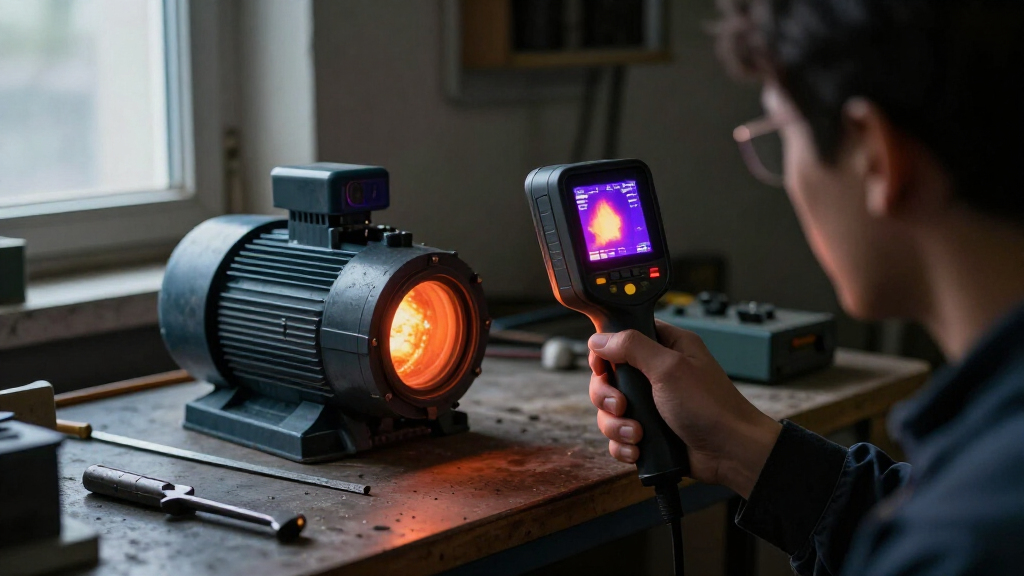
How We Picked
I compared these thermal imaging cameras around the jobs buyers are likely to perform: finding temperature differences, inspecting buildings, checking equipment, and documenting results. The main criteria were stated thermal resolution and image-enhancement features, display and control usability, measurement aids such as spot meters or laser pointers, connectivity, ruggedness, and whether the camera works independently or depends on a phone. I treated feature claims as specifications rather than proof of equal image quality, since sensor resolution, processing, lens characteristics, and user settings all affect what appears on screen.
The ranking favors cameras that combine useful thermal detail with a clear, practical workflow across more than one common task. The FLIR E5 Pro ranks first for its balance of MSX image context, Wi-Fi, and dedicated-camera operation. Handheld alternatives follow according to their screen, portability, and assistance features; phone accessories rank for buyers who put compactness first. Models with overlapping names or similar stated specifications are separated by their listed controls and intended workflow, while buyers should verify exact model details before purchase.
| thermal imaging camera | Temperature range |
|---|---|
| FOXWELL RT280 Thermal Imaging | -4°F to 1022°F |
| FLIR E5 Pro Thermal Imaging Ca | -4°F to 752°F |
| GT14S Thermal Imaging Camera w | — |
| TOPDON TC004 3.5" Thermal Imag | -4°F to 1022°F |
| HSFTOOLS HF96 Thermal Camera w | -4°F to 1022°F |
| GT14S Thermal Imaging Camera w | -4°F to 1022°F |
| MILESEEY TR10 Thermal Imaging | -4°F to 1022°F |
| H128 Handheld Thermal Camera | -4°F to 842°F |
| HP96 Thermal Imaging Camera wi | — |
| FLIR TG165-X Thermal Imaging C | -25°C to 300°C (-13°F to 572°F) |
| Flagfront YXI96 Thermal Camera | -4°F to 1022°F |
| REVASRI Thermal Camera for iPh | -4°F to 842°F |
| FLIR One Pro Thermal Imaging C | — |
| TOPDON TC004 Mini Thermal Imag | -4°F to 842°F |
| Klein Tools TI250 Rechargeable | — |
Factors to Consider When Choosing Thermal Imaging Cameras
Before choosing a camera, match its measurement method and workflow to the problem you need to solve. A thermal image shows surface temperature patterns; it does not see through walls or identify a fault by itself. These broader checks can prevent paying for features that do not improve your inspections.
Match Resolution to the Smallest Detail You Need
Resolution matters most when you need to distinguish small targets or inspect from farther away. A low-resolution image may show a broad hot area clearly while blending together a small connector or narrow leak path. Some product listings use processed figures such as TISR or super resolution, which should not be read as equivalent to native sensor pixels. Check the native detector resolution where available, along with the field of view and the distance at which you expect to work. For household surveys, broad patterns may be enough; for dense electrical panels, finer detail and a close focusing distance can matter more. Avoid choosing by the headline pixel count alone.
Check Temperature Range, Accuracy, and Emissivity Controls
A camera’s temperature range should cover the surfaces you plan to measure, but range alone does not describe measurement quality. Accuracy specifications and the conditions under which they apply affect whether a reading is useful for comparison or documentation. Emissivity describes how a surface emits infrared energy, and glossy metal can produce misleading readings when settings are wrong. Look for emissivity adjustment and a clear way to set reflected temperature if your work includes varied materials. A spot reading on paint or insulation may be more dependable than one on shiny metal, even with the same camera. For diagnosis, compare similar surfaces under similar conditions instead of treating one displayed value as a definitive answer.
Choose the Workflow: Dedicated Handheld or Phone Attachment
A dedicated handheld camera is ready to use without opening an app or connecting an accessory, which can simplify routine inspections and shared-tool workflows. A phone attachment reduces the amount of gear you carry and can make it easier to organize images alongside notes, but it depends on a compatible phone, connector, and app. Check whether your phone case blocks the connector and whether the accessory supports your operating system before buying. Also consider who will use the camera: a shared handheld device may be simpler for a team, while a phone-based model can suit one person who already documents work on a mobile device. Portability is useful only if the setup is reliable when you need it.
Prioritize Usability Features That Fit Your Work
A large screen helps when you need to inspect an image without transferring it, while a touchscreen can make menus quicker for some users and less comfortable with gloves. MSX-style visible-light detail, edge enhancement, and scene detection can make patterns easier to locate, but they do not add thermal measurements the sensor did not capture. A laser pointer helps identify the area associated with a spot reading; it does not improve thermal resolution. Think about how often you will change palettes, adjust measurement settings, or capture comparison images. Try to favor controls and overlays that clarify your decisions rather than features that merely add visual complexity.
Consider Ruggedness, Battery, and Image Handoff
Field use places different demands on a camera than occasional indoor troubleshooting. Check the ingress protection rating, drop protection, battery runtime, charging method, and whether the screen is readable in the light where you work. A rugged rating can be valuable around construction sites, but it does not guarantee protection from every impact or liquid exposure. Wi-Fi or app transfer saves time when reports need images, while onboard storage can keep the camera useful without a connection. Consider how you will label and revisit images, since unlabeled thermal snapshots can become difficult to interpret later. Paying for connectivity or ruggedness makes sense when those features remove friction from your regular workflow.
Frequently Asked Questions
Can a thermal imaging camera find a leak or missing insulation behind a wall?
It can reveal surface temperature patterns that may be consistent with air leakage, moisture, or missing insulation, but it cannot see through the wall. The pattern depends on a temperature difference between indoors and outdoors and on how the wall materials conduct heat. Confirm a suspected issue with another method, such as a moisture meter or a pressure test, before opening a wall or making repairs. Scan under stable conditions and compare nearby areas made from the same material. A thermal camera is most useful as a way to narrow down where to investigate.
Is a phone thermal camera accurate enough for electrical troubleshooting?
A phone attachment can help locate relative hot spots, which is often the first step in checking a panel or connection. Whether its readings are suitable for your work depends on temperature range, measurement accuracy, emissivity settings, target size, and safe access. Small components may occupy too few pixels for a dependable reading at a distance. Follow electrical safety procedures and have a qualified person interpret results where required. Choose a dedicated handheld model if you need a shared tool or want to work without depending on a particular phone.
Should I pay more for higher resolution or for image enhancement?
Start with the size of the target and the distance you will scan from. Higher native sensor resolution can preserve more thermal detail, while image enhancement can make edges or visible context easier to understand. Those benefits solve different problems, and a processed resolution label does not necessarily mean the sensor captures that many independent thermal measurements. For broad home checks, usable controls and clear image context may matter more than maximum resolution. For small electrical parts or longer working distances, prioritize native resolution and lens characteristics.
Do I need a laser pointer or spot temperature measurement?
These features help connect a numerical spot reading to the physical area being inspected. A laser pointer marks an approximate target location, while the camera’s measurement function reports temperature within a defined spot or region. They are useful when checking equipment or comparing specific points, but the laser does not measure temperature or improve image detail. For broad insulation surveys, an area pattern may be more useful than a single spot reading. Confirm that the target fills enough of the measurement area and that the surface settings are appropriate.
When does a dedicated handheld camera make more sense than a phone attachment?
A handheld model is a strong fit when multiple people will use the tool, when you need a ready-to-run device, or when your phone is not on the supported list. It can also keep inspection work separate from personal phone use. A phone attachment is appealing when compact carry and app-based image sharing matter more than standalone operation. Check connector type, phone generation, case clearance, and app support before choosing an accessory. If your phone changes often, a dedicated camera may offer a longer-lasting workflow.
Conclusion
For a versatile dedicated camera, I recommend the FLIR E5 Pro as best overall, with MSX detail and Wi-Fi giving it a practical mix for inspection and image sharing. The TOPDON TC004 is my value-oriented handheld pick for buyers who want a larger 3.5-inch display, while the FLIR One Pro suits buyers committed to a supported USB-C iPhone workflow. Beginners may prefer the HSFTOOLS HF96 or HP96 for scene assistance, while anyone prioritizing a compact setup can compare the REVASRI phone camera with the TOPDON TC004 Mini. For tougher field conditions, check the H128’s listed IP65 rating and confirm that its size and controls fit your work. Choose based on target size, measurement needs, and how you plan to capture and share findings.