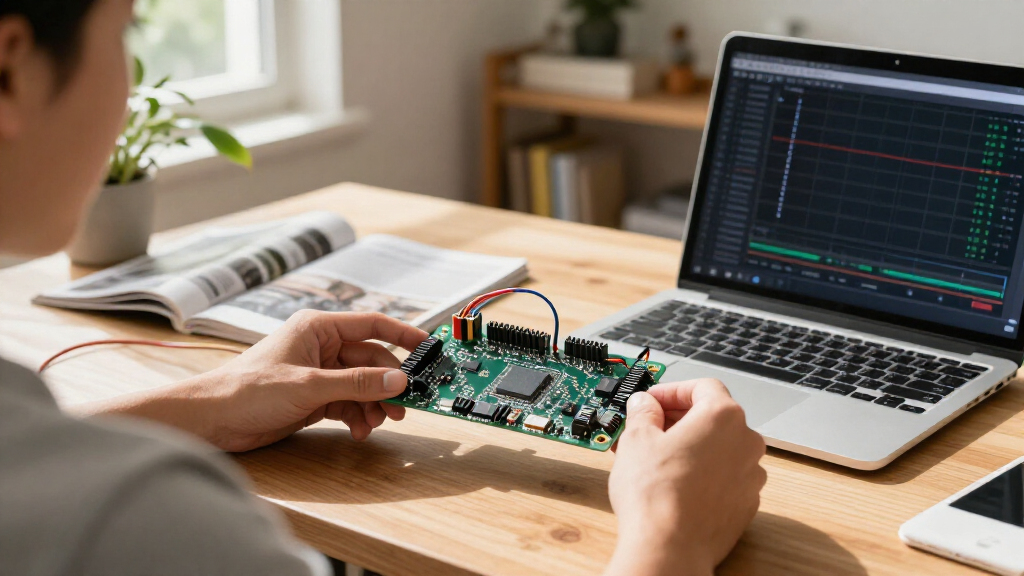

This checklist is for makers, engineers, and teams choosing hardware for edge AI projects, from early prototypes to devices that process data close to where it is collected. Use it to compare the kind of hardware you need before narrowing down specific models.

Get the latest gadgets delivered free with Prime
- Fast, free delivery on millions of items
- Prime Video, Amazon Music and more included
- Member-only deals all year
The sections follow common hardware categories: accelerator boards, gateways, neural processing units, camera modules, GPU modules, and development kits. Some entries offer general buying advice because no specific product was provided; others focus on the supplied pick.
Start with the job your system needs to do, then check compute needs, interfaces, operating conditions, and physical fit. Treat product names as a starting point and confirm specifications against the seller’s current documentation before buying.
AI accelerator boards
An accelerator board can add dedicated compute to an edge system, but the right choice depends on the workload and the host device. Before shopping, identify the model or software stack you plan to run, how much data it processes, and whether inference needs to happen locally. Those requirements help you narrow the field without assuming that a board will work with every processor or framework.
A common buying mistake is focusing on compute capability while overlooking the connection to the host. Check the board’s physical interface, supported operating systems, software tools, power needs, and cooling requirements. Confirm that the host has the matching slot or connector and that the enclosure leaves room for the board and airflow. For a compact build, compare board dimensions with the available space and account for cables and other attached hardware.
There is no product pick for this slot, so use these checks to build a shortlist. Compatibility comes first: verify the board, host, software, and power setup together before committing.
What to look for:
- Supported models, frameworks, and operating systems
- Host interface and connector compatibility
- Power requirements and thermal management
- Board dimensions and enclosure clearance
- Vendor documentation and software support
Edge computing gateways
A gateway connects edge devices and supports processing or data handling near the source. The supplied pick is the AIG-301-T-AZU-LX IIoT Gateway, named with a Cortex-A7 dual-core 1 GHz processor and an operating temperature range of -40 to 85°C. Those details make it especially important to compare the stated operating conditions with the environment where the gateway will be installed.
Do not choose by processor description or temperature range alone. Confirm the interfaces, protocols, networking options, storage, operating system, and software requirements for your project in the product documentation. Check whether your sensors and controllers can connect directly, and whether the gateway can pass data to the systems you already use. A frequent mistake is overlooking mounting, enclosure, and cable clearance until installation; compare the device’s dimensions with the planned location and allow space for connectors and service access.
Also verify that the stated temperature range suits the actual installation conditions and that the complete setup—including power supply and enclosure—is appropriate for that location. Check the full system fit before selecting the gateway.
What to look for:
- Required interfaces, protocols, and network connections
- Compatibility with sensors and controllers
- Operating system and software requirements
- Documented operating conditions for the installation
- Dimensions, mounting, and cable clearance
AIG-301-T-AZU-LX IIoT Gateway, Cortex-A7 Dual-core 1 GHz, -40 to 85°C

The AIG-301-T-AZU-LX is an industrial IoT gateway featuring a Cortex-A7 dual-core 1 GHz processor, with 1 CAN, 4 digital inputs, and 4 digital outputs. It supports ThingsPro Edge and Azure IoT Edge software, operating reliably in temperatures from -40°C to 85°C.
Pros:
- Robust industrial temperature range
- Supports popular IoT edge software
- Multiple digital I/O options
Cons:
- Limited number of CAN channels
- No mention of wireless connectivity
- Requires specific software for operation
Best for: Industrial edge projects needing a gateway
Not ideal for: Buyers who need confirmed features beyond the supplied name
Bottom line: Verify interfaces, software, installation fit, and documented operating conditions before buying.
Neural processing units
A neural processing unit, or NPU, is a hardware category to consider when an edge device needs to run neural-network workloads locally. The useful question is not simply whether a device includes an NPU, but whether it supports the models and software your project uses. Start by listing the target model, expected input data, and the response time your application needs.
One common mistake is assuming that any NPU supports any model. Check supported operations, model conversion tools, runtime requirements, and the operating systems available for your host device. Confirm whether the NPU is integrated into a platform or purchased as a separate component, then check how it connects to the rest of the system. If you are comparing platforms, consider the full workflow from development and deployment to updates and troubleshooting.
No product is specified for this slot, so treat the category as a research prompt. Look for clear documentation and a practical path to test your actual workload. Software support matters alongside the hardware when deciding whether an NPU fits your build.
What to look for:
- Support for the intended models and operations
- Model conversion tools and runtime availability
- Host interface and platform requirements
- Operating system and software documentation
- A way to test the target workload on the device
AI camera modules
An AI camera module combines image capture with a path toward edge vision, making camera compatibility and the intended task central to the choice. The supplied pick is the HUSKYLENS 2 Plus Kit, described as an edge AI vision sensor with a wide-angle camera. Since that name does not establish every interface or capability, check the current product documentation to confirm what is included and how it connects to your controller or computer.
A common mistake is choosing a camera based on its field of view without considering where it will be mounted and what the scene looks like. Check the viewing area, distance to the subject, lighting conditions, mounting position, and whether the camera can be aimed as needed. Confirm supported host platforms, connection type, software libraries, and any setup steps required for the vision tasks you intend to run. Make sure the kit includes the cables or accessories required for your planned setup, or identify them before ordering.
For projects with tight physical constraints, compare the module dimensions and cable route with the enclosure. Test the intended view in the final mounting position when possible. Placement affects results, so plan the scene and installation along with the hardware.
What to look for:
- Included camera, cables, and kit components
- Connection and host platform compatibility
- Supported software and vision tasks
- Field of view for the planned scene and distance
- Mounting position, dimensions, and cable routing
HUSKYLENS 2 Plus Kit – Edge AI Vision Sensor with Wide-Angle Camera & WiFi for A

The HUSKYLENS 2 Plus Kit is an advanced AI vision sensor featuring a wide-angle camera and support for custom YOLO models. It offers real-time video transmission via WiFi and wired connections, making it ideal for robotics and AI projects.
Pros:
- Powerful edge AI processing with support for custom models
- Wide-angle camera minimizes blind spots
- Supports real-time wireless video transmission with low latency
- Easy to use with plug-and-play interfaces and touchscreen
Cons:
- Effective distance limited to close-range (0.1~1.5m)
- Requires some technical knowledge for advanced customization
- No mention of included accessories or detailed software support
Best for: Makers exploring edge vision with a camera kit
Not ideal for: Installations needing unconfirmed interfaces or features
Bottom line: Verify kit contents, host compatibility, and camera placement against your use case.
Embedded GPU modules
Embedded GPU modules suit designs that need graphics or parallel compute within a compact system. Begin by defining the workload and the surrounding platform: the module must fit the host, use a supported software environment, and connect to the required peripherals. Consider whether the project needs a module for a custom product or a broader development platform, since those choices can affect how you evaluate fit and integration.
A frequent buying mistake is treating the GPU module as a standalone component. Check the carrier board or host requirements, power input, cooling, supported operating systems, software stack, and connector layout. Confirm that the host provides the interfaces your display, storage, cameras, and network equipment require. For a compact enclosure, check module and carrier dimensions together, then account for heatsinks, airflow, connectors, and access during assembly or maintenance.
No specific product was provided for this category. Build a shortlist around system-level compatibility and verify each candidate’s documentation for the exact host and workload. A small integration check early can expose connector or thermal constraints before the design is fixed.
What to look for:
- Host or carrier board requirements
- Workload and software stack support
- Power, cooling, and airflow needs
- Peripheral connectors and interface layout
- Combined module and enclosure dimensions
Edge AI development kits
A development kit helps teams explore an edge AI platform and test software before designing a finished system. The supplied pick is the NVIDIA Jetson AGX Orin 64GB Developer Kit, with Ethernet, USB, and Display named in the product description. Check the current listing and documentation for the full set of included components, interfaces, and setup requirements before planning around it.
A common mistake is assuming a development kit matches the final product’s size, power, or installation needs. Treat it as a platform for evaluation, then check whether your models and development tools are supported and whether the named connections fit your peripherals. Confirm the operating system, storage and networking details, cooling needs, and physical dimensions. If you expect to move from a prototype to custom hardware, identify which parts of the kit are useful for development and what additional integration work the finished design may require.
Plan a test around your actual model, input data, and target workflow. Also confirm the required cables, display setup, and workspace before getting started. Test the intended workflow early so that compatibility and setup needs are clear.
What to look for:
- Complete list of included kit components
- Support for intended models and development tools
- Ethernet, USB, Display, and other required interfaces
- Power, cooling, and workspace requirements
- Path from development kit testing to the target design
NVIDIA Jetson AGX Orin 64GB Developer Kit with Ethernet, USB, DisplayPort
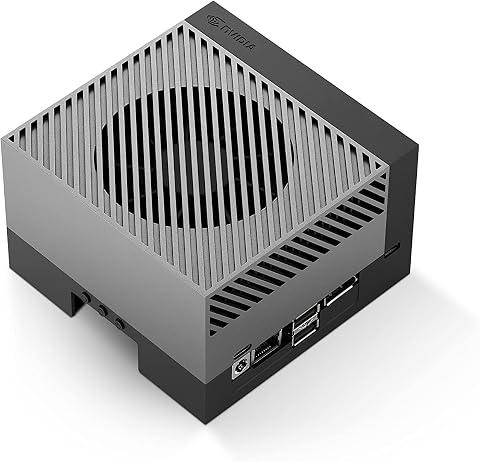
The NVIDIA Jetson AGX Orin 64GB Developer Kit offers high AI performance with up to 275 TOPS, making it ideal for developing advanced AI-powered robots and autonomous machines. It features a compact design, multiple connectors, and supports complex AI applications using NVIDIA’s software ecosystem.
Pros:
- High AI processing power suitable for complex applications
- Multiple connectivity options for versatile development
- Supports a wide range of AI frameworks and software tools
Cons:
- Likely expensive for hobbyist use
- Requires technical expertise to operate effectively
Best for: Developers evaluating an edge AI platform
Not ideal for: Projects requiring a finished, enclosure-ready design
Bottom line: Confirm the kit contents and test your real workflow before planning the final system.
Buy in the order that reduces the most uncertainty: first define the workload and software, then confirm the host and interface requirements, and next check power, cooling, and physical fit. For camera projects, plan the view and mounting location; for gateways, verify the connections and installation conditions. This requirements-first order helps keep research focused on hardware that can fit the system.
You do not need every category for every project. Use the relevant sections to compare candidates, confirm details in current documentation, and test the intended workflow where possible. With a clear use case and a few compatibility checks, you can make a more confident shortlist and move toward a practical edge AI build.