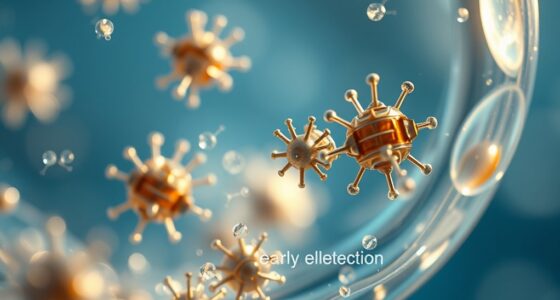
Bio-nanobots are tiny, programmable living devices combining biology and nanotech, capable of autonomous movement, sensing, and cargo delivery in biological environments. They include biohybrids with living cells or fully biological systems like xenobots, controlled by external forces such as magnetic fields, ultrasound, or light. Researchers have demonstrated their potential in medicine and environmental cleanup, but ethical, safety, and regulatory challenges remain. Continuing explores how these innovative life-like machines could revolutionize many fields.
Key Takeaways
- Bio-nanobots are programmable, microscopic systems combining biological components and nanotechnology for targeted applications.
- They can mimic living behaviors like movement, sensing, self-repair, and environmental responsiveness.
- Using DNA engineering and cellular structures, bio-nanobots achieve precise control and functionality.
- Their potential spans medicine, environmental cleanup, and scientific research at the frontier of synthetic biology.
- Ethical, safety, and regulatory challenges are critical considerations in developing these artificial life forms.
As an affiliate, we earn on qualifying purchases.
Defining the World of Bio-Nanobots
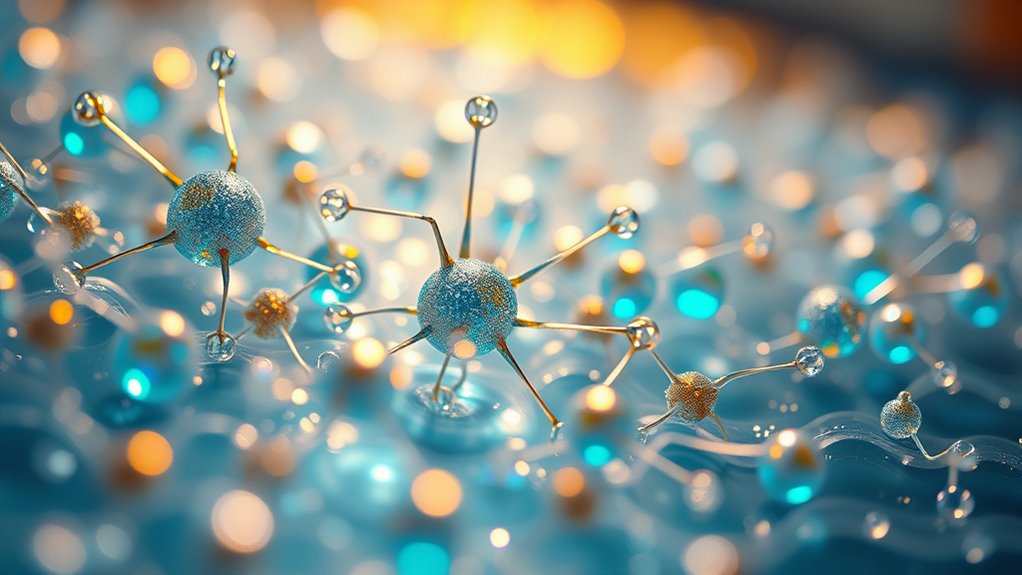
Bio-nanobots are at the intersection of biology and nanotechnology, representing tiny, programmable systems that can perform tasks at microscopic scales. You might think of them as engineered living entities or hybrid systems combining biological components with synthetic materials. Unlike traditional robots, bio-nanobots can be entirely biological, like xenobots, or biohybrid, integrating living cells with nanomaterials for enhanced control. They encompass a range of constructs, from fully synthetic nanoscale devices to living organisms designed for specific functions. These systems leverage biological elements such as DNA, cells, and proteins, combined with nanoscale engineering to enable motility, sensing, and cargo delivery. Their ability to operate within biological environments makes them promising tools for medicine, environmental cleanup, and scientific research. Innovative European cloud servers are also contributing to the development and simulation of bio-nanobot systems, supporting sustainable and secure scientific advancements. Additionally, advances in biomedical applications are paving the way for targeted therapies and diagnostics utilizing bio-nanobots.

DNA Nanotechnology: From Structure to Function
As an affiliate, we earn on qualifying purchases.
As an affiliate, we earn on qualifying purchases.
Building Blocks: From Cells to DNA Nanotechnology
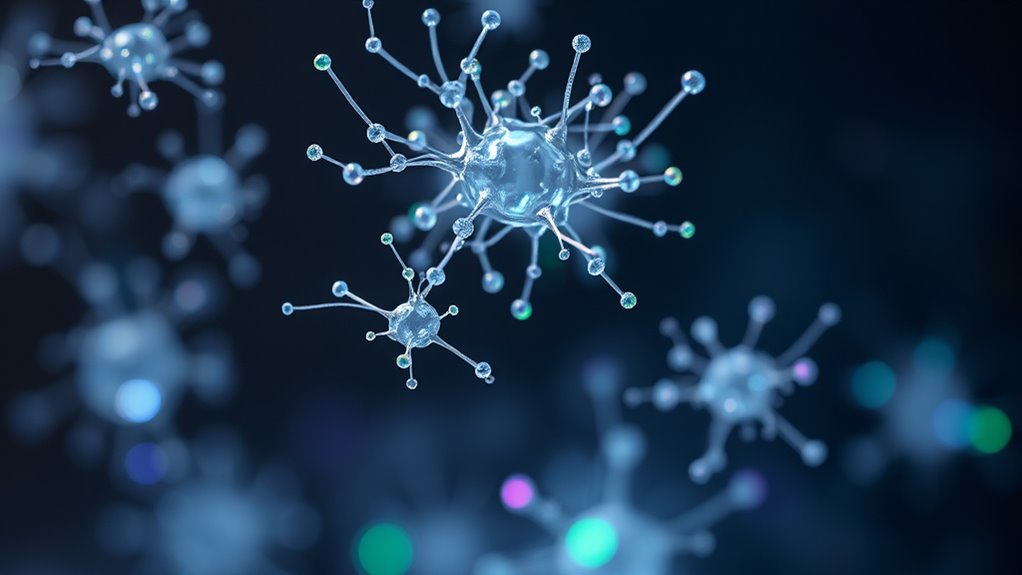
You can harness cellular components like stem cells and differentiated cells to create motile biohybrid systems that move and repair themselves. DNA engineering enables precise control and programmability, allowing nanobots to respond to specific signals or stimuli. By combining these building blocks, you lay the foundation for sophisticated bio-nanobots capable of complex functions. Understanding Free Floating systems can further enhance the development of autonomous nanodevices that operate seamlessly within biological environments. Additionally, employing study techniques and exam preparation strategies can accelerate innovation and ensure rigorous testing of these emerging technologies. Recognizing the net worth of key individuals involved in related technological fields can provide insights into potential funding sources and market viability. Incorporating advanced color accuracy and contrast ratios in design can improve the efficiency and effectiveness of bio-nanobot visual signaling systems. Exploring biophysical properties of cellular components can lead to more effective integration and performance of biohybrid systems.
Cellular Components and Motility
Cells and their components serve as the fundamental building blocks for bio-nanobots, enabling precise control over movement, sensing, and interaction within biological environments. You harness structures like actin filaments, microtubules, and motor proteins to generate motility, mimicking natural cellular processes. For example, motor proteins such as kinesin and dynein convert chemical energy into mechanical work, allowing nanobots to crawl or transport cargo. Differentiated cells like cardiomyocytes provide contractile motion, while cilia and flagella serve as biological propellers. You can incorporate cellular components to create self-repairing, adaptive systems that respond to environmental cues. These biological motility mechanisms, combined with engineered modifications, form the core of functional biohybrid and living nanodevices capable of steering through complex biological terrains. Understanding cellular components is essential for advancing bio-nanobot design and functionality. Additionally, the integration of motility mechanisms enhances the capability of nanobots to navigate and perform tasks efficiently within dynamic biological systems.
DNA Engineering and Programmability
DNA engineering and nanotechnology form the foundation of programmable bio-nanobots, enabling precise control over their structure, function, and responsiveness. You can design DNA origami structures that fold into specific shapes, acting as scaffolds for attaching functional molecules or nanomachines. Aptamers serve as molecular locks, allowing nanobots to respond selectively to target signals, such as biomarkers or environmental cues. This programmability makes it possible to create systems that can sense, compute, and react at the molecular level. You leverage techniques like gene editing to incorporate desired genetic sequences, guiding cellular behavior or enabling self-assembly. DNA origami techniques allow for the construction of complex nanostructures with high precision, expanding the potential applications of bio-nanobots. Ultimately, DNA’s versatility allows you to engineer nanobots that are highly adaptable, capable of precise cargo delivery, targeted interactions, and autonomous responses within complex biological environments. Connected equipment and apps can further enhance the capabilities of these bio-nanobots for real-world applications. Additionally, advancements in DNA nanotechnology enable the creation of more sophisticated and functional nanostructures that can operate effectively in diverse settings.
As an affiliate, we earn on qualifying purchases.
External Forces and Control Mechanisms
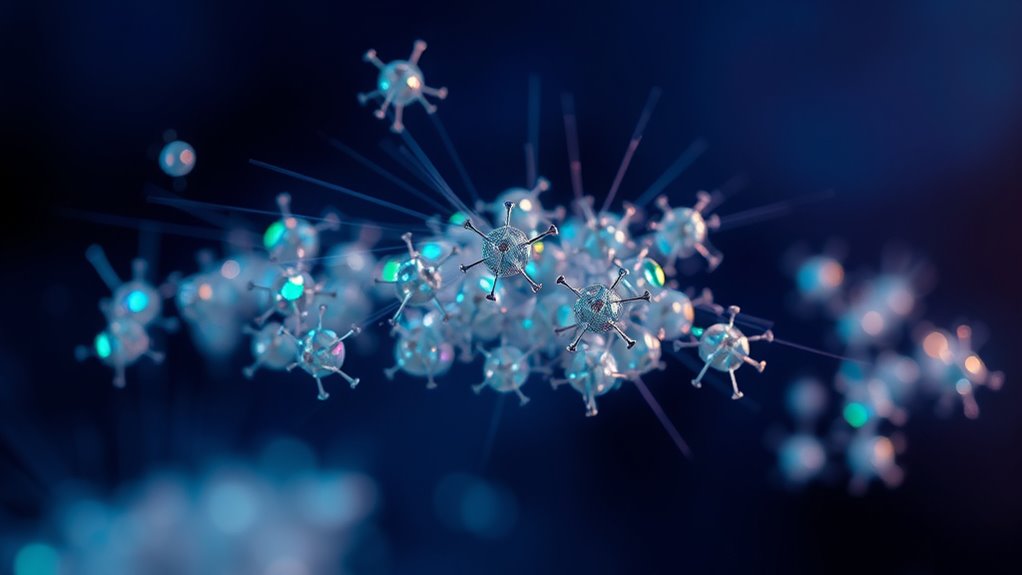
You can control bio-nanobots using external fields like magnets, ultrasound, light, or electric stimuli to steer and activate them precisely. These remote actuation techniques allow for targeted movement and function in complex environments. Environmental stimuli, such as chemical signals or temperature changes, also enable autonomous responses, enhancing their adaptability and control.
External Field Manipulation
External field manipulation plays a crucial role in directing the movement and functions of bio-nanobots and micro/nanorobots. You can use magnetic fields to steer magnetically labeled robots precisely, guiding them through complex biological environments. Ultrasound allows you to activate or propel nanobots remotely, enabling targeted delivery or microscale manipulation. Light-based techniques, such as optogenetics, make it possible to control activity with spatial and temporal precision, triggering specific responses. Electric fields can induce movement or trigger chemical reactions within the robots, offering another layer of control. These external forces provide non-invasive, real-time guidance, improving navigation accuracy, enabling complex tasks like cargo transport, and activating functions without direct contact. Combining these methods enhances your ability to manipulate bio-nanobots effectively in biomedical and environmental applications. Decoding slang can also be useful in understanding informal communications during research collaborations or in tech documentation. Additionally, advances in external force control mechanisms are expanding the possibilities for precise nanorobot operation in challenging environments. Moreover, emerging techniques such as electromagnetic stimulation are opening new avenues for dynamic and versatile control of nanobots in various settings. Incorporating feedback systems further enhances precision, allowing real-time adjustments based on environmental responses.
Remote Actuation Techniques
Remote actuation techniques harness external forces to precisely control bio-nanobots’ movement and functions without direct contact. You can steer these tiny devices using magnetic fields, which manipulate magnetic nanoparticles embedded in the nanobots. Ultrasound waves enable non-invasive activation or propulsion by creating pressure gradients, allowing you to guide or trigger actions remotely. Light-based methods, such as laser or optical activation, enable high-precision control over nanobots’ behavior and cargo release, especially in transparent tissues. Electric fields can induce movement or stimulate specific responses in electrically responsive biohybrids. These external forces provide real-time control, enabling complex navigation, targeted delivery, and activation of functions while minimizing invasiveness. Combining these techniques enhances the versatility and safety of bio-nanobots in clinical and environmental applications. Understanding the underlying principles of power tools and equipment can improve the design and application of these remote actuation methods. Additionally, advancements in precise control mechanisms contribute to more accurate and reliable manipulation of bio-nanobots in various settings. For example, the development of feedback systems allows for real-time monitoring and adjustment during nanobot operations, increasing effectiveness and safety. Incorporating sensor technologies into bio-nanobots further enhances their responsiveness and adaptability during tasks. The integration of material science is also crucial for optimizing the durability and functionality of nanobots under different conditions.
Environmental Stimuli Response
Environmental stimuli such as magnetic fields, ultrasound waves, light, and electric signals serve as effective control mechanisms for bio-nanobots, enabling precise manipulation of their movement and functions. You can steer magnetic nanoparticles embedded in nanobots with external magnetic fields, guiding them accurately through complex environments. Ultrasound waves allow for non-invasive activation, triggering cargo release or propulsion. Light, especially in specific wavelengths, can initiate or halt biological responses, such as activating motor proteins like myosin. Electric signals enable localized control, affecting cell behavior or inducing movement in electrically responsive components. By leveraging these external forces, you gain real-time, remote control over bio-nanobots’ activities, enhancing their capabilities for targeted therapy, diagnostics, or environmental remediation, while maintaining non-invasiveness and precise control. Understanding the control mechanisms involved helps optimize their application in real-world scenarios. Additionally, advances in stimuli-responsive materials provide new avenues for developing adaptable bio-nanobots that respond more efficiently to external cues, broadening their potential uses. Incorporating external force techniques allows for more sophisticated and targeted interventions, improving efficiency and safety in various applications.
programmable nanobots for research
As an affiliate, we earn on qualifying purchases.
As an affiliate, we earn on qualifying purchases.
Demonstrated Capabilities in Laboratory Settings
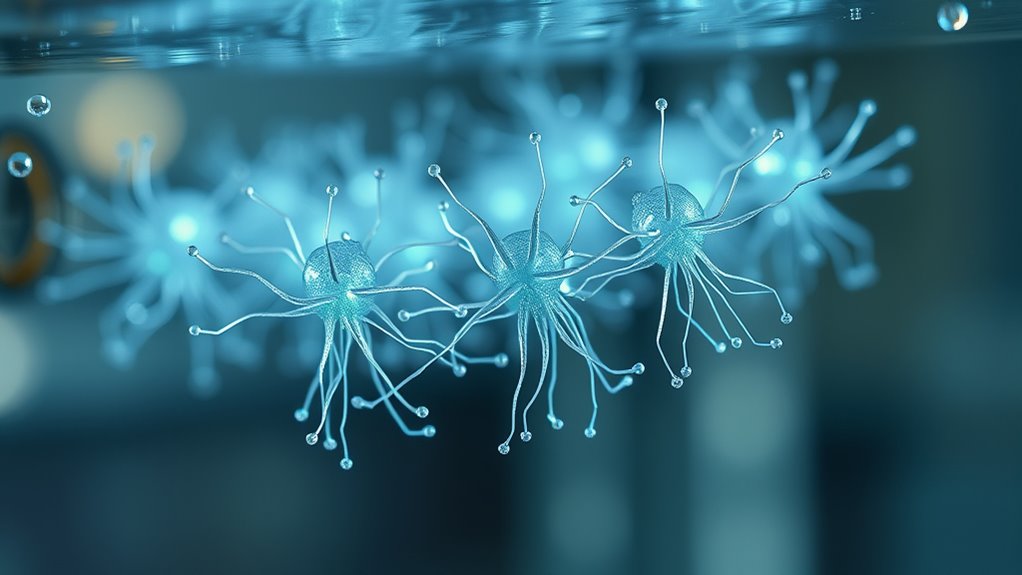
Laboratory research has demonstrated a wide range of capabilities for bio-nanobots, showcasing their potential to perform complex tasks at microscopic scales. You observe these tiny machines move autonomously, guided by magnetic fields or chemical fuels, through fluids and tissue-like environments. They can manipulate objects, towing small payloads or delivering cargo such as drugs or probes. DNA nanomachines detect specific RNA sequences, enabling precise biosensing, while xenobots heal themselves after damage and form collective, reproducing-like structures. These biohybrids and living constructs show high biocompatibility and biodegradability, fitting seamlessly into biological settings. Their biocompatibility paves the way for safe integration into medical applications.
Promising Uses in Medicine and Environment
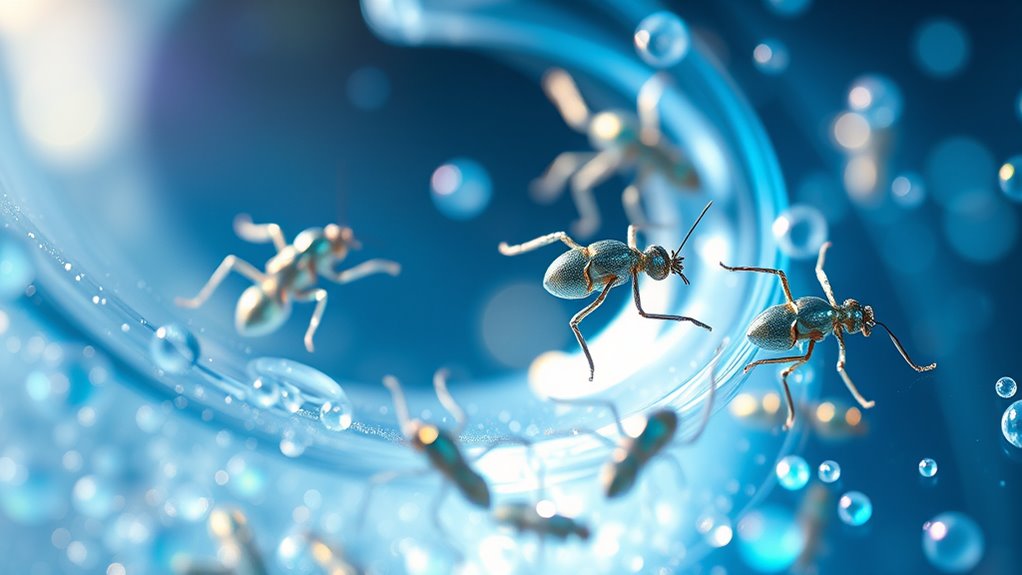
Bio-nanobots hold significant promise for advancing medicine and environmental management by enabling precise, minimally invasive interventions. In medicine, you could use them for targeted drug delivery, ensuring medicines reach specific diseased cells while minimizing side effects. They might perform microscale surgeries, like clearing vascular blockages or removing biofilms, with less trauma. In diagnostics, bio-nanobots can sense biomarkers in vivo, providing real-time health data without biopsies. For tissue repair, patient-derived xenobots could be programmed to assist in healing or modulating tissues. Environmentally, these nanobots could capture pollutants, degrade toxins, or detect contaminants in water, helping monitor and clean ecosystems. Their ability to operate precisely and safely makes them promising tools for tackling complex medical and environmental challenges.
Navigating Ethical and Safety Challenges
As bio-nanobots move closer to real-world applications, addressing the ethical and safety concerns they raise becomes increasingly urgent. You must consider risks like unintended interactions with biological systems, persistent presence, or ecological impacts if these tiny constructs are released into the environment. There’s also the danger of misuse, such as weaponization or covert surveillance, which raises dual-use concerns. Ethical questions about creating programmable living entities challenge existing regulatory frameworks and provoke debates over “playing god.” To guarantee responsible development, you need clear guidelines, transparency, and international oversight. Balancing innovation with safety involves rigorous risk assessments, long-term studies, and establishing standards for deployment, ensuring bio-nanobots benefit society without compromising safety or moral boundaries.
Overcoming Technical and Manufacturing Barriers
Developing reliable, scalable manufacturing processes for bio-nanobots remains a significant hurdle, as current techniques often rely on manual assembly and low-throughput methods. To address this, researchers explore automated biofabrication, microfluidic systems, and synthetic biology tools. These approaches aim to produce uniform, functional constructs efficiently. Overcoming these barriers involves integrating biological components with nanoscale engineering, which requires innovative techniques to guarantee consistency and reproducibility. The table below summarizes key ideas:
| Strategy | Goal |
|---|---|
| Automated biofabrication | Increase production speed and uniformity |
| Microfluidic systems | Precise control over assembly processes |
| Synthetic biology tools | Standardize component synthesis |
| Modular design approaches | Enable scalable, adaptable manufacturing |
| Quality control protocols | Ensure functionality and safety |
Regulatory Landscape and Governance Needs
How can existing regulations keep pace with the rapid advancement of bio-nanobot technologies? You need to recognize that current frameworks for medical devices, biologics, and nanomaterials often fall short in addressing programmable living constructs. These entities blur the lines between organisms, devices, and materials, creating gaps in oversight. You must advocate for updated, interdisciplinary governance that considers biosafety, dual-use risks, and ethical concerns. International standards and transparent research protocols are essential to manage potential ecological impacts and prevent misuse. Regulation should also guarantee thorough safety testing and long-term impact assessments before clinical or environmental deployment. Without proactive governance, bio-nanobots could pose unforeseen risks, making it vital to develop adaptive, all-encompassing policies that keep pace with technological innovations.
The Future Horizon of Programmable Living Devices
The horizon of programmable living devices is rapidly expanding, driven by breakthroughs in bioengineering, nanotechnology, and synthetic biology. You’ll see these devices evolve into highly sophisticated tools capable of autonomous tasks within complex biological environments. Future developments will likely focus on enhancing control, precision, and safety, enabling applications like targeted therapies, environmental cleanup, and tissue regeneration. Advances in DNA nanotechnology, flexible actuation methods, and self-healing capabilities will make living devices more adaptable and resilient. As these technologies mature, you can expect scalable manufacturing processes and integrated sensing and computing functionalities. However, challenges remain in ensuring long-term stability, safe deployment, and ethical governance. The future of programmable living devices promises revolutionary impacts, but it also necessitates careful regulation and responsible innovation.
Frequently Asked Questions
How Long Can Bio-Nanobots Function Inside Living Organisms?
You can expect bio-nanobots to function inside living organisms for varying durations, typically from a few hours to several days. Their operational lifespan depends on factors like design, materials, immune response, and intended purpose. Researchers aim to balance longevity with safety, ensuring they perform their tasks without causing harm or persistent presence. Proper biodegradation and immune clearance are essential for safe, effective use within the body.
Are Bio-Nanobots Biodegradable or Do They Persist Indefinitely?
Bio-nanobots are generally designed to be biodegradable, meaning they don’t persist indefinitely inside living organisms. Researchers often choose biocompatible materials that break down safely over time, allowing for temporary medical applications like drug delivery or diagnostics. However, some biohybrid systems may have components that last longer, depending on their materials and purpose. Overall, the goal is to balance functionality with safe degradation to minimize long-term impacts.
Can Bio-Nanobots Be Programmed to Adapt in Real-Time?
Imagine you’re wielding a futuristic device from a sci-fi novel—you can program bio-nanobots to adapt in real-time. Yes, they can be engineered with DNA circuits or responsive materials that enable dynamic responses to environmental changes. These programmable nanobots can adjust their behavior, sensing cues and altering actions on the fly, making them incredibly versatile for medical, environmental, or research applications.
What Are the Risks of Gene Transfer Between Bio-Nanobots and Natural Microbes?
You risk gene transfer between bio-nanobots and natural microbes if living constructs release genetic material into the environment. This can happen through horizontal gene transfer, where microbes absorb DNA from biohybrid systems or xenobots. Such transfer may introduce engineered traits into native microbes, potentially disrupting ecosystems or creating antibiotic resistance. To prevent this, strict biosafety measures and containment protocols are essential during research and deployment.
How Close Are Bio-Nanobots to Commercial Medical or Environmental Deployment?
You’re still a few years away from seeing bio-nanobots in widespread medical or environmental use. While labs have demonstrated promising capabilities like targeted drug delivery, sensing, and environmental cleanup, many technical hurdles remain. Scaling up manufacturing, ensuring safety, and developing precise control systems are ongoing challenges. Regulatory frameworks are still catching up, so commercialization will likely happen gradually, starting with specialized clinical or environmental applications before broader deployment.
Conclusion
As you stand at the frontier of bio-nanobots, remember they blend life and technology—like tiny explorers on the brink of discovery. While their potential promises revolutionary medicine and environmental solutions, challenges loom like shadows, reminding you of the delicate balance needed. Embrace the excitement of innovation, but stay mindful of the ethical and safety hurdles. Together, you can shape a future where these living devices transform our world without losing sight of responsibility.