

Several Fortune 500 companies are deeply involved in nanotech, including Johnson & Johnson, which partners with Nanobiotix for cancer therapies, and Thermo Fisher Scientific, known for its nano-enabled drug safety and research tools. Semiconductor giants like Intel and TSMC are investing heavily in nanoscale manufacturing. NVE Corporation leads in nano-sensors and spintronics. With evolving regulations and breakthroughs, these big players are shaping nanotech’s future—discover how they’re making an impact across industries.
Key Takeaways
- Johnson & Johnson collaborates with Nanobiotix on nanotech-based cancer therapies like NBTXR3.
- Thermo Fisher Scientific develops nano-enabled platforms for drug safety and targeted research tools.
- Semiconductor companies utilize nanoscale manufacturing, supported by U.S. government initiatives like the CHIPS Act.
- NVE Corporation focuses on spintronic sensors and magnetoresistive memory for biomedical and defense applications.
- Major industry players are investing in nanotech to advance healthcare, electronics, and manufacturing innovations.

Immunomodulatory Biomaterials and Nano-immunotherapies (Woodhead Publishing Series in Biomaterials)
As an affiliate, we earn on qualifying purchases.
As an affiliate, we earn on qualifying purchases.
Johnson & Johnson’s Strategic Partnership With Nanobiotix

Have you ever wondered how major pharma companies are leveraging nanotechnology to advance cancer treatments? Johnson & Johnson is leading the charge through its strategic partnership with Nanobiotix, focusing on the revolutionary NBTXR3 nano-enabled therapy. In 2023, Johnson & Johnson made a $30 million upfront payment to support the development, with the potential for up to $2.7 billion in milestone payments. They’re funding most of the Phase 3 trial for head and neck cancers, demonstrating their commitment to nanotech-based solutions. This collaboration validates nanotechnology’s role in transforming oncology, highlighting how big pharma is integrating cutting-edge nanomaterials into mainstream cancer treatments. It’s clear that Johnson & Johnson’s investment signals confidence in nanotech’s commercial and therapeutic potential. Additionally, the use of energy-efficient cloud servers supports the development and deployment of these advanced medical technologies by ensuring sustainable and secure data management, which is essential for managing large datasets in nanotechnology research. The integration of cybersecurity measures further safeguards sensitive health data involved in these innovative treatments. Moreover, advancements in smart home technology can enhance patient care by enabling remote monitoring and personalized health management.
nanotech research tools Thermo Fisher
As an affiliate, we earn on qualifying purchases.
As an affiliate, we earn on qualifying purchases.
Thermo Fisher Scientific’s Nano-Enabled Pharmaceutical Innovations

Building on the momentum of nanotech’s impact in medicine, Thermo Fisher Scientific is advancing pharmaceutical innovation through nano-enabled solutions. Their recent launches include the TruScan G3 Handheld Raman Analyzer, designed for rapid pharmaceutical raw material analysis, enhancing quality control. They also introduced the CoreVitas platform, which integrates nanotechnology to improve clinical research data management and drug safety monitoring. This platform supports the identification of small and large molecules, streamlining drug development processes. Thermo Fisher’s focus on nanotech enhances precision, security, and efficiency across pharma R&D. The company’s innovations demonstrate a commitment to leveraging nanoscale tools for smarter, faster pharmaceutical solutions, setting new standards in the industry. Additionally, their efforts in nanomaterial development are crucial for advancing targeted drug delivery systems.
nanoscale manufacturing equipment semiconductor
As an affiliate, we earn on qualifying purchases.
As an affiliate, we earn on qualifying purchases.
Semiconductor Industry’s Heavy Investment in Nanoscale Manufacturing
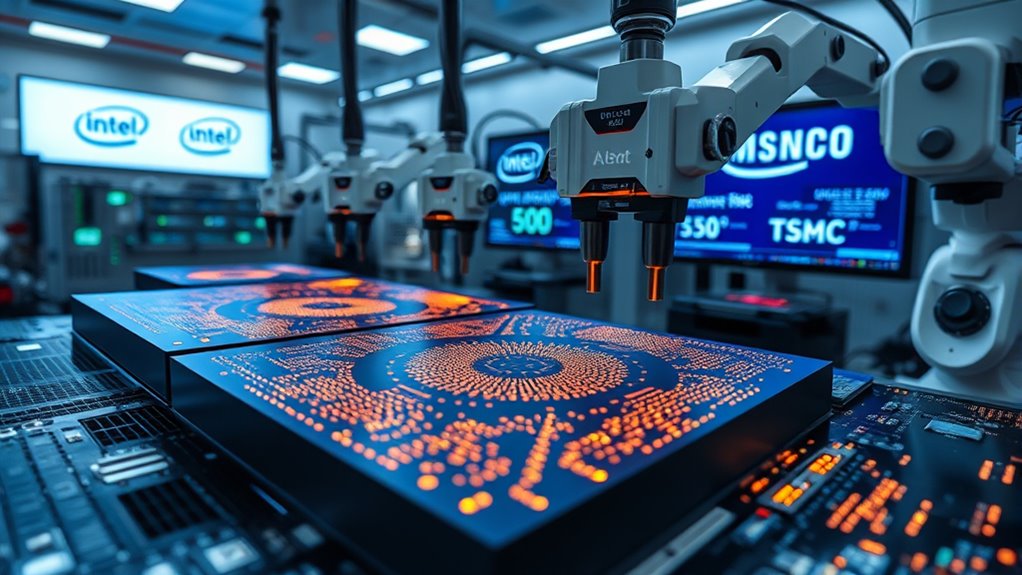
The semiconductor industry is investing heavily in nanoscale manufacturing to meet the demands of advanced technologies like AI, 5G, and high-performance computing. The U.S. CHIPS Act allocates over $50 billion for R&D, fueling innovation and production capacity. Companies like Atomera partner with chip equipment makers to develop MST technology, enabling next-generation chips. Multiple manufacturers are testing MST in fabs to enhance performance and efficiency. ACM Research supplies nanoscale capital equipment tailored for semiconductor fabrication, accelerating process improvements. These investments aim to shrink device sizes, improve power efficiency, and increase processing speeds. Additionally, the industry is exploring ways to incorporate Free Floating designs to optimize the use of available space on chips, further enhancing performance and energy efficiency. The push towards nanotechnology advancements is critical for maintaining competitiveness as device features continue to shrink. As a result, industry giants are positioning themselves at the forefront of nanoscale innovation, ensuring they can meet future market needs and maintain competitive advantages in the rapidly evolving tech landscape.
spintronic sensors NVE Corporation
As an affiliate, we earn on qualifying purchases.
As an affiliate, we earn on qualifying purchases.
NVE Corporation’s Cutting-Edge Nano-Sensors and Spintronics

NVE Corporation is pushing the boundaries of nanotechnology with its innovative spintronic sensors and couplers, which operate at the nanoscale to deliver ultra-sensitive detection capabilities. These sensors detect magnetic fields with unmatched precision, making them ideal for advanced applications like neuromorphic computing and biomedical diagnostics. Their spintronic technology leverages electron spin, enabling faster, more energy-efficient data processing. NVE has expanded manufacturing capacity to meet growing demand and invest in magnetoresistive memory, promising breakthroughs in storage and sensing. To illustrate, here’s a quick comparison of key features:
| Feature | Application | Benefit |
|---|---|---|
| Spintronic sensors | Biomedical, defense | Ultra-sensitive detection |
| Magnetoresistive memory | Data storage | Faster, energy-efficient |
| Spintronics research | Brain-like computing | Enhanced processing |
This cutting-edge work keeps NVE at the forefront of nanotech innovation. Additionally, ongoing research into magnetoresistive technologies continues to expand the potential uses of these advanced sensors and memory devices. Furthermore, advancements in quantum effects at the nanoscale are opening new avenues for sensor precision and computational power. Moreover, understanding nanomaterial properties is essential for developing next-generation devices with improved performance and reliability. A deeper understanding of material science is fueling these innovations and the development of more robust, scalable nanodevices. Emerging nanotechnology applications are expected to revolutionize industries ranging from healthcare to computing.
Regulatory Advancements and Market Milestones in Nanotech

Regulatory agencies are making significant strides to keep pace with the rapid growth of nanotechnology. They’re establishing guidelines and approvals that help guarantee safety and innovation move forward together. Here are four key milestones:
- The FDA issued guidance on evaluating nano-enabled drugs, streamlining approval processes.
- Europe approved its first self-amplifying mRNA vaccine using 100nm lipid nanoparticles in February 2025.
- Advances in nanowire electronics and graphene transistors are leading to new device standards.
- The development of room-temperature quantum sensors with two-nanometer thickness opens new commercial markets.
These advancements signal a regulatory environment that actively supports market growth, fostering confidence for companies investing in nanotech innovations.
Major Players and Market Trends in Fortune 500 Nanotech Engagement

You can see that major Fortune 500 companies are actively investing in nanotech partnerships, like Johnson & Johnson’s collaboration on cancer therapies and Thermo Fisher’s innovative research tools. Market trends show increased funding and government support, especially in semiconductor manufacturing and medical applications. As regulatory milestones are reached, these companies are positioning themselves to lead in nanotech-driven innovation and commercialization. Additionally, empowering new parents through advancements in medical nanotech highlights the broader impact of this rapidly evolving field. The influence of biotech collaborations with government agencies further accelerates progress and adoption of nanotechnology solutions across industries. Moreover, a focus on regulatory frameworks is essential to ensure safe and effective integration of nanotech products into mainstream markets. Recent developments in market adoption indicate a promising trajectory for nanotech’s role in industry transformation. Furthermore, the integration of advanced manufacturing techniques is enabling more precise and scalable production of nanomaterials, which is crucial for widespread commercial use.
Corporate Nanotech Partnerships
Major players in the Fortune 500 are increasingly integrating nanotechnology through strategic partnerships and investments, signaling a shift toward nanotech-driven innovation across industries. You can see this in how companies collaborate to develop cutting-edge solutions. Here are key examples:
- Johnson & Johnson partnered with Nanobiotix to commercialize NBTXR3, a nano-enabled cancer therapy, with up to $2.7 billion in milestone payments.
- Thermo Fisher Scientific launched nanotech-enhanced platforms like CoreVitas, improving drug safety and research data security.
- Semiconductor firms benefit from the U.S. CHIPS Act, investing heavily in nanoscale manufacturing and partnering with companies like Atomera.
- NVE Corporation focuses on spintronic sensors and memory, expanding capacity to meet rising demand in nanotech applications.
- The integration of nanotechnology often involves technological innovation that enhances performance and enables new functionalities across sectors.
Market Investment Trends
Investment patterns among Fortune 500 companies reveal a growing emphasis on nanotechnology as a key driver of innovation and competitiveness. Major players are channeling funds into nanotech for healthcare, semiconductors, and advanced manufacturing. Johnson & Johnson, for example, invests heavily in nano-enabled cancer therapies, committing up to $2.7 billion in milestones. Thermo Fisher Scientific advances include nanotech-based platforms for drug research. Semiconductor firms leverage government initiatives like the U.S. CHIPS Act to fund nanoscale chip development, with partners like Atomera and ACM Research leading the charge. Meanwhile, NVE Corporation expands its nanoscale sensors for computing, signaling a broad market shift. The table below highlights key investments and areas of focus:
| Company/Area | Investment Focus |
|---|---|
| Johnson & J. | Nano cancer therapies |
| Thermo Fisher | Nanotech in pharma research |
| Semiconductors | Nanoscale chip manufacturing |
| NVE Corp. | Spintronic sensors |
Additionally, a focus on market growth underscores the increasing importance of nanotech in global industries. This trend reflects the technological advancements driving new applications across sectors. Advances in nano-engineering are enabling unprecedented capabilities in various fields, further fueling investment and innovation.
Regulatory and Innovation Milestones
Regulatory milestones are shaping the landscape of nanotech innovation among Fortune 500 companies, signaling both validation and new opportunities. These milestones demonstrate increased confidence and clearer pathways for commercialization. Here are four key developments:
- The FDA issued guidance on evaluating nano-enabled drugs, streamlining approval processes.
- Europe approved the first self-amplifying mRNA vaccine in 100nm lipid nanoparticles, validating nanotech’s medical potential.
- Breakthroughs like a two-nanometer-thick quantum sensor enable room-temperature, high-performance devices.
- Advances in nanomedicine, such as nanoparticles for gene sequencing and drug delivery, push regulatory bodies to adapt standards.
These milestones accelerate innovation, supporting Fortune 500 companies to expand nanotech applications and market reach.
Frequently Asked Questions
Which Fortune 500 Companies Are Leading in Nanotech Investments?
You should know that Johnson & Johnson leads in nanotech investments, partnering with Nanobiotix on cancer therapies and funding major clinical trials. Thermo Fisher Scientific advances with nanotech-enabled platforms for drug research and safety monitoring. Semiconductor giants are also heavily involved, thanks to the U.S. CHIPS Act and collaborations like Atomera’s MST technology. These companies actively push nanotech innovation, positioning themselves at the forefront of the industry’s growth.
How Does Nanotech Enhance Pharmaceutical and Medical Applications?
Nanotech enhances pharmaceutical and medical applications by enabling targeted drug delivery, improving diagnostic accuracy, and advancing personalized medicine. You benefit from nanotech through more effective treatments with fewer side effects, faster diagnostics, and innovative therapies like nano-enabled cancer treatments. Companies like Johnson & Johnson invest in nanotech to develop cutting-edge therapies, while tools like nanobiosensors improve clinical research and patient monitoring, transforming healthcare into more precise, efficient, and personalized care processes.
What Role Does Government Policy Play in Nanotech Industry Growth?
You should know that government policy considerably fuels nanotech industry growth. For example, the U.S. CHIPS Act invested over $50 billion in nanoscale manufacturing R&D, directly boosting innovation. Policies like FDA guidance on nano-enabled drugs and approvals of nanoparticle-based vaccines create regulatory frameworks that encourage investment. These measures reduce risks, foster commercialization, and attract companies, ultimately accelerating nanotech’s impact across healthcare, electronics, and other sectors.
Are Startups or Established Firms More Dominant in Nanotech Innovation?
You’ll find that established firms dominate nanotech innovation more than startups. These large companies, like Johnson & Johnson and Thermo Fisher Scientific, have the resources, infrastructure, and R&D capacity to push nanotech advancements. They invest heavily in partnerships, clinical trials, and commercialization. While startups drive innovation with new ideas, it’s the big firms that often scale and implement nanotech solutions across industries, shaping the future of nanotechnology.
How Is Nanotech Impacting the Future of Semiconductor Manufacturing?
Nanotech is revolutionizing semiconductor manufacturing by enabling smaller, more efficient chips with enhanced performance. You’ll see advancements like MST technology from Atomera, which facilitates next-generation AI, 5G, and computing devices. Semiconductor firms are actively evaluating nanoscale solutions, and industry investments, like the U.S. CHIPS Act, drive R&D. These innovations will lead to faster, more powerful electronics, shaping the future of tech with improved energy efficiency and miniaturization.
Conclusion
You see, big companies are leading the nanotech revolution, pushing boundaries, pioneering innovations, and shaping markets. They’re investing in breakthroughs, partnering for progress, and steering regulations—all while transforming industries. As these giants embrace nano-scale advancements, they’re not just shaping the future—they’re defining it. Keep watching, because their progress fuels innovation, their collaboration drives growth, and their leadership inspires change across the Fortune 500 and beyond.