
Nanomedicine uses tiny particles engineered with surface ligands to target hard-to-treat diseases precisely, avoiding healthy tissue. These nanocarriers can protect drugs, respond to specific stimuli, and deliver payloads directly to cells or organelles. By activating immune cells or applying physical methods like heat or electric fields, nanomedicine overcomes resistance and enhances treatment outcomes. If you want to see how this groundbreaking tech fights untreatable conditions, keep exploring these innovative strategies.
Key Takeaways
- Nanomedicine employs surface modifications and targeted delivery to precisely attack difficult-to-treat diseases like cancer.
- It protects fragile drugs and releases them selectively in diseased tissues using stimuli-responsive nanocarriers.
- Combining therapy and imaging allows real-time monitoring, improving treatment of previously untreatable conditions.
- Physical methods like magnetothermal heating and electric field induction enable non-invasive destruction of resistant disease cells.
- Advanced nanocarrier designs overcome drug resistance, enhancing efficacy against complex diseases that traditional treatments struggle to cure.

Nanomedicine Based Drug Delivery Systems: Recent Developments and Future Prospects
As an affiliate, we earn on qualifying purchases.
As an affiliate, we earn on qualifying purchases.
Unlocking Cell Entry: The Power of Surface Engineering
Surface engineering plays a crucial role in enhancing nanoparticle entry into target cells, overcoming one of the main barriers to effective nanomedicine. By modifying the nanoparticle surface with specific ligands, you can dramatically increase cellular uptake, often by orders of magnitude. These engineered surface features enable nanoparticles to recognize and bind selectively to receptors on target cell membranes, facilitating entry through endocytosis. For example, attaching antibodies, peptides, or aptamers directs nanoparticles precisely where they need to go, minimizing off-target effects. This targeted approach not only improves delivery efficiency but also reduces required dosages and side effects. Surface engineering transforms nanoparticles into highly specific delivery tools, making it possible to penetrate cellular barriers that previously limited therapeutic success. Additionally, optimizing the surface properties of nanoparticles can help evade immune detection and prolong circulation time, further enhancing their therapeutic potential. Implementing surface modifications based on cellular recognition mechanisms can significantly boost the precision and effectiveness of nanomedicine delivery systems. Improving nanoparticle design can also facilitate better navigation through the complex biological environment, increasing overall success rates.

Recent Advances in Nanocarriers for Pancreatic Cancer Therapy
As an affiliate, we earn on qualifying purchases.
As an affiliate, we earn on qualifying purchases.
Protecting and Delivering Payloads With Nanocarriers
You need nanocarriers that can effectively protect fragile drugs from degradation during delivery. By incorporating controlled release mechanisms, you guarantee the payload is released precisely where it’s needed, responding to local stimuli like pH or enzymes. This targeted approach maximizes therapeutic impact while minimizing off-target effects, making your treatment both safer and more effective.
Payload Shielding Strategies
Nanocarriers employ a variety of payload shielding strategies to protect fragile drugs and nucleic acids from degradation before reaching their target. You can use lipid bilayers or polymer coatings to create a barrier against enzymatic breakdown and immune recognition. Encapsulation within inorganic shells, like silica or metal oxides, offers additional stability and controlled access to the payload. Surface modifications with polyethylene glycol (PEG) or other stealth agents help evade immune clearance, extending circulation time. Layer-by-layer assembly techniques can also build multilayer shields that protect the cargo while allowing triggered release. These strategies guarantee that your therapeutic agents remain intact during transit, increasing bioavailability and effectiveness. Proper shielding is essential for delivering sensitive payloads precisely where they’re needed, minimizing off-target effects.
Controlled Release Mechanisms
Controlled release mechanisms are essential for ensuring that therapeutic payloads remain protected during transit and are released precisely at their target sites. They prevent premature degradation and reduce off-target effects, improving treatment efficacy. Nanocarriers utilize stimuli-responsive systems—pH, enzymes, magnetic fields—that trigger payload release only where needed. This precision maximizes bioavailability and minimizes side effects. For example, pH-sensitive nanoparticles release drugs in acidic tumor environments, while enzyme-responsive carriers activate in specific tissue microenvironments. The table below illustrates different mechanisms:
| Mechanism | Trigger | Application |
|---|---|---|
| pH-responsive | Acidic conditions | Tumor microenvironments |
| Enzyme-responsive | Specific enzymes | Inflamed tissues |
| Magnetic field | External magnetic activation | Targeted drug release |
| Temperature-sensitive | Elevated temperature | Hyperthermia treatments |
| Redox-responsive | Cellular redox state | Intracellular delivery |
Response to Local Stimuli
Responding to local stimuli is a powerful strategy that enhances the precision and efficacy of nanomedicine delivery. By designing nanocarriers to respond to specific cues like pH, enzymes, or magnetic fields, you can guarantee the payload releases exactly where it’s needed. For example, in acidic tumor microenvironments, pH-sensitive nanoparticles remain stable during circulation but release their cargo upon encountering lower pH levels. Enzyme-responsive carriers activate in response to tumor-specific enzymes, increasing targeting accuracy. Magnetic field-triggered nanoparticles allow external control, guiding and releasing drugs at precise sites. This responsiveness minimizes off-target effects and maximizes treatment impact. By leveraging local stimuli, you improve bioavailability, reduce side effects, and enhance the overall therapeutic outcome in difficult-to-treat diseases.

Protein Engineering for Therapeutics, Part B (Volume 503) (Methods in Enzymology, Volume 503)
As an affiliate, we earn on qualifying purchases.
As an affiliate, we earn on qualifying purchases.
Multi-Scale Targeting: From Tissue to Organelles
Achieving precise therapy requires nanomedicine to operate effectively across multiple biological scales, from the tissue level down to cellular and organelle compartments. You can harness passive strategies like the EPR effect to accumulate drugs in tumor tissues, while active targeting uses ligands such as antibodies, aptamers, or peptides to bind specific cell surface markers. Once inside the cell, nanocarriers can deliver payloads directly to organelles like the nucleus or mitochondria, enhancing efficacy and reducing off-target effects. Multi-stage and stimuli-responsive nanoparticles transform in size or charge, penetrating deeper or releasing drugs upon specific triggers. This layered approach guarantees your therapeutic agents reach the precise location, optimizing treatment outcomes for complex diseases that challenge traditional methods. Additionally, understanding the best heat pump features and common issues can inform the design of more efficient and reliable nanomedical devices, ensuring optimal performance across various medical environments. Incorporating targeted delivery systems that respond to specific biological signals further improves the localization and effectiveness of treatments. For example, advances in nanocarrier design facilitate improved stability and controlled release profiles, making therapies more effective and safer. Moreover, considering the biocompatibility of nanomaterials is crucial to prevent adverse immune responses and ensure patient safety. Developing biodegradable nanomaterials is also essential to minimize long-term accumulation and potential toxicity.
nanocarriers for fragile drug protection
As an affiliate, we earn on qualifying purchases.
As an affiliate, we earn on qualifying purchases.
Harnessing Nanoparticles for Immune System Reprogramming
Nanoparticles offer a powerful platform for reprogramming the immune system to fight diseases more effectively. They can present antigens or deliver immune adjuvants directly to immune cells, activating or modulating responses precisely. By targeting specific immune cell populations, nanoparticles reshape the tumor microenvironment, converting immunosuppressive tissues into active immune sites. They also carry cytokines like IL-12, boosting immune cell proliferation and activity without systemic toxicity. Additionally, nanoparticles can deliver checkpoint inhibitors or gene-editing tools to overcome immune resistance. This targeted approach enhances immune recognition of cancer cells and other pathogens, enabling more robust and sustained responses. Overall, harnessing nanoparticles for immune reprogramming offers a promising strategy to treat otherwise untreatable conditions by turning the immune system into a precise, powerful weapon.
Physical Approaches to Selective Cancer Cell Killing
You can leverage physical mechanisms like magnetothermal heating and electric field induction to target cancer cells precisely. Magnetoelectric nanoparticles generate heat or electric fields when externally activated, inducing apoptosis selectively in malignant cells. These approaches offer a promising way to kill cancer cells without harming surrounding healthy tissue.
Magnetothermal Heating Effects
Magnetothermal heating leverages magnetic nanoparticles that generate localized heat when exposed to alternating magnetic fields, enabling precise destruction of cancer cells. You can target tumors selectively by delivering these nanoparticles directly into cancer tissues or cells. When activated, the particles produce heat that induces apoptosis or necrosis in malignant cells without harming surrounding healthy tissue. This approach offers a non-invasive and controllable method to kill cancer cells efficiently. The heat generated can be finely tuned by adjusting the magnetic field’s strength and frequency, providing precise thermal control. Because the heating occurs specifically at the nanoparticle location, it minimizes collateral damage and offers a promising alternative for treating tumors resistant to conventional therapies. This physical method complements other nanomedicine strategies, advancing targeted, minimally invasive cancer treatments. Smart home technologies exemplify the potential for integrating innovative physical techniques into broader medical and technological applications.
Electric Field Induction
Electric field induction employs specially engineered nanoparticles that generate localized electric fields when externally activated, enabling precise targeting of cancer cells. You activate these particles using external electric stimuli, creating intense electric fields at the tumor site. This disrupts cancer cell membranes, inducing apoptosis without harming surrounding healthy tissue. The nanoparticles are designed for efficient cellular uptake, often through surface modifications that recognize tumor-specific markers. When activated, the electric fields cause membrane destabilization, leading to cancer cell death. This approach offers high spatial control, minimizing off-target effects. Because it’s a physical mechanism, it circumvents drug resistance issues. Researchers are exploring various inorganic and hybrid nanoparticles to optimize electric field strength, penetration depth, and safety, making this technique a promising addition to targeted cancer therapies. Understanding nanomaterial properties is crucial for designing effective nanoparticles for this application.
Transforming Weak Drugs Into Potent Therapies
Nanomedicine transforms weak drugs into highly potent therapies by leveraging advanced delivery systems that enhance their efficacy and precision. You benefit from nanoparticles that protect fragile drugs from degradation and release them precisely at disease sites, increasing bioavailability. Engineered surface ligands enable targeted cellular uptake, dramatically boosting drug entry into diseased cells—up to 12.5× in leukemia models. By concentrating drugs at specific tissues and organelles through passive and active targeting, off-target effects are minimized, and therapeutic impact is maximized. Nanoparticles can also modulate the immune system or combine diagnostic imaging with treatment, providing real-time monitoring. Additionally, controlled release techniques further optimize drug delivery and reduce side effects. These innovations turn previously ineffective therapies into powerful tools against stubborn diseases, fundamentally changing treatment possibilities and opening new avenues for combating untreatable conditions. Moreover, advances in nanoparticle design continue to expand the potential applications of nanomedicine in personalized medicine. Incorporating insights from treatment targeting strategies enhances the precision and effectiveness of nanomedical interventions, and ongoing research aims to improve biocompatibility and reduce long-term toxicity. The development of targeted delivery systems has opened up new possibilities for precision treatment in various medical fields.
Visualizing and Treating With Theranostic Nanoparticles

Building on the ability of nanoparticles to convert weak drugs into potent therapies, researchers have developed theranostic nanoparticles that combine treatment and imaging into a single platform. These multifunctional particles allow you to visualize disease sites in real time while delivering targeted therapy, enhancing precision. You can track how nanoparticles accumulate in tumors or affected tissues, adjusting treatment as needed. Many theranostic platforms respond to local stimuli—like pH or enzymes—to release their payload exactly when and where it’s needed. This dual function improves treatment efficacy and reduces off-target effects. By integrating imaging and therapy, you gain a clearer picture of progress and response, making it easier to tailor interventions. Utilizing AI tools can further optimize the design and deployment of these nanoparticles for better outcomes. Overall, theranostic nanoparticles empower you to see and treat diseases more effectively, especially in complex or hard-to-reach conditions.
Overcoming Barriers: Manufacturing and Regulatory Advances
Advances in manufacturing techniques are crucial for translating nanomedicine from the laboratory to widespread clinical use. Scaling up production while maintaining nanoparticle quality is a key challenge. Recent breakthroughs, like layer-by-layer polymer nanoparticle manufacturing, guarantee consistent performance at large volumes. Additionally, rigorous quality control protocols are being developed to ensure batch-to-batch reproducibility and adherence to safety standards. Regulatory agencies focus on characterizing particle properties, safety, and reproducibility to approve therapies. You must navigate complex standards and validation processes to bring nanomedicines to market. To visualize this, consider the following table:
| Manufacturing Step | Key Challenge | Solution |
|---|---|---|
| Scale-up | Maintaining quality at large scale | Mass production techniques |
| Characterization | Ensuring consistent properties | Advanced analytical methods |
| Safety assessment | Long-term toxicity risks | Extensive preclinical data |
| Regulatory approval | Meeting diverse standards | Harmonized testing frameworks |
These advances are essential for overcoming translational barriers and guaranteeing safe, effective nanomedicine therapies. Additionally, ear wax odor detection and management techniques serve as an analogy for the importance of precise characterization and quality control in nanomedicine development.
Nanomedicine’s Role in Combating Hard-to-Treat Cancers
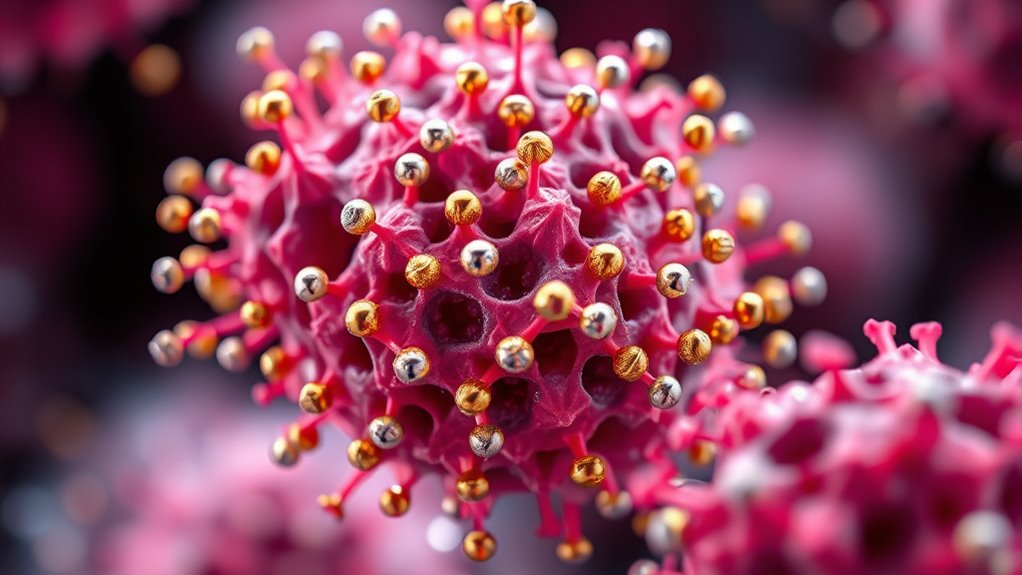
You can leverage nanomedicine’s advanced tumor penetration strategies to reach even the most difficult cancer sites. By overcoming treatment resistance, these tiny tools improve drug efficacy where traditional therapies fall short. With precision delivery systems, you get targeted, controlled treatment that minimizes off-target effects and maximizes patient outcomes. This innovative approach exemplifies how artificial intelligence can optimize drug design and delivery methods, further enhancing treatment success. Additionally, the integration of targeted therapy approaches allows for even more precise interventions, improving overall patient prognosis. Furthermore, implementing free floating techniques in nanomedicine can facilitate better distribution within the tumor microenvironment, leading to more effective treatment results. Incorporating luggage & organization strategies can also assist in the practical aspects of delivering complex nanomedicine treatments safely and efficiently. Proper storage and handling of nanomedicine formulations are vital to maintaining their efficacy throughout the treatment process.
Enhanced Tumor Penetration Strategies
Enhanced tumor penetration remains a critical challenge in nanomedicine, especially for treating solid tumors with dense stroma or poor vascularization. To overcome this, researchers develop strategies like size-shifting nanoparticles, charge transformation, and stimuli-responsive carriers that adapt within the tumor microenvironment. These approaches improve deep tissue infiltration and increase therapeutic payload delivery. For example, some nanoparticles change size or charge upon encountering tumor-specific stimuli, enabling better penetration. The table below highlights common strategies:
| Strategy | Mechanism | Benefit |
|---|---|---|
| Size/charge transformation | Alter size or charge in response to stimuli | Enhanced tissue infiltration |
| Multi-stage carriers | Sequential size reduction for penetration | Deeper tumor access |
| Stimuli-responsive release | Triggered drug release inside tumors | Increased local drug concentration |
Overcoming Treatment Resistance
Treatment resistance remains a major obstacle in managing hard-to-treat cancers, often rendering conventional therapies ineffective. Nanomedicine tackles this by enhancing drug delivery and targeting resistant tumor cells. Engineered surface ligands boost cellular uptake, ensuring higher concentrations of therapeutics inside cancer cells. Nanoparticles shield drugs from degradation and release them in response to local stimuli, improving intracellular delivery. They can target multiple scales—tissue, cell, and organelle—reducing off-target effects. Additionally, nanocarriers modulate the immune microenvironment, overcoming resistance mechanisms by reprogramming immune responses. Physical-mechanism nanoparticles generate heat or electric fields to induce apoptosis selectively in resistant cells. These strategies collectively improve treatment efficacy, making nanomedicine a promising approach to overcoming resistance in cancers that traditionally evade therapy.
Precision Delivery Systems
Nanomedicine’s ability to precisely deliver therapeutics directly to tumor sites is transforming how we approach hard-to-treat cancers. You can leverage engineered surface ligands that boost cellular uptake—up to 12.5 times in some models—ensuring more drug reaches the target. Nanoparticles shield fragile drugs and nucleic acids from degradation, releasing them only in response to local stimuli like pH or enzymes, which enhances bioavailability. Using passive and active targeting strategies, you concentrate treatments at disease sites while minimizing off-target effects. Some nanoparticles even combine imaging with therapy, enabling real-time monitoring. Physical-mechanism approaches, like magnetoelectric or photothermal particles, generate heat or electric fields externally, selectively killing malignant cells. These precision delivery systems make treatments more effective, safer, and tailored to each cancer’s unique environment.
Addressing Challenges and Future Directions in the Field

While nanomedicine has made significant advances, several challenges must be addressed to fully realize its potential in clinical settings. You need scalable manufacturing processes that maintain consistency and safety, as well as thorough safety data on long-term effects. Targeting specificity remains an issue, as off-target interactions reduce effectiveness and increase risks. Bridging the translational gap requires better models that mimic human tumor heterogeneity. Regulatory frameworks need harmonization, focusing on characterization, toxicity, and immunogenicity. Investing in research to refine targeting ligands, develop standardized protocols, and improve understanding of nanoparticle biodegradation is essential. Here’s a snapshot of key challenges and future directions:
| Challenge | Future Direction |
|---|---|
| Manufacturing scalability | GMP-compliant large-scale production, emphasizing scalable manufacturing processes to ensure safety and efficiency |
| Long-term safety data | Longitudinal human studies |
| Targeting specificity | Advanced ligand design |
| Regulatory harmonization | Standardized testing frameworks |
| Translational gap | Better preclinical models |
Additionally, fostering interdisciplinary collaboration can accelerate the development of innovative solutions to these challenges.
Frequently Asked Questions
How Do Nanomedicines Specifically Target Cancer Cells Without Harming Healthy Tissue?
You can see that nanomedicines target cancer cells specifically by using surface ligands like antibodies, aptamers, or peptides that recognize and bind to unique markers on cancer cells. They also exploit tumor-specific features like the enhanced permeability and retention (EPR) effect, which allows nanoparticles to accumulate more in tumor tissue. Controlled release mechanisms and stimuli-responsive design further guarantee that therapeutic payloads are released only at the disease site, sparing healthy tissue.
What Are the Main Safety Concerns Associated With Long-Term Nanoparticle Accumulation?
You might think that tiny tech’s harmless, but long-term nanoparticle buildup raises safety alarms. It can lead to organ accumulation, causing toxicity or inflammation over time. There’s also concern about nanoparticles triggering immune reactions or crossing barriers unexpectedly, creating unforeseen health risks. Plus, our incomplete understanding of biodegradation leaves us guessing whether these particles will linger indefinitely or eventually cause damage. Safety, after all, shouldn’t be an afterthought in the quest for miracles.
How Scalable Are Current Manufacturing Methods for Complex Nanomedicine Platforms?
Current manufacturing methods for complex nanomedicine platforms are becoming increasingly scalable, especially with advances like layer-by-layer polymer production and batch processing techniques. You can now produce these nanoparticles in larger quantities while maintaining quality and functionality. However, challenges remain in ensuring reproducibility, meeting GMP standards, and controlling batch-to-batch variation. Continued development and standardization are essential to fully realize large-scale, clinical-grade manufacturing of these sophisticated nanomedicines.
How Does Tumor Heterogeneity Affect Nanomedicine Efficacy in Humans?
You might find it shocking that tumor heterogeneity causes nanomedicine to underperform in humans, despite promising animal results. Tumor differences in cell types, microenvironments, and receptor expression mean your targeted nanoparticles often struggle to reach all cancer cells effectively. This variability hampers treatment precision, reducing efficacy and risking resistance. Overcoming this challenge requires adaptable nanocarriers that can target multiple tumor features simultaneously for better, personalized outcomes.
What Regulatory Hurdles Must Be Overcome for Widespread Clinical Adoption?
You need to address several regulatory hurdles for nanomedicine to become widely adopted. First, you must guarantee consistent characterization of nanoparticle properties, safety, and toxicity. Manufacturing reproducibility is critical, requiring scalable, GMP-compliant processes. You’ll also need to validate targeted delivery and minimize off-target effects. Finally, you must navigate evolving regulatory frameworks, standardize preclinical models, and gather long-term safety data to gain approval from authorities.
Conclusion
As you explore nanomedicine’s innovations, remember it’s like a tiny lighthouse guiding treatments through the darkness of untreatable diseases. Each breakthrough shines a light on hope, breaking down barriers that once seemed insurmountable. With perseverance, these nano-guards can navigate the complex ocean of our bodies, illuminating new paths toward cures. Embrace this journey, for in the smallest particles lie the greatest possibilities to transform health and restore life’s balance.