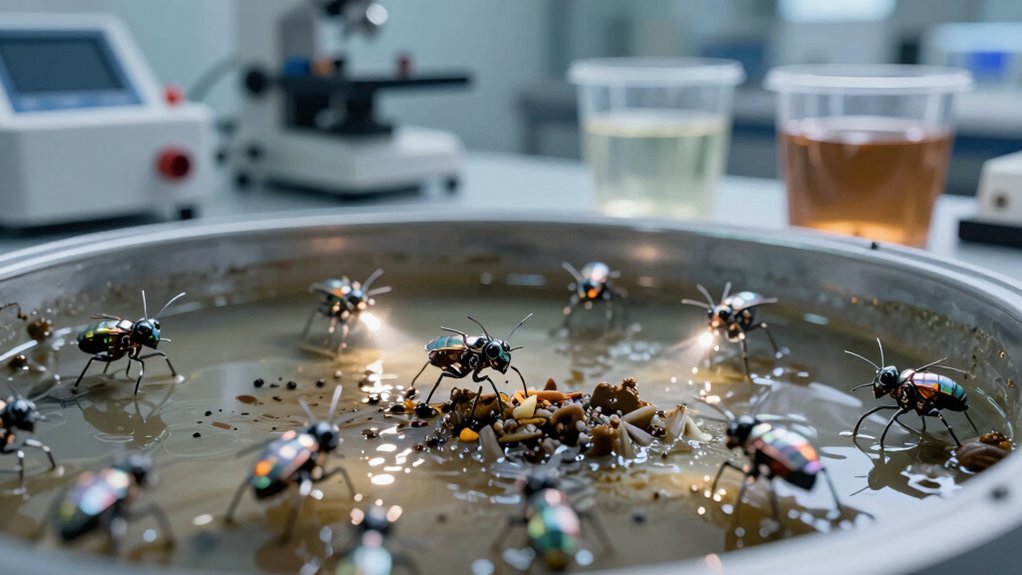

Nanotechnology provides innovative ways to tackle environmental disasters like oil spills and groundwater contamination. Tiny materials like nanoscale zero-valent iron break down pollutants in situ, while carbon nanomaterials adsorb organic and heavy metal contaminants effectively. Photocatalytic nanoparticles use light to degrade harmful substances, and magnetic nanoparticles help capture and recover pollutants easily. These advancements offer faster, greener cleanup methods—if you want to see how these tiny tech giants are transforming environmental rescue efforts, keep exploring.
Key Takeaways
- Nanomaterials like nZVI rapidly reduce chlorinated solvents in groundwater, enabling in-situ cleanup of environmental disasters.
- Photocatalytic nanoparticles break down organic pollutants in wastewater, providing efficient, light-driven remediation.
- Magnetic nanoparticles facilitate contaminant removal via magnetic separation, allowing for effective recovery and reuse.
- Carbon-based nanomaterials offer high adsorption capacities and selectivity for targeted pollutants, enhancing cleanup efficiency.
- Challenges remain in scaling nanotech applications safely, cost-effectively, and with minimal ecological impact for disaster response.
nanoscale zero-valent iron for groundwater cleanup
As an affiliate, we earn on qualifying purchases.
As an affiliate, we earn on qualifying purchases.
The Marvels of Nanoscale Zero-Valent Iron in Groundwater Cleanup

Have you ever wondered how tiny particles can make a big difference in cleaning polluted groundwater? Nanoscale zero-valent iron (nZVI) offers a powerful solution. These ultra-small particles are highly reactive and can be injected directly into contaminated aquifers. Once in the ground, nZVI reduces harmful chlorinated solvents like PCE and TCE into less toxic substances through a process called reductive dechlorination. Their large surface area provides abundant reactive sites, boosting efficiency. Because they can be dispersed in-situ, they eliminate the need for excavation or extensive treatment facilities. Field studies show nZVI can rapidly lower pollutant levels, making groundwater safer. This targeted approach minimizes environmental disturbance and helps restore water quality more quickly and cost-effectively. Additionally, understanding the reactive surface area of nZVI particles is crucial for optimizing their environmental remediation performance. Accurate measurement of this surface area can influence the design of more effective nanoparticles, leading to improved cleanup strategies. Moreover, advancements in measurement techniques can further enhance the effectiveness of nZVI in field applications. Exploring surface chemistry provides deeper insights into nanoparticle interactions and potential improvements in remediation efficiency.
Nanomaterials for the Removal of Pollutants and Resource Reutilization (Micro and Nano Technologies)
As an affiliate, we earn on qualifying purchases.
As an affiliate, we earn on qualifying purchases.
Carbon Nanomaterials: High-Surface-Area Adsorbents for Organic and Metal Contaminants

You can leverage carbon nanomaterials like nanotubes and graphene to achieve higher adsorption capacities for pollutants. Their high surface area and tailored surface chemistry make them highly selective for specific organic compounds and metals. This selectivity is crucial for targeting specific contaminants, thereby increasing cleanup efficiency while minimizing unintended environmental impacts. Incorporating attention to detail in the design of nanomaterials further ensures optimal performance in environmental remediation applications. Additionally, the functionalization of nanomaterials can enhance their affinity for certain pollutants, making them versatile tools in pollution control. Understanding material surface chemistry is essential for customizing nanomaterials to maximize their remediation potential and improve water purification processes.
Enhanced Adsorption Capacity
Carbon nanomaterials such as carbon nanotubes (CNTs) and graphene oxide are revolutionizing environmental cleanup efforts by offering exceptional adsorption capacities for organic pollutants and heavy metals. Their high surface-area-to-volume ratios create abundant active sites, allowing them to trap contaminants more efficiently than traditional materials. Their high surface-area-to-volume ratios enable greater contact with pollutants, enhancing removal efficiency. You’ll find these nanomaterials excel at concentrating pollutants from water and air streams, making removal faster and more effective. Their unique structures enable strong interactions with diverse chemicals, including dyes, pesticides, and metal ions, without requiring complex chemical modifications. Additionally, their tunable surface chemistry enhances adsorption performance, ensuring contaminants are securely bound. This combination of high capacity and adaptability means you can achieve significant cleanup results with smaller quantities of nanomaterials, reducing overall costs and environmental impact. Surface chemistry plays a crucial role in optimizing their adsorption capabilities, enabling tailored interactions with specific contaminants. A high-surface-area adsorbent like these nanomaterials maximizes contact with pollutants, boosting cleanup efficiency. Incorporating nanomaterial modifications can further improve their selectivity and capacity for targeted contaminants. Utilizing material engineering techniques can also enhance stability and reusability of these nanomaterials in cleanup processes.
Selectivity for Pollutants
Because of their tunable surface chemistries, carbon nanomaterials like CNTs and graphene oxide can be engineered to target specific pollutants with high precision. By functionalizing their surfaces with chemical groups, you can enhance their affinity for particular organic compounds or metal ions. For example, adding carboxyl or amine groups improves binding to heavy metals like lead or chromium, while hydrophobic modifications attract oils and organic solvents. This selectivity allows you to design nanomaterials that efficiently remove targeted contaminants while minimizing unwanted interactions. Such tailored approaches increase removal efficiency, reduce secondary waste, and enable in-situ applications. Additionally, understanding the surface chemistry of nanomaterials is essential for optimizing their performance in diverse environmental conditions. By customizing surface chemistry, you make carbon nanomaterials versatile tools capable of addressing complex contamination scenarios with high specificity and minimal environmental impact. Cote de Pablo and Ziva David One key aspect involves leveraging machine learning techniques to predict and enhance nanomaterial interactions with specific pollutants, thereby streamlining the development process.

Enhanced Photocatalytic Performance of Bio-Functionalized ZnO Nanoparticles for Advanced Wastewater Treatment: Advanced Wastewater Treatment
As an affiliate, we earn on qualifying purchases.
As an affiliate, we earn on qualifying purchases.
Photocatalytic Nanoparticles: Lighting the Path to Organic Pollutant Degradation

Photocatalytic nanoparticles offer a promising approach to degrading organic pollutants in contaminated environments by harnessing light energy to activate chemical reactions. When exposed to UV or visible light, semiconductor nanoparticles like TiO₂ and ZnO generate electron-hole pairs that produce reactive oxygen species. These reactive species break down complex organic molecules into harmless end products like CO₂ and water. You benefit from their high surface area, which enhances pollutant contact and reaction efficiency. Unlike conventional methods, photocatalysis can operate in situ, reducing the need for chemical additives or extensive equipment. This process is effective against dyes, pharmaceuticals, and hydrocarbons, making it ideal for wastewater treatment and environmental cleanup. With optimized light exposure and catalyst loading, photocatalytic nanoparticles provide a sustainable, energy-efficient solution for organic pollutant degradation. Additionally, advances in industry trends continue to improve catalyst performance and cost-effectiveness, making this technology more accessible for large-scale applications. The development of nanostructured catalysts further enhances light absorption and charge separation, boosting overall efficiency and feasibility for practical use.

Euroboor Magnetic stick for cleanup of metal chips
As an affiliate, we earn on qualifying purchases.
As an affiliate, we earn on qualifying purchases.
Magnetic Nanoparticles: Combining Capture and Recovery for Water and Soil Remediation

Magnetic nanoparticles excel at efficiently recovering contaminants from water and soil because of their easy magnetic separation. Their targeted binding capabilities guarantee pollutants are captured effectively, reducing environmental spread. Plus, their reusability and regeneration potential make them a cost-effective, sustainable option for ongoing remediation efforts. Proper halal certification ensures that the production of these nanoparticles adheres to safety and quality standards, which is crucial for environmental and human health. Additionally, advancements in Gold IRA markets have led to innovative approaches for funding large-scale cleanup projects through precious metal investments, further supporting sustainable environmental initiatives. Incorporating ethical practices in manufacturing processes enhances stakeholder trust and long-term viability of environmental solutions. Moreover, employing aquatic exercise techniques can help assess the effectiveness of water remediation by monitoring improvements in water quality and ecosystem health. To maximize the environmental benefits, researchers are exploring nanotechnology regulations to establish safe and effective standards for nanoparticle use.
Magnetic Recovery Efficiency
How effective are magnetic nanoparticles at capturing and removing contaminants from water and soil? They can be highly efficient, thanks to their magnetic properties that allow easy recovery after cleanup. Here’s what makes them stand out:
- Rapid Separation: You can quickly pull nanoparticles out of water or soil using external magnets, reducing treatment time.
- High Recovery Rates: Over 90% of nanoparticles can often be retrieved, minimizing environmental release.
- Reuse Potential: Many magnetic nanoparticles maintain their effectiveness after multiple recovery cycles, saving costs.
- Minimal Residue: Their magnetic nature ensures fewer residual particles remain in the environment, lowering secondary contamination risks.
- Enhanced Performance: Advances in nanoparticle design continue to improve their energy efficiency, making large-scale remediation more feasible.
This efficiency makes magnetic nanoparticles a powerful tool for large-scale environmental cleanup efforts, combining effective contaminant removal with straightforward recovery.
Targeted Contaminant Binding
Targeted contaminant binding with magnetic nanoparticles offers a highly efficient approach to removing specific pollutants from water and soil. You can tailor these particles with functional groups that selectively attach to heavy metals like lead or chromium, or organic pollutants such as pesticides and dyes. When introduced into contaminated environments, the nanoparticles bind tightly to their target contaminants, effectively concentrating them for removal. The magnetic core allows you to easily recover the nanoparticles using a magnetic field, preventing secondary pollution. This targeted binding minimizes the impact on non-polluted areas and reduces the need for extensive chemical treatments. By focusing on specific contaminants, you enhance cleanup efficiency and limit unintended environmental effects, making magnetic nanoparticles a precise tool for environmental remediation.
Reusability and Regeneration
Reusability and regeneration are critical for maximizing the efficiency and cost-effectiveness of magnetic nanoparticles in environmental cleanup. You can enhance their lifespan and reduce waste by implementing regeneration techniques. Here are four key methods:
- Magnetic separation: Use magnetic fields to recover nanoparticles after contaminant removal, enabling reuse.
- Chemical regeneration: Apply solutions like acids or chelating agents to desorb pollutants, restoring nanoparticle surface activity.
- Thermal treatment: Heat nanoparticles to deactivate bound pollutants and prepare them for subsequent cycles.
- Surface modification: Functionalize nanoparticle surfaces to facilitate easier regeneration and prevent fouling.
Real-World Applications: From Oil Spills to Industrial Wastewater Treatment

Nanotechnology has become a vital tool in addressing a wide range of environmental disasters, from oil spills to industrial wastewater contamination. You can use nanomaterials like nano-absorbents, such as hydrophobic nano-sorbents, to soak up oil spills efficiently, absorbing multiple times their weight. In groundwater cleanup, injecting nanoscale zero-valent iron (nZVI) can reduce chlorinated solvents like PCE and TCE in situ, transforming harmful chemicals into less toxic forms. For industrial wastewater, nano-adsorbents and photocatalysts target dyes, pharmaceuticals, and heavy metals, removing them effectively. Nano-enabled filters and photocatalytic coatings also help control air pollution by capturing particulate matter and degrading volatile organic compounds. These applications enable faster, more targeted cleanup efforts, often reducing costs and environmental impact compared to traditional methods.
Balancing Benefits and Risks: Scalability, Costs, and Safety in Nanomaterial Use

While nanomaterials offer promising environmental cleanup solutions, scaling their use from laboratory to large-scale disaster response presents significant challenges. You need to consider:
Scaling nanomaterials from lab to disaster zones faces cost, safety, and logistical hurdles.
- Costs: Synthesis and deployment of nanomaterials can be expensive, limiting widespread use.
- Reproducibility: Producing consistent nanomaterials at scale remains difficult, affecting reliability.
- Safety: Potential ecotoxicity and unknown long-term impacts raise concerns about environmental and human health.
- Logistics: Transporting and applying nanomaterials in disaster zones requires specialized equipment and planning.
Balancing these factors is vital. You must weigh the benefits of targeted, efficient cleanup against the risks of unintended consequences. Developing cost-effective, safe, and scalable nanotechnologies is essential for broader acceptance and success.

Despite the promising potential of nanomaterials for environmental cleanup, significant gaps in research and regulatory frameworks hinder their widespread adoption. You need thorough understanding of long-term environmental impacts, yet many studies focus only on short-term results. Standardized methods for evaluating ecotoxicity and fate are lacking, making risk evaluation difficult. Regulatory policies are still evolving, leaving uncertainties about approval processes and safe deployment. Monitoring engineered nanoparticles in complex ecosystems remains a challenge, complicating exposure assessments. You must also develop scalable, cost-effective synthesis and recovery techniques, especially for large-scale disasters. Addressing these gaps requires coordinated efforts among scientists, policymakers, and industry to establish clear standards, improve detection technologies, and ensure safe, sustainable application of nanomaterials in environmental remediation.
Frequently Asked Questions
How Do Nanomaterials Impact Ecosystems Long-Term?
You might wonder how nanomaterials impact ecosystems long-term. They can pose ecotoxicity risks if they persist or accumulate, potentially harming plants, animals, and microorganisms. Although some nanomaterials are designed to be recoverable or immobilized, their fate isn’t fully understood, and long-term effects remain uncertain. Monitoring, regulation, and further research are essential to make sure they don’t cause secondary environmental issues, balancing cleanup benefits with ecosystem safety.
Are There Standard Safety Protocols for Deploying Nanomaterials in the Environment?
You’re walking a tightrope with nanomaterials, so safety protocols act as your safety net. Currently, standardized protocols are still in development, but best practices include risk assessments, controlled deployment, and post-application monitoring. You should follow evolving guidelines from regulatory agencies and prioritize minimizing environmental exposure. Remember, implementing thorough safety measures now guarantees your efforts don’t become a double-edged sword, protecting ecosystems while harnessing nanotech’s potential.
Can Nanomaterials Be Safely Recovered or Recycled After Use?
You can recover or recycle nanomaterials after use, mainly through techniques like magnetic separation for magnetic nanoparticles or immobilization on solid supports. These methods allow you to retrieve nanoparticles efficiently, reducing environmental release and enabling reuse. Implementing recovery strategies minimizes secondary pollution, lowers costs, and promotes sustainability. However, developing standardized, cost-effective recovery processes remains essential to guarantee safe, practical recycling of nanomaterials in environmental cleanup efforts.
What Are the Detection Methods for Tracking Nanomaterials in Complex Environments?
Imagine shining a flashlight into murky waters; you want to see tiny particles swirling beneath. To track nanomaterials, you use advanced techniques like electron microscopy, which provides detailed images of nanostructures, or spectroscopy methods like ICP-MS and Raman, which identify and quantify nanoparticles amidst complex backgrounds. Fluorescent tagging also helps visualize their movement. These tools help you detect, monitor, and understand nanomaterials’ behavior in challenging environmental matrices.
How Does Nanomaterial Cost Compare to Traditional Remediation Technologies?
You’ll find nanomaterials often cost more upfront than traditional remediation methods due to synthesis and deployment expenses. However, their targeted action, lower material use, and faster cleanup times can lead to long-term savings. In situ applications reduce excavation and transport costs, making them economically attractive for large-scale disasters. Still, scalability and regulatory hurdles can impact overall affordability, and ongoing research aims to improve cost-effectiveness and practical deployment.
Conclusion
As you step into this tiny yet powerful world, remember that these nanotechnologies are like seeds—small but capable of transforming vast environmental landscapes. With careful nurturing and responsible use, they can bloom into solutions that heal our planet’s scars. But beware—missteps could turn these seeds into weeds, choking future progress. Embrace innovation wisely, for in your hands lies the power to turn tiny tech into a mighty force for environmental renewal.