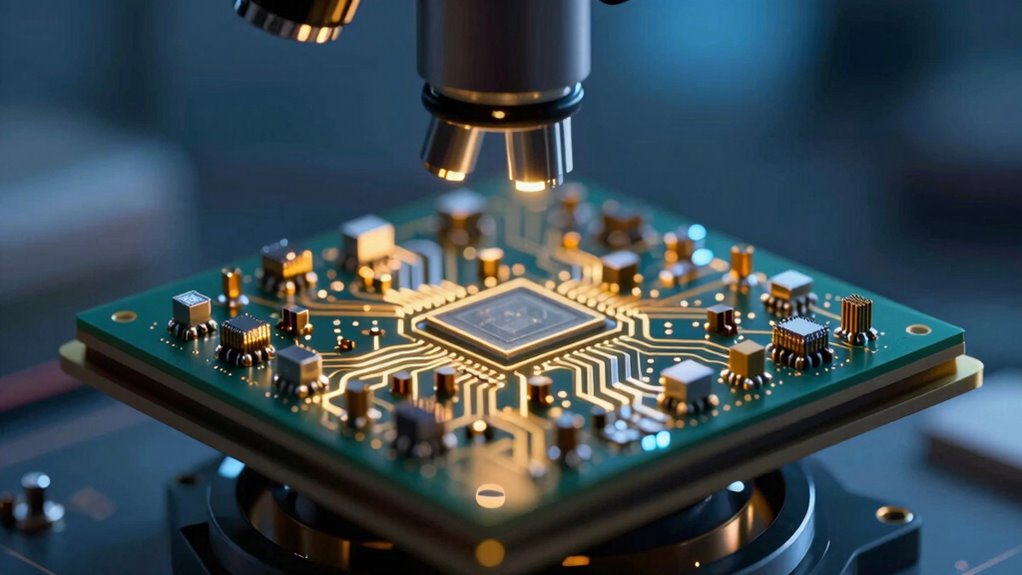

Semiconductor nanodevices are a big deal for future hardware because they enable you to build smaller, faster, and more efficient electronics. They harness quantum effects like tunneling, which enhance device performance but also pose challenges. These innovations allow for greater miniaturization, powering ultra-fast processors and advanced communication systems. As devices shrink, new functionalities emerge, transforming industries and everyday life. Keep exploring how ongoing advancements will shape the future of technology and your world.

Get the latest gadgets delivered free with Prime
- Fast, free delivery on millions of items
- Prime Video, Amazon Music and more included
- Member-only deals all year
Key Takeaways
- Enable significant device miniaturization, increasing processing power and reducing energy consumption.
- Leverage quantum tunneling for faster, more efficient electronic functionalities.
- Overcome challenges of leakage currents through innovative materials and design strategies.
- Support continued Moore’s Law progress with advanced nanofabrication techniques.
- Pave the way for ultra-fast processors, quantum computers, and next-generation electronics.
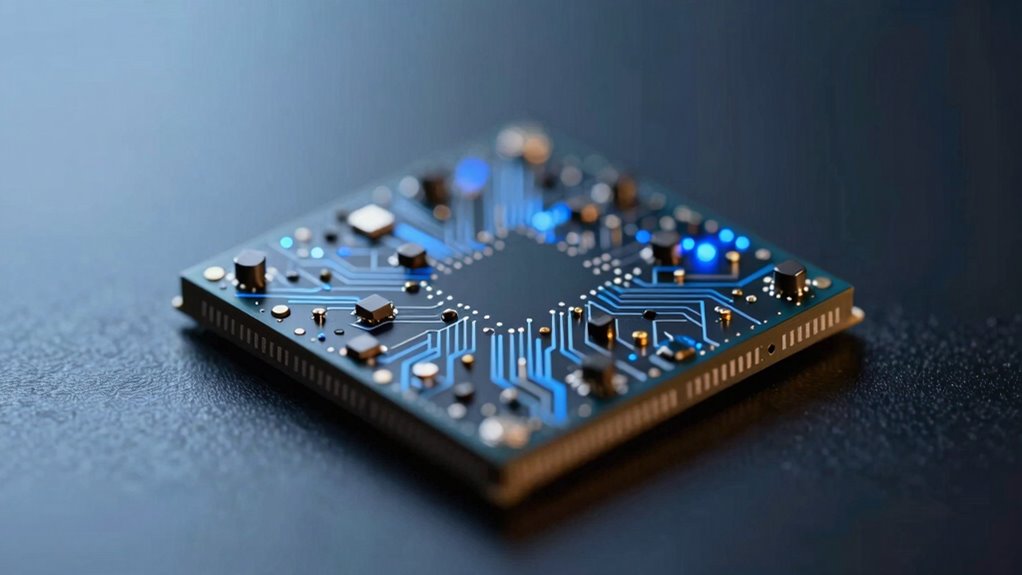
As technology advances at an unprecedented pace, semiconductor nanodevices are emerging as the cornerstone of next-generation hardware. These tiny components, often just a few nanometers in size, are revolutionizing the way we think about electronics. One of the key phenomena enabling this leap is quantum tunneling, which allows electrons to pass through barriers that would be insurmountable in larger devices. This effect becomes significant at the nanoscale, influencing how devices operate and demanding innovative approaches to design. While quantum tunneling presents challenges, it also opens doors for new functionalities, making nanodevices more efficient and faster.
Semiconductor nanodevices leverage quantum tunneling to unlock new functionalities at the nanoscale, revolutionizing future electronics.
Device miniaturization is at the heart of this transformation. Shrinking components means you can pack more transistors into the same space, boosting processing power without increasing the device’s physical footprint. This relentless drive to make devices smaller directly impacts performance, energy efficiency, and cost. As you push the limits of miniaturization, you enable more compact smartphones, powerful wearables, and advanced computing systems that were once thought impossible. The smaller the device, the less energy it consumes, which is *essential* for extending battery life and reducing heat dissipation. This miniaturization also enhances speed, as shorter electrical paths result in quicker signal transmission.
However, as you scale down to the nanoscale, quantum effects like tunneling become more pronounced, sometimes causing unintended leakage currents that can compromise device reliability. Engineers and scientists are actively working on strategies to control these quantum phenomena, so they can harness their benefits while minimizing drawbacks. Innovations in material science, such as the development of new high-k dielectrics and two-dimensional materials like graphene, help address these issues, ensuring nanodevices remain robust and functional.
The importance of semiconductor nanodevices for future hardware cannot be overstated. They enable continued device miniaturization in line with Moore’s Law, while also *unlocking* new possibilities with quantum mechanics. You’ll likely see these tiny devices powering everything from ultra-fast processors to quantum computers, transforming industries and daily life. As you embrace the era of nanotechnology, understanding how quantum tunneling and device miniaturization shape this landscape gives you a glimpse into a future where electronics become even more integrated, efficient, and powerful. The ongoing evolution of nanotechnology will redefine what’s possible in computing, communication, and beyond, cementing semiconductor nanodevices as *indispensable* building blocks for future hardware innovations.
Popular right now

Dyson Ball Animal 2 Plus Corded Vacuum

Vitamix Propel Series 510 Professional-Grade Blender, 3 Programs, Black

Breville Barista Pro Espresso Machine with Grinder, Brushed Stainless Steel
As an affiliate, we earn on qualifying purchases.
Frequently Asked Questions
How Do Nanodevices Compare Cost-Wise to Traditional Semiconductor Devices?
Nanodevices tend to have higher initial costs due to manufacturing complexity, but they offer significant cost reduction in the long run. Their smaller size and improved efficiency lower power consumption and material use, saving money over time. As production techniques improve, costs are expected to decrease further. So, while they’re pricier upfront, nanodevices can be more economical overall, especially for advanced, high-performance applications.
What Are the Environmental Impacts of Manufacturing Nanodevices?
Think of manufacturing nanodevices as tending a delicate garden. You must follow strict environmental regulations and adopt sustainability practices to prevent harm. The process can produce waste and use significant energy, risking pollution and resource depletion. However, by embracing eco-friendly methods, you can minimize negative impacts, ensuring that your technological growth doesn’t come at the environment’s expense. Responsible practices help balance innovation with ecological preservation.
How Scalable Are Nanodevices for Mass Production?
You can scale nanodevices for mass production, but quantum effects and material stability pose challenges. As device sizes shrink, quantum effects become more significant, potentially causing unpredictable behavior. Ensuring material stability is vital for consistent performance during large-scale manufacturing. Advances in fabrication techniques and materials help overcome these issues, making it increasingly feasible to produce nanodevices at a commercial scale, though ongoing research remains essential for widespread implementation.
What Are the Primary Challenges in Integrating Nanodevices With Existing Tech?
You face the challenge of integrating nanodevices with existing tech, where quantum effects and material stability collide. Quantum effects can cause unpredictable behavior, complicating device reliability, while material stability issues threaten long-term performance. Bridging this gap demands innovative manufacturing techniques and advanced materials. You must balance cutting-edge science with practical engineering to guarantee nanodevices seamlessly fit into current hardware, paving the way for future technological breakthroughs.
How Long Will Nanodevices Remain Relevant in Future Hardware Development?
Nanodevices will stay relevant in future hardware until quantum effects and material limitations challenge their effectiveness. As technology advances, these tiny devices push boundaries, but quantum effects become more pronounced at smaller scales, potentially causing unpredictable behavior. Material limitations might also restrict performance improvements. You should stay attentive because ongoing research aims to address these issues, ensuring nanodevices continue to play a vital role in next-gen hardware development.
Conclusion
As you embrace the future of hardware, remember that semiconductor nanodevices are revolutionizing technology. They’re 100 times smaller than traditional components, enabling faster, more efficient devices. With the potential to boost computing power by over 30% in just the next few years, these tiny tech marvels are set to transform everything from smartphones to supercomputers. Staying informed about this breakthrough can give you a front-row seat to the next wave of innovation.