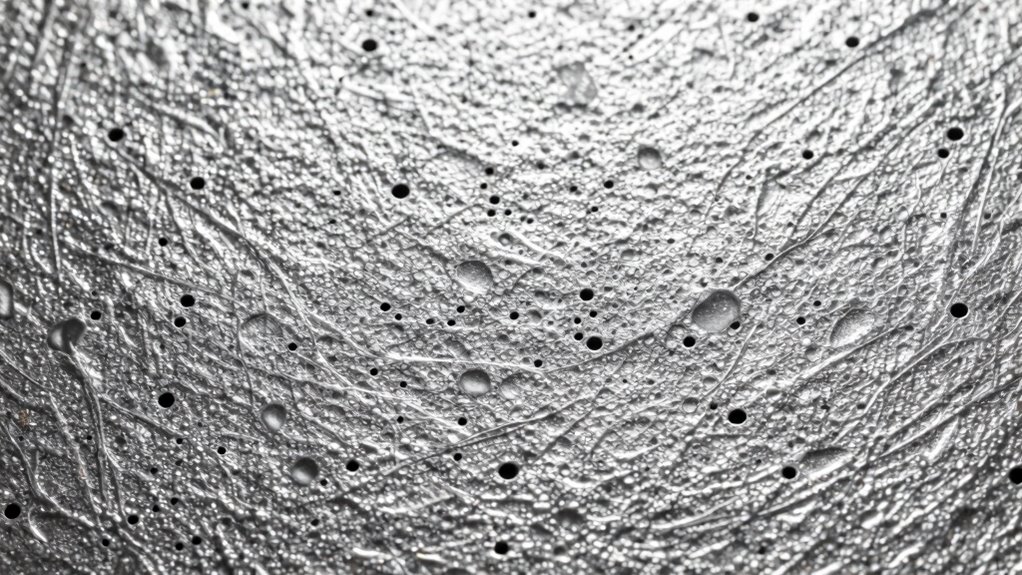

Nano-scale porosity boosts your material’s surface area, creating more active sites for reactions, filtration, and adsorption. This enhances catalytic efficiency, allows for precise separation of pollutants, and improves filtration performance. The tiny pores also facilitate faster molecular diffusion and internal flow, making devices smarter and more responsive. By engineering the internal structure, you can develop lighter, stronger, and more functional materials. Keep exploring, and you’ll discover how these advancements open new frontiers in technology and sustainability.
Key Takeaways
- Nano-scale porosity dramatically increases surface area, enhancing catalytic activity and chemical interactions.
- Tiny pores enable precise filtration, capturing contaminants beyond traditional filter capabilities.
- Engineered pore networks improve molecular diffusion, optimizing flow and reaction efficiency.
- Increased surface reactivity enhances sensor, catalytic, and environmental applications.
- Tailored pore sizes and structures allow customization for specific functional and performance goals.
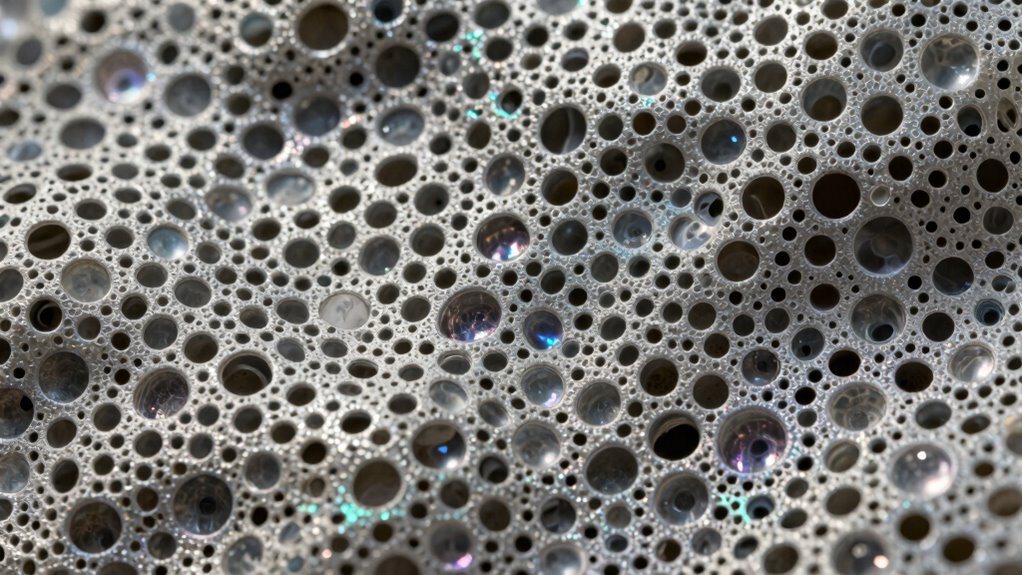
Nano-scale porosity revolutionizes material capabilities by enabling precise control over surface properties and internal structures. When you harness this tiny-scale porosity, you dramatically increase the surface area of a material, which directly enhances its functional performance. This surface area enhancement isn’t just about making materials bigger or more complex; it’s about creating a vastly more active interface at the microscopic level. The increased surface area allows more interaction sites, which can be crucial for catalytic processes or chemical reactions, but it’s especially impactful in filtration and separation technologies. With a greater surface area, you can trap smaller particles, gases, or liquids more efficiently, leading to significant improvements in filtration efficiency.
Nano-scale porosity boosts surface area, revolutionizing filtration, catalysis, and material performance through precise internal and surface control.
Imagine filtering pollutants from water or air—nano-porous materials excel here because their tiny pores can capture contaminants that traditional filters miss. This heightened filtration efficiency results from the increased number of active sites available for capturing or adsorbing unwanted particles. Furthermore, the uniformity and tunability of nano-scale pores mean you can customize these filters for specific applications, whether it’s removing heavy metals, bacteria, or organic compounds. You’ll find that the ability to fine-tune pore sizes makes these materials incredibly versatile, enabling precise separation and purification processes that were previously impossible or inefficient.
Beyond filtration, nano-scale porosity also transforms how materials interact with their environment. You get improved surface reactivity, which means catalytic surfaces become more efficient, or sensors become more sensitive. The internal structures, with their intricately designed pore networks, facilitate faster diffusion of molecules, which accelerates reactions or detection processes. This internal architecture can be engineered to optimize flow rates or reaction times, making devices more effective and responsive. Additionally, understanding the material capabilities of nano-scale porosity helps in designing smarter, more adaptable materials for a variety of cutting-edge applications.
In essence, by controlling nano-scale porosity, you access a new realm of material performance. You can design materials that are lighter, stronger, and more functional, all while maintaining or even reducing weight and resource consumption. These advancements open doors to innovations in medicine, energy, environmental protection, and electronics. Whether you’re developing advanced filtration systems, catalysts, or sensors, understanding and leveraging nano-scale porosity gives you the power to push the boundaries of what materials can do. It’s not just about making things smaller; it’s about making them smarter, more efficient, and perfectly tailored to meet the complex demands of modern technology.
![[Center]FortunaFlow Catalytic Converter Compatible with Nissan Versa 2012-2017 1.6L,Replace 16794(EPA Compliant high flow standard)](https://m.media-amazon.com/images/I/31c5Ik9OBpL._SL500_.jpg)
[Center]FortunaFlow Catalytic Converter Compatible with Nissan Versa 2012-2017 1.6L,Replace 16794(EPA Compliant high flow standard)
- Vehicle Compatibility: Fits Nissan Versa 2012-2018 1.6L
- EPA Compliant: Meets high flow standards and resolves code lights
- Important Purchase Info: Not for sale in CA, NY, CO, ME
As an affiliate, we earn on qualifying purchases.
As an affiliate, we earn on qualifying purchases.
Frequently Asked Questions
How Does Porosity at the Nano-Scale Affect Material Durability?
Nano-scale porosity can improve your material’s durability by enhancing nano structural stability and surface area optimization. These tiny pores distribute stress more evenly, reducing the chances of cracks and fractures. Additionally, increased surface area allows better interaction with environmental factors, making the material more resistant to corrosion and wear. Overall, controlling porosity at this scale strengthens your material, extending its lifespan and maintaining performance under demanding conditions.
Can Nano-Porous Materials Be Recycled or Reused Effectively?
Yes, nano-porous materials can be recycled and reused effectively through nano recycling and porous regeneration processes. You can break down these materials to recover valuable components or restore their porosity for new applications. By applying advanced techniques, you guarantee minimal loss of material properties and promote sustainability. This approach allows you to extend the lifespan of nano-porous materials, making them a more eco-friendly and cost-effective choice for various industries.
What Industries Benefit Most From Nano-Scale Porosity?
You’ll find industries like energy, healthcare, and filtration benefit most from nano-scale porosity. These sectors leverage nanoparticle enhancement and surface area optimization to improve efficiency and functionality. For example, in energy storage, nano-porous materials boost battery performance. In healthcare, they enable targeted drug delivery. Filtration systems use nano-scale pores for superior contaminant removal. This tiny porosity offers big advantages across these fields, transforming how products perform and last.
How Is Nano-Scale Porosity Measured Accurately?
You can accurately measure nano-scale porosity using surface characterization techniques like BET surface area analysis and pore size distribution measurements. These methods investigate the surface and pore structure at the nanoscale, revealing details about pore size, volume, and distribution. Recent studies show that combining multiple techniques, such as electron microscopy and gas adsorption, provides an extensive understanding, challenging earlier assumptions that single methods sufficed for precise measurements.
Are There Environmental Risks Associated With Nano-Porous Materials?
You should be aware that nano-porous materials can pose environmental risks, especially if they release nanoparticles into ecosystems, potentially affecting wildlife and human health. These concerns raise environmental impact questions and regulatory concerns, prompting authorities to develop safety guidelines. It is crucial to handle these materials responsibly, ensuring proper containment and disposal to minimize any adverse effects on the environment and comply with evolving regulations.
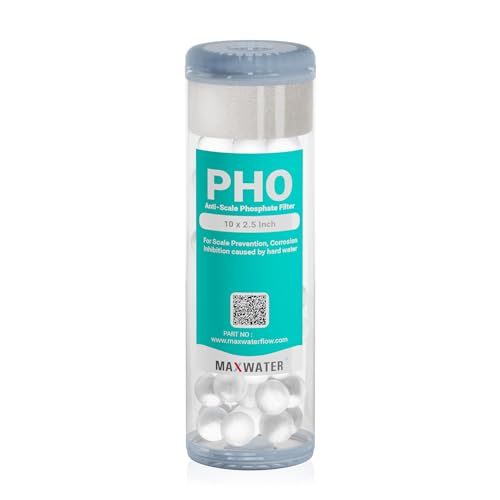
Max Water 10" x 2.5" Anti-Scale Water Filter Cartridge, Siliphos Polyphosphate (PHO) Replacement Filter, Fits Standard 10" Whole House Water Filtration System, Reduces Scale, Corrosion & Iron Staining
- Scale Prevention: Prevents scale buildup with Siliphos crystals
- Corrosion Protection: Forms protective layer on metal surfaces
- Long-Lasting Performance: Replace every 3 to 12 months
As an affiliate, we earn on qualifying purchases.
As an affiliate, we earn on qualifying purchases.
Conclusion
By now, you see how nano-scale porosity can dramatically boost a material’s capabilities, from increased strength to enhanced filtration. Did you know that materials with nano-porosity can have up to 50% more surface area? That’s like fitting twice as much functionality into the same space. So, next time you encounter advanced materials, remember that tiny pores are making a huge difference—redefining what’s possible in technology and industry.

Nanohybrid and Nanoporous Materials for Aquatic Pollution Control (Micro and Nano Technologies)
As an affiliate, we earn on qualifying purchases.
As an affiliate, we earn on qualifying purchases.

Advanced Functional Porous Materials: From Macro to Nano Scale Lengths (Engineering Materials)
As an affiliate, we earn on qualifying purchases.
As an affiliate, we earn on qualifying purchases.