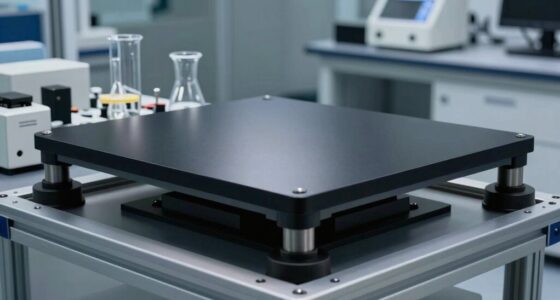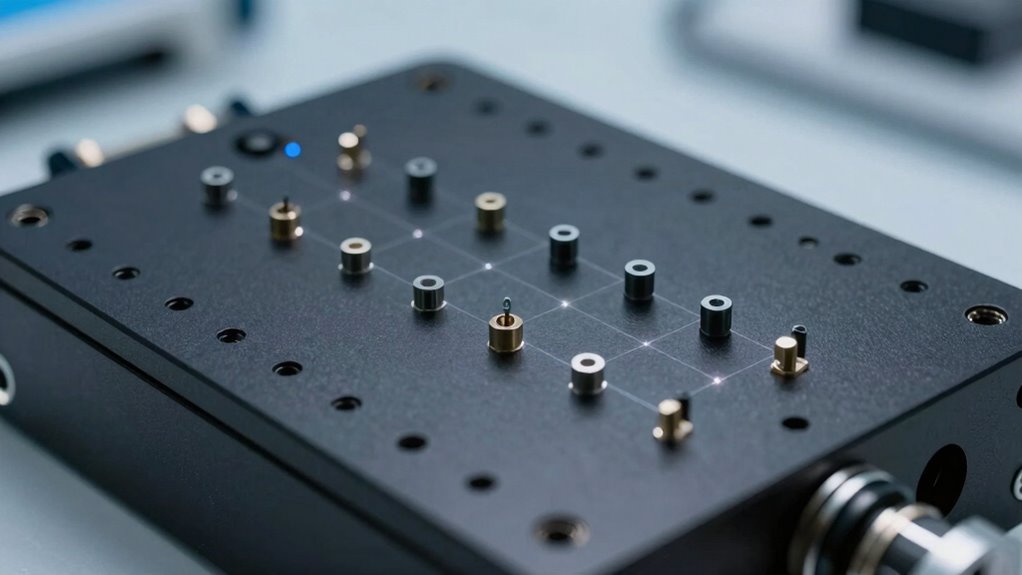

Optical breadboards are the foundation of any photonics or laser setup, and the right one depends on how much vibration isolation, mounting density and workspace you actually need. My top pick is the MOYEE Aluminum Honeycomb Optical Breadboard (350 x 500mm), because its honeycomb core and half-inch thickness deliver the stiffness that thin solid plates simply can’t match at this size. For compact bench work, the MOYEE 500 x 100 x 12mm breadboard stands out for its unusual long-rail format, while the Shrandi 100 x 100mm precision board makes sense as a low-cost entry point. The main tradeoff in this category is stiffness versus portability and price: honeycomb boards damp vibration better but cost more, while solid anodized plates are cheaper, lighter and easier to carry between stations. Keep reading for the full breakdown of all eight boards.

Get the latest gadgets delivered free with Prime
- Fast, free delivery on millions of items
- Prime Video, Amazon Music and more included
- Member-only deals all year
Complete the kit



Key Takeaways
- Honeycomb-core boards (MOYEE 350x500mm and the 100x300mm honeycomb model) outperformed solid plates for vibration damping, making them the picks for laser and interferometry work.
- Every board in this lineup uses the M6 thread standard, so buyers choosing based on existing posts and hardware won’t face compatibility issues — the differentiator is hole pitch, not thread.
- The 25x25mm hole spacing on the MOYEE 500x100mm rail gives double the mounting density of the 25mm-pitch M6 boards, which matters for crowded multi-component assemblies.
- Below roughly 150x150mm, the differences between boards mostly disappear — small solid plates are effectively commodity items, so price and flatness tolerance should drive the choice.
- Black anodizing appeared on nearly every model; the real finish differentiator was edge machining quality, where the Shrandi and MOYEE boards were cleaner than the generic plates.


| optical breadboard | Material | Dimensions |
|---|---|---|
| MOYEE Aluminum Honeycomb Optic | Aluminum honeycomb core | 350 x 500 mm |
| Optical Breadboard Plate | 6061 aluminum alloy, black anodized finish | 300 x 300 mm |
| MOYEE Aluminum Optical Breadbo | Aluminum, black hard anodized | 500 x 100 x 12 mm |
| Optical Aluminum Breadboard 10 | Aluminum alloy | 100 x 100 x 12 mm |
| Shrandi High Precision Aluminu | Aluminum alloy | 100 x 100 x 10 mm |
| 150x150mm Optical Breadboard P | Black anodized aluminum | 150 x 150 x 13 mm |
| Optical Aluminum Honeycomb Bre | Aluminum alloy, honeycomb core | 100 x 300 x 12 mm |
| 300 × 400 mm Optical Breadboar | Anodized aluminum | 300 × 400 mm |
More Details on Our Top Picks
MOYEE Aluminum Honeycomb Optical Breadboard, 0.5 Inch Thick, M6 Threaded Holes, 350mm x 500mm
This MOYEE honeycomb breadboard earns the top spot because it balances the three things that actually matter for optical work: flatness within 0.1mm, vibration damping, and a usable working area. At 350 x 500mm, it offers roughly triple the mounting real estate of the 100 x 100mm honeycomb board in this lineup, which means room for a full beam path rather than a single lens assembly. Compared with the solid MOYEE 500 x 100mm plate, the honeycomb core delivers better stiffness-to-weight ratio and dampens vibration instead of transmitting it — a real advantage if your bench sits on anything less than a granite slab. The tradeoff is the 12.7mm thickness: it flexes more under asymmetric loads than a full-thickness research-grade table, and MOYEE includes no warranty, so fit and finish issues are on you to catch early.
Pros:- High precision flatness within 0.1mm for stable optical setups
- Rigid honeycomb structure offers excellent stiffness-to-weight ratio and vibration damping
- Black anodized finish reduces light reflection and resists corrosion
- Available in multiple sizes for different lab configurations
Cons:- No manufacturer warranty
- Relatively thin (0.5″) compared to heavier-duty optical tables
Best for: Graduate researchers and photonics labs building multi-element beam paths who need damping and decent surface area on a budget
Not ideal for: Anyone running interferometry or sub-micron alignment — the 0.5-inch thickness lacks the mass and rigidity of a true optical table
- Brand:MOYEE
- Material:Aluminum honeycomb core
- Dimensions:350 x 500 mm
- Thickness:0.5 inch (12.7 mm)
- Surface Flatness:Within 0.1 mm
- Mounting Holes:M6 threaded, 25 mm grid
- Finish:Black anodized
- Warranty:None
Our verdict“The most versatile board here — buy it if you need a real working surface with vibration damping, skip it if your experiments demand table-grade rigidity.”
Optical Breadboard Plate, Black Anodized Aluminum with M6 Tapped Mounting Holes (300 x 300mm)
What separates this 300 x 300mm plate from the pack is its 0.05mm flatness tolerance — twice as tight as the MOYEE honeycomb board — which matters most when you’re stacking post assemblies and need every mount landing on the same plane. The 6061 aluminum alloy and black anodized finish make it a durable, low-reflectance surface, and the addition of Ø5 through-holes alongside the 36 M6 tapped holes gives mounting flexibility that none of the other boards here match, since they’re threaded on the top surface only. That said, it’s a solid plate, not a honeycomb structure, so it transmits more vibration than the MOYEE honeycomb picks. Also flag the listing inconsistency: the title says 300 x 300mm while the description references 150 x 150mm — confirm the actual size with the seller before ordering.
Pros:- High 0.05mm flatness tolerance for accurate experimental setups
- Durable 6061 aluminum alloy construction with black anodized finish
- Flexible mounting with 36 M6 tapped holes plus Ø5 through-holes
- Compact and portable at 0.8 kg while remaining stable
Cons:- Product listing has inconsistent size information (title says 300x300mm, description says 150x150mm)
- Relatively small working surface may limit larger optical setups
Best for: Precision alignment work — laser collimation, fiber coupling, metrology fixtures — where tight flatness is non-negotiable
Not ideal for: Vibration-sensitive experiments on shared benches, since the solid plate lacks honeycomb damping
- Material:6061 aluminum alloy, black anodized finish
- Dimensions:300 x 300 mm
- Thickness:13 mm
- Hole Pattern:M6 threaded holes in 25 x 25 mm grid
- Number of M6 Holes:36
- Additional Holes:Ø5 through-holes
- Flatness Tolerance:0.05 mm
- Weight:0.8 kg
Our verdict“The flattest surface in this roundup — pick it for alignment-critical work, but verify the dimensions before you buy.”
MOYEE Aluminum Optical Breadboard, Black Anodized, 25x25mm M4/M6 Tapped Holes (500x100x12mm)
This long, narrow MOYEE plate is essentially a linear optical rail in breadboard form, and that shape is its whole argument. A 500 x 100mm footprint suits collinear setups — laser, irises, lenses, detector in a straight line — far better than the squarer 300 x 300mm plate, which wastes width on that kind of layout. Its standout feature is the dual M4 and M6 tapping: every other board here is M6-only, so this is the one to get if your mounts mix metric post sizes. The solid aluminum construction gives it honest flatness, but it lacks the honeycomb core of MOYEE’s own 350 x 500mm board, so it’s stiffer per millimeter yet worse at damping vibration. And like the rest of the MOYEE line, there’s no warranty, plus the listing’s width figure appears mislabeled, so double-check the specs before ordering.
Pros:- Black anodized surface reduces stray light reflection for optical work
- Dual M4/M6 tapped holes on a 25x25mm grid offer flexible fixture mounting
- Solid aluminum plate maintains high flatness for precise optical alignment
- Multiple thickness options (9mm/12mm) for different experimental loads
Cons:- No manufacturer warranty included
- Item width listed as 100 inches appears to be a listing error
- Narrow footprint limits 2D layout flexibility
Best for: Anyone building straight-line laser trains or microscope illumination paths with mixed M4/M6 hardware
Not ideal for: Two-dimensional optical layouts — the 100mm width can’t fit side-by-side components or folded beam paths
- Brand:MOYEE
- Material:Aluminum, black hard anodized
- Dimensions:500 x 100 x 12 mm
- Hole Spacing:25 x 25 mm
- Thread Sizes:M4, M6
- Thickness Options:9 mm, 12 mm
- Core Structure:Solid aluminum
Our verdict“A purpose-built strip for collinear beam paths — ideal if your experiment runs in a straight line, restrictive if it doesn’t.”
Optical Aluminum Breadboard 100x100x12mm, M6 Threaded Honeycomb Core Platform for Optical Experiments
At 100 x 100mm and just 0.3kg, this honeycomb platform is the true minimalist option in the lineup — light enough to bolt onto a linear stage, a gimbal, or inside an enclosure where a full breadboard won’t fit. It shares the honeycomb vibration damping of the larger MOYEE honeycomb board but packages it in a footprint you can reposition mid-experiment without disturbing the rest of your setup. The anodized finish holds up against handling and corrosion, and the M6 grid on 25mm spacing accepts standard posts. The obvious cost is capacity: a 100mm square fits a lens mount and a mirror, maybe two, whereas even the Shrandi 100 x 100mm board at least offers flush countersunk fasteners for clean stacking. Also note only the top surface is threaded, so multi-angle configurations are out. For a teaching demo or a detector fixture, though, it’s a tidy solution.
Pros:- Rigid aluminum honeycomb construction provides high stability and vibration damping
- Anodized surface resists corrosion and wear
- Evenly spaced M6 threaded holes enable secure mounting of optical components
- Compact and lightweight design suits space-constrained lab setups
Cons:- Small 100x100mm size limits larger optical setups
- Only top surface is threaded, limiting flexible configurations
Best for: Instrument builders and educators needing a tiny, mountable damping platform inside assemblies or demo kits
Not ideal for: Multi-component optical trains — four square inches of grid fill up after two or three mounts
- Dimensions:100 x 100 x 12 mm
- Material:Aluminum alloy
- Core Structure:Honeycomb
- Thread Size:M6 x 1.0
- Hole Grid Spacing:25 mm
- Surface Finish:Anodized
- Weight:0.3 kg
Our verdict“A pocket-sized damping platform — perfect for embedded fixtures, too small to be anyone’s main breadboard.”
Shrandi High Precision Aluminum Optical Breadboard, 100 × 100 × 10 mm, M6 Threaded Holes
The Shrandi’s defining feature is its countersunk M6 holes, which let fasteners sit flush with the surface — something none of the other boards here offer, including the otherwise similar 100 x 100mm honeycomb platform. That flush mounting matters when you want to stack this board on another plate, slide components across the surface, or clamp it flat against a stage without bolt heads interfering. It’s a plain aluminum alloy plate rather than a honeycomb build, so it won’t damp vibration like the honeycomb picks, and at 10mm it’s the thinnest board in this batch. The bigger frustration is the listing itself: the spec table quotes dimensions in inches that don’t square with the 100 x 100mm title, so measure the delivered part before committing it to a design. As a clean, low-profile mounting surface for a detector or single optic, though, it does the job.
Pros:- Aluminum alloy construction keeps weight low at 1.15 pounds
- M6 threaded holes support securing optical components
- Countersunk holes allow flush fastener installation for stacking
Cons:- The listed dimensions may not match the 100 × 100 mm size in the title
- Solid plate lacks honeycomb damping of competing boards
- Thinnest board in the lineup at 10 mm
Best for: Builders who need a thin, flush-fastened sub-plate for stacking inside larger assemblies or on stages
Not ideal for: Vibration-isolated setups or anything requiring more than a few mounted components
- Manufacturer:Shrandi
- Material:Aluminum alloy
- Dimensions:100 x 100 x 10 mm
- Thickness:10 mm
- Hole Type:M6 threaded, countersunk
- Hole Spacing:25 x 25 mm
- Weight:1.15 pounds (0.52 kg)
Our verdict“Choose it when flush hardware and low profile matter more than damping or surface area — and verify the size on arrival.”
150x150mm Optical Breadboard Plate, Black Anodized Aluminum with M6 Tapped Mounting Holes
This plate earns its place as the compact precision option in the lineup. Where the Shrandi 100 × 100mm board feels cramped for anything beyond a single beam path, this 150mm footprint gives enough real estate for a source, a mount, and a detector without forcing the buyer up to the 300 × 400mm plate. The 13mm thickness is the key differentiator here — thicker than the 10mm Shrandi and the 12mm honeycomb boards, which translates to better damping and less flex when components hang off the edge. The black anodized finish keeps stray reflections down, a real benefit over unfinished plates during alignment work. The tradeoff is straightforward: anyone building a multi-element system will outgrow 150mm quickly, and the tapped-hole pattern won’t accommodate sprawling stage assemblies.
Pros:- High-accuracy flat surface holds alignment over repeated reconfiguration
- 13mm thickness adds stiffness compared to thinner 10-12mm competitors
- Black anodized finish resists corrosion and suppresses stray reflections
- M6 tapped holes match the most common optical mount standard
Cons:- 150mm footprint is genuinely limiting for multi-component setups
- No honeycomb core, so vibration damping falls short of dedicated isolation designs
Best for: Graduate students and lab builders assembling a single beam path — laser diode, mount, and detector — on a tight bench footprint
Not ideal for: Anyone planning multi-stage optical trains or interferometry setups; the 150mm surface runs out of space after two or three components
- Dimensions:150 x 150 x 13 mm
- Material:Black anodized aluminum
- Mounting Holes:M6 tapped
- Type:Optical flat breadboard plate
- Surface Finish:Black anodized (low reflection)
- Flatness:High accuracy
Our verdict“The right pick when a single beam path needs a solid, flat, corrosion-resistant platform without paying for surface area you won’t use.”
Optical Aluminum Honeycomb Breadboard with M6 Tapped Holes, 100 x 300 x 12 mm
The standout feature here is vertical mounting via 90° mounting plates — something no other board in this roundup offers, including the larger MOYEE 350 × 500mm honeycomb. That alone makes this the pick for optical elevations, periscope builds, or crowded benches where a horizontal plate simply won’t fit. The elongated 100 × 300mm geometry suits beam paths that travel in a line, unlike the square 150 × 150mm plate, which favors compact clusters. The honeycomb core keeps weight down while the solid aluminum alloy skin resists bending. Compared with the 100 × 100mm honeycomb platform elsewhere in this guide, the extra length buys room for a displacement stage or adjustment frame. The honest tradeoff: honeycomb construction trades some rigidity against solid plates, and heavy stacks of components may reveal that limit.
Pros:- Vertical mounting capability via 90° plates, unique in this lineup
- Elongated 300mm length fits linear beam paths and translation stages
- Lightweight honeycomb core reduces load on support posts
- Anodized black surface minimizes unwanted reflections
Cons:- Honeycomb core is less rigid than solid aluminum plates under heavy or asymmetric loads
- 100mm width is narrow, constraining perpendicular component placement
Best for: Builders running long linear beam paths or needing to mount optics vertically on a post or frame
Not ideal for: Rigidity-first applications like precision interferometry, where a solid thick plate — such as the 13mm 150mm board — is the safer choice
- Material:Aluminum alloy, honeycomb core
- Dimensions:100 x 300 x 12 mm
- Thread Size:M6
- Surface Finish:Anodized black
- Mounting Orientation:Horizontal or vertical (90° mounting plates)
- Application:Optical experiments, vibration isolation, displacement stages
Our verdict“Buy this if your optical axis runs in a straight line or points upward; skip it if you need a stiff platform for heavy, clustered hardware.”
300 × 400 mm Optical Breadboard Plate with M6 Tapped Mounting Holes
This is the largest plate in the batch, and size is the entire argument. At 300 × 400mm, it nearly doubles the working area of the 300 × 300mm black anodized plate reviewed elsewhere in this guide, which matters when a setup grows beyond a laser and two mirrors into something with beam splitters, stages, and a camera. The black and white anodized finish is a practical touch — the two-tone grid makes it easier to eyeball component spacing and document layouts than a uniform black surface does. The M6 hole array keeps it drop-in compatible with the same mounts used on the smaller boards, so a mixed bench works fine. What buyers give up is portability: this plate is meant to live on a bench, not move between stations, and the listing offers less detail on flatness tolerance than the 150mm high-accuracy plate — a real question for precision alignment work.
Pros:- Largest working area in this batch, fitting full multi-element optical trains
- Two-tone black and white finish aids layout planning and documentation
- M6 tapped holes match the standard mounts used across this lineup
- Anodized aluminum resists corrosion and everyday bench wear
Cons:- Flatness accuracy is not specified, a concern for precision alignment applications
- Large footprint makes it impractical for crowded benches or portable setups
Best for: Hobbyists and lab users building multi-component optical systems who have outgrown 100–150mm plates
Not ideal for: Anyone who needs documented flatness tolerances for metrology-grade alignment, or who needs a portable board to move between setups
- Dimensions:300 × 400 mm
- Material:Anodized aluminum
- Finish:Black and white two-tone
- Mounting Holes:M6 tapped
- Type:Optical breadboard plate
- Best Use:Multi-component bench setups
Our verdict“The most surface area per purchase here — pick it when your setup has outgrown compact plates and you value layout room over documented tolerances.”

How We Picked
I ranked these eight breadboards against four buyer-relevant criteria. First, structural stiffness and damping: honeycomb-core construction scores higher than solid plate because it resists flex and absorbs vibration, which is the whole point of a breadboard rather than a plain metal sheet. Second, mounting flexibility — hole pitch, thread consistency and edge-hole access determine how densely you can populate a setup without running out of tapped positions. Third, build and finish quality: anodizing uniformity, burr-free tapped holes and machined edges affect both corrosion resistance and how smoothly mounts seat against the surface. Fourth, value relative to size class, since a 100 x 100mm board and a 350 x 500mm board are judged against different expectations.
The ranking logic follows use case. Larger honeycomb boards sit at the top because they serve serious optical experiments; mid-size solid plates fill the value tier for teaching labs and hobbyist setups; and the small plates rank lower only because their roles are narrower, not because they are poorly made. Where two boards are nearly identical on paper, I gave the edge to cleaner machining and more consistent hole patterns, since those are the flaws you discover too late to return.
Factors to Consider When Choosing Optical Breadboards
Before settling on a specific board, it helps to understand what actually separates a useful optical breadboard from an expensive sheet of metal. These are the factors that shaped my rankings and the ones most buyers underestimate.Solid Plate vs. Honeycomb Core
This is the single biggest fork in the road. A solid aluminum plate is stiff for its footprint when small, but as dimensions grow past roughly 300mm, a solid plate starts to transmit floor vibration and ring when tapped — exactly what you don’t want under a laser cavity. A honeycomb core sandwiches an aluminum cell structure between two skins, which adds thickness and damping without much weight penalty. The common mistake is buying a large solid plate to save money, then fighting unexplained beam wander for months. If your experiments involve interferometry, microscopy or anything vibration-sensitive, honeycomb pays for itself. For static mounts, beam blocks and teaching demos, solid plate is perfectly adequate and cheaper.
Thread Standard and Hole Pitch
All eight boards here use M6 threads, which is the dominant standard in Asian and European optics supply — but if your lab runs on Imperial hardware, mixing M6 with 1/4-20 posts means adapters everywhere and chronic frustration. Check what your existing mounts use before ordering, not after. Pitch matters just as much as thread: 25mm spacing is the workhorse pattern that matches most commercial optomechanics, while tighter grids like the 25x25mm arrangement on long rails let you squeeze in more components at the cost of slightly weaker material between holes. Undersized or oversized holes that don’t quite match your hardware are a chronic problem on generic plates, so buy from makers that publish tolerance specs.
Thickness, Flatness and Rigidity
Thickness drives stiffness more than buyers expect: a 12mm plate is dramatically more rigid than an 8mm one of the same footprint, because stiffness scales with the cube of thickness. Flatness is the other hidden spec — a board that bows even a few tenths of a millimeter will tilt every post mounted on it and make aligning a beam path needlessly painful. Most budget listings don’t publish flatness data at all, which itself is a signal. For small boards used as risers or mounting plates, flatness barely matters. For anything carrying a full optical path, treat unspecified flatness as a red flag and favor sellers who at least claim a machined surface.
Size: Buy for the Experiment, Not the Desk
The most common sizing mistake is buying a board that exactly fits today’s setup, leaving zero room for the beam path you’ll add next month. A useful rule of thumb is to take your current component footprint and add at least 30 to 50 percent margin, plus clearance along the intended beam axis. On the other end, oversizing has real costs: bigger boards are heavier, harder to move, need more bench space, and push you into honeycomb pricing. Long narrow formats like 500 x 100mm make sense as dedicated rail sections for folded paths, while square boards suit general-purpose assembly. Match the geometry to the optical layout, not to aesthetics.
Surface Finish and Corrosion Resistance
Black anodizing isn’t cosmetic — it suppresses stray reflections, which in a laser lab can be the difference between a clean setup and constant scattered-light noise on your detector. Anodizing also hardens the surface against scratches from sliding mounts. What varies between boards is execution: cheap plates sometimes have anodizing inside the tapped holes, which can bind threads or flake into your optics. Look for boards where holes are described as tapped after finishing, or expect to run a tap through stubborn holes once when the board arrives. Edges matter too: raw saw-cut edges on generic plates can be sharp enough to cut cables and hands.
When to Pay More — and When Not To
Paying more makes sense when you’re buying stiffness: the jump from solid plate to honeycomb is the one upgrade in this category that changes physical performance. Below that, premium pricing on small solid plates usually buys nicer edges and marginally better anodizing, which is pleasant but rarely worth a large premium. A good strategy for growing labs is to buy one mid-size honeycomb board as the core platform, then add cheap small plates as sub-assemblies and risers around it. That way the vibration-critical path sits on the good board, and everything static sits on the cheap ones. Avoid the trap of buying several mid-price boards hoping to combine them later — bolted-together boards never behave like one continuous surface.
Frequently Asked Questions
Can I bolt two smaller breadboards together to make a larger surface?
You can physically join them, but you shouldn’t treat the result as one breadboard. The seam between two boards is a stiffness discontinuity, and any component straddling the joint will sit at a slightly different height and tilt than components on continuous material. Thermal expansion also acts differently across the seam, so alignment drifts with temperature. If you need a 400 x 400mm working area, buying a single 300 x 400mm or 350 x 500mm board gives better results than two 200 x 400mm plates side by side. Where multiple small boards do work well is as independent, repositionable sub-assemblies on a larger base surface — that’s a legitimate and common lab practice.
Is M6 or 1/4-20 threading better for my setup?
Neither is objectively better; compatibility with what you already own is everything. M6 is the standard across Asian and most European optomechanics, while 1/4-20 dominates North American supply. Every board in this roundup is M6, so if your posts, cage systems and mounts are Imperial, you’ll be threading adapters constantly, and adapters add height error and wobble under load. Mixing standards within one setup also makesborrowed or replacement hardware a recurring headache. My suggestion: pick one standard for the whole lab and stick with it, and only choose M6 boards like these if that standard is metric.
Do I actually need a honeycomb core, or is a solid plate enough?
It depends on what happens on the board. If you’re holding static components — beam blocks, a fixed laser head, a camera mount — a solid plate does the job and saves money. If anything on the board is sensitive to vibration or alignment drift, such as an interferometer, a cavity, or a beam path longer than a few tens of centimeters, honeycomb construction earns its premium because the core damps the resonant ringing that solid plates exhibit. Size pushes the decision too: solid plates stay acceptable up to roughly 300mm, but beyond that flex and vibration transmission become noticeable. As a tiebreaker, if you can’t yet name a vibration-sensitive application, start with solid plate and upgrade later — solid plates never become useless, they just get demoted to riser duty.
How flat does a breadboard need to be for typical optics work?
For general beam steering and mounting, a flatness tolerance in the range of 0.1 to 0.2mm across the surface is usually fine, since post-and-mount stacks have far more tilt error than that on their own. Interferometry and precision metrology push requirements down to tens of microns or better, which is where cheap unbranded plates fall short — most simply don’t publish a flatness number. The practical check when a board arrives is to mount two posts at opposite corners and lay a straightedge or stretched thread across the tops; visible mismatch signals a problem worth returning. Also remember that a board bolted to an uneven table can be bent into non-flatness, so mount it on three points or a known-flat surface.
What’s the difference between a breadboard and an optical table?
A breadboard is a relatively thin plate — 8 to 20mm in this category — meant to sit on a desk, shelf or existing table and provide a regular grid of tapped holes. An optical table is a much thicker structure, typically 50mm to 300mm, with tuned vibration isolation (often pneumatic legs) designed to make the surface the quietest place in the room. Breadboards handle routine experiments and prototyping; optical tables handle the vibration-floor-limited work like holography or precision metrology. A common and cost-effective middle path is placing a good honeycomb breadboard on a heavy, damped surface, which captures much of the isolation benefit at a fraction of the cost. If your measurements are limited by floor vibration rather than your optics, that’s your cue to move up to a table.
Conclusion
Matching the board to the buyer is straightforward once the use case is clear. For best overall, the MOYEE Aluminum Honeycomb Optical Breadboard (350 x 500mm) wins on stiffness, damping and usable area — it’s the board a serious setup grows into. The best value pick is the 300 x 300mm black anodized plate, which delivers a full working surface at solid-plate pricing without giving up finish quality. For beginners and students, the Shrandi 100 x 100mm precision board is the smart entry: small, cheap and forgiving while you learn post-and-mount assembly, with the 150 x 150mm plate as the natural step up. The best pick for specific needs splits two ways — the MOYEE 500 x 100mm rail for folded beam paths and dense 25x25mm mounting, and the 100 x 300mm honeycomb board when you need damping in a long, narrow footprint. Whichever direction you take, the deciding factors remain the same: honeycomb for vibration-sensitive work, solid plate for everything else, and always a size larger than today’s layout demands.