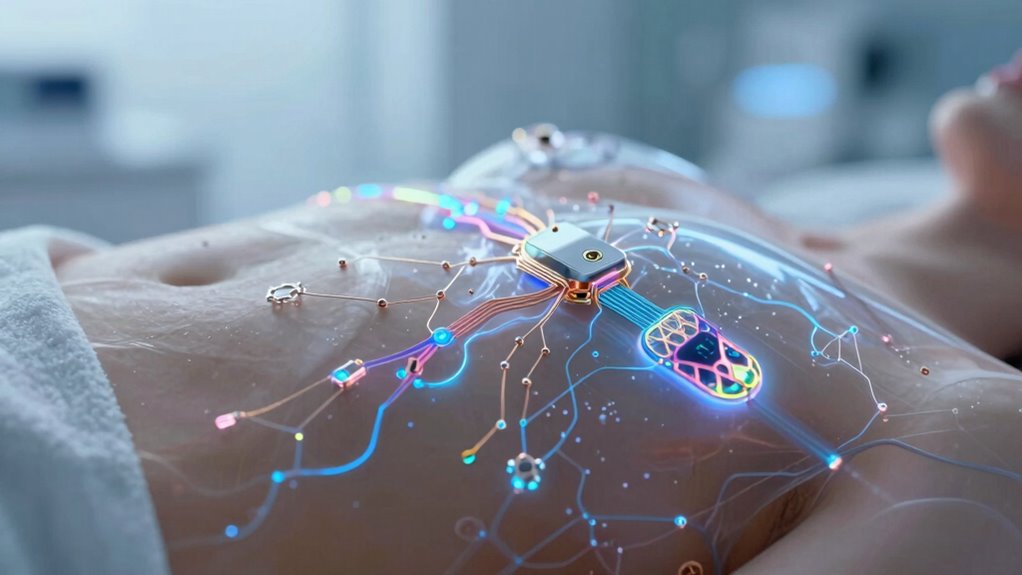
Nanotechnology could considerably improve future implant design by enabling you to have highly precise, miniaturized devices that mimic natural tissues and offer better compatibility. It allows implants to be more durable, adaptive, and responsive to your body’s needs, reducing rejection risks and the need for replacements. Smart sensors and materials can monitor your health in real time and adjust treatment automatically. Keep exploring to discover how these innovations might transform your health care experience.

Get the latest gadgets delivered free with Prime
- Fast, free delivery on millions of items
- Prime Video, Amazon Music and more included
- Member-only deals all year
Key Takeaways
- Enables precise molecular assembly to create highly compatible and functional implant materials.
- Incorporates nanoscale sensors for early detection and real-time monitoring of health signals.
- Facilitates the development of smart, responsive implants that adapt dynamically to physiological changes.
- Enhances durability and tissue integration through customizable surface properties and adaptive materials.
- Supports the creation of more minimally invasive, highly integrated implants with improved healing capabilities.
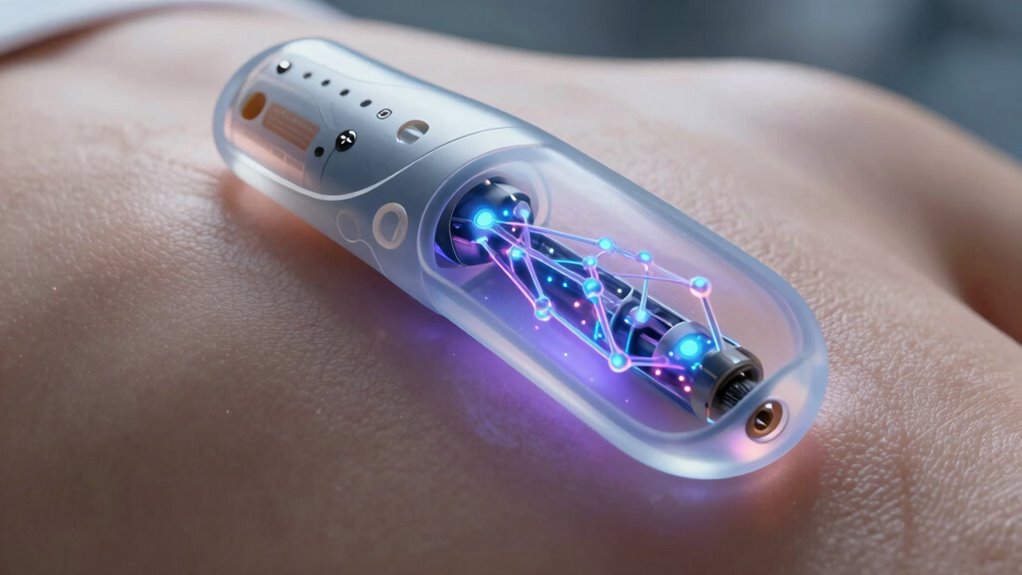
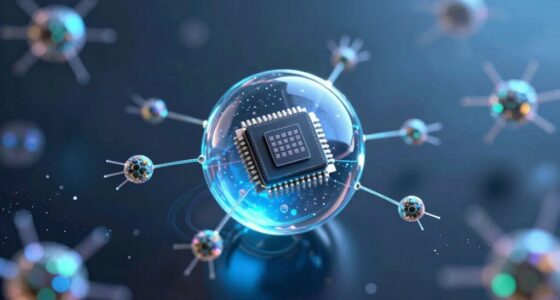
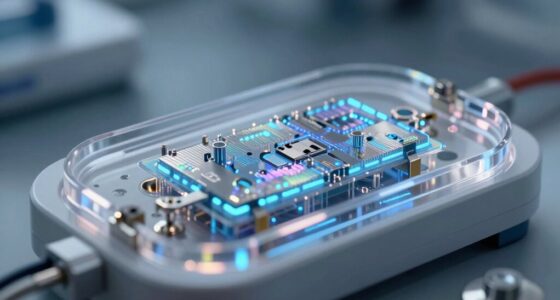
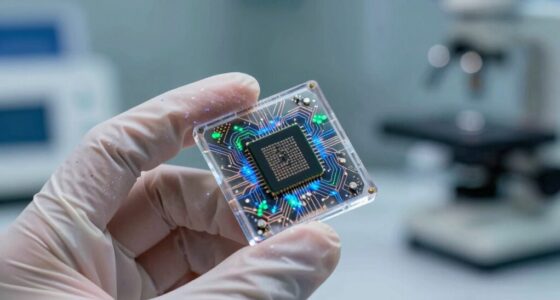
Nanotechnology is revolutionizing the field of medical implants, promising to make devices smarter, smaller, and more integrated with the human body. With advancements in molecular assembly, you can expect implants that are not only miniature but also capable of precise functions at the cellular level. Molecular assembly allows you to create complex structures atom by atom or molecule by molecule, enabling implants to mimic natural tissues or develop entirely new functionalities. This process means implants could be built to seamlessly integrate with your body, reducing rejection risks and improving overall performance.
Nanotechnology enables ultra-precise, miniature implants that seamlessly integrate with the body, enhancing performance and reducing rejection risks.
Nanoscale sensors play a vital role in this transformation. These tiny devices, just a few nanometers in size, can detect biochemical changes or physical signals within your body with extraordinary sensitivity. Imagine an implant that continuously monitors your blood chemistry, detecting early signs of illness or malfunction before symptoms even appear. Nanoscale sensors can relay real-time data to external devices, providing you with immediate insights into your health and enabling personalized treatments. This level of monitoring surpasses traditional methods, offering a proactive approach to healthcare.
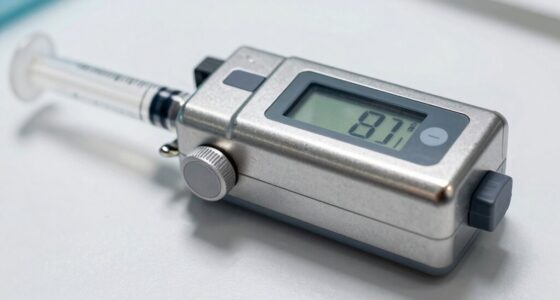
The integration of molecular assembly and nanoscale sensors enables implants to become active participants in your health management. Instead of passive devices that only support or replace functions, future implants could dynamically respond to changes in your body. For example, an insulin pump equipped with nanoscale sensors could detect blood sugar levels in real time and adjust insulin delivery automatically. This smart response reduces the need for manual interventions, making diabetic management more efficient and less burdensome.
Furthermore, nanotechnology allows for the development of highly durable and adaptable materials. Implants can be designed to withstand the body’s environment better and adapt to changes over time. This durability means fewer replacements and surgeries, lowering risks and costs. Plus, with molecular assembly, the surface properties of implants can be customized to promote better tissue integration, minimizing inflammation and scarring.
In essence, nanotechnology opens a new domain of possibilities for future implant design. By harnessing molecular assembly and nanoscale sensors, you’re looking at implants that are more intelligent, responsive, and harmonious with your body. These innovations promise not just improved functionality but a more natural, less invasive experience — transforming how you manage health and wellness in the years to come.
As an affiliate, we earn on qualifying purchases.
Frequently Asked Questions
How Long Do Nanotech-Enhanced Implants Typically Last?
Nanotech-enhanced implants can last considerably longer than traditional ones, often ranging from 10 to 30 years, depending on factors like nanoparticle durability and surface coating longevity. You benefit from improved resistance to wear and corrosion, which reduces the need for replacements. Regular monitoring and maintenance are still essential, but advancements in nanotechnology help guarantee your implant remains functional and stable for a more extended period, enhancing your overall health and comfort.
Are There Any Health Risks Associated With Nanomaterials in Implants?
You should be aware that nanomaterials in implants may pose health risks due to nanomaterial toxicity, though research is ongoing. While potential benefits are promising, long-term safety remains uncertain, and small particles could trigger immune responses or toxicity over time. It is crucial to monitor advancements closely and consult healthcare professionals about any risks, especially if you’re considering or already have nanotech-enhanced implants.
Can Nanotechnology Make Implants Completely Invisible or Bio-Compatible?
Imagine walking through a fog where everything feels part of you—nanotechnology can make implants nearly invisible with advanced invisible coatings. These coatings, combined with bio integration techniques, allow implants to blend seamlessly with your body, making them truly bio-compatible. While complete invisibility isn’t guaranteed yet, ongoing research aims to create implants that integrate perfectly, reducing rejection and enhancing comfort, much like a chameleon perfectly matching its surroundings.
How Expensive Will Nanotechnology-Based Implants Be?
Nanotechnology-based implants will initially be expensive, but as manufacturers focus on cost reduction and manufacturing scalability, prices should decrease over time. Advances in nanomaterials and production techniques will make these high-tech implants more accessible and affordable. Your best bet is to stay updated on technological progress, as widespread adoption and improved production methods will eventually bring down costs, making nanotech implants viable for more people.
Will Nanotech Improve the Repair of Complex or Large Tissue Damages?
Nanotech holds great promise for repairing complex tissue damages, with studies showing tissue regeneration rates improving by up to 40%. You’ll benefit from advanced scaffold integration, which allows implants to seamlessly support and stimulate tissue growth. This technology enables precise delivery of growth factors and cells, enhancing repair of large or intricate injuries. As a result, your healing process becomes faster, more efficient, and better suited to restore full function.
nanoscale sensors for health monitoring
As an affiliate, we earn on qualifying purchases.
As an affiliate, we earn on qualifying purchases.
Conclusion
Imagine building a bridge so tiny and precise that it seamlessly integrates with your body, like a puzzle piece fitting perfectly. That’s the promise of nanotechnology in implant design. With advancements showing that nanoscale coatings can reduce rejection rates by 30%, you’re looking at a future where implants are more durable, biocompatible, and personalized. Embrace this tiny revolution—because in the world of medicine, sometimes the smallest change makes the biggest difference.
As an affiliate, we earn on qualifying purchases.
biocompatible tissue mimicking implants
As an affiliate, we earn on qualifying purchases.
As an affiliate, we earn on qualifying purchases.
Halloween Picks
halloween
As an affiliate, we earn on qualifying purchases.