
Nano surface chemistry helps you control adhesion and release by designing nanoscale structures and adjusting surface energy. You can create surfaces with textures like ridges or pores to increase or decrease contact area, affecting how materials stick or detach. By modifying surface energy through chemical treatments, you can make surfaces more adhesive or non-stick as needed. Exploring these techniques further reveals powerful ways to develop smarter materials for various applications.
Key Takeaways
- Nanostructure design influences contact area and contact points, controlling adhesion strength and ease of release.
- Modulating surface energy at the nanoscale adjusts material attraction or ease of detachment.
- Combining nanostructures with surface energy control enables precise regulation of adhesion properties.
- Surface modifications responsive to stimuli create smart surfaces with tunable adhesion and release behaviors.
- Understanding nanostructure interactions allows for tailored surface functionality across medical, industrial, and manufacturing applications.
Have you ever wondered how tiny changes at the surface level can dramatically influence a material’s behavior? With nano surface chemistry, even the smallest modifications can have outsized effects, especially when it comes to controlling adhesion and release. This field explores how nanostructure interactions and surface energy modulation work together to fine-tune how surfaces stick or let go, which is vital in industries ranging from medical devices to manufacturing.
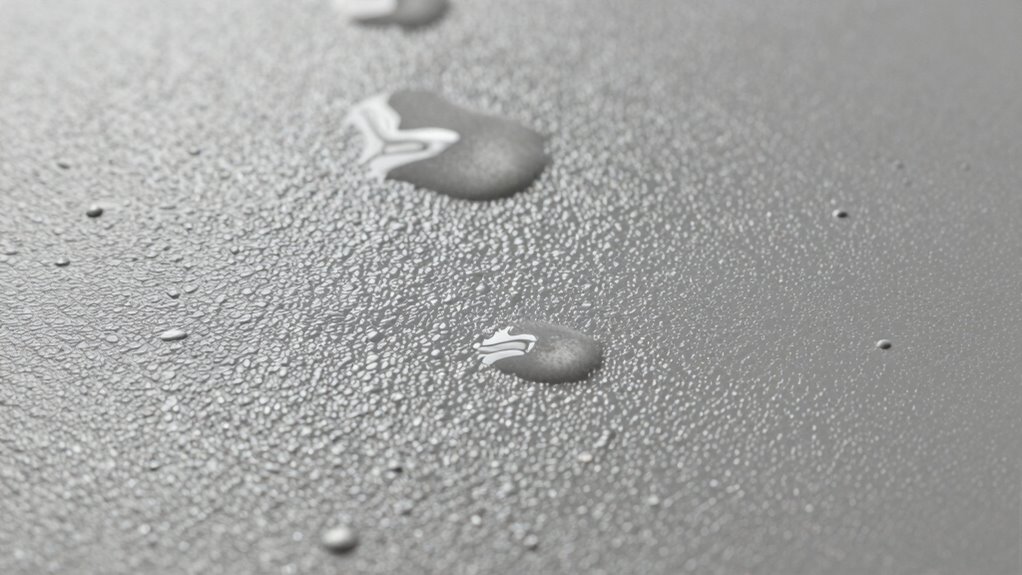
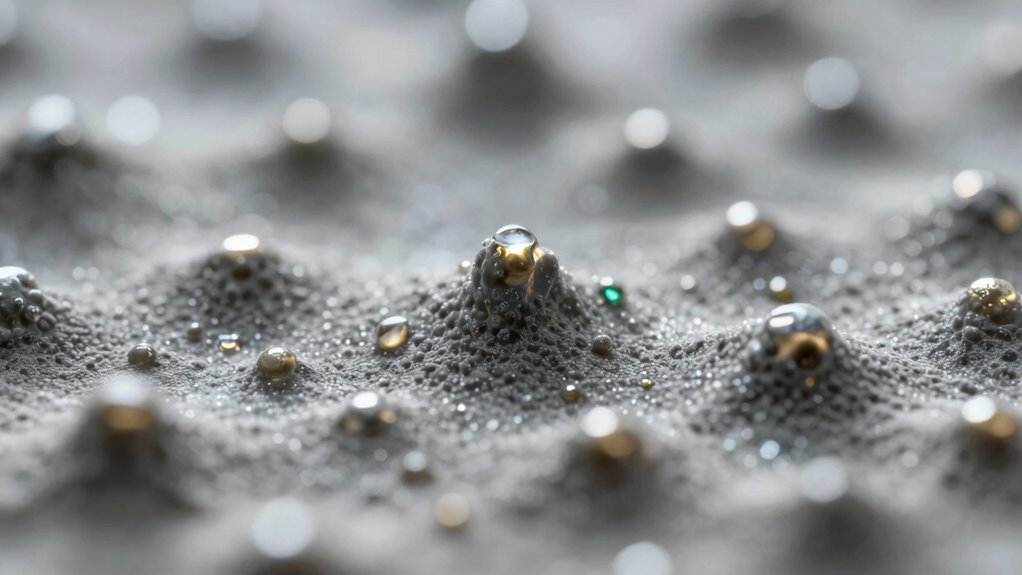
Nanostructure interactions are at the core of this control. When you manipulate the surface at the nanoscale, you’re altering the way molecules and particles interact with it. By designing specific nanostructures—like tiny ridges, pores, or textures—you can influence how strongly substances adhere to the surface. For instance, creating a rougher surface at the nanoscale can reduce contact points with an adhering material, decreasing adhesion. Conversely, smooth nanostructures might increase contact area, enhancing bonding. This precise control allows you to engineer surfaces that either promote adhesion for stability or minimize it for easy release, depending on your needs. Additionally, nanostructure design can be tailored to respond to external stimuli, enabling smart surface functionalities. Understanding how these nanostructures interact at the molecular level is essential for developing responsive surfaces that adapt to changing conditions.
Nanostructure design at the nanoscale controls how surfaces interact, boosting or reducing adhesion for tailored applications.
Surface energy modulation is another key aspect. You can adjust the surface energy to influence how materials interact at the interface. High surface energy surfaces tend to attract and hold onto other materials more strongly, making them ideal for applications where adhesion is necessary. On the other hand, lowering surface energy makes it easier for substances to detach, which is essential for applications like non-stick coatings or drug delivery systems. By applying chemical treatments, coatings, or grafting specific molecules onto the surface, you change its surface energy. These modifications can be fine-tuned at the nanoscale to create the perfect balance for adhesion or release.
When you combine nanostructure interactions with surface energy modulation, you gain a powerful toolkit for controlling adhesion and release. For example, you might design a nanostructured surface with low surface energy to prevent unwanted sticking, then modify certain areas to increase surface energy where adhesion is needed. This level of control allows for innovative solutions, like smart adhesives that can be turned on or off or medical implants that resist fouling but allow easy removal when necessary.
Ultimately, nano surface chemistry provides you with the ability to engineer surfaces with precision, making it possible to tailor the interaction between materials at the smallest scales. As you manipulate nanostructure interactions and modulate surface energy, you access new possibilities for controlling adhesion and release, leading to smarter, more efficient, and more versatile material designs. Understanding nanostructure interactions is crucial because it directly impacts how surfaces behave at the molecular level.

Denir Bonee 2 PCS Quick Effect Coating Agent, Nano-Quick Ceramic Coating Pro, Revolutionary Nano Spray for Car Detailing for Dust-Proof Glass Effect and Lasting Luster, 3.5 fl.oz
- Nano Technology for Waterproof Coating: Creates a durable, glossy, waterproof surface
- Scratch Repair and Restoration: Fills minor scratches and restores gloss easily
- Long-Lasting High-Gloss Finish: Resists water, dirt, and pollutants for durability
As an affiliate, we earn on qualifying purchases.
As an affiliate, we earn on qualifying purchases.
Frequently Asked Questions
How Does Nano Surface Chemistry Differ From Traditional Surface Treatments?
Nano surface chemistry differs from traditional treatments by leveraging nano-specific interactions to precisely modify surface properties. You benefit from surface energy modification at the nanoscale, which allows for more targeted control over adhesion and release. Unlike conventional methods, nano treatments create a tailored surface environment that enhances or reduces adhesion based on your needs, offering improved performance, durability, and functionality through molecular-level adjustments.
Can Nano Surface Modifications Be Applied to All Material Types?
Imagine a chameleon adapting seamlessly to its surroundings—that’s how nano surface modifications work across various materials. While they can be applied to many, material compatibility and application limitations exist. Some substrates may require specific techniques or might not respond well. You need to take into account these factors, as not all materials are equally suited for nano treatments, which can influence adhesion control and release performance.
What Are the Long-Term Stability Effects of Nano Surface Coatings?
You’ll find that nano surface coatings generally offer good long-term stability, especially when durability testing confirms resistance to wear and corrosion. Environmental factors like moisture, temperature changes, and UV exposure can impact coating performance over time. By selecting coatings with proven environmental resistance, you guarantee sustained adhesion control and release properties, maintaining surface functionality. Regular durability testing helps identify potential degradation, so you can optimize coatings for your specific conditions.
How Eco-Friendly Are Nano Surface Chemistry Processes?
Nano surface chemistry processes can be quite eco-friendly, especially when manufacturers use eco-friendly alternatives like water-based solutions and non-toxic materials. These options reduce environmental impact by minimizing harmful chemicals and waste. You can promote sustainability by choosing nanocoatings with environmentally conscious formulations, which help decrease pollution and energy consumption during production. Overall, advancing eco-friendly nano surface chemistry supports both effective adhesion control and a healthier planet.
Are There Any Health Risks Associated With Nano Surface Chemicals?
Think of nano surface chemicals like tiny warriors—powerful but potentially risky. You should be aware of health implications and prioritize chemical safety, as some nano particles might pose inhalation or skin contact hazards. While many are tested for safety, ongoing research is essential to fully understand their long-term effects. Always follow safety guidelines, use protective gear, and stay informed to minimize risks associated with nano surface chemicals.
nanostructured surface treatment for adhesion control
As an affiliate, we earn on qualifying purchases.
As an affiliate, we earn on qualifying purchases.
Conclusion
By understanding nano surface chemistry, you can precisely control adhesion and release processes, making your designs more efficient and effective. Notably, studies show that nanostructured surfaces can reduce adhesion by up to 90%, opening new possibilities in industries like healthcare and manufacturing. Embracing these nanotechnologies allows you to tailor surfaces for specific needs, enhancing performance and longevity. So, by harnessing nano surface chemistry, you’re at the forefront of innovative, smarter material design.

Biomimetic and Bioinspired Materials (Smart Innovations and Technological Advancements in Mechanical and Materials Engineering)
As an affiliate, we earn on qualifying purchases.
As an affiliate, we earn on qualifying purchases.

Plasma Surface Modification and Plasma Polymerization
As an affiliate, we earn on qualifying purchases.
As an affiliate, we earn on qualifying purchases.