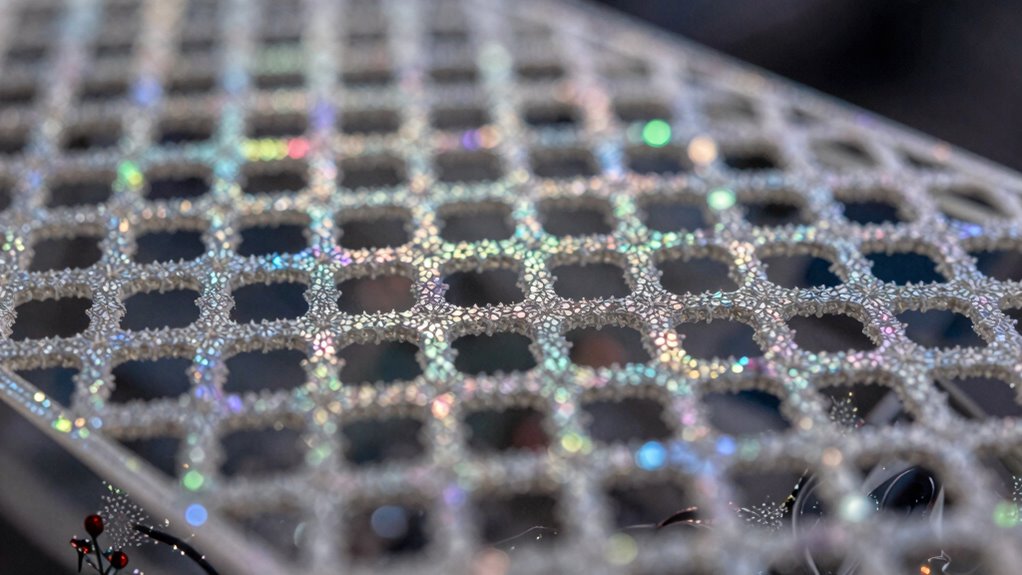
Nanostructured materials keep appearing in next-gen designs because they offer unique quantum effects and high surface areas that enhance performance, efficiency, and customization. These materials allow you to create lighter, stronger, and more responsive solutions across industries like electronics, aerospace, and energy. Their ability to be precisely engineered for specific functions means you can push technological boundaries farther than ever before. Keep exploring to discover how these innovations are shaping the future of material design.
Open a free Amazon Business account
Business pricing, bulk buying and tax-exempt orders.
As an affiliate, we earn on qualifying purchases.
Key Takeaways
- Nanostructured materials offer enhanced performance through quantum effects and increased surface area.
- Their customizable surface chemistry enables tailored interactions for specific applications.
- They enable the development of lighter, stronger, and more efficient components across industries.
- Their unique properties facilitate innovative functions like targeted drug delivery and advanced sensing.
- They represent a paradigm shift in material design, fostering smarter, more adaptable technological solutions.
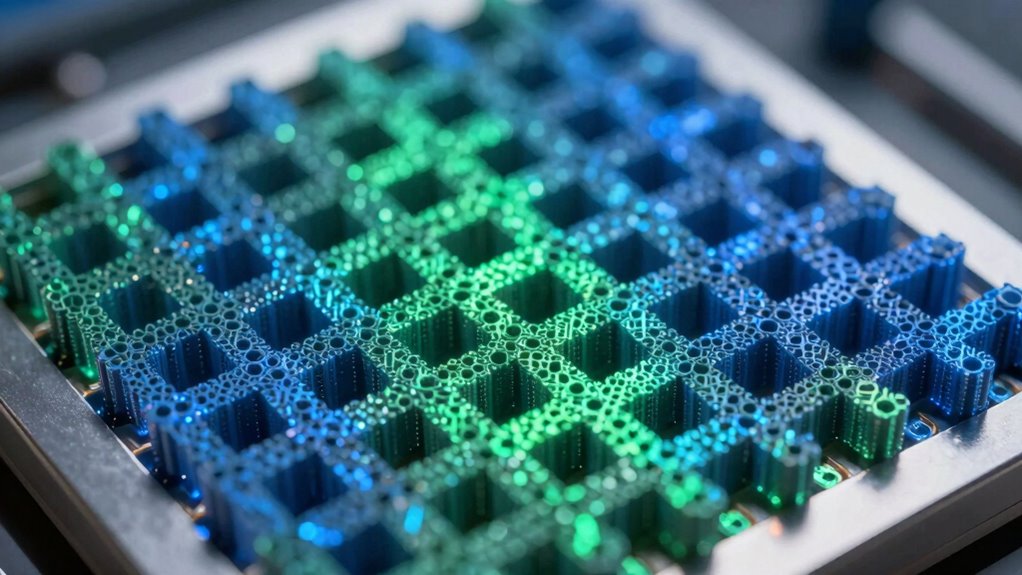
Nanostructured materials are revolutionizing the way we approach next-generation designs by offering unprecedented control over properties at the atomic and molecular levels. This ability to manipulate matter on such a tiny scale opens doors to innovations that weren’t possible before. You see, at these dimensions, quantum effects become significant—they influence electrical, optical, and magnetic behaviors in ways that bulk materials simply can’t achieve. For example, quantum confinement can boost the efficiency of solar cells or create entirely new electronic devices with faster, more energy-efficient performance. This makes nanostructured materials especially attractive for cutting-edge applications where every atom counts. Additionally, understanding the role of surface chemistry**** is crucial because it determines how these materials interact with their environment, further expanding their potential uses. The interplay between surface properties and quantum effects is key to unlocking their full capabilities.
Nanostructured materials harness quantum effects for innovative, efficient, and atomic-level controlled next-generation technologies.
Surface engineering plays an essential role in optimizing these materials. When you work at the nanoscale, the surface-to-volume ratio skyrockets, meaning surface properties dominate the behavior of the material. By precisely engineering surfaces—adding coatings, creating nanostructures, or modifying surface chemistry—you can tailor how these materials interact with their environment. This control allows you to enhance corrosion resistance, improve biocompatibility, or increase catalytic activity, depending on the application. Surface engineering empowers you to fine-tune the material’s performance, making nanostructures more versatile and adaptable for next-gen tech.
One of the main reasons nanostructured materials keep appearing in innovative designs is their ability to deliver superior performance with less material. Because of their high surface area and quantum effects, they often exhibit enhanced strength, lighter weight, or better conductivity compared to traditional materials. For instance, in aerospace or automotive sectors, using nanostructured composites can lead to lighter, stronger components, helping improve fuel efficiency and safety. In electronics, smaller, faster transistors leverage nanomaterials’ unique properties, pushing the boundaries of computing power. Moreover, the high surface area of nanostructured materials not only enhances their physical properties but also facilitates more efficient interactions in catalytic or sensor applications.
Moreover, the flexibility of nanostructured materials means you can engineer them for specific functions, whether that’s creating highly responsive sensors, advanced drug delivery systems, or energy storage devices. It’s not just about making things smaller—it’s about accessing new functionalities that were previously impossible. As research continues to deepen our understanding of quantum effects and surface engineering, these materials will become even more integral to next-generation designs.
In essence, you’re witnessing a paradigm shift. Nanostructured materials give you the tools to design smarter, more efficient, and more adaptable solutions. Their ability to leverage quantum effects and surface engineering ensures they stay at the forefront of innovation, shaping the future across industries.
nanostructured materials for electronics
As an affiliate, we earn on qualifying purchases.
As an affiliate, we earn on qualifying purchases.
Frequently Asked Questions
How Cost-Effective Are Nanostructured Materials for Large-Scale Manufacturing?
Nanostructured materials can be cost-effective for large-scale manufacturing, but it depends on your cost analysis and scalability challenges. While their unique properties might justify higher initial costs, scaling production often introduces challenges like maintaining quality and controlling expenses. To improve cost-effectiveness, focus on optimizing manufacturing processes and developing cheaper synthesis methods, which can help overcome scalability hurdles and make these materials more viable for widespread use.
What Environmental Impacts Do Nanostructured Materials Have During Production?
You might find it surprising, but during production, nanostructured materials can pose environmental toxicity risks and contribute to resource depletion. As you work with them, consider that their synthesis often involves harmful chemicals and energy-intensive processes, which can harm ecosystems. Being aware of these impacts helps you make more sustainable choices, like developing greener manufacturing methods or recycling nanomaterials, ultimately reducing their environmental footprint.
How Do Nanostructured Materials Behave Under Extreme Temperatures?
Nanostructured materials often exhibit high thermal stability, allowing them to withstand extreme temperatures without degrading. You’ll notice they resist phase changes that typically occur in bulk materials, maintaining their unique properties even under heat. This stability makes them ideal for applications in harsh environments, such as aerospace or electronics, where they perform reliably. Their ability to endure temperature fluctuations guarantees your designs remain durable and efficient in extreme conditions.
Are There Any Long-Term Durability Concerns With Nanostructured Components?
Think of nanostructured components like fragile glass sculptures—you need to ensure long-term stability carefully. You might worry about degradation mechanisms over time, which can cause performance loss or failure. While these materials offer remarkable properties initially, their durability depends on factors like environmental exposure and mechanical stress. To consider longevity, ongoing research aims to understand and mitigate these issues, making nanostructured components more reliable for future applications.
What Are the Current Regulatory Challenges for Using Nanomaterials?
You face regulatory challenges because existing frameworks often don’t fully address nanomaterials’ unique properties. Safety assessments are complex, requiring detailed data on environmental and health impacts. Regulatory agencies are still developing standards, which can delay approvals and increase costs. To navigate this, you must stay updated on evolving regulations, conduct thorough safety evaluations, and engage with policymakers to help shape all-encompassing guidelines for nanomaterials’ safe and effective use.
nanostructured composites aerospace
As an affiliate, we earn on qualifying purchases.
As an affiliate, we earn on qualifying purchases.
Conclusion
Nanostructured materials are like the hidden threads weaving the fabric of future innovations. Their unique properties open possibilities, transforming designs from simple sketches into intricate masterpieces. As you explore their potential, remember that these tiny structures hold the power to reshape industries and redefine what’s possible. Embrace this nano-era, for it’s the loom where the next-generation tapestry of technology is spun—complex, vibrant, and endlessly fascinating.
nanomaterials for energy storage
As an affiliate, we earn on qualifying purchases.
As an affiliate, we earn on qualifying purchases.
As an affiliate, we earn on qualifying purchases.
NFL season / tailgating Picks
team gear
As an affiliate, we earn on qualifying purchases.