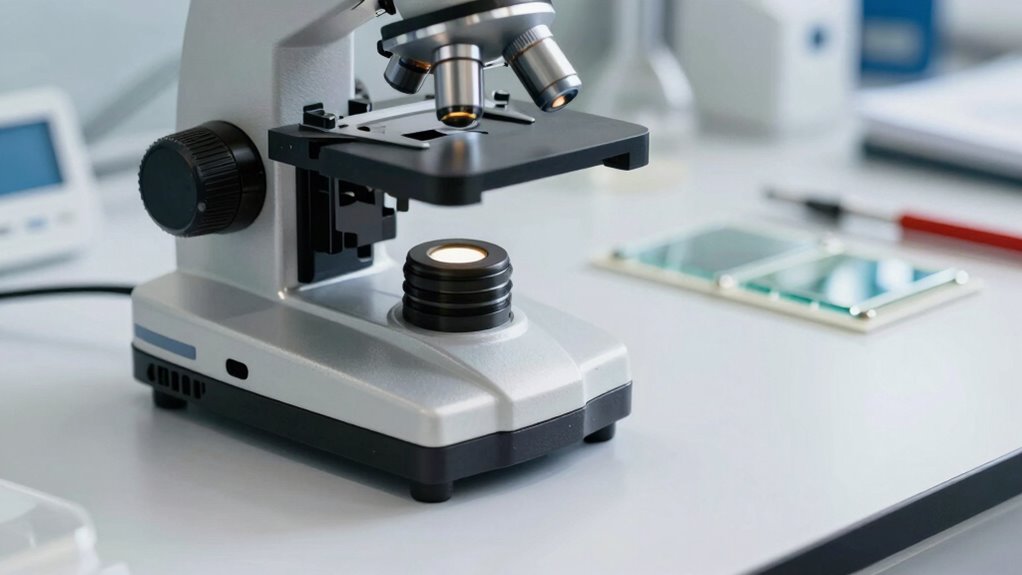

Before purchasing a lab microscope, consider its digital imaging capabilities, ergonomic design, and build quality to guarantee it fits your research needs. Look for models with high-resolution cameras, adjustable eyepieces, and sturdy frames that reduce vibrations. Advanced features like digital connectivity and accessory compatibility can boost productivity. To make the best choice, compare options and test different models if possible. Keep exploring to discover how these factors can help you find the perfect microscope for your work.
Key Takeaways
- Prioritize digital imaging features for accurate documentation and easy sharing of sample data.
- Ensure ergonomic design to reduce fatigue during extended use and promote natural posture.
- Check build quality and optical flexibility for stability, high magnification, and future expandability.
- Verify advanced features like automation, connectivity, and compatibility with accessories for efficiency.
- Compare models thoroughly, read reviews, and test in person to find intuitive controls matching your research needs.
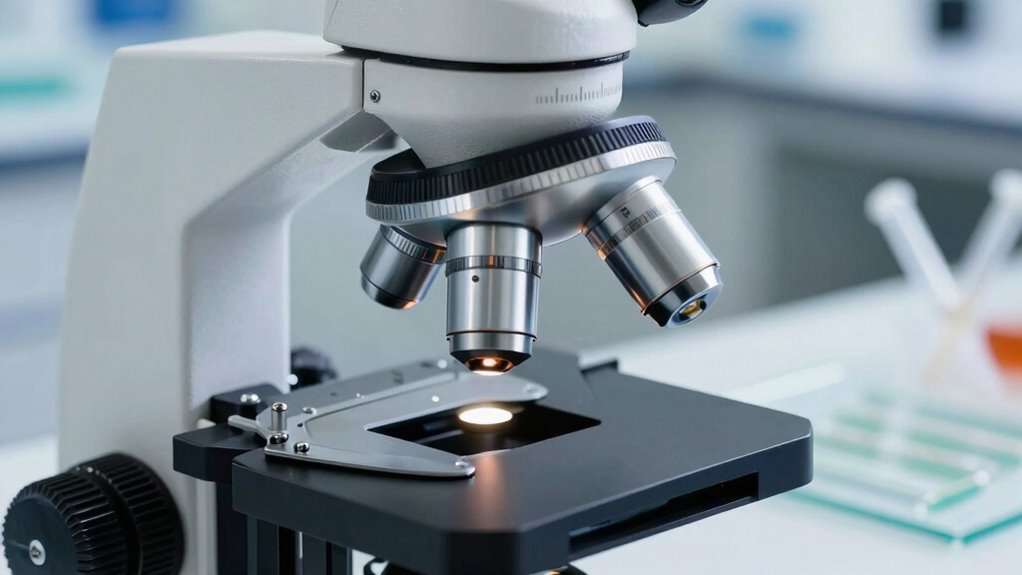
When choosing a lab microscope, understanding your specific needs and the features that matter most can make all the difference. One of the key aspects to assess is whether the microscope offers robust digital imaging capabilities. Digital imaging allows you to capture high-resolution images of specimens, which is essential for documentation, analysis, and sharing findings with colleagues or in reports. If you anticipate needing to photograph or record samples frequently, verify the microscope has an integrated camera or compatibility with external imaging devices. High-quality digital imaging features can save you time and improve your accuracy when analyzing samples, making it a worthwhile investment.
Prioritize digital imaging features for accurate documentation and efficient sample analysis in your lab microscope.
Equally important is the ergonomic design of the microscope. Since you’ll likely spend long periods using it, an ergonomic setup reduces fatigue and strain on your neck, back, and eyes. Look for models with adjustable eyepieces, comfortable focusing knobs, and a body that promotes natural posture. Features like a tiltable head or adjustable stand can considerably improve your comfort during extended sessions. Don’t overlook the importance of proper lighting and control placement; easy-to-reach, intuitive controls help maintain focus and speed up your workflow. An ergonomic design isn’t just about comfort—it directly impacts your productivity and the quality of your work.
Beyond these considerations, think about the overall build quality and stability of the microscope. A sturdy frame minimizes vibrations that can blur your images, especially when working at high magnifications. Consider the magnification range and whether it suits your typical samples; some microscopes offer modular lenses or objectives, giving you flexibility for different applications. Also, examine the illumination system—LED lights are common for their longevity and consistent brightness, but ensure the brightness can be adjusted smoothly to match your sample requirements. Additionally, understanding the importance of biodiversity and the role of microscopes in studying tiny organisms and ecological samples can help you make a more informed choice. Exploring advanced features like automation and digital connectivity can further enhance your microscopy experience, especially for complex or repetitive tasks. Moreover, investing in a microscope with expandable capabilities can allow you to upgrade or customize your setup as your needs evolve.
Furthermore, evaluating the availability of training resources and technical support from manufacturers can be valuable, especially if you’re new to microscopy or working with complex models. A good understanding of user interface design can also significantly improve your efficiency and ease of operation. Finally, usability features like intuitive controls, a user-friendly interface, and compatibility with various accessories can streamline your workflow. Before buying, compare models, read reviews, and if possible, test the microscope in person. Taking these steps will guarantee you pick a model that fits your needs perfectly, saving you time and frustration in the long run. Remember, a good lab microscope isn’t just about magnification—it’s about the right combination of digital imaging, ergonomic comfort, build quality, and ease of use to support your scientific work effectively.

Andonstar AD246S-M HDMI Digital Microscope 2000x for Adults, 3 Lens 2160P UHD Video Record, 7 Inch LCD Soldering Microscope for Electronics Repair, Error Coins, Pro Boom Arm Stand, Windows Compatible
【Andonstar 3 Lens Digital Microscope for Adults】: Lens L for Soldering and Repairing: Can be used to repair…
As an affiliate, we earn on qualifying purchases.
As an affiliate, we earn on qualifying purchases.
Frequently Asked Questions
What Is the Average Lifespan of a Lab Microscope?
The average lifespan of a lab microscope is around 10 years, but proper microscope maintenance can extend this considerably. By regularly cleaning lenses, ensuring optical clarity, and servicing moving parts, you prevent damage and degradation. High-quality microscopes, with attentive care, can last 15 years or more. Investing in good maintenance routines helps preserve the instrument’s performance and accuracy, making your investment worthwhile over time.
How Often Should I Calibrate My Microscope?
Think of your microscope as a finely-tuned instrument that needs regular care. You should calibrate it at least once a month, or more often if you use it daily or for critical work. Proper microscope maintenance and consistent calibration frequency guarantee accurate results. Skipping calibration can lead to blurry images or measurement errors, so don’t neglect it—make it part of your routine to keep your microscope performing at its best.
Are Refurbished Microscopes as Reliable as New Ones?
Refurbished microscopes can be just as reliable as new ones if they undergo proper testing and quality control. While new microscopes typically offer better durability and the latest features, refurbished models often provide excellent microscope durability at a lower price. Just make certain you buy from a reputable source that offers warranties and guarantees. This way, you’ll get a dependable instrument without sacrificing performance, whether you choose refurbished vs new.
What Accessories Are Essential for Beginners?
For beginners, essential accessories include a variety of slides and coverslips, but don’t overlook magnification options and lighting techniques. While high magnification can reveal intricate details, proper lighting guarantees clarity and reduces eye strain. You need adjustable LED or mirror lighting to optimize visibility. These accessories work together—magnification options help you see more, lighting techniques ensure you see clearly—making your microscopy experience both effective and enjoyable.
Can a Lab Microscope Be Used for Both Biological and Industrial Purposes?
Yes, a lab microscope can be used for both biological and industrial purposes, but your effectiveness depends on sample preparation and optical clarity. For biological samples, you’ll need proper slides and staining techniques, while industrial uses might require specific lenses or illumination. Make sure the microscope offers adjustable features for different applications, ensuring clear, detailed views. This versatility allows you to switch between tasks without hassle.

10X Microscope Eyepieces Accessories for Optical Microscope Eyepieces Biological Microscopes Lens Adapters for Microscopes
High Quality: The optical microscope eyepiece is made of high-quality material and is durable and durable. Customers can…
As an affiliate, we earn on qualifying purchases.
As an affiliate, we earn on qualifying purchases.
Conclusion
Before you make your lab microscope purchase, remember that choosing the right model depends on your specific needs and budget. Did you know that the global microscope market is expected to reach $1.8 billion by 2027? This shows how essential microscopes are across various fields. So, take your time, compare features, and verify it fits your goals. A well-chosen microscope will serve you well and elevate your scientific explorations.

Herwicm Compound Trinocular Microscope 40X-5000X Magnification, Research Grade Professional Microscope, Two Levels of Mechanical Stage LED Illumination, USB Video Camera with Microscope for Adults
Laboratory professional microscope: 195 flat-field achromatic objective lens can magnify up to 40X, 100X, 250X, 400X, 1000X and…
As an affiliate, we earn on qualifying purchases.
As an affiliate, we earn on qualifying purchases.
Herwicm Compound Trinocular Microscope 40X-5000X Magnification, Research Grade Professional Microscope, Two Levels of Mechanical Stage LED Illumination, USB Video Camera with Microscope for Adults
Laboratory professional microscope: 195 flat-field achromatic objective lens can magnify up to 40X, 100X, 250X, 400X, 1000X and…
As an affiliate, we earn on qualifying purchases.
As an affiliate, we earn on qualifying purchases.