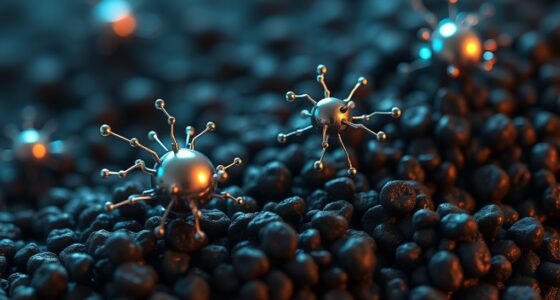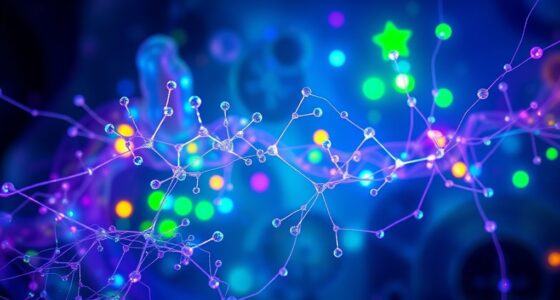
Bio-sensors powered by nanotechnology, like quantum dots, use tiny particles to detect biological molecules with high sensitivity and specificity. They offer multiplexed detection, meaning you can identify multiple targets simultaneously, and are resistant to photobleaching for consistent results. Functionalized surfaces improve selectivity and stability in biological environments. These advanced sensors are transforming diagnostics and environmental monitoring. Keep exploring to discover how these innovations are shaping the future of biological analysis and healthcare.

Get the latest gadgets delivered free with Prime
- Fast, free delivery on millions of items
- Prime Video, Amazon Music and more included
- Member-only deals all year
Key Takeaways
- Quantum dots enable highly sensitive, multiplexed detection of biological analytes through their bright, stable fluorescence properties.
- Surface functionalization of nanomaterials enhances selectivity and stability of bio-sensors in complex biological environments.
- Integration of quantum dots with other nanomaterials improves sensor performance, enabling rapid, real-time diagnostics.
- Nanotechnology allows development of portable, point-of-care biosensing devices for healthcare and environmental monitoring.
- Advances in nanomaterials facilitate customizable, high-precision bio-sensors for disease detection, biomarker tracking, and pathogen identification.
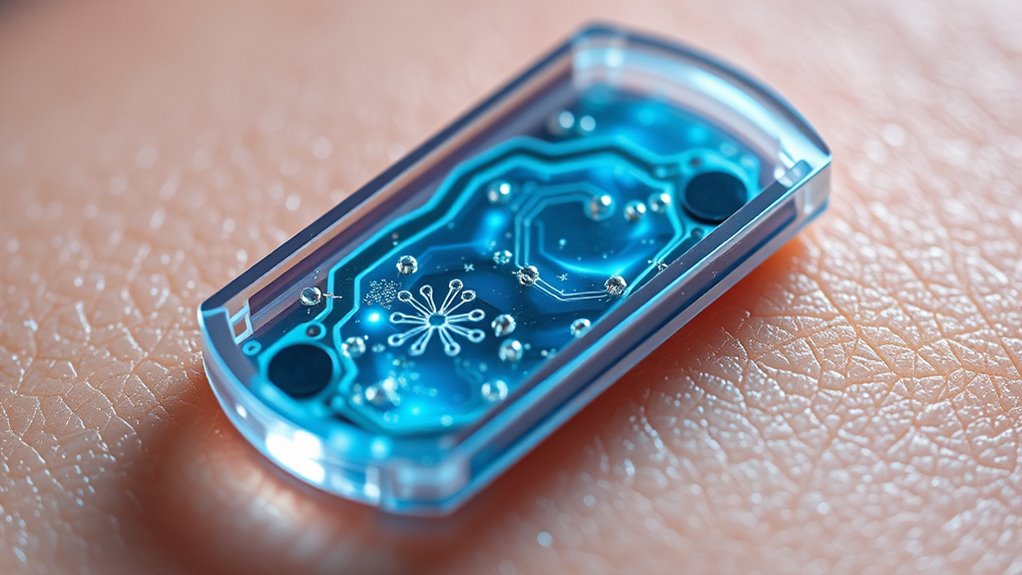
Bio-sensors powered by nanotechnology are revolutionizing the way we detect and monitor biological signals. These tiny devices leverage advanced materials and engineering techniques to achieve unprecedented sensitivity and specificity. Among the most promising innovations are quantum dots, which are semiconductor nanoparticles that emit bright, stable fluorescence when excited by light. Their unique optical properties make them ideal for bio-sensing applications, as they can be tailored to detect specific biomolecules with high accuracy. When integrated into bio-sensors, quantum dots enable real-time, multiplexed detection of various biological analytes, from proteins to nucleic acids, with remarkable clarity.
Quantum dots enable real-time, multiplexed detection of biomolecules with exceptional sensitivity and stability.
To harness the full potential of quantum dots in bio-sensing, surface functionalization becomes essential. Surface functionalization involves attaching specific chemical groups or biomolecules to the surface of quantum dots, allowing them to selectively bind to target analytes. This process enhances the sensor’s specificity, reducing false positives and improving overall performance. For example, by attaching antibodies or aptamers to the surface, you can create highly selective sensors that recognize unique markers associated with diseases or biological processes. Surface functionalization also stabilizes quantum dots in biological environments, preventing aggregation and preserving their optical properties over time. This step is critical for developing reliable, durable biosensors suited for clinical or environmental monitoring.
The combination of quantum dots and surface functionalization offers a versatile platform for designing next-generation bio-sensors. You can customize these sensors to detect a wide array of targets by simply changing the surface chemistry. For instance, functionalized quantum dots can be integrated into portable devices that monitor glucose levels, detect pathogens, or track biomarkers associated with cancer. The high brightness and tunable emission spectra of quantum dots make it easier to perform multiplexed assays, where multiple targets are identified simultaneously in a single sample. This capability markedly shortens diagnosis times and improves the accuracy of disease detection. Additionally, advances in nanotechnology are enabling the development of even more sophisticated and integrated biosensing systems.
Furthermore, you benefit from the stability and resistance of quantum dots to photobleaching, which ensures consistent performance during repeated use or prolonged monitoring. Surface functionalization techniques also allow for the integration of quantum dots with other nanomaterials, such as graphene or nanoparticles, to enhance their sensing capabilities further. This synergy results in more sensitive, faster, and more robust bio-sensors that can operate in complex biological environments. Overall, quantum dots combined with surface functionalization are paving the way for highly precise, customizable bio-sensors that can transform healthcare, environmental monitoring, and biological research.
quantum dot biosensor for disease detection
As an affiliate, we earn on qualifying purchases.
As an affiliate, we earn on qualifying purchases.
Frequently Asked Questions
How Do Nanomaterials Improve Bio-Sensor Sensitivity?
Nanomaterials like quantum dots enhance your bio-sensor sensitivity by providing strong, precise signals due to their unique optical properties. Surface modification allows you to tailor the nanomaterials to better detect specific biological molecules, increasing accuracy. These modifications improve the interaction between the sensor and target analytes, making your bio-sensor more responsive and reliable. This combination of quantum dots and surface modification markedly boosts the overall performance of your bio-sensors.
What Are the Challenges in Integrating Nanotech Into Wearable Sensors?
Think of integrating nanotech into wearable sensors like fitting tiny puzzle pieces together. You face miniaturization hurdles that make designing compact, efficient devices tricky, and manufacturing scalability challenges that hinder mass production. These hurdles can cause inconsistencies and increased costs. To succeed, you need precise fabrication techniques and scalable processes. Overcoming these challenges guarantees your wearable sensors are reliable, affordable, and ready for widespread use.
Are Nanotech-Powered Bio-Sensors Safe for Long-Term Use?
Nanotech-powered bio-sensors are generally safe for long-term use if designed with biocompatibility concerns in mind. You should be aware of potential biocompatibility issues that could cause adverse reactions over time. Additionally, consider the environmental impact of nanomaterials, as improper disposal might pose risks. When used responsibly and with proper testing, these sensors can offer reliable monitoring without significant long-term safety concerns.
How Do Bio-Sensors Powered by Nanotechnology Compare Cost-Wise?
You’ll find that bio-sensors powered by nanotechnology tend to have higher manufacturing expenses, making their initial cost comparison more expensive than traditional sensors. However, these advanced sensors often offer better accuracy and longer lifespan, which can reduce overall costs over time. So, while upfront costs are higher, their durability and performance might save you money in the long run by decreasing the need for replacements and maintenance.
What Future Innovations Are Expected in Nanotech Bio-Sensor Development?
You’ll likely see exciting innovations like quantum dots and bio-inspired designs shaping nanotech bio-sensors. These advances promise enhanced sensitivity, faster responses, and greater versatility, making sensors more reliable and easier to integrate into daily life. As technology matures, expect these sensors to become more affordable and widespread, improving health monitoring, environmental detection, and personalized medicine. The future holds a world where nanotech bio-sensors seamlessly blend into your routine, offering smarter solutions.
As an affiliate, we earn on qualifying purchases.
Conclusion
Just as Icarus soared toward the sun with wings of wax, our pursuit of nanotech-powered bio-sensors pushes boundaries. While these tiny devices promise groundbreaking health insights, remember the tale warns us to tread carefully. As you harness this technology’s potential, stay vigilant—balance innovation with caution. By doing so, you’ll ensure that, like the phoenix rising, this breakthrough soars safely into a brighter, healthier future, not stumbles in its own hubris.
portable nanotechnology biosensor
As an affiliate, we earn on qualifying purchases.
As an affiliate, we earn on qualifying purchases.
quantum dot fluorescence assay kit
As an affiliate, we earn on qualifying purchases.
As an affiliate, we earn on qualifying purchases.
Fall Picks
fall essentials
As an affiliate, we earn on qualifying purchases.