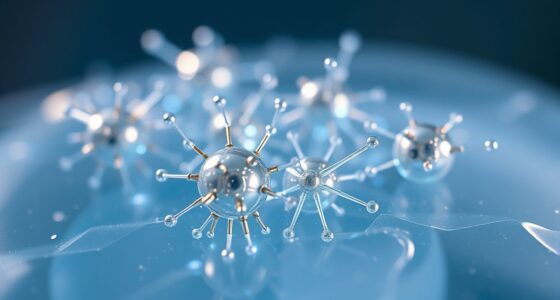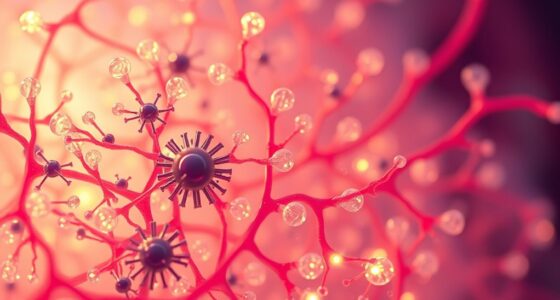

Bio-nano interfaces are crucial zones where biological systems and nanomaterials connect, allowing you to control cellular communication effectively. By functionalizing nanoparticle surfaces with molecules like antibodies or ligands, you can target specific cells and modify interactions. Understanding how these interfaces form and change helps improve drug delivery and biosensing. If you explore further, you’ll discover how mastering these interactions can open new possibilities in nanomedicine and biotechnology.
Key Takeaways
- Bio-nano interfaces regulate cellular communication by mediating nanoparticle recognition and uptake through surface chemistry and biomolecular interactions.
- Surface functionalization influences how nanoparticles interact with cell receptors, affecting targeted signaling pathways.
- Dynamic interface interactions, including protein corona formation, modify nanoparticle behavior and cellular responses.
- Proper interface design enhances nanoparticle stability, enabling precise delivery and modulation of cellular functions.
- Understanding interface dynamics is critical for developing nanomaterials that effectively communicate with and influence biological systems.
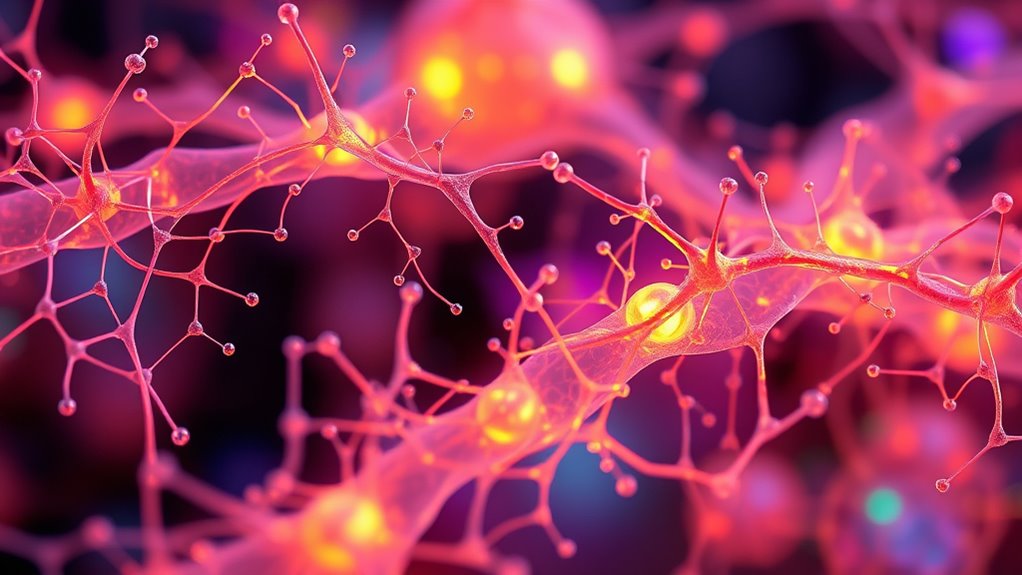
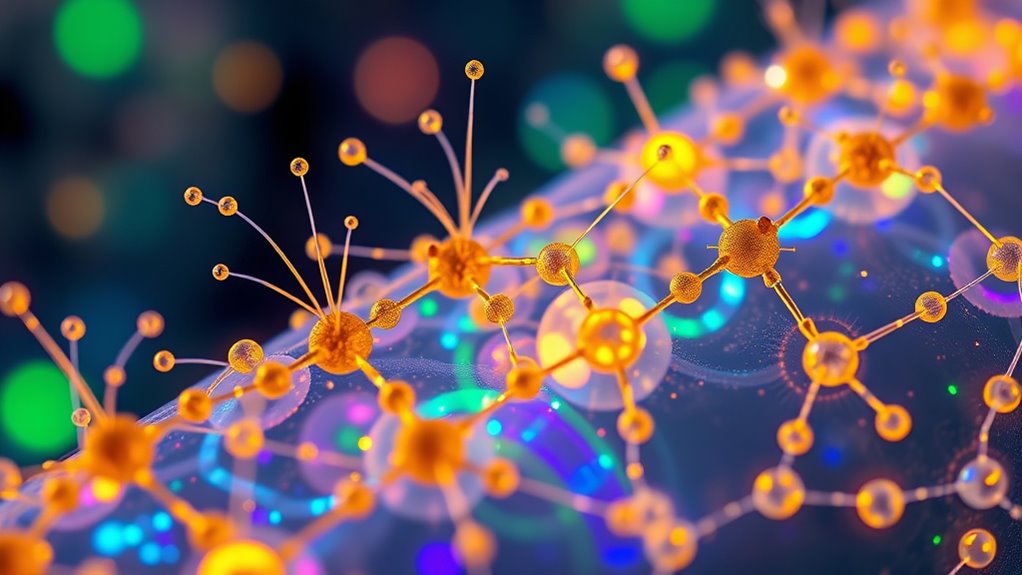
Bio-nano interfaces are the essential boundary where biological systems and nanomaterials interact, enabling advanced applications in medicine, sensing, and biotechnology. At this interface, the way nanoparticles are functionalized plays a crucial role. Nanoparticle functionalization involves attaching specific molecules, such as antibodies, ligands, or drugs, to the nanoparticle surface. This process tailors the nanoparticle’s properties, allowing it to target particular cells or biomolecules with high precision. When you manipulate the surface chemistry through functionalization, you influence how the nanoparticle interacts with the biological environment, enhancing specificity and reducing unwanted effects. This customization is key for creating effective drug delivery systems or biosensors that can detect disease markers at very low concentrations.
Bio-nano interfaces enable precise targeting through nanoparticle surface functionalization for advanced biomedical applications.
Understanding interface dynamics is equally vital. Interface dynamics refers to the constantly changing interactions and forces at the boundary between the nanoparticle and the biological medium. These interactions include binding affinities, conformational changes, and the formation of a biological corona—a layer of proteins and other biomolecules that spontaneously adsorb onto the nanoparticle surface. You need to be aware of how these dynamics affect cellular recognition and uptake. For example, when nanoparticles enter a biological system, proteins quickly coat their surfaces, potentially altering their original functionalization. This dynamic process can either facilitate or hinder cellular communication, depending on how well you control the interface properties. Additionally, surface modifications can influence the formation and composition of the biological corona, which plays a significant role in cellular interactions.
The interaction between nanoparticles and cells hinges on a delicate balance of interface dynamics and nanoparticle functionalization. If you optimize these factors, you can improve cellular targeting efficiency and minimize immune responses. For instance, coating nanoparticles with polyethylene glycol (PEG) can help evade immune detection, prolonging circulation time in the bloodstream. Simultaneously, functional groups on the nanoparticle surface can be designed to bind specific cell receptors, promoting targeted delivery. You must also consider how the biological environment influences interface stability. Changes in pH, ionic strength, or the presence of enzymes can modify the nanoparticle’s surface, impacting how well it communicates with cells.
Ultimately, mastering nanoparticle functionalization and understanding interface dynamics empower you to design nanomaterials that seamlessly integrate with biological systems. This control enhances cellular communication, enabling precise intervention in health and disease processes. Whether delivering drugs, sensing cellular signals, or modulating cell behavior, the interface serves as the critical gateway. Your ability to manipulate these interactions determines the success of bio-nano technologies in advancing medicine and biotechnology. Developing robust surface chemistries can further improve the stability and functionality of nanoparticle interfaces in complex biological environments.
nanoparticle surface functionalization kit
As an affiliate, we earn on qualifying purchases.
As an affiliate, we earn on qualifying purchases.
Frequently Asked Questions
How Do Bio-Nano Interfaces Influence Immune Responses?
Bio-nano interfaces influence immune responses by modulating immune activity and shaping inflammatory responses. When you introduce nano materials, they can either trigger or suppress immune cells, leading to immune modulation. This affects how your body recognizes and reacts to these interfaces, potentially reducing inflammation or enhancing immune defense. By designing these interfaces carefully, you can control inflammatory responses, improving therapeutic outcomes and minimizing adverse immune reactions.
What Are the Potential Applications of Bio-Nano Interfaces in Medicine?
You can harness bio-nano interfaces for medicine by advancing nanoparticle synthesis to create targeted drug delivery systems, improving treatment precision. They also enable biosensor development, allowing you to detect diseases early and monitor health conditions accurately. These applications lead to personalized therapies and quicker diagnostics, transforming healthcare. As you explore these interfaces, you’ll find new ways to enhance patient outcomes through innovative, nanotechnology-driven solutions.
How Are Bio-Nano Interfaces Engineered for Targeted Drug Delivery?
You engineer bio-nano interfaces for targeted drug delivery by designing nanoparticles with specific surface functionalization, which allows them to recognize and bind to target cells. You customize nanoparticle design to optimize size, shape, and surface chemistry, ensuring efficient navigation through the body. This precise engineering enhances drug delivery accuracy, minimizes side effects, and improves therapeutic outcomes by ensuring the medication reaches the intended site effectively.
What Challenges Exist in Studying Dynamic Cellular Communication at Nano Scales?
You face measurement challenges when studying dynamic cellular communication at nano scales because capturing rapid, transient events requires high temporal resolution. The tiny size of cellular components makes it difficult to precisely track interactions in real-time. Additionally, noise and limitations of current imaging technologies can hinder accurate data collection, making it tough to fully understand how cells communicate dynamically at such small scales.
How Do Bio-Nano Interfaces Affect Cellular Signaling Pathways?
Bio-nano interfaces influence cellular signaling pathways by enabling nanoparticle signaling and membrane modulation. When nanoparticles interact with cell membranes, they can alter membrane fluidity, receptor positioning, and signal transduction efficiency. This can enhance or inhibit specific pathways, affecting cellular responses. By controlling these interfaces, you can potentially direct cell behavior, improve targeted drug delivery, and develop innovative therapies that modulate signaling with precision.

Drug Delivery with Targeted Nanoparticles: In Vitro and In Vivo Evaluation Methods
As an affiliate, we earn on qualifying purchases.
As an affiliate, we earn on qualifying purchases.
Conclusion
As you explore bio-nano interfaces, remember they’re the bridges connecting worlds—tiny yet powerful. These interactions hold the key to revolutionizing cellular communication and medical breakthroughs. Imagine a future where you harness these nano-scale conversations to heal, detect, and enhance life itself. The question isn’t if you’ll reveal their potential, but when. Embrace this frontier, for within it lies the promise to transform how we understand and influence living systems forever.
Biosensors Based on Nanomaterials and Nanodevices (Nanomaterials and their Applications)
As an affiliate, we earn on qualifying purchases.
As an affiliate, we earn on qualifying purchases.

Gold Nanoparticles in Biomedical Applications
As an affiliate, we earn on qualifying purchases.
As an affiliate, we earn on qualifying purchases.