TL;DR

Get the latest gadgets delivered free — and shop member deals
- Fast, free delivery on millions of items
- Access to Prime Big Deal Days deals on October 6–7
- Prime Video, Amazon Music and more included
Microsoft says it is incorporating restored wetlands and native gardens into new U.S. data center projects to make sites fit their local landscapes. The effort has drawn criticism from a Texas consumer advocacy director, who questioned its value alongside a planned 20-year power deal involving a Chevron gas plant. Details on the projects, ecological outcomes and community input remain limited.
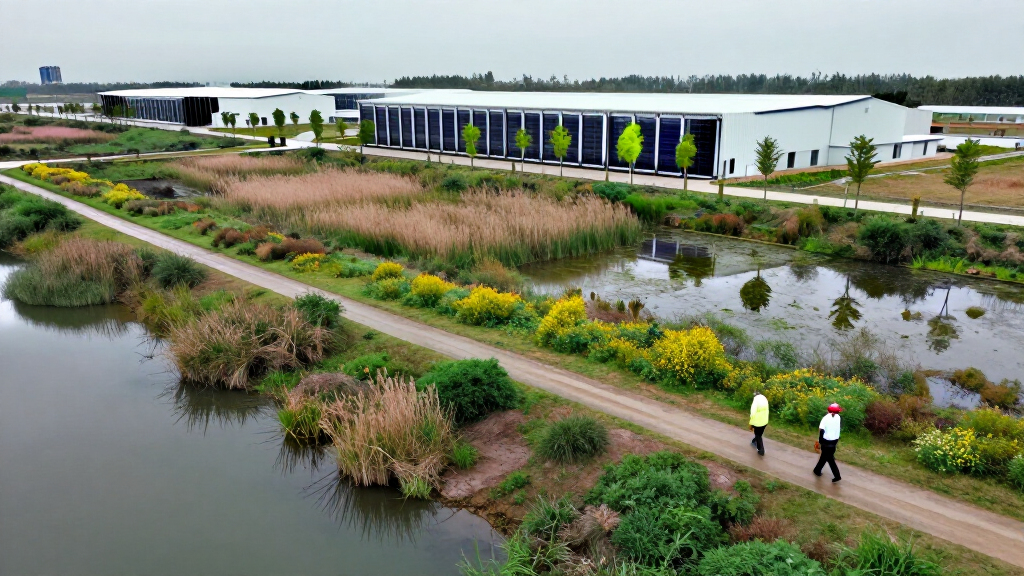
Microsoft says all new U.S. data center projects will incorporate a site-specific landscaping approach that can include restored wetlands and native gardens, with the stated aim of blending facilities into their surrounding ecosystems. The program, described as “biomimicry,” is drawing criticism from a Texas watchdog who questions the effort alongside a planned 20-year power deal tied to a Chevron gas plant.
According to reporting by The Verge, Microsoft is applying the approach at more than 20 data center sites and says its wider project portfolio includes locations in the United States and Germany. The company says it consults communities and uses ecological research to map local conditions before planning site features. The supplied account does not identify each location or say how many sites have completed the work.
Microsoft’s planning tool, called Ecosystem Intelligence, runs on Azure and scores site characteristics including water quality, biodiversity and noise abatement. The company’s stated objective is to help data centers fit into the natural landscape. The source does not provide measured results showing whether the landscaping has improved ecological conditions or reduced noise at operating facilities.
The criticism concerns the gap critics see between landscaping measures and the effects of powering large data centers. Adrian Shelley, Public Citizen’s Texas director, called the effort “basically lipstick on a pig.” The report links his criticism to Microsoft’s June agreement to buy electricity from a planned Chevron gas plant in West Texas; it does not establish that the plant is operating or specify the deal’s expected emissions.
Landscaping Meets Data Center Power
Data centers require substantial land and electricity, so their development can affect nearby communities as well as local ecosystems. Wetlands and native planting may address some site-level concerns, such as habitat, water conditions or how a facility sits within its surroundings. But landscaping cannot, by itself, answer questions about the source and environmental effects of the electricity used to run the buildings.
That distinction explains the dispute. Microsoft presents ecological planning as part of its approach to new projects, while Shelley’s criticism challenges whether such measures are meaningful alongside a long-term arrangement involving a planned gas-fired power source. The available information does not quantify either the environmental gains from the landscaping or the energy and emissions implications of the reported power deal, so readers cannot compare the impacts directly.
For communities considering nearby data center development, the program’s value will depend on site-specific details and outcomes, not just design language. Relevant measures would include what habitat is restored, how water and noise are monitored, whether commitments persist after construction, and how a project’s electricity is supplied. Those details are not included in the supplied report.
As an affiliate, we earn on qualifying purchases.
How Microsoft Plans Site Design
The reported approach starts with mapping local ecological conditions and gathering community input. Microsoft says it then uses its Ecosystem Intelligence tool to assess features such as water quality, biodiversity and noise abatement. Restored wetlands and native gardens are among the measures described, though the source does not say that every project will use both or explain how designs differ by location.
The company’s stated scope is broader than a single facility: Microsoft says the approach is now part of all new U.S. projects, while the reporting also identifies sites in Germany. The report describes activity at more than 20 sites, but does not clarify whether that figure refers to completed projects, active construction, or projects at different planning stages.
The debate comes as Microsoft pursues energy arrangements for its data center operations. In June, the company signed a reported 20-year agreement to buy power from a planned Chevron gas plant in West Texas. The supplied source gives no further terms of that agreement and does not detail the plant’s construction schedule or anticipated output.
““Basically lipstick on a pig.””
— Adrian Shelley, Texas director of Public Citizen
As an affiliate, we earn on qualifying purchases.
Evidence and Project Details Missing
The supplied reporting does not include independent assessments of the program’s ecological effects, or measurements showing changes in biodiversity, water quality or noise. It also does not specify project-by-project costs, which sites have wetlands or gardens, or how long any restoration work will be maintained. Microsoft’s description of its objectives should therefore be distinguished from demonstrated environmental results.
Details of the Chevron power arrangement are also limited in the material provided. The deal is described as a 20-year agreement to buy power from a planned West Texas gas plant, but the year of the June announcement, expected generating capacity, emissions profile, construction status and any relevant contractual conditions are not stated. The relationship between that plant and particular data center sites is not explained.
The criticism quoted in the report is Shelley’s assessment; no response from Microsoft addressing that specific criticism is included in the source material. It is also unclear what community consultation has taken place at individual sites or how residents’ input affects final designs.
As an affiliate, we earn on qualifying purchases.
Project Results and Energy Terms
The next useful indicators will be project-level disclosures: which new sites use wetlands or native gardens, what ecological baselines Microsoft records, and whether it publishes follow-up measurements after construction. Those details would help distinguish planned landscaping from documented environmental improvements.
Further information about the Chevron agreement and the planned plant’s development would clarify the energy side of the debate, including expected output and how the power is intended to serve Microsoft’s operations. Until those details and site-specific results are available, the program’s stated goals and critics’ concerns remain difficult to evaluate against measured outcomes.
As an affiliate, we earn on qualifying purchases.
Key Questions
What is Microsoft’s biomimicry program for data centers?
Microsoft describes an approach to planning data center sites around local ecological conditions. Measures can include restored wetlands and native gardens, with ecological research and community input used to inform designs.
How many sites are covered?
The report says the approach is being used at more than 20 sites and that Microsoft is including it in all new U.S. projects. It does not clarify how many sites are completed or provide a location-by-location list.
What does Ecosystem Intelligence assess?
Microsoft’s Azure-based tool scores site features including water quality, biodiversity and noise abatement, according to the report. No measured environmental results from its use are provided in the supplied material.
Why has the program drawn criticism?
Adrian Shelley of Public Citizen in Texas called the effort “basically lipstick on a pig,” pointing to concerns linked to Microsoft’s reported 20-year power agreement with a planned Chevron gas plant in West Texas. The source does not provide enough detail to assess the deal’s full energy or emissions effects.
Has Microsoft shown that the landscaping improves local ecosystems?
The supplied report describes Microsoft’s goals and planning process but does not provide independent evaluations or before-and-after data. The program’s ecological results therefore remain unclear from the available information.
Source: fediverse
Halloween Picks
halloween
As an affiliate, we earn on qualifying purchases.