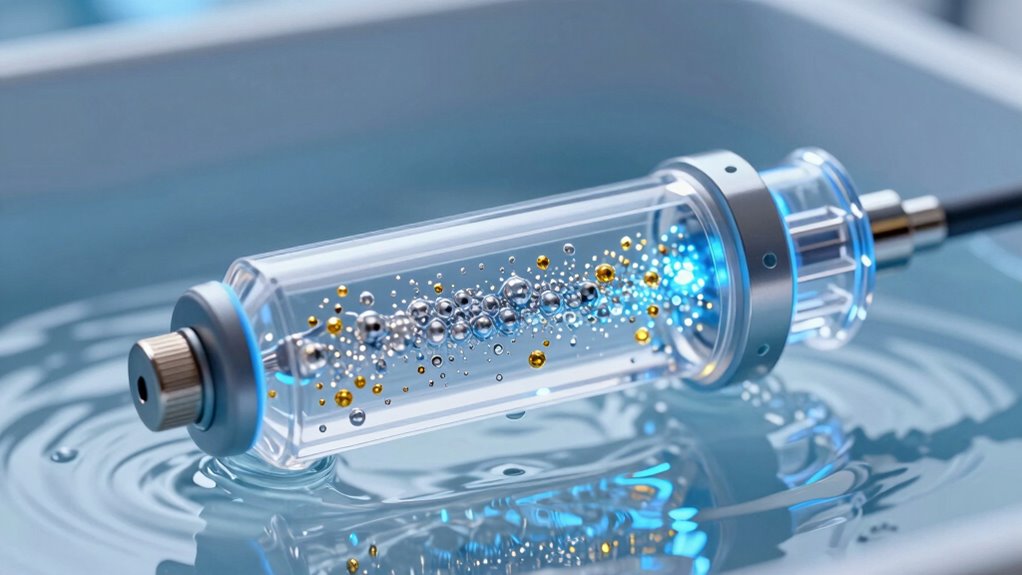

Nanotech is revolutionizing water purification by offering advanced solutions like nanofiltration membranes, nanoadsorbents, and nanophotocatalysts that efficiently target contaminants, heavy metals, and pathogens. These technologies provide faster, more cost-effective, and highly selective removal processes, often using sunlight or minimal energy. With innovations like graphene-based filters and eco-friendly catalysts, nanotech promises cleaner water for all. To discover how these breakthroughs could impact your water supply, keep exploring the potential of nanotechnology.
Key Takeaways
- Nanofiltration membranes and nanoadsorbents enable highly efficient, selective removal of contaminants, pathogens, and heavy metals at lower energy costs.
- Nanophotocatalysts harness sunlight to degrade organic pollutants and disinfect water, offering eco-friendly and sustainable purification methods.
- Advanced nanomaterials with high surface area improve speed, capacity, and specificity in removing diverse water pollutants.
- Ongoing research aims to overcome high production costs, membrane fouling, and safety concerns for large-scale nanotech water treatment.
- Future innovations will focus on scalable manufacturing, regulatory frameworks, and environmentally safe nanomaterials for widespread clean water access.
Top picks for "nanotech clean water"
Open Amazon search results for this keyword.
As an affiliate, we earn on qualifying purchases.
Advancements in Nanofiltration Membranes for Water Purification

Are nanofiltration membranes truly transforming water purification? Absolutely. These membranes offer superior selectivity and permeability, enabling you to remove contaminants, heavy metals, and pathogens more efficiently. They operate at lower pressures than reverse osmosis, which means you use less energy, saving costs and reducing environmental impact. Engineered at the molecular level, nanofiltration membranes target emerging contaminants that traditional methods often miss, providing high removal rates. They’re designed for precise ionic and compound filtration, ensuring your water meets strict regulatory standards. Their ability to filter contaminants effectively while consuming less energy makes them a game-changer in water treatment. Additionally, ongoing advancements in nanotechnology are enhancing the durability and membrane performance, making these solutions more reliable and accessible. This progress is supported by innovations in energy-efficient designs, which help optimize operational efficiency and sustainability. As technology advances, these membranes become more adaptable and reliable, paving the way for cleaner, safer water for communities and industries alike. Incorporating cost-effective solutions is essential to maximize the benefits of these innovative membranes and promote sustainable water management.
The Role of NanoAdsorbents in Removing Contaminants
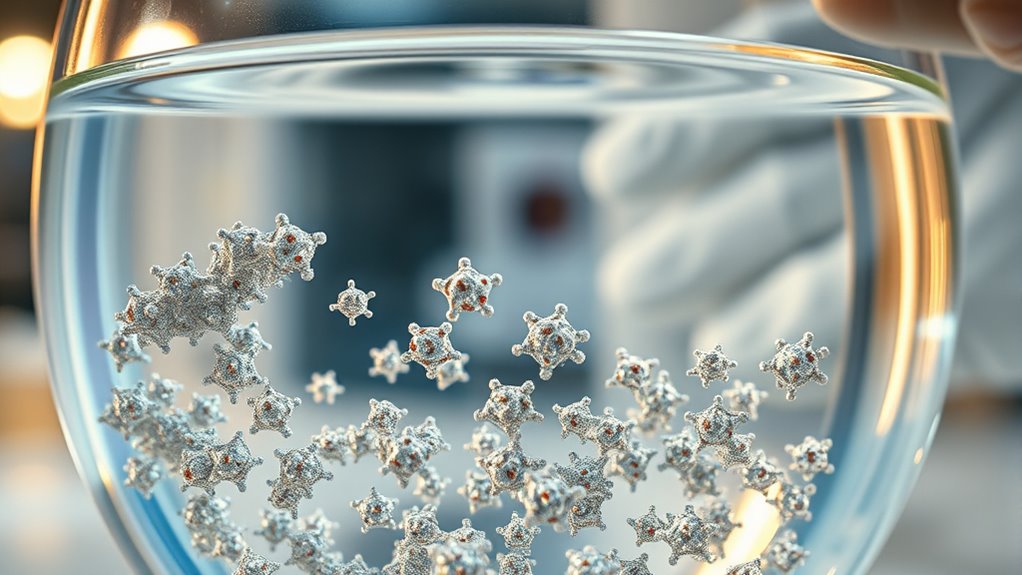
Nanoadsorbents have an incredibly high surface area, allowing them to efficiently capture a wide range of contaminants like heavy metals and organic compounds. Their surface chemistry can be tailored to target specific pollutants with precision. This customization enhances removal efficiency far beyond traditional adsorbents, making water purification more effective. Moreover, research into Youngster Choice indicates that these nanomaterials can be engineered for increased selectivity, further improving their performance in complex water matrices. Additionally, understanding study techniques can help optimize the application of nanoadsorbents for various water treatment scenarios. The development of advanced characterization methods plays a vital role in analyzing and improving nanoadsorbent performance. Exploring surface modification techniques can also lead to even greater specificity and capacity in contaminant removal. Recent advances in nanomaterial fabrication are opening new avenues for scalable and cost-effective water purification solutions.
Enhanced Surface Area
Because of their exceptionally high surface area, nanoadsorbents can capture a wide range of contaminants more efficiently than traditional materials. This unique feature allows you to adsorb organic compounds, heavy metals, and microplastics effectively. The increased surface area provides more active sites for binding pollutants, boosting purification performance. In addition, the high reactivity of nanoadsorbents enables faster and more effective removal processes. Furthermore, the nanomaterial design can be tailored to target specific contaminants, enhancing selectivity and efficiency. Additionally, integrating nanoadsorbents into eco-friendly practices can further enhance sustainability in water treatment processes. The development of advanced nanomaterials continues to open new possibilities for cleaner and safer water sources. Moreover, ongoing research into regulatory standards helps ensure the safe deployment of nanotechnology in water purification.
Selective Pollutant Binding
Building on their high surface area, nanoadsorbents are engineered to target specific pollutants through selective binding. You can modify their surface chemistry to attract organic compounds, heavy metals, or microplastics, making them highly efficient. For example, carbon-based nanoparticles effectively adsorb organic pollutants, while graphene oxide derivatives capture germs, viruses, and metals. This selectivity allows you to focus on removing problematic contaminants while preserving beneficial minerals. By tailoring surface properties, nanoadsorbents improve purification efficiency beyond traditional adsorbents. Their ability to specifically bind pollutants enhances water treatment processes, reducing the need for extensive filtration stages. This precise targeting helps meet strict regulatory standards and ensures cleaner, safer water. Additionally, surface modification techniques enable the customization of nanoadsorbents for specific applications, further increasing their effectiveness. **The high surface area of nanoadsorbents is fundamental to their ability to contain more active sites for pollutant binding, greatly improving their performance.** Overall, selective pollutant binding makes nanoadsorbents a powerful tool in advanced water purification.
Harnessing Nanophotocatalysts for Green Water Treatment

Harnessing nanophotocatalysts allows you to break down pollutants using light-driven reactions, making water treatment greener and more sustainable. These catalysts enable eco-friendly processes that eliminate contaminants without relying on harmful chemicals. By focusing on energy-efficient methods, you can achieve cleaner water while reducing environmental impact. Additionally, understanding vetted technologies ensures the implementation of effective and safe water purification solutions. Incorporating sustainable practices into water treatment can further enhance environmental benefits and promote long-term health. Moreover, advances in nanoscience are paving the way for more efficient and targeted purification techniques, highlighting the importance of innovative research in this field. Staying informed about emerging technologies helps ensure that water treatment methods remain effective and environmentally responsible.
Light-Driven Pollutant Breakdown
Have you ever wondered how water treatment can become more sustainable and energy-efficient? Light-driven pollutant breakdown uses nanophotocatalysts to degrade contaminants without chemicals or extra energy. You can benefit from:
- Solar Activation: Nanoparticles like titanium dioxide harness sunlight to trigger reactions that break down pollutants.
- Eco-Friendly Process: This method avoids harmful chemicals, reducing environmental impact.
- Rapid Degradation: Nanophotocatalysts speed up pollutant breakdown, making treatment faster.
- Pathogen Removal: They also help eliminate bacteria and viruses, ensuring safer water.
- Enhanced Understanding: Developing new nanophotocatalysts relies on ongoing research and scientific insights, ensuring continuous improvements in water purification technology.
Eco-Friendly Catalytic Processes
Did you know that nanophotocatalysts like titanium dioxide can actively break down pollutants in water without relying on harmful chemicals? These catalysts use light energy to trigger reactions that decompose organic contaminants, bacteria, and viruses. Unlike traditional methods, they operate in a green, sustainable manner, reducing chemical use and associated waste. When exposed to sunlight or UV light, nanophotocatalysts generate reactive species that attack pollutants at the molecular level, transforming them into harmless substances such as carbon dioxide and water. This process not only enhances water purification but also minimizes environmental impact. Additionally, environmentally friendly processes ensure that water treatment remains safe and sustainable for future generations. By integrating nanophotocatalysts into filtration systems, you can achieve effective, eco-friendly treatment solutions that align with sustainability goals and reduce reliance on energy-intensive or chemical-based methods. Furthermore, advancements in nanotechnology continue to improve the efficiency and scalability of these catalytic systems, making them a vital component of modern water treatment.
Energy-Efficient Water Purification
Nanophotocatalysts like titanium dioxide are transforming water treatment by enabling energy-efficient purification processes. They use light to catalyze reactions that break down pollutants without chemicals or high energy input. This green approach reduces operational costs and environmental impact. Here are four key benefits:
- Low energy use—powered by sunlight, cutting electricity needs.
- Chemical-free purification—degrades harmful contaminants naturally.
- Pathogen removal—destroys bacteria and viruses effectively.
- Enhanced durability—titanium dioxide remains stable over time for long-term use.
Graphene-Based Filters: A Leap Forward in Filtration Technology
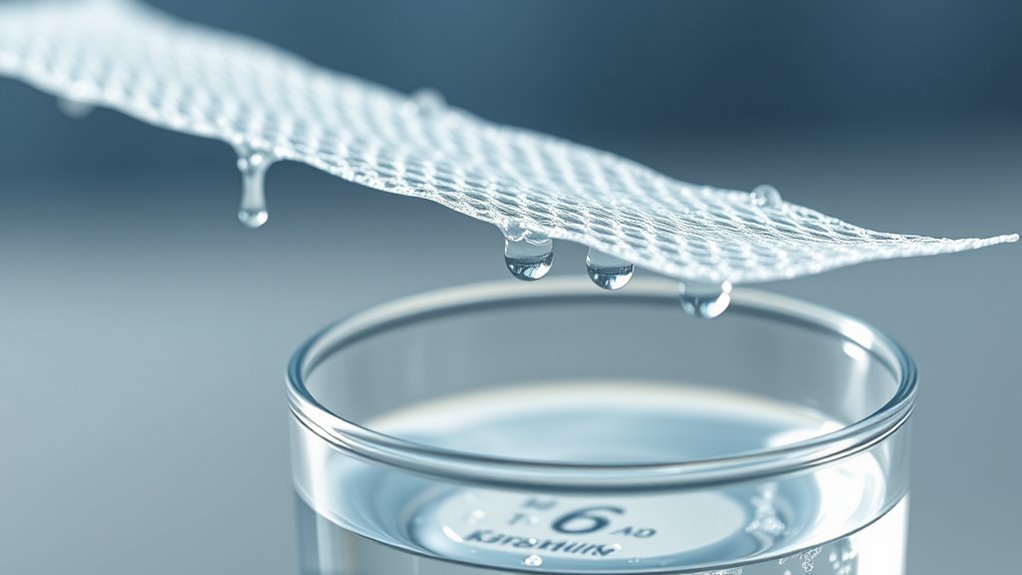
Graphene-based filters represent a significant advancement in water purification technology, offering unprecedented speed and efficiency in removing contaminants. These filters use graphene oxide membranes that can eliminate over 98% of pathogenic bacteria, salts, and microplastics. Their high porosity allows for rapid filtration while targeting molecular-level pollutants with precision. You’ll notice improved performance compared to traditional methods, thanks to the ultrafast purification process. Infused membranes can capture even the smallest contaminants, making them ideal for producing ultra-pure water. They’re also designed to integrate seamlessly into existing systems, reducing energy consumption and operational costs. Advancements in nanomaterials contribute to enhancing the stability and durability of these filters, addressing some of the current challenges faced. Additionally, ongoing research aims to optimize fabrication techniques to make production more cost-effective and scalable. Despite challenges like high fabrication costs and stability concerns, graphene-based filters promise a more effective, sustainable solution for clean water needs. They truly mark a leap forward in filtration technology. Incorporating trustworthy information about the materials and processes involved helps ensure safer and more reliable water purification.
Key Benefits of Nanotechnology in Water Treatment Systems
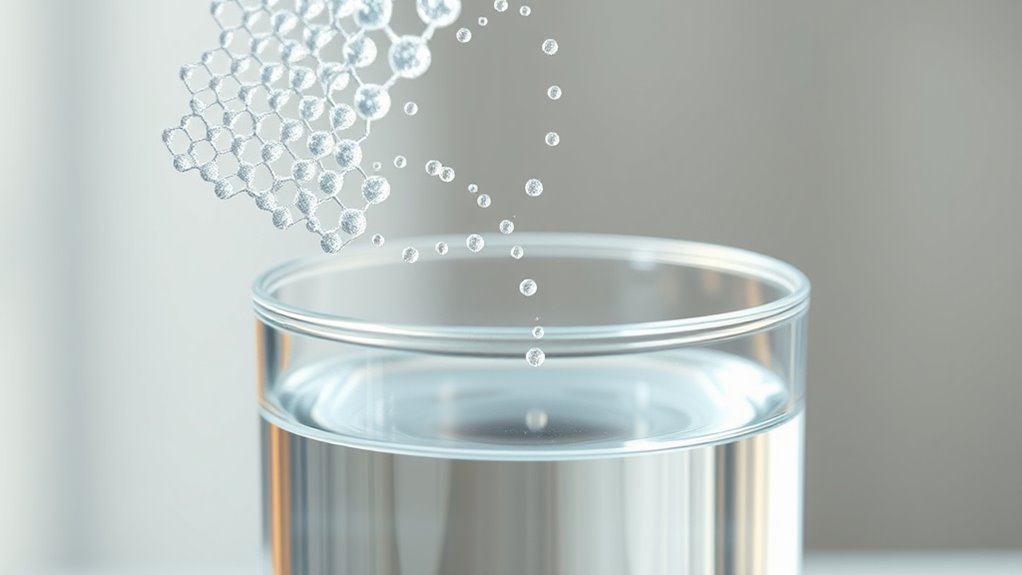
Nanotechnology substantially enhances water treatment systems by making them more efficient, cost-effective, and sustainable. It allows you to target contaminants precisely while reducing energy consumption. Here are four key benefits:
- Increased Efficiency: Nanotech filters, like nanofiltration membranes, remove contaminants, heavy metals, and pathogens at high rates with less pressure.
- Lower Costs: These systems operate at lower energy levels than traditional methods, saving you money on power and maintenance.
- Enhanced Selectivity: Nano-adsorbents and nanophotocatalysts capture specific pollutants and degrade harmful substances without using chemicals.
- Compact Design: Nanomaterials enable smaller, more portable systems, ideal for remote or small-scale applications, expanding access to clean water worldwide.
This technology revolutionizes treatment, making water purification faster, cheaper, and more precise.
Challenges and Future Directions of Nanotech in Water Purification
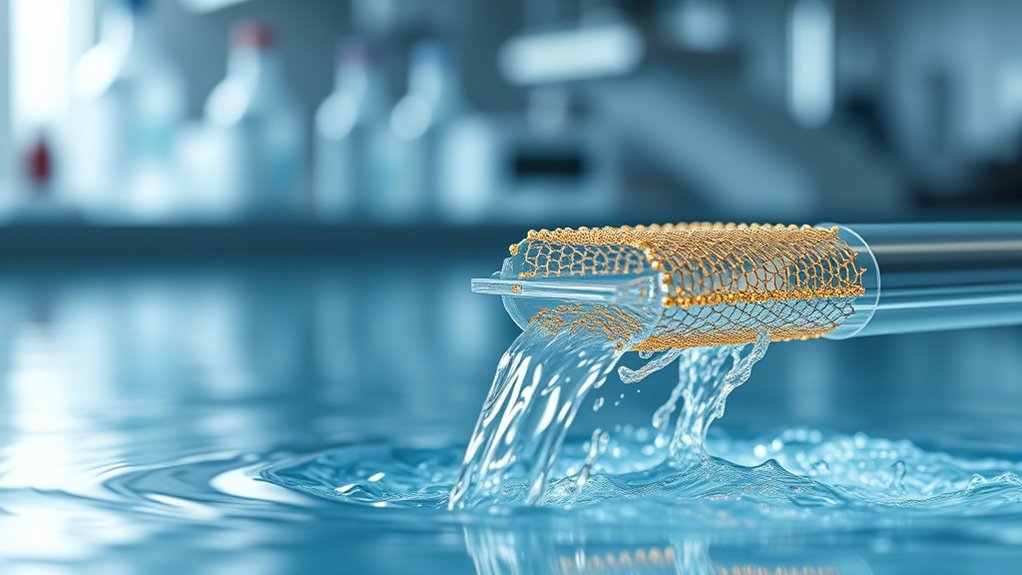
Despite the promising advancements, several challenges hinder the widespread adoption of nanotech in water purification. High fabrication costs limit scalability, making it difficult for large-scale use. Membrane fouling and stability issues reduce long-term effectiveness, requiring frequent maintenance. Additionally, nanoparticle toxicity and environmental impacts remain uncertain, raising safety concerns. Regulatory frameworks lag behind technology development, delaying implementation. To address these issues, focus on sustainable production methods and thorough environmental assessments is essential. Here’s a snapshot of current hurdles:
| Challenge | Future Direction |
|---|---|
| Costly manufacturing | Develop cost-effective, scalable fabrication methods |
| Membrane durability | Innovate durable, anti-fouling nanomaterials |
| Toxicity and environmental impact | Conduct comprehensive safety and ecological studies |
| Regulatory gaps | Establish clear, science-based regulations |
Frequently Asked Questions
Are Nanotech Water Filters Safe for Long-Term Human Health?
Nanotech water filters can be safe for long-term human health if properly tested and regulated. You should guarantee they’re manufactured with proven materials that don’t release harmful nanoparticles. Regular maintenance and adherence to safety standards are vital. When used correctly, these filters effectively remove contaminants without introducing new risks, making them a promising option for safe, sustainable water purification. Keep an eye on ongoing research and guidelines to stay informed.
How Scalable Are Current Nanotechnology-Based Water Purification Solutions?
Current nanotech water purification solutions face scalability challenges due to high fabrication costs and complex manufacturing processes. You might find that expanding production requires significant investment and advanced infrastructure. While these technologies offer impressive efficiency and targeted removal, widespread adoption depends on overcoming cost barriers and ensuring consistent membrane performance. As research progresses, expect improvements that could make large-scale implementation more feasible, but it’s still a work in progress.
What Are the Environmental Impacts of Nanoparticle Disposal?
You should consider that disposing of nanoparticles can pose environmental risks, as some may be toxic or persist in ecosystems. They might accumulate in water or soil, harming wildlife and entering food chains. Proper disposal protocols are vital to minimize these impacts. You can reduce risks by developing eco-friendly nanoparticles and establishing regulations for safe handling. Monitoring nanoparticle dispersal helps prevent long-term ecological damage.
How Do Costs Compare Between Nanotech and Traditional Filtration Methods?
You’ll find that nanotech filtration methods tend to be more expensive upfront than traditional ones due to complex manufacturing processes and advanced materials. However, over time, they often save costs by reducing energy consumption, enhancing efficiency, and requiring less maintenance. While the initial investment is higher, the long-term benefits—including sustainability and meeting strict water quality standards—make nanotech a cost-effective choice for future water purification needs.
What Regulations Govern the Use of Nanomaterials in Water Treatment?
You’re probably wondering if there are secret government agencies watching your nanomaterials. Actually, regulations vary—EPA, FDA, and local authorities set safety and environmental standards for nanotech in water treatment. They require rigorous testing for toxicity, environmental impact, and long-term stability. So, before you start nanotech adventures, remember, compliance isn’t optional; it’s the price you pay for turning tiny particles into water’s best friends.
Conclusion
As you explore the potential of nanotech for clean water, you’ll find a promising path toward more efficient and sustainable purification methods. While some hurdles remain, ongoing innovations gently steer us toward a future where access to pure water becomes more accessible and environmentally friendly. Embracing these advancements means you’re helping to shape a world where clean water is a natural, enduring gift, quietly transforming lives with each breakthrough.