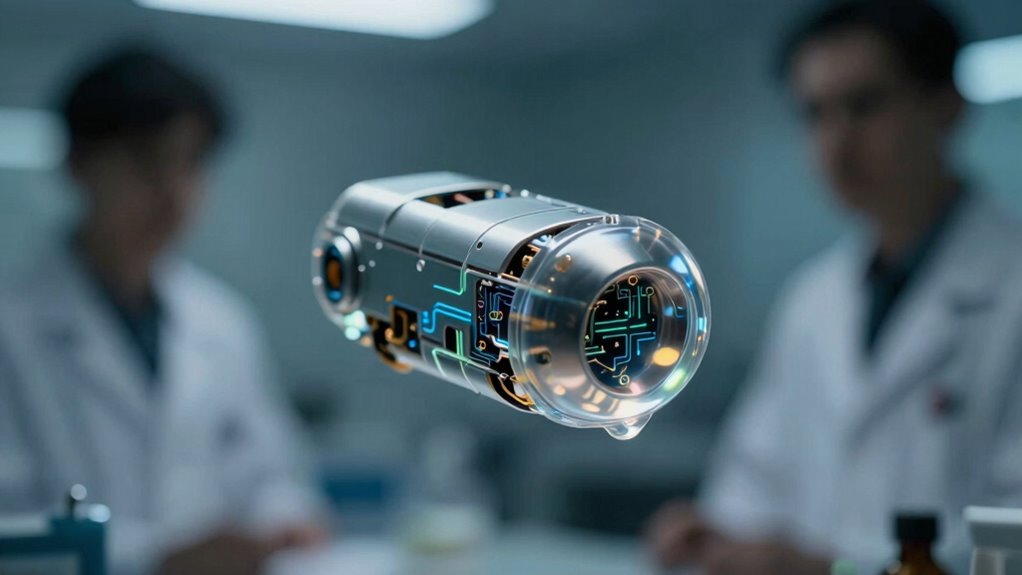

Nanotech conspiracies often mix facts with false claims, making it tricky to tell what’s real. Myths like self-aware black goo, harmful vaccine nanobots, and dangerous graphene are not supported by scientific evidence. Actual nanomaterials are safe and have everyday uses, from electronics to medicine. To understand what’s true, you need to distinguish verified science from rumors. If you want to learn more about how these myths spread and what the facts really are, keep exploring.
Open a free Amazon Business account
Business pricing, bulk buying and tax-exempt orders.
As an affiliate, we earn on qualifying purchases.
Key Takeaways
- Many nanotech myths, like black goo and self-assembling nanobots, lack scientific evidence and are based on misinformation.
- Actual nanomaterials, such as graphene and lipid nanoparticles, are well-studied, safe, and have real-world applications.
- Effective science communication and education are essential to differentiate facts from conspiracy theories about nanotechnology.
- Misinformation spreads through sensational stories, social media, and visuals, creating interconnected conspiracy narratives.
- False claims hinder research progress, public trust, and policy development, emphasizing the need for transparent, evidence-based information.
As an affiliate, we earn on qualifying purchases.
Understanding the Black Goo Myth
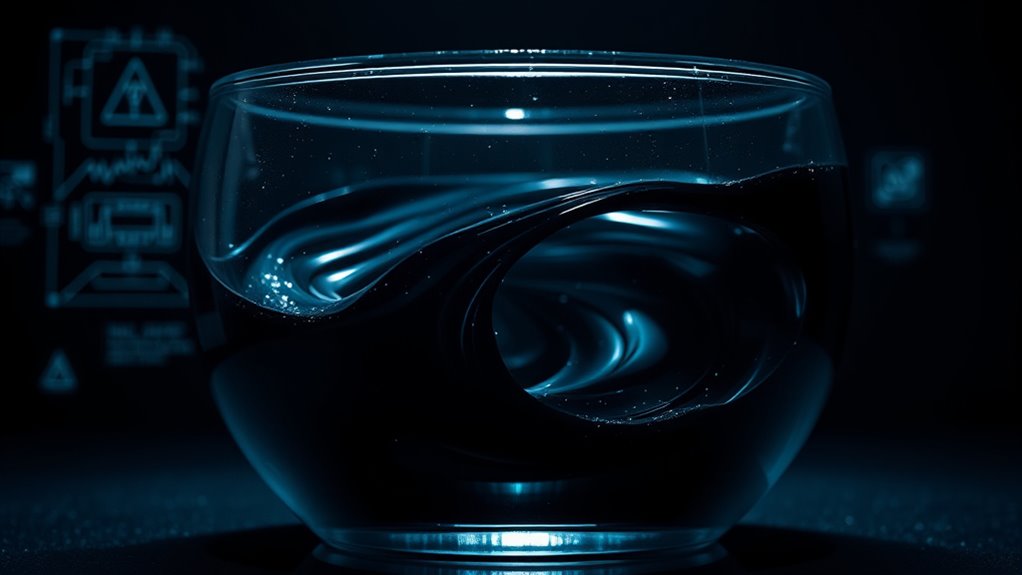
The Black Goo myth revolves around a mysterious, dark viscous substance that supposedly exhibits self-awareness and adaptive abilities. Proponents claim it can think, evolve, and even control minds, fueling theories about alien intelligence or secret weaponry. However, there’s no concrete evidence to support these ideas. Skeptics argue that the concept likely stems from misinterpretations of programmable matter or advanced nanomaterials, which are real but lack any form of consciousness. No verifiable samples of such a substance have ever been analyzed, making the myth largely anecdotal. While self-assembling nanomaterials do exist, they are designed for specific functions and don’t possess any independent intelligence or adaptive consciousness. Recognizing the difference between scientifically validated nanomaterials and speculative myths is crucial for rational understanding. Ongoing research in nanotechnology emphasizes that these materials are created with precise, functional purposes and are not capable of self-awareness or autonomous decision-making.
As an affiliate, we earn on qualifying purchases.
Debunking Mrna Vaccine Nanobot Claims

Are claims that COVID-19 vaccines contain self-assembling nanobots causing harm based on truth or fiction? These claims are rooted in misinformation. Imagine tiny particles:
- Self-assembling structures that supposedly form inside your body. This falsehood disregards the well-understood nanoparticle composition of the vaccine delivery systems.]
- Clots and tumors allegedly caused by these nanobots.
- Invisible bots supposedly controlling your cells.
In reality, the vaccines use lipid nanoparticles to deliver mRNA, which prompts your immune response. There’s no credible evidence that these particles can self-assemble into harmful structures or act as nanobots. The study fueling these claims was published by an organization with anti-vaccine ties and lacks scientific rigor. The nanoparticles are well-understood, safe, and do not possess autonomous or harmful capabilities. These conspiracy theories distort scientific facts to spread fear. Additionally, understanding the role of contrast ratio in imaging helps clarify that these claims have no basis in established scientific principles.
lipid nanoparticle vaccine components
As an affiliate, we earn on qualifying purchases.
As an affiliate, we earn on qualifying purchases.
The Truth About Graphene and Its Uses

Graphene has become a focal point of many conspiracy theories, especially amid misinformation surrounding nanotechnology and COVID-19. Despite its advanced applications, false claims link graphene to vaccine control or mind-reading devices. In reality, graphene is a remarkable material used in energy storage, sensors, and medicine, with Nobel recognition for its potential. No credible evidence connects it to harmful conspiracies. Its properties attract disinformation, but scientific research confirms its safety and versatility. To clarify, here’s a comparison:
| Aspect | Fact | Myth |
|---|---|---|
| Uses | Energy, medicine, sensors | Control, mind-reading devices |
| Safety | Approved in many applications, tested rigorously | Dangerous, untested claims |
| Presence in vaccines | Not included in COVID vaccines | Hidden ingredient for control |
| Scientific backing | Supported by peer-reviewed research | Based on rumors and speculation |
| Recognized applications | Nobel Prize awarded for graphene research | Conspiratorial misuse |
As an affiliate, we earn on qualifying purchases.
The Role of Scientific Communication in Nanomaterial Safety
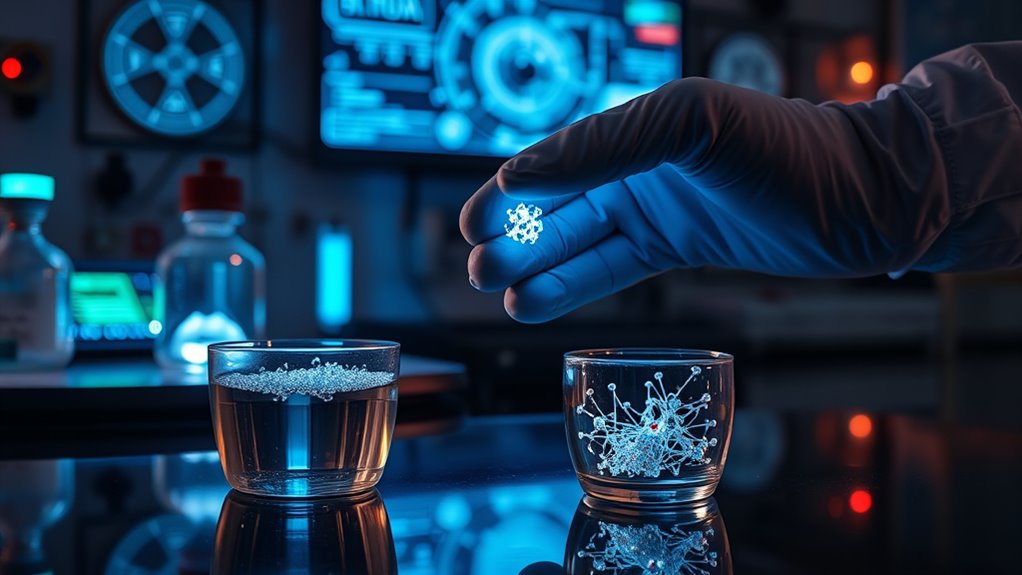
Effective scientific communication plays a crucial role in ensuring public understanding and safety regarding nanomaterials. When information is clear and accurate, you can better differentiate facts from fiction. Imagine:
- A well-organized website presenting safety data with simple visuals, making complex concepts easy to grasp.
- Expert-led workshops that directly address your concerns, dispelling myths with transparent explanations.
- News articles backed by credible sources, providing timely updates on nanomaterial research and safety standards.
- Clear, accessible explanations of science‑driven insights, enabling everyone to stay informed and make educated decisions about nanotechnology. Additionally, public engagement strategies help bridge the gap between scientists and the community, fostering trust and understanding. Understanding filter maintenance and replacement techniques can also contribute to safer handling and better perception of nanomaterials in everyday applications. Incorporating visual and auditory cues in communication efforts can further enhance understanding, especially for diverse audiences. Promoting transparency through accurate data dissemination can further enhance public confidence and support informed policy decisions.
How Conspiracy Theories Interconnect and Spread

You’ll notice how conspiracy theories link together through shared themes like nanoparticles and secret technologies, creating a web that’s easy to spread. Amplification strategies, like social media posts and sensational claims, quickly boost their reach and influence. This network of misinformation makes it harder for the public to distinguish facts from fiction, fueling distrust in science. Recognizing the signs of toxic relationships can help individuals protect themselves from emotionally manipulative narratives.
Network of Misinformation
Conspiracy theories about nanotechnology often form interconnected networks that amplify their reach and influence. These webs link ideas like black goo, vaccine nanobots, and graphene, creating a complex web of misinformation. You might picture:
- Viral social media posts that share similar claims, each reinforcing the other’s credibility.
- Online forums where skeptics and conspiracy proponents exchange ideas, strengthening their narratives.
- Shared imagery and videos that depict exaggerated or false evidence, making the theories seem more convincing.
These interconnected stories feed off each other, making it harder for the public to discern facts from fiction. They spread rapidly across platforms, creating a sense of consensus, even when the evidence is lacking. This web of misinformation fuels distrust and confusion about nanotech advancements.
Amplification Strategies
Conspiracy theories about nanotechnology employ strategic amplification methods to enhance their interconnectedness and spread across platforms. They often reuse familiar themes, like the Black Goo or vaccine nanobots, creating a web of related stories that reinforce each other. Social media algorithms favor sensational content, boosting visibility and engagement, especially when theories evoke strong emotions like fear or suspicion. Conspiracists deliberately cross-reference claims—linking nanotech to chemtrails or geoengineering—to build credibility through a sense of interconnectedness. Viral posts, often lacking credible sources, spread rapidly through shares and comments, amplifying the narrative. This interconnected web makes it harder for the public to distinguish fact from fiction, as multiple theories reinforce one another, creating a powerful feedback loop that sustains and magnifies misinformation. Additionally, the use of sound vibrations in sound healing and therapy is sometimes misrepresented to support unfounded claims about nanotech’s healing capabilities, further blurring the lines between fact and fiction.
Public Perceptions and Misinformation Challenges
You often see misinformation spread through sensational claims and emotionally charged language, making it hard to trust credible sources. Misinformation amplification strategies leverage social media and visual content to sway public opinion quickly. To build trust, scientists and communicators must address fears with clear, transparent information and engage directly with communities. Incorporating simple, effective strategies can help demystify complex topics like nanotech and foster informed discussions. Recognizing the importance of public perception is crucial in addressing misconceptions and promoting accurate understanding. Additionally, understanding the key features of nanotech, such as waterproof materials and advanced manufacturing, can help clarify its real potential and limitations. Being aware of self-sufficiency practices, like sustainable food and resource management, can also contribute to a more grounded perspective on technological advancements.
Furthermore, increasing public awareness through accessible education can significantly reduce the spread of misinformation and build a more informed community.
Misinformation Amplification Strategies
Misinformation amplification strategies often exploit public perceptions of nanotechnology by spreading sensational claims that evoke fear and distrust. They use vivid stories and alarming visuals to deepen skepticism. For example:
- Visualizing black goo that “self-aware” and “adaptive,” creating an image of alien intelligence lurking in labs.
- Claiming nanoparticles in vaccines form “mind-controlled” structures, fueling fears of hidden control mechanisms.
- Linking graphene to sinister uses, like “nano-surveillance,” despite its proven scientific benefits.
These tactics leverage emotional reactions, making complex science seem threatening. They often ignore scientific context, misrepresenting scientific facts and amplifying doubts and confusion. By creating vivid imagery and sensational narratives, these strategies distort facts, making it harder for the public to discern truth from fiction. Recognizing these tactics helps you critically evaluate misinformation.
Navigating Public Trust
Building public trust in nanotechnology is increasingly challenging as misinformation and exaggerated fears spread rapidly through social media and sensational stories. You might encounter claims about sinister nanomaterials or conspiracy theories that play on emotions rather than facts. These stories often exploit the complex nature of nanotech, making it hard for non-experts to discern truth from fiction. To navigate this landscape, rely on credible sources like scientific organizations and transparent communication efforts. Initiatives such as the DaNa project aim to provide clear, evidence-based information about nanomaterial safety. Engaging openly with the public and addressing concerns honestly helps build confidence. Recognizing that misinformation thrives on fear, your role is to promote factual understanding and foster a balanced view of nanotechnology’s potential and risks.
The Impact of Disinformation on Scientific Progress

Disinformation considerably hampers scientific progress by sowing doubt and confusion around established research. When false claims spread, they create a fog that distorts public understanding and delays breakthroughs. You might imagine:
- Researchers chasing shadows, wasting time debunking myths instead of advancing knowledge.
- Public skepticism growing, making it harder to implement new technologies like nanomaterials safely.
- Policy delays due to mistrust, hindering innovation and funding for promising nano-focused projects.
- The proliferation of fake information further complicates efforts to verify credible research findings. Additionally, the spread of misleading narratives can distort the scientific consensus, making it even more challenging to communicate accurate information effectively. Recognizing the importance of critical evaluation can help mitigate the effects of disinformation on scientific development. The presence of verified data is essential to combat the spread of falsehoods and maintain trust in scientific endeavors. This chaos discourages collaboration, fuels mistrust, and stalls scientific breakthroughs. The more disinformation circulates, the harder it becomes to differentiate fact from fiction, undermining efforts to develop safe, effective nanotech solutions. Moreover, public awareness about scientific integrity plays a crucial role in fostering a more informed society. Your role in critical evaluation becomes essential to combat this destructive cycle.
Strategies for Promoting Scientific Literacy

Promoting scientific literacy requires targeted strategies that engage the public and foster critical thinking skills. You should prioritize clear, accessible communication that breaks down complex nanotech concepts into relatable ideas. Using real-world examples, like the safety assessments from the DaNa project, helps build trust and understanding. Interactive methods, such as public workshops or online platforms, encourage active participation and curiosity. Address misinformation directly by presenting evidence-based facts and explaining how disinformation spreads. Collaborate with educators to incorporate nanotechnology topics into curricula, empowering future generations to evaluate claims critically. By promoting transparency, providing reliable resources, and nurturing inquiry, you help create a public better equipped to distinguish between conspiracy theories and scientific facts. Understanding the importance of public perception in scientific progress is crucial for fostering acceptance and responsible innovation. This approach ultimately strengthens societal confidence in nanotech advancements.
Frequently Asked Questions
Are There Any Verified Samples of the So-Called Black Goo?
You won’t find any verified samples of the so-called black goo because no credible evidence or scientific analysis has confirmed its existence. The claims are mostly anecdotal and speculative, often linked to conspiracy theories without factual backing. Researchers and authorities haven’t documented or studied such a substance, so it remains a myth. Until verified samples emerge and are rigorously examined, the black goo stays in the sphere of fiction.
What Credible Evidence Supports the Existence of Nanobots in Vaccines?
Imagine tiny robots marching into your bloodstream, ready to take over—sounds like a sci-fi movie, right? But, in reality, there’s no credible evidence supporting nanobots in vaccines. Scientists have thoroughly examined vaccine ingredients, confirming they’re made of lipids, proteins, and mRNA, with no sign of autonomous nanobots. So, while it’s fun to dream of microscopic armies, the facts show no such invasion is happening.
How Do Graphene Applications Differ From Conspiracy Claims About It?
Graphene applications differ greatly from conspiracy claims because scientists use it for real, beneficial purposes like energy storage and medical treatments. You should know that verified research shows graphene’s properties help improve batteries and sensors, unlike false theories suggesting it’s part of control mechanisms or vaccines. These disinformation stories exploit its advanced features, but credible studies confirm its safe and practical use in technology, not in any sinister schemes.
What Role Do Science Communicators Play in Combating Nanomaterial Misinformation?
You play a vital role in combating nanomaterial misinformation, especially since over 8 million people engaged with false claims about COVID-19 vaccines. By providing clear, evidence-based information, you help build trust and dispel myths. Your active efforts in science communication guarantee the public understands nanomaterials’ real benefits and risks, countering fear and confusion. This is indispensable for fostering informed decisions and supporting scientific progress.
How Can the Public Better Distinguish Between Conspiracy Theories and Scientific Facts?
You can better distinguish between conspiracy theories and scientific facts by checking credible sources, such as peer-reviewed studies and official health organizations. Be skeptical of sensational claims lacking evidence, and look for consensus among experts. Avoid spreading unverified information, and ask questions about the origin of the claims. Staying informed and critical helps you separate fact from fiction, ensuring you make decisions based on reliable science.
Conclusion
So, next time you hear about black goo or nanobots controlling your mind, remember: science isn’t hiding secret conspiracies—it’s busy making your life better. Ironically, it’s misinformation that spreads faster than facts, turning complex research into wild stories. Instead of falling for fiction, trust credible science and stay curious. After all, the real marvel isn’t a conspiracy, but your ability to question, learn, and see through the noise.
Flea & tick season Picks
flea and tick prevention
As an affiliate, we earn on qualifying purchases.