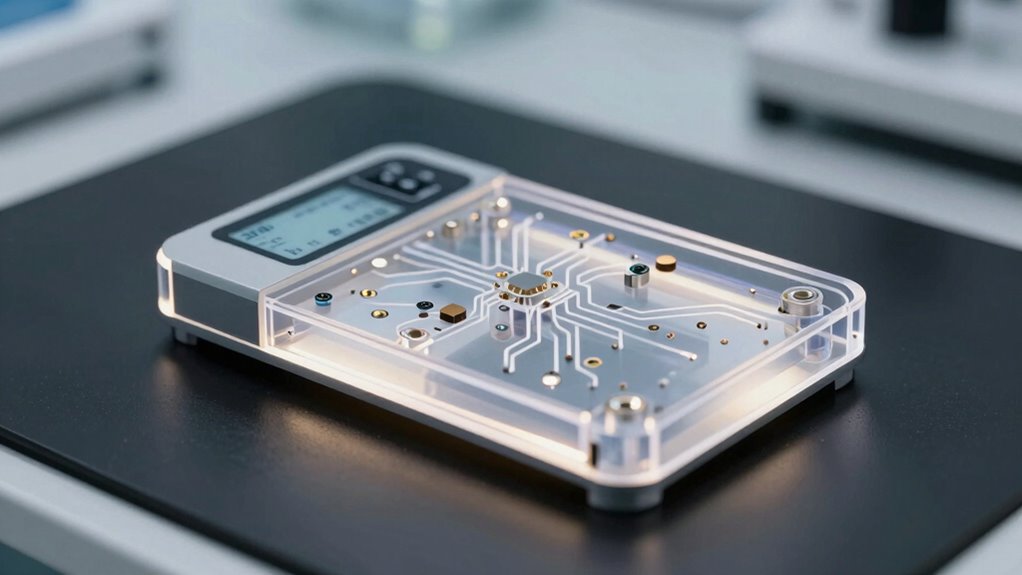
Lab-on-a-chip technology combines microfluidics and nanotech to quickly diagnose diseases by processing tiny samples within minutes. These devices automate steps like sample prep, mixing, and detection, offering high sensitivity and speed. By integrating nanoscale materials, they detect biomarkers and pathogens accurately, making portable diagnostics possible—especially for infectious and chronic diseases. If you explore further, you’ll discover how these innovative tools are transforming healthcare delivery worldwide.

Get the latest gadgets delivered free — and shop member deals
- Fast, free delivery on millions of items
- Access to Prime Big Deal Days deals on October 6–7
- Prime Video, Amazon Music and more included
Key Takeaways
- Lab-on-a-chip devices miniaturize traditional diagnostics, enabling rapid, on-site disease detection with minimal sample volumes.
- Incorporation of nanomaterials like quantum dots enhances sensitivity and enables quick biomarker identification.
- Microfluidic channels precisely control fluids for fast sample processing, amplification, and detection within minutes.
- Nanotechnology integration allows multiplexed testing and early diagnosis, especially beneficial in resource-limited settings.
- Advanced LOC platforms, combined with AI and nanotech, deliver accurate, rapid results for timely disease diagnosis.
The Basics of Lab-on-a-Chip Technology
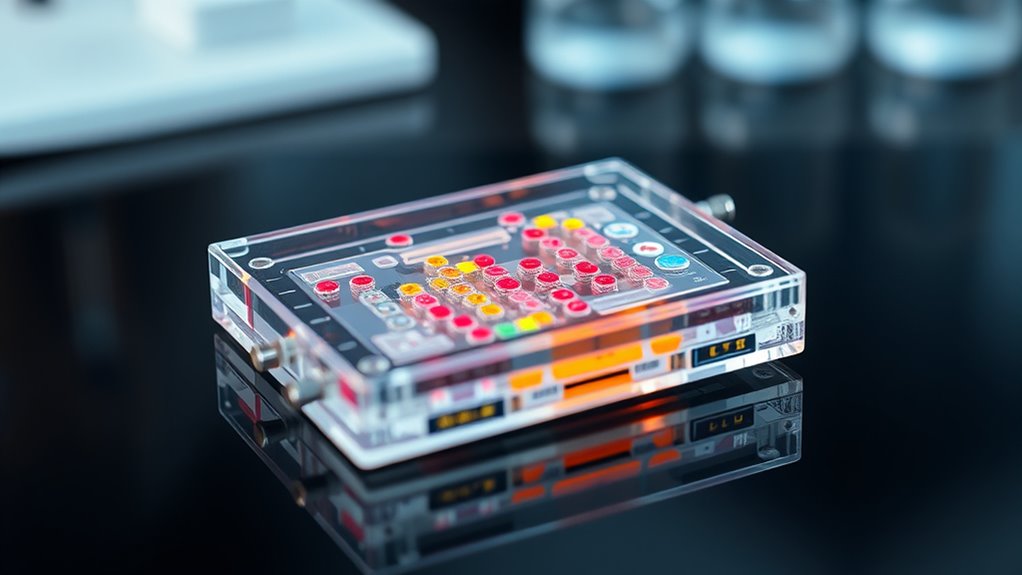
Lab-on-a-chip (LOC) technology miniaturizes traditional laboratory functions onto a single microfluidic device, allowing you to perform complex sample processing and analysis quickly and efficiently. Instead of large, bulky lab setups, LOC devices are compact and portable, integrating multiple steps like sample preparation, mixing, and detection within tiny channels. They combine microfluidics and nanotechnology to handle small sample volumes, reducing reagent use and cost. These chips can perform rapid bioassays, such as nucleic acid amplification tests, in minutes. By miniaturizing lab functions, LOC enables point-of-care testing, especially useful in remote or resource-limited settings. This technology simplifies workflows, shortens turnaround times, and makes diagnostic testing more accessible, efficient, and cost-effective. Additionally, advances in projector technology can enhance the visualization of results in various healthcare environments, improving the overall diagnostic process. The integration of sustainable manufacturing practices in LOC devices can further reduce environmental impact and support global health initiatives.
How Microfluidics Power Rapid Diagnostics
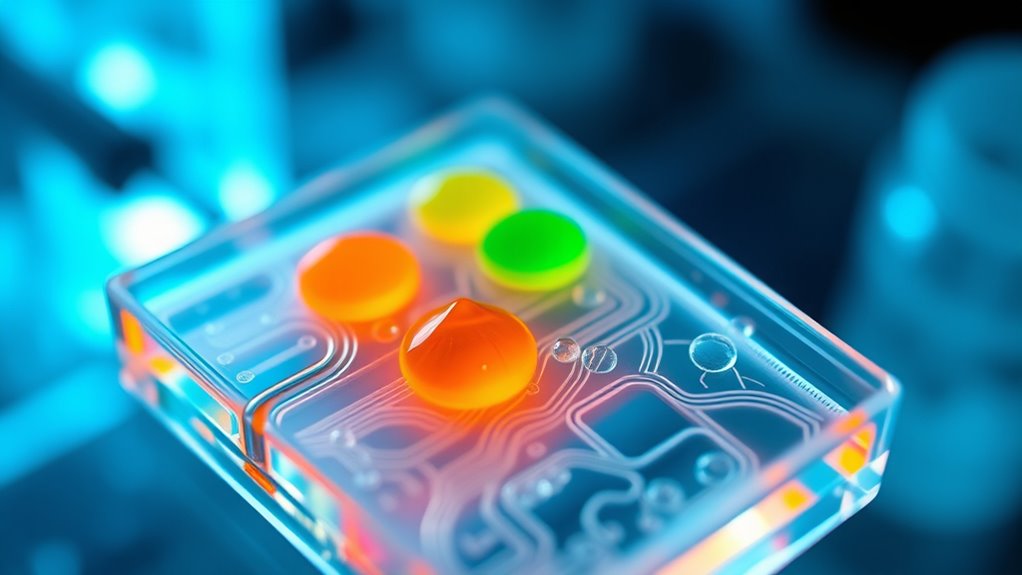
Microfluidics enables you to handle tiny sample volumes with precision and speed, streamlining the diagnostic process. This technology accelerates testing by quickly manipulating biological fluids and performing complex assays on a single chip. As a result, rapid, accurate results become possible at the point of care, even in resource-limited settings. Microfluidic devices are often inspired by innovative designs from fields like biomimicry, which enhance their efficiency and functionality. Additionally, integrating creative storytelling approaches can help communicate the benefits of this technology to diverse audiences, fostering greater adoption and understanding. Incorporating automotive repair principles such as regular inspection and maintenance can also improve device longevity and performance in clinical environments.
Microfluidic Sample Handling
Have you ever wondered how tiny channels can process and analyze samples so quickly? Microfluidic sample handling uses minuscule channels to precisely control fluids at the microliter and nanoliter scale. You direct your sample into these channels, where it’s automatically split, mixed, or purified, often with minimal reagent use. The design allows rapid transport and reaction times, enabling you to perform complex bioassays in minutes. Microfluidics also isolates specific components, such as nucleic acids or proteins, improving detection accuracy. Because of their small size, these devices reduce contamination risks and require less sample volume—crucial for patient comfort and resource conservation. This precise handling accelerates diagnostics, making it possible to quickly identify pathogens or biomarkers right at the point of care. Additionally, the integration of microfluidic chips with detection methods further enhances the speed and sensitivity of diagnostic tests.
Accelerated Diagnostic Processes
Microfluidic technology accelerates diagnostic processes by enabling rapid sample processing and analysis within compact devices. You can perform complex bioassays, like nucleic acid amplification tests, in minutes instead of hours. Microchannels allow multiple samples to run simultaneously, increasing throughput and efficiency. These devices use minimal reagents and small sample volumes, reducing costs and patient discomfort. With integrated detection methods, such as quantum dots or biosensors, you get quick, accurate results at the point of care. Portable lab-on-a-chip systems make it possible to diagnose infectious diseases like influenza, COVID-19, or hepatitis rapidly, even in remote settings. By streamlining workflows and automating critical steps, microfluidics cuts down testing time and boosts early detection, ultimately improving patient outcomes and enabling swift medical responses.
Nanotechnology’s Role in Disease Detection
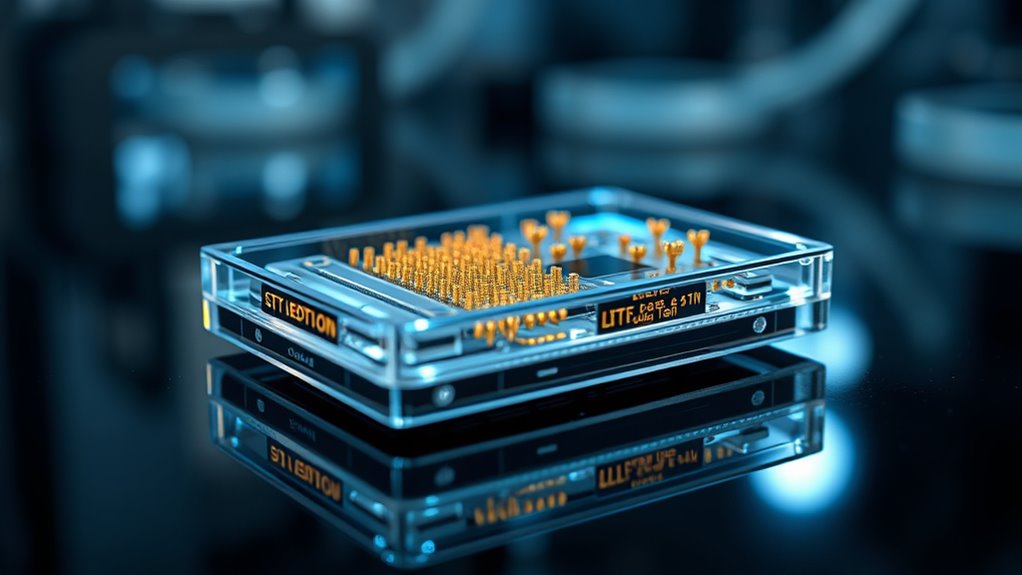
Nanotechnology enhances disease detection by enabling highly sensitive biomarker identification at the nanoscale. You can incorporate nanoscale devices like quantum dots and nanofluidic systems into lab-on-a-chip platforms for rapid, precise diagnostics. This integration improves early detection and accuracy, especially in resource-limited settings. Additionally, AI ethics ensures that the development and deployment of nanotech solutions adhere to moral and societal standards, fostering public trust. Moreover, understanding biomarker detection at the nanoscale allows for the development of more targeted and efficient diagnostic tools. Leveraging industry trends in nanotechnology can further accelerate innovation and adoption in medical diagnostics. Furthermore, employing body-compatible materials in nanotech devices minimizes immune reactions and enhances biocompatibility, ensuring safer diagnostic procedures.
Sensitive Biomarker Detection
Ever wondered how tiny technological advances are transforming disease detection? With nanotechnology, you can now identify minute amounts of biomarkers that signal disease early. Lab-on-a-chip devices use nanostructures like quantum dots and nanofluidics to detect specific molecular markers with high sensitivity. These tools analyze blood, saliva, or other samples rapidly, often in just minutes, revealing infections or chronic conditions before symptoms appear. By concentrating and isolating targets at the nanoscale, these systems improve detection limits and accuracy. This Floating on Water approach enables portable and cost-effective diagnostics, expanding access to healthcare in remote or resource-limited settings. Additionally, the integration of nanofabrication techniques allows for the miniaturization and customization of diagnostic tools tailored to specific diseases. This means you get quicker, more reliable diagnoses, essential for timely treatment. The ability to detect biomarkers at such low concentrations is revolutionizing healthcare, especially in remote or resource-limited settings where traditional lab facilities are unavailable.
Nanoscale Device Integration
Nanoscale device integration is transforming disease detection by embedding nanostructures directly into lab-on-a-chip platforms. This integration boosts sensitivity, speed, and miniaturization, enabling rapid, point-of-care diagnostics. Nanomaterials like quantum dots improve detection of infectious agents, while nanofluidic channels allow for precise biomarker analysis. You can now perform complex bioassays with minimal sample volumes and high throughput. This synergy of nanotech and microfluidics supports multiplexed testing, essential for timely diagnosis. Additionally, the use of culturally inspired Indonesian decor masks in laboratory settings can enhance aesthetic appeal and create a more inviting environment for healthcare professionals and patients alike. Innovations in nanotechnology continue to drive progress toward more accessible healthcare solutions. Researchers are also exploring standardization methods to ensure consistency and reliability across different platforms. Standardization is crucial for achieving widespread adoption and ensuring quality control in clinical applications. Addressing issues like biocompatibility is essential for safe and effective device performance in real-world settings. However, challenges remain in standardization, validation, and scaling. Addressing these hurdles is vital for widespread deployment. Here’s an overview of key aspects:
| Aspect | Benefit | Challenge |
|---|---|---|
| Nanomaterials | Enhance sensitivity | Biocompatibility |
| Nanofluidics | Precise biomarker detection | Standardization |
| Integration | Compact, portable devices | Scalability |
Transforming Healthcare With Portable Devices
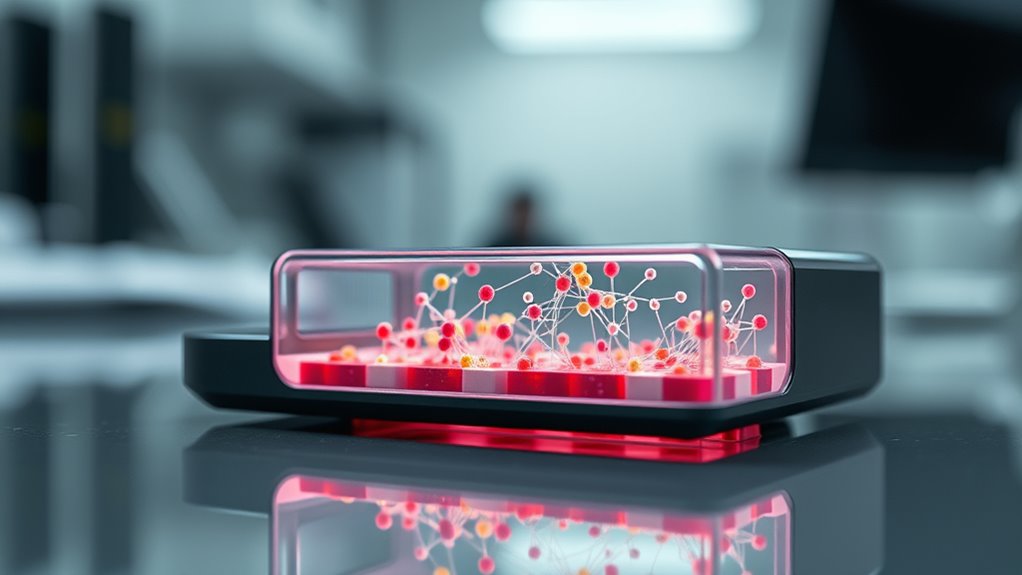
Portable devices are revolutionizing healthcare by bringing advanced diagnostic capabilities directly to patients, regardless of location. With miniaturized lab-on-a-chip systems, you can perform complex tests in minutes, right at the point of care. These devices use microfluidics and nanotechnology to analyze blood, saliva, or other samples quickly and with minimal reagent use. They’re easy to operate, requiring less training, and deliver rapid results, enabling prompt decision-making. Whether you’re in a remote clinic or at home, these tools can detect infections, monitor chronic conditions, and assist in early diagnosis. Their portability reduces reliance on centralized labs, cuts costs, and improves access for underserved populations. As technology advances, these devices will become even more integrated into everyday healthcare, transforming how you diagnose, monitor, and manage health conditions. Incorporating study techniques and exam preparation can help healthcare professionals stay updated on these emerging technologies and ensure proper implementation.
Applications in Infectious and Chronic Disease Management
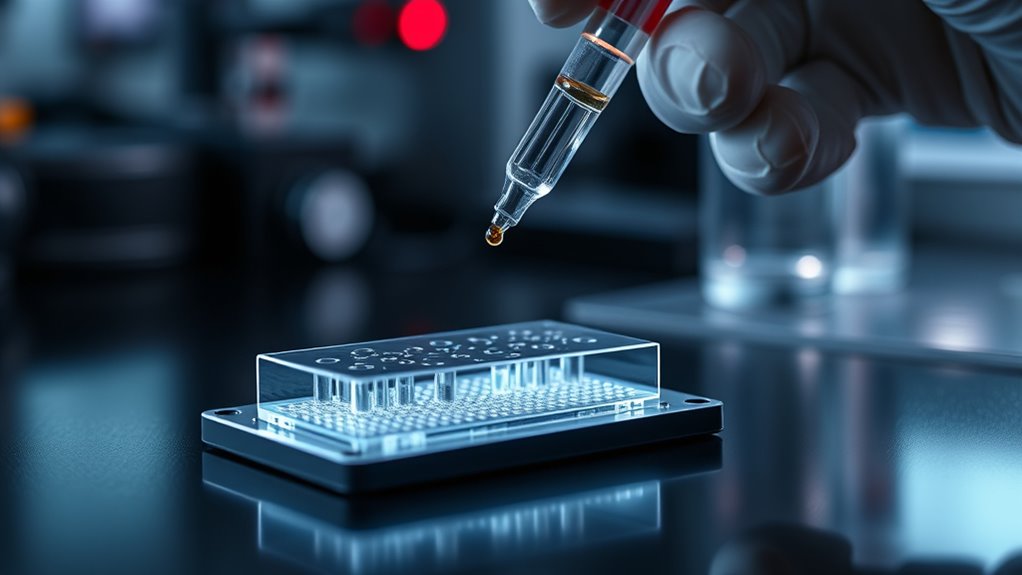
Lab-on-a-chip devices are transforming how healthcare providers detect and manage infectious and chronic diseases. They enable rapid, sensitive testing right at the point of care, reducing reliance on centralized labs. For infectious diseases like HIV, hepatitis, and COVID-19, LOC systems quickly identify pathogens within minutes. They also track chronic conditions such as diabetes, kidney issues, and respiratory illnesses by detecting specific biomarkers. The table below highlights some applications:
| Disease Type | Biomarker Detection | Time to Result |
|---|---|---|
| Infectious | Pathogens, viral RNA/DNA | Minutes |
| Chronic | Blood glucose, kidney markers | Seconds to Minutes |
| Oral & Salivary | Salivary biomarkers for oral diseases | Minutes |
These portable, efficient tools improve early diagnosis, especially in remote or resource-limited settings. Additionally, understanding the costs and financial considerations involved in deploying these devices can help optimize their implementation in various healthcare environments. Incorporating compliance with regulations ensures these devices meet safety and efficacy standards critical for widespread adoption. Moreover, ongoing advancements in nanotechnology are continuously expanding the applications of lab-on-a-chip systems across diverse medical fields. As research progresses, the integration of nanotechnology with LOC systems promises even more precise and versatile diagnostic capabilities.
Speed and Precision: The Advantages of LOC Systems
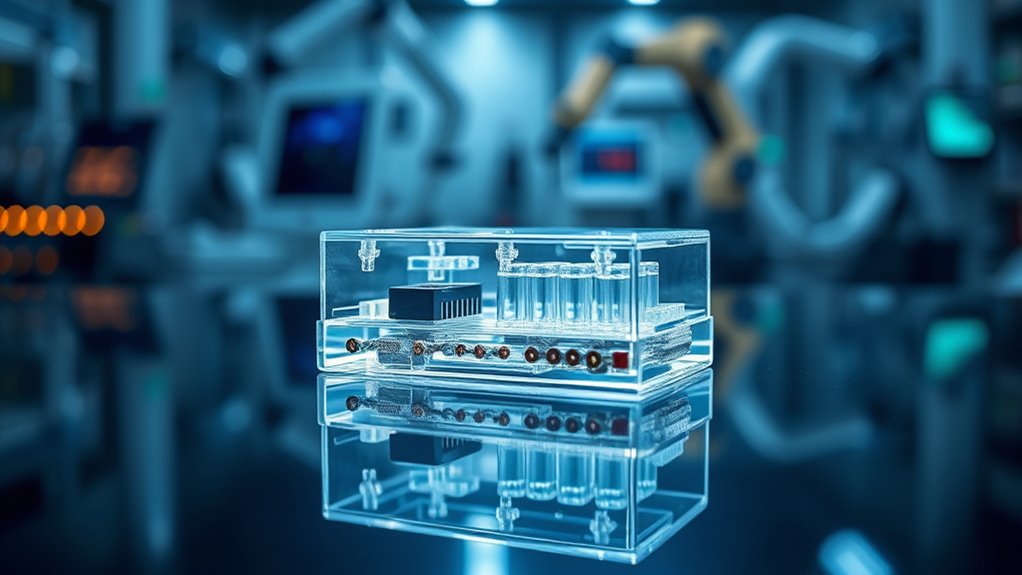
One of the key advantages of LOC systems is their remarkable speed and precision, which considerably enhances diagnostic capabilities. You can perform complex bioassays, like nucleic acid amplification tests, in just minutes—much faster than traditional lab methods. Microfluidics allows multiple assays to run simultaneously, enabling high-throughput and multiplexed analysis. Portable devices deliver rapid results at the point of care, making immediate decisions possible. Precision is achieved through nanotechnology and advanced biosensing, detecting even low levels of biomarkers with high accuracy. Additionally, AI models interpret data quickly, improving diagnostic reliability. This combination of speed and precision not only accelerates disease detection but also reduces sample volumes and reagent use, making diagnostics more accessible, cost-effective, and suitable for remote or resource-limited settings.
Overcoming Challenges in LOC Implementation
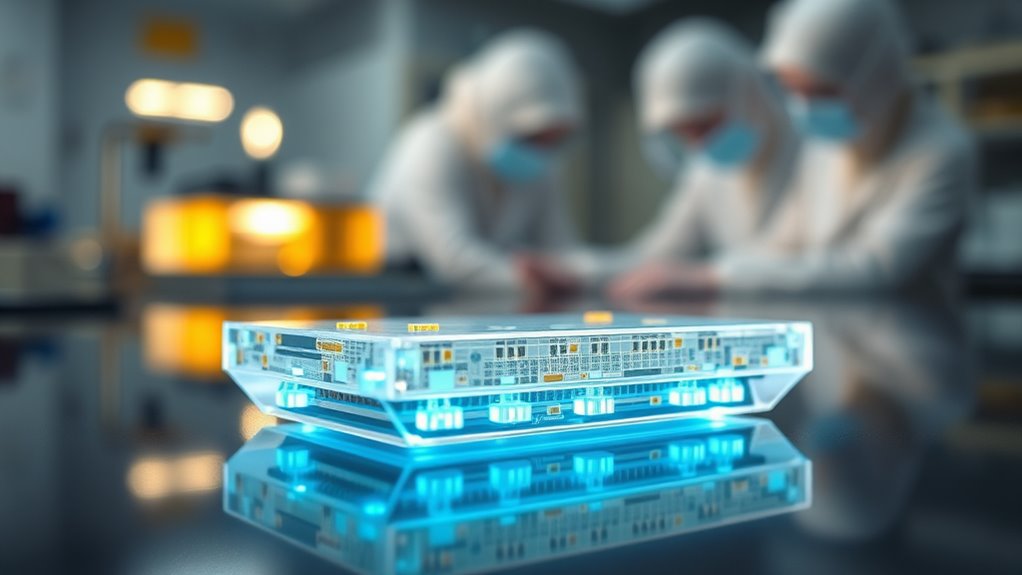
Despite the significant advantages of LOC systems, their widespread adoption faces several hurdles that must be addressed. One major challenge is the need for thorough clinical validation of new biomarkers to guarantee reliability and accuracy. Additionally, integrating AI for disease detection requires robust algorithms and extensive training data. Standardization issues in nanofluidic biosensing can hinder reproducibility across platforms. Scalability remains a concern, as moving from laboratory prototypes to mass production demands cost-effective manufacturing. Furthermore, sample preparation and detection accuracy must be optimized to avoid false positives or negatives. Overcoming these obstacles involves collaborative efforts between researchers, clinicians, and industry to develop validated, standardized, and scalable solutions that can seamlessly fit into existing healthcare frameworks.
- Clinical validation of new biomarkers
- Integration of reliable AI algorithms
- Standardization of nanofluidic biosensors
- Cost-effective manufacturing scalability
- Optimization of sample prep and detection
The Future of Nanotech-Enabled Diagnostic Platforms
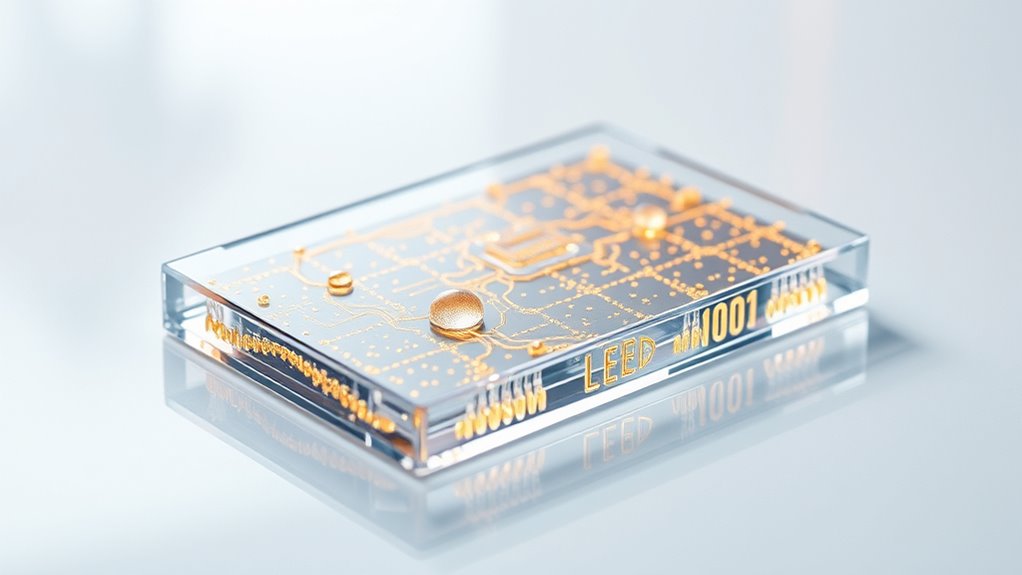
How will nanotechnology revolutionize diagnostic platforms in the coming years? You’ll see more integrated, ultra-sensitive lab-on-a-chip devices that deliver rapid results at the point of care. Advances in nanomaterials like quantum dots and nanofluidics will enable detection of biomarkers at even lower concentrations, increasing diagnostic accuracy. Self-powered systems, such as triboelectric nanogenerators, will simplify device design, making portable diagnostics more accessible. AI integration will enhance data analysis, reducing false positives and improving disease monitoring. Future platforms will combine multiplexed testing, high-throughput screening, and miniaturization, allowing you to diagnose multiple diseases quickly, even in remote or resource-limited settings. As nanotech evolves, you’ll benefit from faster, cheaper, and more precise diagnostics that transform healthcare delivery worldwide.
Frequently Asked Questions
How Cost-Effective Are Lab-On-A-Chip Devices Compared to Traditional Lab Tests?
Lab-on-a-chip devices are highly cost-effective compared to traditional lab tests. You save money by using fewer reagents and samples, reducing waste and operational costs. Their portability means you can perform tests on-site, eliminating transportation expenses. Plus, these devices deliver rapid results, saving time and enabling quicker decision-making. Overall, their affordability and efficiency make them a practical choice, especially in resource-limited settings or for large-scale screening efforts.
What Are the Main Regulatory Hurdles for Clinical Adoption of LOC Systems?
Did you know that over 50% of new medical device approvals face lengthy regulatory delays? You’ll find that main hurdles for clinical adoption of LOC systems include proving safety and accuracy through rigorous validation, managing complex regulatory frameworks like FDA approval, and establishing standardized protocols for consistent results. You’ll need to demonstrate reliability, scalability, and compliance with evolving regulations to successfully bring these innovative devices into widespread healthcare use.
How Do LOC Devices Ensure Data Security and Patient Privacy?
You guarantee data security and patient privacy in LOC devices by implementing strong encryption protocols during data transmission and storage. You also restrict access with multi-factor authentication and role-based permissions. Regular software updates patch vulnerabilities, and you anonymize data whenever possible. Additionally, you follow strict compliance standards like HIPAA or GDPR, conducting routine audits to identify and address potential security risks, safeguarding sensitive health information effectively.
Can LOC Technology Be Integrated With Existing Healthcare Infrastructure?
Imagine a seamless bridge connecting tiny, portable LOC devices to your hospital’s digital network. You can easily integrate LOC tech with existing healthcare infrastructure by updating your electronic health records systems, ensuring secure data exchange, and training staff on new protocols. This integration creates a smooth flow of real-time diagnostic data from the lab-on-a-chip to doctors’ screens, enhancing patient care with faster, more accurate results without disrupting your current systems.
What Are Future Innovations Expected to Enhance LOC Diagnostic Capabilities?
Future innovations will likely focus on integrating artificial intelligence for more accurate, real-time analysis and expanding multi-analyte detection capabilities. You can expect improved miniaturization, making devices even more portable and user-friendly. Advances in nanomaterials will boost sensitivity and specificity, while automation and cloud connectivity will enable remote monitoring. These innovations will make LOC devices more accessible, faster, and reliable, transforming healthcare, especially in remote or resource-limited settings.
Conclusion
You can see how lab-on-a-chip technology is revolutionizing healthcare, making diagnostics faster and more precise. Some experts believe that nanotech-enabled devices could even detect diseases before symptoms appear, transforming early intervention. While challenges remain, ongoing innovations suggest that rapid, portable diagnostics will soon become standard. Embrace this cutting-edge future—you might just be part of a groundbreaking shift in disease management and personalized medicine.
Fall Picks
fall essentials
As an affiliate, we earn on qualifying purchases.