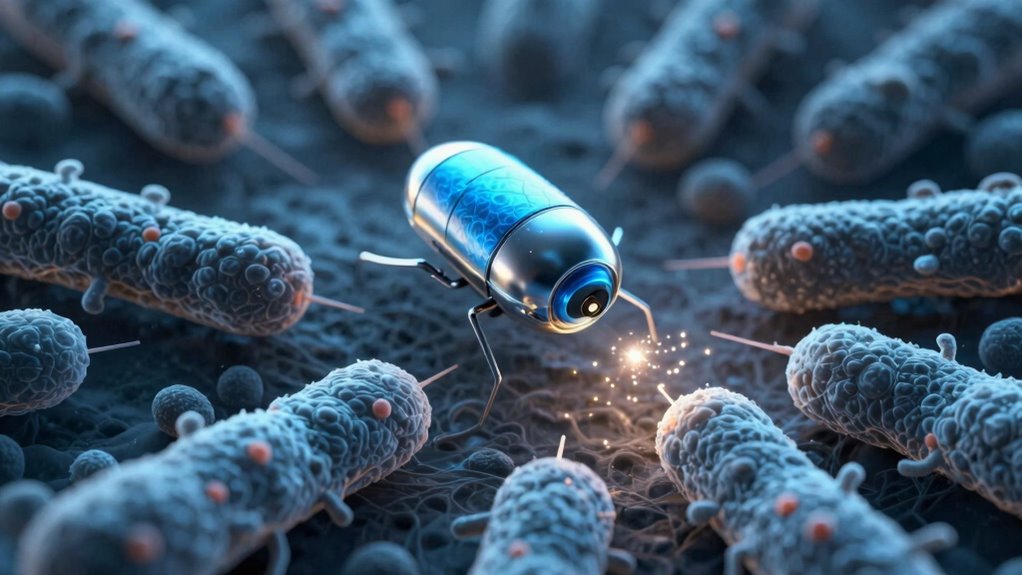

Nanotech fights drug-resistant bacteria by using tiny particles that tear through bacterial membranes and walls, making bacteria more vulnerable. These nanoparticles generate reactive oxygen species that damage essential cell components and boost the power of antibiotics by delivering them directly where needed. They also penetrate stubborn biofilms, exposing hidden bacteria. If you want to understand how nanotech overcomes bacteria defenses and safety challenges, there’s more to learn below.
Key Takeaways
- Nanoparticles physically disrupt bacterial membranes, causing leakage and cell death, bypassing traditional resistance mechanisms.
- Nanomaterials generate reactive oxygen species (ROS) that oxidatively damage resistant bacteria’s proteins, lipids, and DNA.
- Nanocarrier systems enhance antibiotic delivery and efficacy against resistant strains, restoring drug activity.
- Functionalized NPs penetrate biofilms and deliver agents that break down protective matrices, exposing bacteria to treatment.
- Hybrid nanomaterials combine multiple bactericidal modes, effectively overcoming defenses of drug-resistant bacteria.
nanoparticle antibacterial agents
As an affiliate, we earn on qualifying purchases.
As an affiliate, we earn on qualifying purchases.
How Nanoparticles Disrupt Bacterial Membranes and Walls
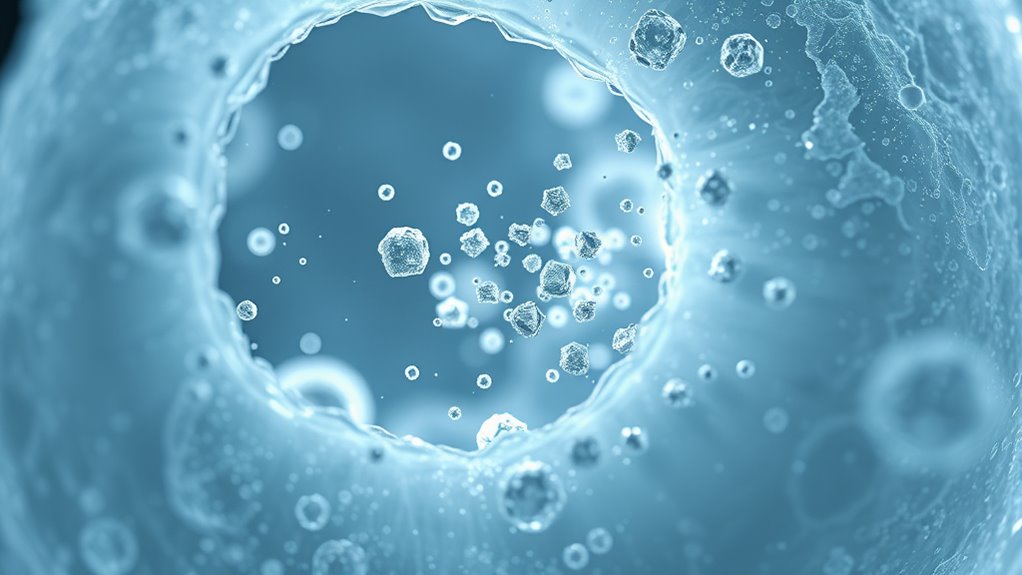
Nanoparticles can directly compromise bacterial membranes and walls through several mechanisms. You might notice that metallic and polymeric NPs interact with the lipid bilayer, disrupting its structure and increasing permeability. This interaction weakens the membrane, leading to leakage of essential cell contents and eventual lysis. Some NPs embed into the membrane, causing physical stress or creating pores that undermine integrity. The surface chemistry of NPs plays a key role; positively charged particles are attracted to negatively charged bacterial surfaces, facilitating contact and disruption. This direct targeting doesn’t rely on metabolic activity, making it effective against resistant strains. Additionally, membrane disruption is a critical step that leads to rapid bacterial death, bypassing traditional resistance mechanisms. When NPs induce oxidative stress, they further damage bacterial components and enhance antimicrobial effects. As a result, membrane integrity fails, and bacteria cannot maintain homeostasis, leading to cell death. This physical damage is a critical first step in nanoparticle-mediated bacterial killing. Understanding membrane interactions is crucial for designing effective antimicrobial nanomaterials.
silver zinc oxide nanomaterials for bacteria
As an affiliate, we earn on qualifying purchases.
As an affiliate, we earn on qualifying purchases.
Generating Reactive Oxygen Species to Damage Bacterial Components
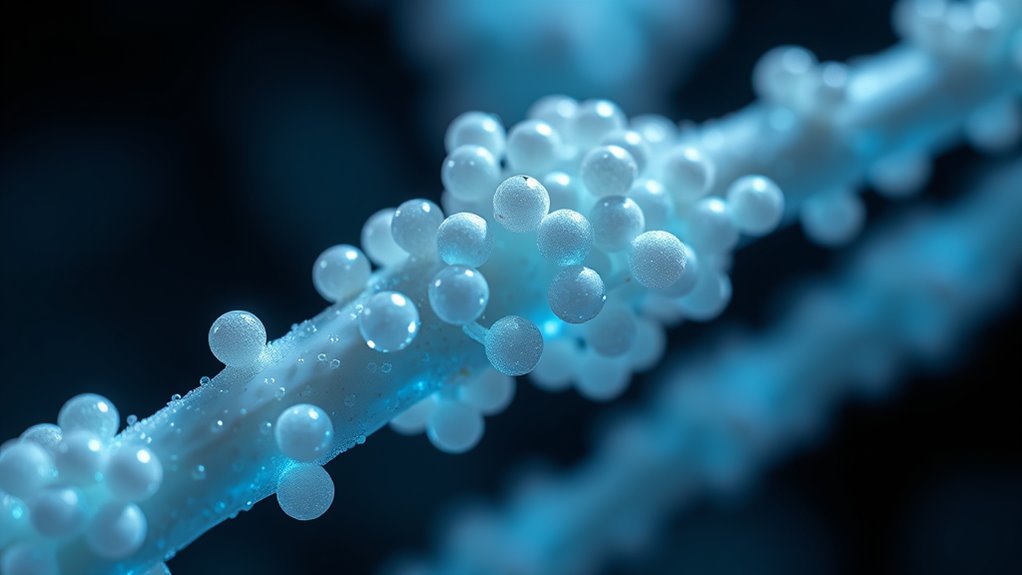
Have you wondered how certain nanomaterials kill bacteria beyond just disrupting their membranes? They generate reactive oxygen species (ROS), which cause oxidative damage inside bacterial cells. These ROS, like superoxide and hydrogen peroxide, attack essential components such as proteins, lipids, and DNA, leading to cell death. Metal nanoparticles like silver, zinc oxide, and cobalt-based NPs excel at producing ROS. This oxidative stress overwhelms bacterial defenses, especially in drug-resistant strains. The effectiveness of ROS generation can further enhance the understanding of these mechanisms, aiding in the development of more effective nanotech-based treatments. Notably, the ability of these nanoparticles to produce ROS is influenced by their composition and surface properties, which can be tailored to maximize antimicrobial activity. Additionally, understanding how nanoparticle design influences ROS production helps optimize their antibacterial effectiveness. Moreover, ongoing research aims to modulate ROS levels to improve safety and reduce potential toxicity to human cells.
Nanotechnology in Drug Delivery (Biotechnology: Pharmaceutical Aspects)
As an affiliate, we earn on qualifying purchases.
As an affiliate, we earn on qualifying purchases.
Enhancing Antibiotic Efficacy Through Nanoparticle Delivery Systems
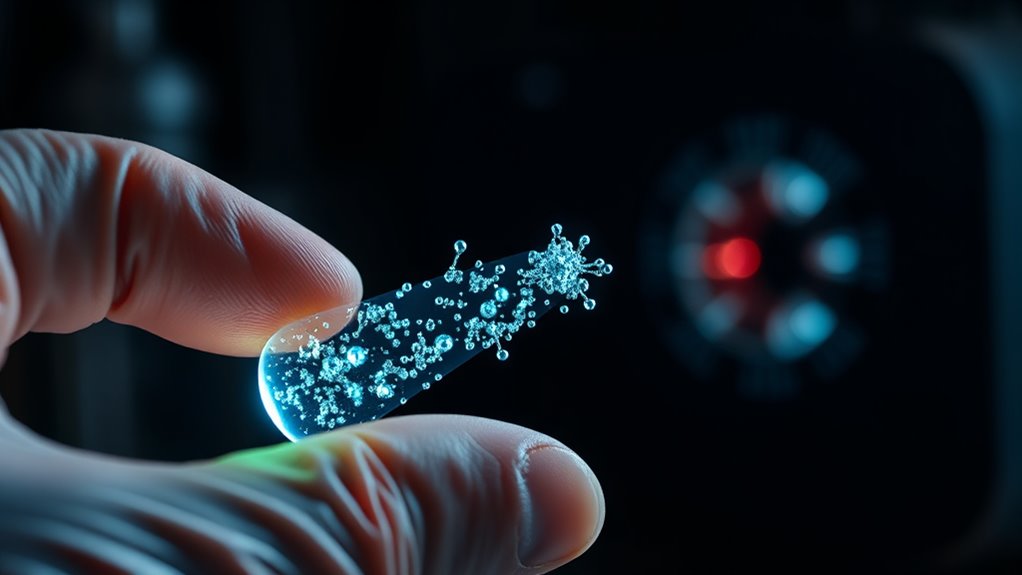
Building on the ability of nanomaterials to generate reactive oxygen species, researchers are now harnessing nanoparticles to improve antibiotic delivery. You can incorporate antibiotics or antimicrobial peptides into nanocarriers like liposomes, polymers, or silica particles, which concentrate drugs at infection sites and protect them from degradation. Surface modifications with targeting ligands help nanoparticles selectively bind bacteria, increasing uptake and reducing off-target effects. Conjugating antibiotics to silver or gold nanoparticles restores activity against resistant strains and lowers the necessary doses. Stimuli-responsive systems release drugs precisely where needed, enhancing efficacy and minimizing toxicity. Co-delivering synergistic agents inside a single nanoparticle further helps overcome Gram-negative outer membranes. These strategies boost antibiotic potency, combat resistance, and improve treatment outcomes against stubborn infections.
biofilm disrupting nanomaterials
As an affiliate, we earn on qualifying purchases.
As an affiliate, we earn on qualifying purchases.
Strategies for Penetrating and Eradicating Biofilms

To effectively combat biofilms, you need to focus on nanoparticle strategies that penetrate their protective matrix. Using enzyme-functionalized NPs can break down biofilm components, making bacteria more vulnerable to antimicrobials. Combining physical disruption with targeted delivery enhances your chances of eradicating stubborn biofilm-associated infections. Incorporating interior design principles can also inform the development of innovative nanotech delivery systems that optimize penetration and efficacy. Additionally, understanding local automation can help in designing responsive nanomaterials that adapt to biofilm environments for improved treatment outcomes. Recognizing the advancements in technology in nanomedicine allows for the creation of more precise and adaptable treatment modalities.
Deep Biofilm Penetration Techniques
Deep biofilm penetration is essential for overcoming the significant barrier posed by the extracellular polymeric substance (EPS) matrix that shields bacteria within biofilms. Nanoparticles are designed to diffuse through this dense matrix, delivering antimicrobials directly to embedded bacteria. Their small size allows them to navigate through pores and channels in the EPS, reaching bacteria deep inside. Surface modifications, such as functional groups or targeting ligands, enhance their ability to bind and penetrate the biofilm. Some NPs produce reactive oxygen species or generate localized heat, disrupting the matrix structure and making bacteria more vulnerable. Additionally, designing NPs with enzymatic capabilities enables them to degrade biofilm components like DNA or proteins, further facilitating deep penetration and ensuring that antimicrobial agents reach the bacteria effectively.
Enzyme-Functionalized Nanoparticles
Enzyme-functionalized nanoparticles offer a targeted approach to overcoming biofilm barriers by actively degrading the extracellular matrix components. You can use them to break down key biofilm constituents like DNA, proteins, and polysaccharides, making bacteria more accessible to antimicrobials. These NPs deliver enzymes such as DNase, proteases, or dispersin B directly into the biofilm, enhancing penetration and disrupting the protective matrix. This process not only exposes bacteria but also reduces their tolerance to antibiotics.
- Incorporate enzymes that target matrix components for improved biofilm breakdown.
- Functionalize NPs with multiple enzymes to address diverse biofilm structures.
- Combine enzyme activity with antimicrobial delivery for synergistic eradication effects.
Overcoming Gram-Negative Bacterial Defenses With Nanotech
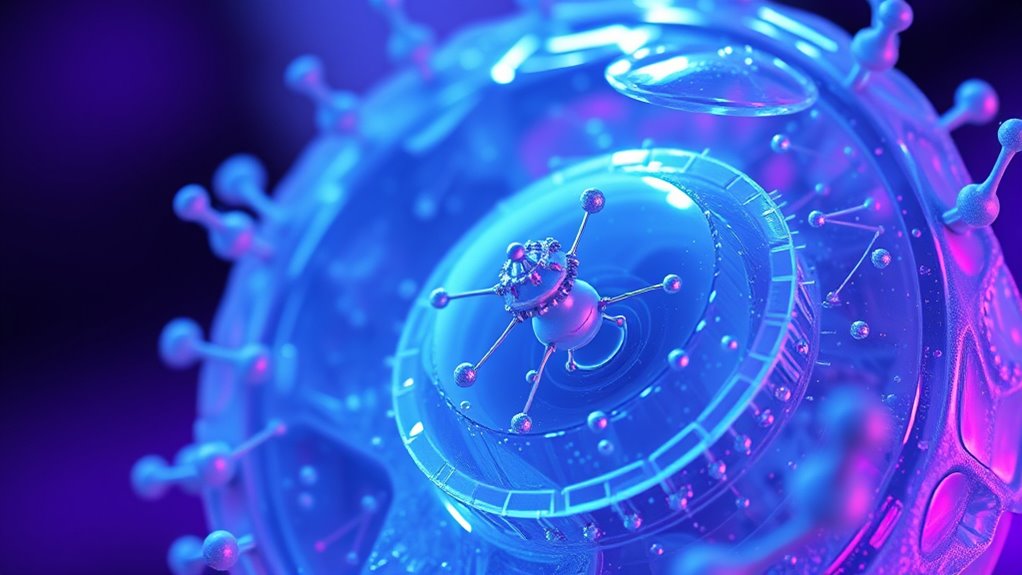
Overcoming Gram-negative bacterial defenses with nanotech involves innovative strategies to breach their robust double membrane barrier. You can use membrane-penetrating peptides and nanoparticle carriers to deliver antimicrobials directly into the bacterial cytoplasm. Tailoring nanoparticle surface chemistries helps increase uptake by negatively charged bacterial envelopes while reducing interactions with mammalian cells. Combining nanoparticles with agents that disrupt efflux pumps or porin functions restores antibiotic accumulation inside bacteria. Optimizing size and shape—between 1 and 100 nanometers—allows them to exploit porin channels or induce membrane stress specific to Gram-negative species. Hybrid nanomaterials, like carbon nanotubes with silver, produce multimodal killing by combining physical damage with chemical toxicity. These approaches enhance penetration and effectiveness against resistant Gram-negative bacteria, overcoming their formidable outer defenses.
Addressing Safety and Translation Challenges in Nanomedicine
Addressing safety and translation challenges in nanomedicine is indispensable for turning promising nanoparticle-based therapies into clinical realities. You must carefully evaluate nanoparticle cytotoxicity, as some metal NPs can cause inflammation or damage to mammalian cells. Additionally, understanding biodistribution, clearance, and long-term accumulation is critical to prevent unintended toxicity. Regulatory hurdles also exist, as reproducibility and manufacturing scale-up pose significant obstacles. Finally, environmental impact must be considered, including potential ecotoxicity from nanoparticle release. To navigate these challenges, focus on:
- Conducting thorough preclinical safety and toxicity assessments, emphasizing dose and formulation impacts.
- Developing standardized manufacturing processes to ensure consistency and regulatory compliance.
- Performing lifecycle and environmental assessments to minimize ecological risks.
Addressing these issues is indispensable for safe, effective translation of nanotech therapies.
Frequently Asked Questions
How Do Nanoparticles Selectively Target Bacteria Without Harming Human Cells?
You can make nanoparticles target bacteria selectively by designing their surface chemistry to recognize bacterial features like negatively charged cell walls. Using targeting ligands or peptides helps the NPs bind specifically to bacteria, avoiding human cells. Additionally, tuning size and shape allows NPs to exploit bacterial porins or stress membranes, while stimuli-responsive release systems guarantee drugs are only released at infection sites, minimizing harm to healthy human tissues.
What Are the Long-Term Environmental Impacts of Antimicrobial Nanomaterials?
You should consider that antimicrobial nanomaterials pose potential long-term environmental risks, including persistence, bioaccumulation, and ecotoxicity. They might accumulate in ecosystems, harming aquatic life and disrupting microbial communities. As these materials can be released during manufacturing, use, or disposal, it’s essential to evaluate their lifecycle impacts, enforce safety standards, and develop biodegradable alternatives to minimize environmental harm and guarantee sustainable nanotechnology applications.
How Scalable Are Nanoparticle Synthesis Methods for Clinical Applications?
Nanoparticle synthesis methods are rapidly advancing toward scalability, making them as accessible as everyday items. You can expect streamlined, cost-effective, and reproducible processes that produce high-quality NPs in large quantities, suitable for clinical use. Innovations like continuous flow reactors and green synthesis techniques are revolutionizing manufacturing, ensuring consistent delivery of nanomaterials on an industrial scale. This progress promises to transform nanomedicine from laboratory curiosity into widespread therapeutic reality.
Can Nanoparticles Prevent the Development of Bacterial Resistance?
Yes, nanoparticles can help prevent bacterial resistance by delivering drugs directly into bacteria, reducing the chances of resistance development. Their multiple mechanisms, like membrane disruption and ROS generation, make it harder for bacteria to adapt. Additionally, surface functionalization and stimuli-responsive release systems enhance targeted action, lowering the likelihood of resistance. Combining these strategies with co-delivery of agents further diminishes resistance emergence, making nanoparticles a promising tool for sustainable antimicrobial therapy.
What Are the Main Regulatory Hurdles for Approving Nanotech-Based Antimicrobials?
Getting nanotech-based antimicrobials approved is like crossing a minefield, with key hurdles including safety concerns, toxicity risks, and environmental impact. You’ll also face challenges in demonstrating consistent manufacturing, stability, and long-term effects, which regulatory agencies demand before approval. Plus, limited standardized testing and clinical trials make it tough to prove these innovative solutions are safe and effective, slowing down their journey to bedside use.
Conclusion
Nanotech offers powerful tools against drug-resistant bacteria, disrupting their defenses and boosting antibiotics. While these innovations promise hope, safety concerns and translation hurdles remain. You stand at the crossroads where cutting-edge science meets responsibility; the battle isn’t just against bacteria but also ensuring safe, effective treatments. Embrace the potential, but remember, progress requires cautious steps—because defeating resistant bacteria isn’t just a victory in the lab, but a triumph for humanity.