

Nanomaterials play a key role in water harvesting by improving methods like solar condensation, fog collection, and dew harvesting. They help you gather moisture from humid air, fog, or dew more efficiently thanks to their high surface areas and special surface chemistries. These tiny materials enable lightweight, durable, and cost-effective systems that perform well even in challenging environments. Keep exploring to discover how these nanotechnologies can transform water access in arid regions.
Key Takeaways
- Nanomaterials enhance water collection efficiency by increasing surface area and enabling tailored surface chemistry for fog and dew harvesting.
- Engineered nanostructures improve solar condensation processes, maximizing sunlight absorption and heat transfer for sustainable water production.
- Superhydrophobic and superhydrophilic nanocoatings facilitate droplet formation and runoff, boosting fog harvesting yields.
- Nanomaterials enable lightweight, durable, and adaptable water harvesting devices suitable for diverse and remote environments.
- Ongoing advancements in nanotechnology aim to increase system efficiency, reduce costs, and expand access to clean water in arid regions.
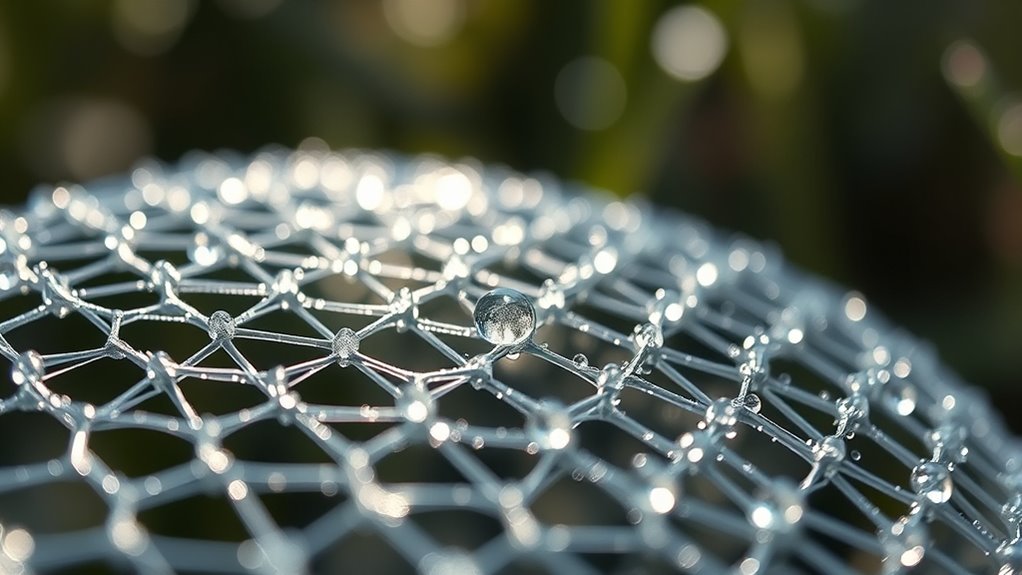
Nanomaterials are revolutionizing water harvesting technologies by offering innovative solutions to collect moisture from the environment efficiently. Their unique properties enable the development of advanced systems that can extract water from sources like humid air, fog, and even dew. One exciting application is solar condensation, where nanomaterials are engineered to maximize sunlight absorption and facilitate the condensation of water vapor. These materials often have high surface areas and tailored surface chemistry, which allow them to absorb solar energy and convert it into heat rapidly. As a result, they create localized temperature differences that encourage water vapor to condense on their surfaces, even in arid conditions. This process can be notably enhanced by nanostructuring, which increases the surface area and improves the efficiency of heat transfer. With solar condensation, you can harness renewable energy directly from sunlight, making the water harvesting process sustainable and cost-effective, especially in remote or drought-prone areas.
In addition to solar condensation, fog collection is another area where nanomaterials excel. Fog collection involves capturing tiny water droplets suspended in fog and channeling them into storage containers. Traditional fog nets work well, but nanomaterials elevate this method by offering superhydrophobic or superhydrophilic surfaces that increase water adhesion and droplet growth. For example, nanostructured coatings can be applied to mesh surfaces, creating a textured surface that enhances droplet formation and runoff. When fog passes through these nanomaterial-coated meshes, water droplets quickly coalesce and drip into collection troughs, boosting the yield. Some nanomaterials are designed to be highly selective, allowing only water to pass through while blocking dust or other impurities. This selectivity improves water purity, reducing the need for extensive filtration later. The durability and flexibility of nanomaterials also mean that fog collection devices can be lightweight, portable, and adaptable to various terrains and climates. By integrating nanomaterials into fog collectors, you can considerably increase water collection rates in fog-prone regions, providing a reliable water source where traditional methods might fall short. Additionally, the high surface area and customizable surface chemistry of nanomaterials enable the creation of efficient water harvesting systems tailored to specific environmental conditions.
Both solar condensation and fog collection demonstrate how nanomaterials are transforming water harvesting into a more efficient, sustainable process. They enable systems to operate with minimal energy input while maximizing output, making them ideal for addressing water scarcity issues globally. As research advances, expect to see even more refined nanostructures that further improve collection efficiency, durability, and cost-effectiveness. These innovations will empower communities and individuals alike to tap into environmental moisture more effectively, ensuring access to clean water even in the most challenging conditions.
Top picks for "nanomaterial water harvest"
Open Amazon search results for this keyword.
As an affiliate, we earn on qualifying purchases.
Frequently Asked Questions
How Do Nanomaterials Compare to Traditional Water Harvesting Methods?
Nanomaterials offer higher efficiency advantages over traditional water harvesting methods because of their surface area and reactivity, capturing moisture more effectively. However, you might face scalability challenges since producing and deploying nanomaterials on a large scale can be complex and costly. While they promise improved performance, balancing these advantages with practical limitations is essential for widespread adoption.
What Are the Environmental Impacts of Using Nanomaterials?
Imagine you’re living in 3024, and nanomaterials are everywhere. You should know they pose ecotoxicity concerns, risking ecosystem disruption if not properly managed. These tiny materials can accumulate in water sources, harming aquatic life and altering natural balances. While they improve water harvesting efficiency, their environmental impacts demand careful oversight to prevent long-term damage to ecosystems and safeguard biodiversity for future generations.
Can Nanomaterials Be Reused or Recycled Effectively?
Yes, nanomaterials can often be reused or recycled effectively. Their durability varies, but many are designed to withstand multiple cycles, extending their usefulness. You should follow specific recycling techniques tailored to the nanomaterial type, such as thermal or chemical processes, to recover and reuse them efficiently. Proper handling and recycling not only optimize their lifespan but also minimize environmental impact, making their use more sustainable.
What Are the Costs Associated With Nanomaterial-Based Water Harvesting?
Imagine a shimmering web of tiny nanomaterials capturing dew. The costs for water harvesting with nanomaterials hinge on economic feasibility and manufacturing expenses. While initial investments in advanced production can be high, their efficiency reduces long-term costs. You might find that as technology advances, expenses decrease, making it more accessible. Still, balancing innovation with affordability remains key to widespread adoption of nanomaterial-based water harvesting solutions.
Are There Any Health Risks From Nanomaterial Exposure?
You might be concerned about health risks from nanomaterial exposure, but health regulations and toxicity assessments help manage these risks. While some nanomaterials could pose toxicity concerns if inhaled or ingested, strict safety guidelines are in place to safeguard you. Proper handling, disposal, and ongoing research ensure that exposure risks remain minimal, allowing safe use in water harvesting applications. Staying informed helps you understand how safety measures mitigate potential health hazards.
Conclusion
By now, you’ve seen how nanomaterials can revolutionize water harvesting, making it more efficient and sustainable. Their unique properties help capture moisture even in the driest environments—like having a personal water genie. As you step into the future, remember that these tiny marvels could turn your desert dreams into a reality, much like discovering a secret water source in the middle of the Sahara. Embrace nanomaterials, and water scarcity might just become history.